A chimney sweep orlando homeowners can trust does far more than clear soot — they remove the creosote and blockages that cause house fires and carbon monoxide poisoning. If your fireplace smells smoky, a damper sticks, or you simply can’t remember your last inspection, that’s your sign to act before cold weather arrives. Many Central Florida homeowners assume mild winters mean low risk, but even a handful of fires a year can leave behind enough creosote to ignite.
At Always Fire & Gas, we’ve been family-owned since 1982, and our crews carry two Florida state licenses plus six national certifications, including CSIA Certified Sweep status. We serve homeowners across Marion, Orange, Lake, and Seminole counties — from Ocala and Dunnellon to Orlando and The Villages. This guide explains what a real chimney sweep involves, how often you need one, and how to vet a crew before they touch your home.
📌 Key Takeaways
- Schedule a chimney sweep at least once a year, even if you rarely use your fireplace.
- Creosote buildup is the leading cause of residential chimney fires, according to the CSIA.
- A licensed sweep should show you documentation, not just a receipt.
- Always Fire & Gas backs every visit with a written ZERO Mess Guarantee.
- Orlando’s humid climate adds water-intrusion risk on top of normal creosote concerns.
Jump to a Section
- Why Orlando-Area Chimneys Need Regular Sweeping
- Warning Signs You Need a Sweep Now
- What a Professional Chimney Sweep Orlando Visit Includes
- How Often You Should Schedule Chimney Cleaning
- DIY vs. Professional Chimney Sweeping
- Choosing a Licensed, Certified Chimney Sweep
- FAQ
Why Orlando-Area Chimneys Need Regular Sweeping
Quick Answer: Florida’s humidity, pollen, and occasional cold snaps combine to create creosote and moisture problems that build up faster than many homeowners expect. Skipping annual sweeps lets these risks compound year after year.
Creosote is the dark, tar-like residue left behind when wood burns incompletely. It coats the inside of a flue and is highly flammable — a small spark can ignite it into a chimney fire that spreads into the attic. According to the Chimney Safety Institute of America, creosote buildup is a leading contributor to residential chimney fires nationwide.
The Local Climate Factor
Orlando and the surrounding Marion County area see high humidity most of the year, which lets moisture mix with soot and accelerate masonry damage. We regularly find rusted dampers and soft mortar in homes that look fine from the curb. Combine that with a handful of cold nights in December and January when fireplaces finally get used, and you have the perfect setup for a fast, unnoticed buildup.
💡 Expert Insight: In nine years working chimneys across North Central Florida, I’ve found that homes with fireplaces used fewer than 10 times a year often have more creosote risk than daily users — infrequent, low-and-slow fires produce more residue than hot, regular ones.
Warning Signs You Need a Sweep Now
Quick Answer: A smoky smell, visible soot flakes, a damper that won’t close, or a fireplace that won’t draft properly are all signals to call a sweep before your next fire.
Don’t wait for smoke in the living room. Several warning signs show up well before a fire or blockage becomes obvious to the average homeowner.
Creosote Buildup and Fire Risk
If you see black, flaky, or glossy residue inside the firebox, that’s creosote accumulating. Glossy, tar-like creosote (sometimes called Stage 3) is the most dangerous and the hardest to remove safely without professional tools.
Carbon Monoxide and Blocked Flues
Bird nests, debris, and collapsed flue tile can block the flue entirely, pushing carbon monoxide back into the home instead of outside. The CDC notes that carbon monoxide poisoning from blocked venting is preventable with proper inspection and maintenance. We also check for cracked flue tiles during every sweep, since a cracked liner lets heat and gases reach combustible framing.
⚠️ Common Mistake: Many homeowners assume a working damper means the whole system is safe. A damper only controls airflow — it tells you nothing about creosote levels or structural cracks higher up the flue.
What a Professional Chimney Sweep Orlando Visit Includes
Quick Answer: A full-service visit includes a visual inspection, mechanical brushing of the flue, vacuum removal of debris, and a written report — not just a quick brush-and-go.
When our team arrives, we tarp floors and furniture first, then run a HEPA vacuum connected to the work area the entire time. That’s part of our written ZERO Mess Guarantee: floors protected, debris fully contained, nothing left behind.
Inspection Levels Explained
The National Fire Protection Association (NFPA) defines three levels of chimney inspection. A Level 1 inspection covers accessible, visible portions of the chimney for routine annual use. A Level 2 adds video scanning and is required after a sale, an appliance change, or a chimney fire, per NFPA 211. We explain which level applies before we start, so there are no surprises about scope.
The ZERO Mess Guarantee Difference
Our crews carry CSIA Certified Sweep, Certified Chimney Specialist, and Certified Master Chimney Technician credentials, among others, so the work follows documented industry standards rather than guesswork. Every visit ends with photos and a written report you can hand to an insurer, agent, or HOA if needed.
✅ Quick Tip: Ask any sweep to show their license number before they start. Florida Contractor License CRC1333200 and Gas License LI45277 should be verifiable through the Florida DBPR.
How Often You Should Schedule Chimney Cleaning
Quick Answer: Most homes need a sweep once a year, but usage, fuel type, and fireplace age can shift that schedule. We cover the details in our chimney cleaning frequency guide.
| Fireplace Use | Recommended Sweep Frequency | Why |
|---|---|---|
| Daily or near-daily wood burning | Every 6-12 months, check mid-season | Creosote builds faster with heavy use |
| Occasional wood fires (10-20/year) | Annually, before first fall fire | Slow burns still deposit creosote |
| Gas fireplace or insert | Annually | Checks venting, not creosote |
| Vacant or rarely-used chimney | Annually | Nests, debris, and moisture still accumulate |
| After a chimney fire or storm | Immediately, Level 2 inspection | Hidden structural damage is common |
📊 Data Point: The CSIA recommends annual inspections regardless of fireplace frequency, since animal nests and weather damage occur even in chimneys that see no fires at all.
DIY vs. Professional Chimney Sweeping
Quick Answer: DIY brushing can remove surface soot, but it misses structural cracks, glazed creosote, and carbon monoxide risks that require trained eyes and proper equipment.
Where DIY Falls Short
A homeowner with a basic brush kit can knock loose soot out of a straight, accessible flue. What they usually can’t do is identify a cracked crown, a deteriorating liner, or glazed creosote that requires rotary cleaning tools to remove safely.
| Factor | DIY Approach | Professional Chimney Sweep |
|---|---|---|
| Tools | Basic brush, limited reach | Rotary cleaning systems, HEPA vacuums |
| Inspection depth | Visual only, from the ground or firebox | Video scanning available (Level 2) |
| Mess control | Soot often spreads into the room | Tarping and HEPA vacuum (ZERO Mess Guarantee) |
| Documentation | None | Written report for insurance, HOA, or sale |
| Safety certification | None | CSIA and NFI certified technicians |
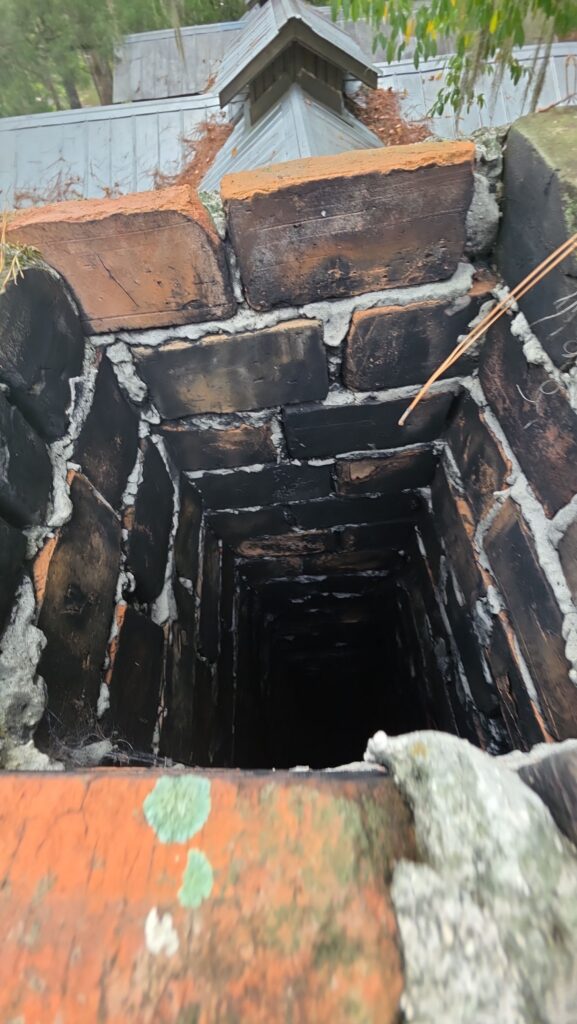
💡 Expert Insight: We’ve been called in after a DIY cleaning missed a cracked crown that was letting water into the wall cavity for months. The homeowner thought the job was done because the firebox looked clean — the real damage was higher up, out of view. Our chimney crown repair guide walks through those warning signs in detail.
Choosing a Licensed, Certified Chimney Sweep Orlando Trusts
Quick Answer: Verify license numbers, ask for proof of national certification, and confirm the company stands behind its work in writing before scheduling.
Anyone can call themselves a chimney sweep. Florida requires specific contractor licensing for work that touches structural or gas components, and national bodies like CSIA and NFI add a layer of trained expertise beyond state minimums.
Questions Worth Asking Before You Book
- What is your Florida contractor license number?
- Are your technicians CSIA or NFI certified, and can you provide certificate numbers?
- Do you provide a written inspection report after every visit?
- How do you protect my floors and furniture during the sweep?
- What happens if you find a crack, leak, or gas issue during the visit?
We answer all five with documentation: two state licenses, CSIA and NFI credentials across ten individual certifications, and a written ZERO Mess Guarantee. Our team also handles related concerns like chimney fire prevention and ongoing chimney safety maintenance plans, so a sweep often becomes the first step toward a complete, documented maintenance history for the home.
⚠️ Common Mistake: Hiring based on the lowest quote alone, without asking for a license number, is how homeowners end up with voided insurance claims after a fire. Always verify credentials first.
FAQ
How much does a chimney sweep cost in the Orlando area?
Cost depends on chimney type, accessibility, and whether repairs are found during inspection. We focus on documenting exactly what your chimney needs rather than quoting blind, so every estimate reflects the real condition of your system.
How do I find a certified chimney sweep near Orlando FL?
Look for CSIA Certified Sweep status, a valid Florida contractor license, and a company willing to provide license numbers upfront. Always Fire & Gas serves Orlando, Ocala, The Villages, and surrounding counties with verifiable state and national credentials.
Is it safe to use a fireplace without an annual chimney sweep?
It’s not recommended, even for occasional use, since creosote and debris accumulate regardless of how often a fireplace burns. An unswept chimney increases both fire and carbon monoxide risk.
What is the difference between a chimney sweep and a chimney inspection?
A sweep physically removes creosote, soot, and debris from the flue, while an inspection evaluates the structural and safety condition of the entire chimney system. Most professional visits, including ours, combine both in a single appointment.
Can a dirty chimney affect my homeowners insurance?
Yes — if a fire is traced back to neglected creosote buildup, some insurers may question coverage, especially without documentation of regular maintenance. A written sweep report provides the proof carriers often ask for.
How often should The Villages or Ocala homeowners schedule chimney cleaning?
Annual service is the standard recommendation for Marion County and The Villages homes, regardless of how often the fireplace is used. Many retiree-community homes sit unused for long stretches, which still allows nests and moisture damage to build.
Do gas fireplaces need a chimney sweep too?
Yes, though the service focuses more on venting and liner condition than creosote removal. Our gas fireplace inspections check for proper draft and blockage, which matters just as much for safety as wood-burning units.
Final Thoughts
A trustworthy chimney sweep orlando homeowners rely on should always lead with documentation, not guesswork — license numbers, certification proof, and a written report every time. Creosote, moisture, and blocked flues don’t announce themselves until there’s smoke, a leak, or worse. Scheduling an annual sweep is one of the simplest ways to protect your home, your family, and your insurance coverage. Our family has worked North Central Florida chimneys since 1982, and we still show up with the same two state licenses and six national certifications on every job.
Next steps:
- Check when your chimney was last swept or inspected.
- Look for warning signs like odor, soot flakes, or a sticky damper.
- Ask any prospective sweep for their license and certification numbers.
- Schedule your annual sweep before the next cold snap arrives.
Always Fire & Gas (Always A Sweep, LLC) holds Florida Contractor License CRC1333200 and Gas License LI45277. Call or text (352) 282-0158 to schedule your certified chimney sweep today — done right, with proof in writing.