Three Levels. One Certified Standard.
Chimney Inspections in Ocala, Gainesville, Orlando, The Villages and All Surrounding Areas.
- CSIA Certified Chimney Sweep #10020
- CCP (Certified Chimney Professional) #546
- NFI Certified Fireplace Installer #177069
- Certified Chimney Specialist (CSIA) #59
- Certified Master Chimney Technician #34
- FL Residential Contractor #CRC133200
- FL Gas Contractor #LI45277
- Liquified Petroleum (LP) Gas Master Qualifier License #MQ31416
- Certified Chimney Re-liner #94
- Certified Chimney Journeyman #5053
Chimney Inspections
Level 1, Level 2, and Level 3 Chimney Inspections. Video Camera Flue Scan. Written Report. CSIA Certified #10020. Serving North Central Florida Since 1982.
A wood burning fireplace is one of the most enduring features you can add to a Florida home. When it is designed, installed, and maintained by certified professionals, it adds warmth, ambiance, and real value for decades. When it is not, it becomes a source of creosote buildup, carbon monoxide risk, and code violations that most homeowners never see coming.
Which Inspection Level Do You Need? Here Is the Honest Answer.
NFPA 211, the national standard governing chimney systems in the United States, defines three levels of chimney inspection. Each level is appropriate to a different situation. Always Fire & Gas performs all three.
The level you need is determined by your situation, not by your preference for a lower price. If the situation calls for a Level 2, performing a Level 1 does not save you money. It leaves you with an incomplete inspection of a system that required a complete one.
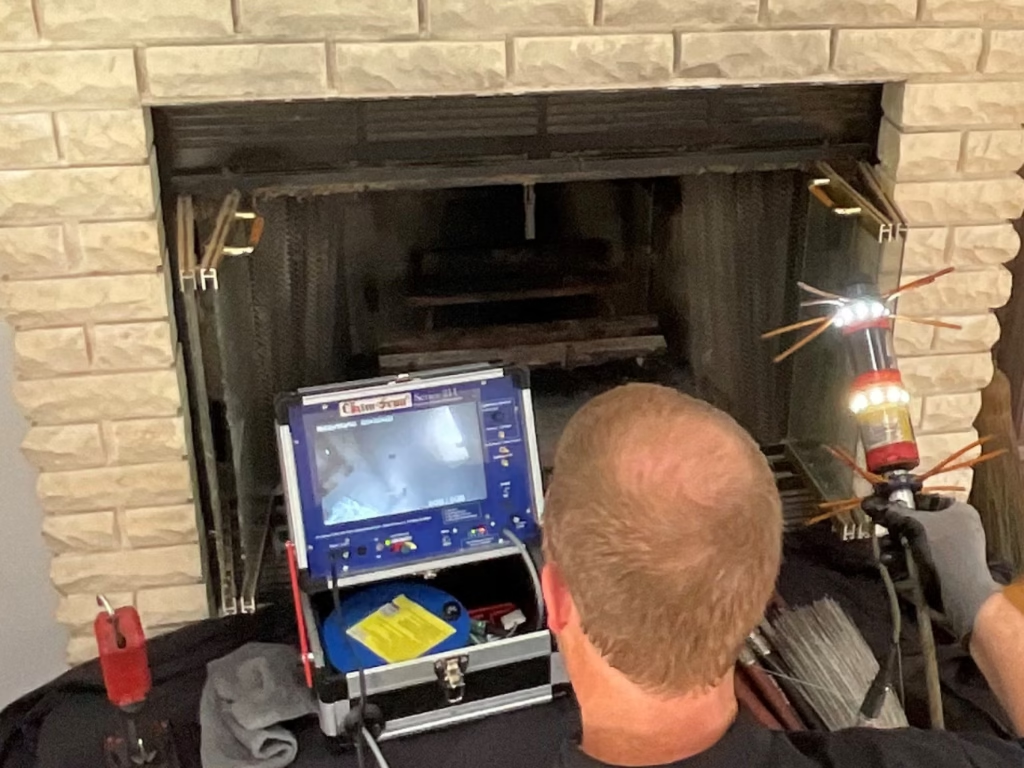
LEVEL 1 Annual Chimney Inspection
For: chimneys in continuous service with no changes to appliance, fuel type, or usage pattern.
A Level 1 inspection covers all accessible portions of the chimney exterior and interior, including the firebox, smoke chamber, damper, flue liner (accessible surfaces), and chimney exterior from ground level. It verifies that the chimney is free of obstruction, that no hazardous conditions exist in accessible areas, and that the system is suitable for continued use. Level 1 is the appropriate scope for a chimney that has been in regular use, has had no changes to the connected appliance or fuel type, and has not experienced any damaging event since the last inspection.
Video scan included: No – visual inspection of accessible flue components only.
Credential: CSIA Certified Chimney Sweep #10020
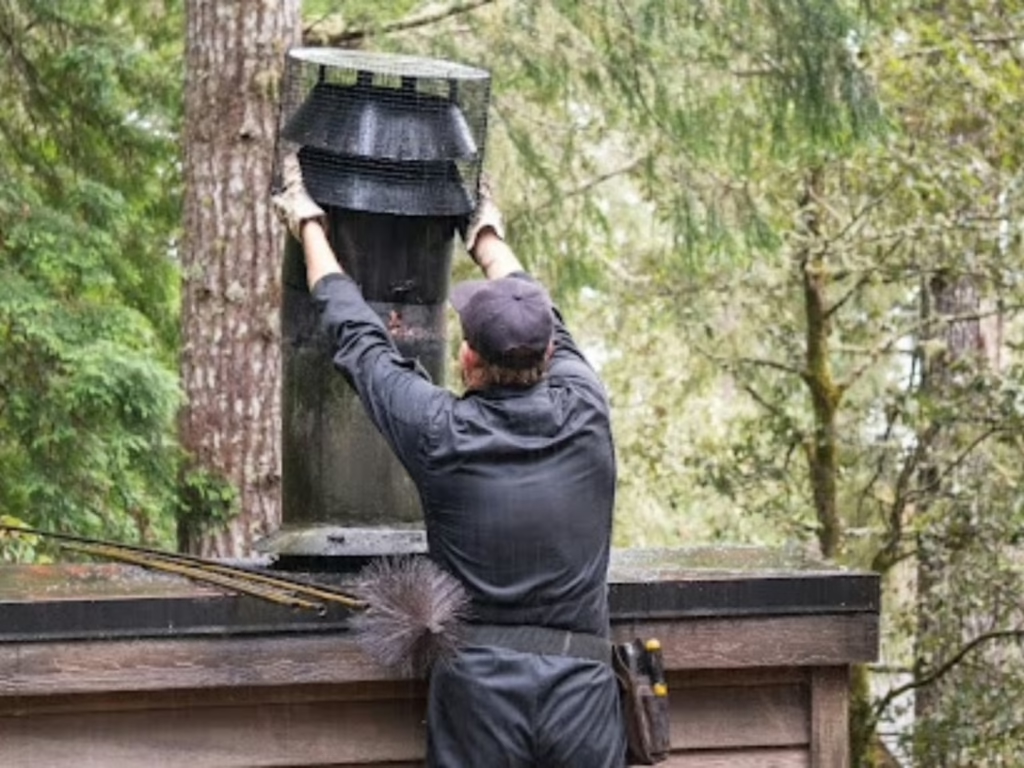
LEVEL 2 Change of Condition or Ownership Inspection
For: any property sale, any appliance or fuel type change, any chimney fire or storm event, and any change in use.
A Level 2 inspection includes everything in Level 1 plus all accessible areas of the attic, basement, and crawl spaces adjacent to the chimney structure, and a video camera scan of the entire internal flue. NFPA 211 requires a Level 2 inspection whenever real property with a chimney system changes ownership, whenever the connected appliance is changed, whenever the fuel type is changed, and after any event that may have affected the chimney – including a chimney fire, an earthquake, or a severe storm. The video camera scan is not optional at Level 2. It is part of the standard. A Level 2 inspection without a video record is not a Level 2 inspection. Video scan included: Yes – full video camera scan of the flue interior is required at Level 2.
Credential: CSIA Certified #10020 • CCP #546 • Video documentation included
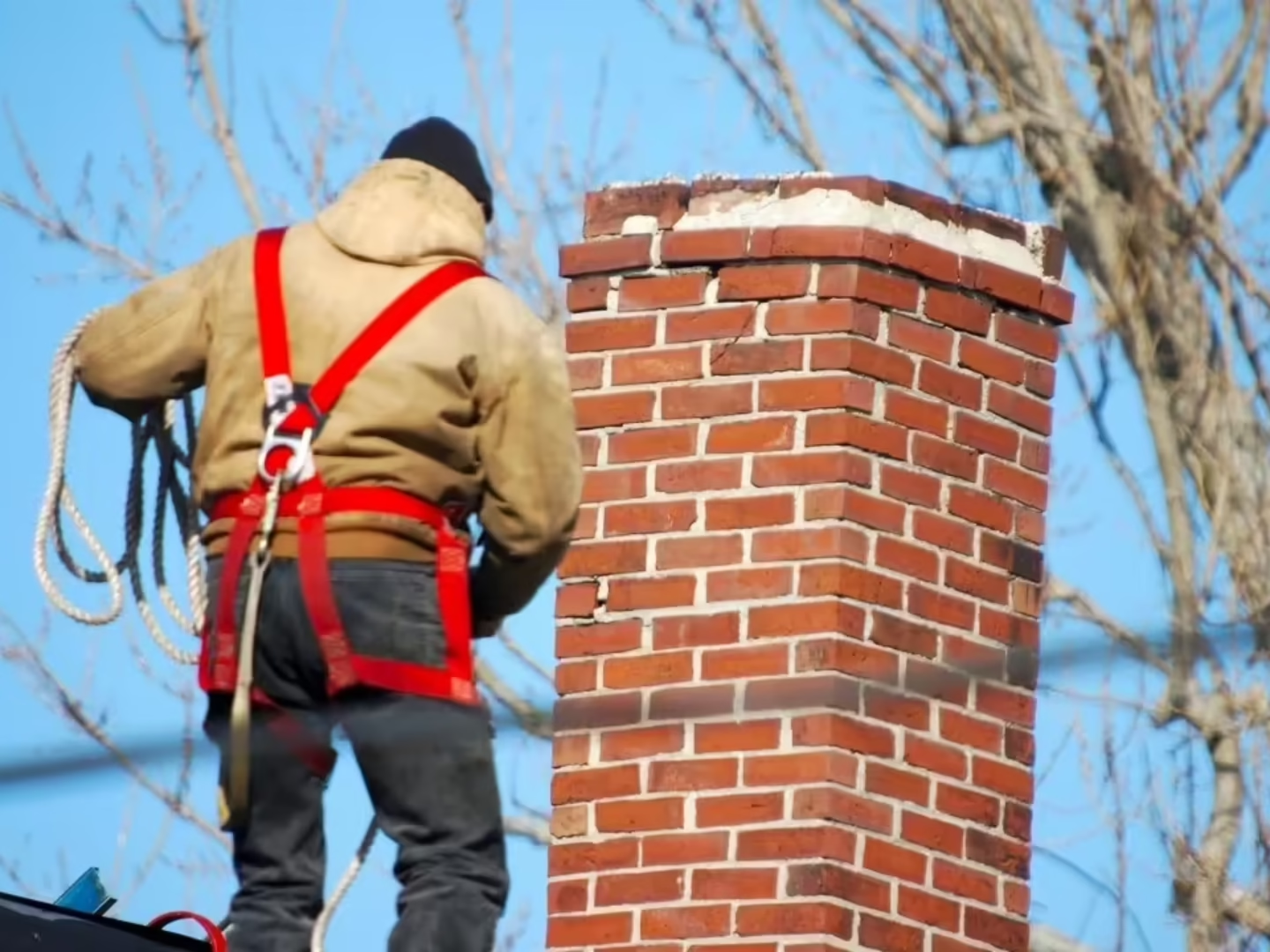
LEVEL 3 Concealed Hazard Investigation
For: situations where Level 1 or Level 2 findings indicate a potential hazard that cannot be confirmed or ruled out without access to concealed areas.
A Level 3 inspection includes everything in Level 1 and Level 2, plus removal of specific chimney components – such as portions of the chimney structure, interior wall surfaces, or exterior wall coverings – to allow inspection of areas that are not accessible at Level 2. A Level 3 inspection is not performed without a specific reason documented in a prior Level 1 or Level 2 inspection. It is not an upgrade someone selects for peace of mind. It is the diagnostic response to a finding that cannot be resolved without access to what is concealed. Always Fire & Gas recommends Level 3 only when prior inspection findings make it necessary and explains the specific reason before any Level 3 work begins.
Video scan included: Yes – plus removal of specific structural components to access and inspect concealed areas.
Credential: CSIA Certified #10020 • CCP #546 • Requires prior Level 1 or Level 2 finding
What Always Fire & Gas Inspects. Every Component, in Plain Language.
A certified chimney inspection is a systematic assessment of every accessible component of the chimney system. Here is exactly what our CSIA-certified inspectors assess, and what they are looking for at each location.
COMPONENT
WHAT WE ASSESS
WHAT FAILURE LOOKS LIKE
Firebox and hearth
Refractory brick and mortar condition, firebox floor integrity, hearth extension compliance, cleanout door seal
Cracked firebox brick, deteriorated mortar joints, damaged hearth, improper cleanout
Smoke chamber
Parging (mortar coating) condition, corbeled brick integrity, smoke shelf clearance
Deteriorated or missing parging, cracks that allow combustion gases to enter wall cavities
Damper
Gap visible between cover edge and chase wall top, cover visibly bowed or lifted at corners
Water entering at the gap between cover and chase wall — runs directly into chase framing, often reaches ceiling below
Flue liner (Level 1: visual; Level 2: video)
Tile condition and alignment, presence of cracks, spalling, or missing sections, mortar joint condition between tiles
Cracked or broken tiles, displaced sections, open mortar joints, evidence of past chimney fire damage
Flue interior (video — Level 2 only)
Full-length video scan documenting liner condition, debris, blockage, creosote stage, and any structural anomalies
Stage 2 or 3 creosote, animal nesting, collapsed liner sections, foreign objects, active water infiltration points
Chimney crown
Condition of the concrete or mortar cap at the chimney top, crack pattern, water diversion slope
Cracked, spalled, or failed crown; improper slope that directs water toward the flue opening
Chimney cap
Presence, fit, condition, and screen integrity
Missing cap, rust-through, screen damage, incorrect sizing for the flue opening
Flashing
Seal condition between chimney and roof surface, step and counter flashing integrity
Separated, corroded, or improperly installed flashing; visible water infiltration path at chimney-roof junction
Chimney exterior (masonry)
Mortar joint condition at all courses, brick face condition, efflorescence (white staining), structural plumb
Deteriorated mortar, spalling brick, efflorescence indicating active moisture migration, visible lean or structural issue
Connector pipe (if present)
Diameter relative to appliance collar, clearances to combustibles, support and slope, single vs. double wall appropriateness
Incorrect diameter, inadequate clearances, missing support, wrong pipe type for the appliance and installation
COMPONENT
Firebox and hearth
Smoke chamber
Damper
Flue liner (Level 1: visual; Level 2: video)
Flue interior (video — Level 2 only)
Chimney crown
Chimney cap
Flashing
Chimney exterior (masonry)
Connector pipe (if present)
WHAT WE ASSESS
Refractory brick and mortar condition, firebox floor integrity, hearth extension compliance, cleanout door seal
Parging (mortar coating) condition, corbeled brick integrity, smoke shelf clearance
Gap visible between cover edge and chase wall top, cover visibly bowed or lifted at corners
Tile condition and alignment, presence of cracks, spalling, or missing sections, mortar joint condition between tiles
Full-length video scan documenting liner condition, debris, blockage, creosote stage, and any structural anomalies
Condition of the concrete or mortar cap at the chimney top, crack pattern, water diversion slope
Presence, fit, condition, and screen integrity
Seal condition between chimney and roof surface, step and counter flashing integrity
Mortar joint condition at all courses, brick face condition, efflorescence (white staining), structural plumb
WHAT FAILURE LOOKS LIKE
Cracked firebox brick, deteriorated mortar joints, damaged hearth, improper cleanout
Deteriorated or missing parging, cracks that allow combustion gases to enter wall cavities
Water entering at the gap between cover and chase wall — runs directly into chase framing, often reaches ceiling below
Cracked or broken tiles, displaced sections, open mortar joints, evidence of past chimney fire damage
Stage 2 or 3 creosote, animal nesting, collapsed liner sections, foreign objects, active water infiltration points
Cracked, spalled, or failed crown; improper slope that directs water toward the flue opening
Missing cap, rust-through, screen damage, incorrect sizing for the flue opening
Separated, corroded, or improperly installed flashing; visible water infiltration path at chimney-roof junction
Deteriorated mortar, spalling brick, efflorescence indicating active moisture migration, visible lean or structural issue
Incorrect diameter, inadequate clearances, missing support, wrong pipe type for the appliance and installation
Every finding is documented in writing. Every Level 2 inspection includes photographs and video. If we find something, we show it to you before we leave.
The Camera Sees What the Eye Cannot. Why Video Matters in Every Level 2 Inspection.
A standard chimney inspection can assess what is visible from the firebox opening and the chimney top. The interior of a 20-foot masonry flue is not visible from either end. The hairline crack in a terracotta tile at the midpoint of the flue, the open mortar joint six courses up from the smoke chamber, the creosote glaze on the tile surfaces that has been building since the first fire ten years ago – none of these are assessable without a camera.
Always Fire & Gas uses a professional chimney camera system on every Level 2 inspection. The camera travels the full length of the flue and documents every surface in real time. The homeowner can view the footage during the inspection. The footage is preserved as part of the written report.
What the camera finds that no other method reveals:
Hairline cracks in terracotta tile liner sections
Too narrow to see from either end of the flue, wide enough to allow combustion gases into the wall cavity.
Open mortar joints between liner tiles
Tile joints that have dried out and separated over years of thermal cycling. Invisible from below. Visible on camera at any point in the flue.
Stage 2 and Stage 3 creosote deposits
Tar-like or glaze-hardened creosote on tile surfaces that sweeping alone cannot remove and that represents an active chimney fire risk.
Collapsed or displaced liner sections
Tiles that have shifted, cracked through, or partially collapsed – structural failures that require liner replacement and are not diagnosable any other way.
Active water infiltration points
Water staining, active moisture, or efflorescence at specific liner locations that identifies exactly where water is entering the system.
Foreign objects and animal nesting
Debris, bird and animal nesting material, and structural blockages at any point in the flue.
What happens with the footage:
The camera feed displays in real time during the inspection. We stop at any finding and explain what we are looking at before moving on.
The complete video record is preserved and provided as part of the written report. If the inspection is for a real estate transaction, the video documentation is included in the disclosure package.
If the footage reveals a problem that requires repair, we show you the footage, explain the finding, and give you the repair recommendation in writing before we leave your property.
What the footage is not used for:
It is not used to manufacture findings that do not exist. A CSIA-certified inspection is bound by the NFPA 211 standard. Findings are documented because they are there, not because a repair sale depends on them. If your chimney is clean and structurally sound, the report says so.
Zero Mess. Not as a Promise. As a System.
The reason many homeowners delay chimney inspections is not price. It is the mental image of soot on the carpet, ash on the mantel, and a fine layer of creosote dust on everything in the room for two days after the sweep left.
Always Fire & Gas eliminates that outcome with a containment system that prevents it from occurring, not a cleaning protocol that addresses it afterward.
How the Zero-Mess system works:
A three-motor HEPA vacuum creates negative pressure in the firebox and flue before any sweeping equipment is introduced. Particulate drawn into the system is captured by HEPA filtration. The vacuum runs continuously throughout the inspection and sweep. No ash, soot, or creosote escapes the containment system into the living space.
Sealed Firebox Entry:
The firebox opening is sealed against the hearth before any equipment enters the flue. The seal prevents any air disturbance during the process from carrying particulate into the room.
Pre- and Post-Photography:
The hearth area and surrounding space is photographed before we begin and after we complete. If there is any question about the condition of the area at completion, the photographs answer it.
The Guarantee:
If we leave a mess, we come back and clean it. That guarantee has never been invoked.
The Zero-Mess system applies to every inspection and every sweep, regardless of the condition of the flue. A Stage 3 creosote situation produces more particulate than a clean annual inspection. The containment system is designed for the worst case, not the average case.
Which Situation Describes You? Every One Has a Clear Next Step.
The Annual Homeowner: You Have a Fireplace and You Have Not Had It Inspected This Year
The CSIA recommends annual inspection for every chimney and fireplace system, regardless of how often it is used. In North Central Florida, where chimneys sit unused through the long humid summer and are brought back into service in the fall, annual inspection before first use is not a formality. It is the minimum check that confirms the system is safe to light after months of humidity, potential wildlife activity, and thermal cycling.
Inspection level: Level 1 is appropriate if there have been no changes to your appliance or fuel type and no damaging events since the last inspection. If you have not had an inspection in more than two years, a Level 2 is advisable. Call (352) 282-0158 and describe your situation — we will confirm the right level.
The Real Estate Seller: Your Home Is Listed or About to Be Listed with a Fireplace
A Level 2 chimney inspection before listing protects you from two outcomes: a buyer’s inspector finding a chimney problem after you are under contract and using it for renegotiation leverage, and a disclosure liability from a condition that was present and discoverable before closing. A clean pre-listing inspection is a disclosure asset. A repair completed before listing is negotiated at your pace, not under contract deadline pressure.
Inspection level: Level 2 is required at any property transfer under NFPA 211. Always Fire & Gas provides written inspection reports and video documentation suitable for real estate disclosure packages. We schedule pre-listing inspections on real estate timelines. Call (352) 282-0158.
The Real Estate Buyer: You Are Under Contract on a Home with a Fireplace
A general home inspector’s chimney assessment is a visual check of accessible surfaces. It is not a Level 2 inspection. It does not include a video scan of the flue interior. The problems that cost the most to fix – cracked liners, deteriorated smoke chambers, failed crowns – are not visible in a general home inspection and will not appear in the general inspector’s report. You find them after closing, at your expense, unless you have a dedicated Level 2 inspection before you close.
Inspection level: Level 2. Always Fire & Gas performs buyer inspections with written reports suitable for negotiation before closing. We work on real estate timelines. Call (352) 282-0158 and give us your closing date — we will tell you if we can meet it.
The New Homeowner: You Just Bought a House with a Fireplace and You Do Not Know Its History
The previous owners may have had the chimney inspected annually. They may never have had it inspected at all. The listing’s disclosure statement, if one existed, reflects what the seller knew and chose to disclose – not necessarily what the chimney’s actual condition is. The only way to know whether the fireplace in your new home is safe to use is to have it inspected by a CSIA-certified professional with a camera.
Inspection level: Level 2, because a change of ownership requires it under NFPA 211 and because a new owner has no documented history of the system’s condition. This is the inspection that establishes your baseline. Everything after it is maintenance. Call (352) 282-0158.
The Post-Event Homeowner: Your Chimney Experienced a Fire, a Storm, or a Major Impact
A chimney fire – even one that was brief and seemed minor – can crack liner tiles, damage the smoke chamber, and stress the crown and cap in ways that are not visible from the firebox or the roof without a camera. A tropical storm or hurricane can shift flashing, crack the crown, and compromise the chimney structure in ways that produce water infiltration months after the event. If something happened to your chimney, the inspection that follows it is not optional.
Inspection level: Level 2 is required after any chimney fire, storm damage, earthquake, or major impact under NFPA 211. Level 3 may be indicated if Level 2 findings suggest concealed damage. Do not use the fireplace again before the inspection. Call (352) 282-0158.
The Problem Homeowner: Your Chimney Smells, Smokes, or Drafts Incorrectly
A chimney that smells like creosote or smoke when the fireplace is not in use, a fireplace that fills the room with smoke when you open the damper, a gas fireplace that backdraughts – these are symptoms of chimney system problems, not appliance problems. The inspection that diagnoses them assesses the full system: liner, flue, crown, cap, and draft characteristics. Treating the appliance when the problem is in the flue wastes money and leaves the problem in place.
Inspection level: Level 2 to include video documentation of the flue interior, where most draft and odor problems originate. If you have already had a service call that did not resolve the issue, tell us that when you call. We diagnose from the system up, not the appliance down. Call (352) 282-0158.
Not sure which situation applies to you?
Call or text (352) 282-0158. Describe your situation in one sentence. We will confirm the inspection level and give you available appointment times in the same call. There is no obligation to book on the call.
What You Receive After the Inspection. And What Happens If We Find a Problem.
Every chimney inspection performed by Always Fire & Gas produces a written report. Every Level 2 inspection produces a written report plus video documentation. Here is what those deliverables contain and what the path forward looks like when findings require action.
What the written report includes:
• Inspection date, inspector credential, and NFPA 211 level performed
• Assessment of every component in the inspection scope – condition rated and noted
• Photographs of all findings, labeled by location
• Video documentation of the full flue interior (Level 2)
• Specific findings documented in plain language – not chimney jargon
• Repair recommendations where applicable, with scope described
• A statement of the system’s current serviceability – safe to use, safe to use with conditions, or not safe to use pending repair
The report is yours to keep, share with your insurer, include in a real estate disclosure package, or use as documentation for any permit application.
If the inspection finds a problem:
The problem was already there. The inspection documented it. That is not the same as the inspection causing it.
We explain every finding before we leave. We show you the photograph or the footage. We describe what we are looking at in plain language. We give you the repair recommendation in writing with the scope described.
We do not pressure you to schedule the repair on the spot. The report is yours whether you have the repair done by Always Fire & Gas or by anyone else.
If the finding is something that makes the fireplace unsafe to use, we say that clearly – and we tell you what the repair path looks like, what it involves, and what a realistic timeframe is.
Always Fire & Gas performs chimney repair, relining, and rebuild work under FL Residential Contractor License #CRC1332000. If the repair is within our scope, we can provide a written proposal at the time of the inspection or by follow-up. If it is outside our scope, we will tell you that too.
Chimney Inspections Across North Central Florida
Always Fire & Gas performs Level 1, Level 2, and Level 3 chimney inspections across Marion, Alachua, Lake, Sumter, Citrus, Putnam, Hernando, Orange, Volusia Counties and all surrounding areas. Real estate inspection requests are scheduled with closing date timelines in mind across all nine counties.
Ocala & Marion County
Home market since 1982. Annual inspections, pre-listing, and buyer inspections across Marion County. Rural and agricultural properties served.
Gainesville & Alachua County
Active resale market with high demand for Level 2 buyer and seller inspections. University-adjacent and established neighborhoods throughout Alachua County.
The Villages & Sumter County
High-volume real estate market. Large senior living and HOA-community population. Level 2 real estate inspections on tight closing timelines throughout Sumter County.
Ocala & Marion County
Gainesville & Alachua County
Active real estate market with high demand for pre-sale and post-inspection relining on real estate timelines. Older residential neighborhoods throughout Alachua County.
The Villages & Sumter County
High-volume real estate market and active insert installation market. Gas and solid fuel liner installations throughout Sumter County. Senior living facility commercial applications.
Ocala & Marion County
Gainesville & Alachua County
The Villages & Sumter County
Home market since 1982. Annual inspections, pre-listing, and buyer inspections across Marion County. Rural and agricultural properties served.
Active resale market with high demand for Level 2 buyer and seller inspections. University-adjacent and established neighborhoods throughout Alachua County.
High-volume real estate market. Large senior living and HOA-community population. Level 2 real estate inspections on tight closing timelines throughout Sumter County.
Also serving: Lake, Citrus, Putnam, Hernando, Orange, and Volusia Counties. Call (352) 282-0158 to confirm scheduling availability for your address.
Chimney Inspection Questions, Answered Directly Answered Directly
A Level 1 chimney inspection covers all accessible portions of the chimney exterior and interior: the firebox, hearth, damper, smoke chamber, accessible flue liner surfaces, chimney crown, cap, and exterior masonry from ground level. It documents the condition of each component and confirms the system is free of obstruction and suitable for continued use. Level 1 is appropriate for chimneys in continuous service with no changes to the appliance, fuel type, or usage pattern. Always Fire & Gas performs Level 1 inspections throughout North Central Florida under CSIA certification #10020.
A Level 2 chimney inspection includes everything in Level 1 plus all accessible attic, basement, and crawl space areas adjacent to the chimney structure, and a full video camera scan of the internal flue. The video scan is required at Level 2 – it is not an add-on. NFPA 211 requires Level 2 at any property transfer, any appliance or fuel type change, and after any damaging event including chimney fires and storms. Always Fire & Gas provides written reports with video documentation for every Level 2 inspection.
A Level 3 chimney inspection is required when Level 1 or Level 2 findings indicate a potential hazard that cannot be confirmed or ruled out without access to concealed areas. It involves removal of specific structural components – portions of wall surfaces, chimney structure, or exterior coverings – to allow inspection of areas not accessible at Level 2. Level 3 is not selected for peace of mind. It is the response to a specific documented finding from a prior inspection. Always Fire & Gas recommends Level 3 only when prior findings make it necessary and explains the specific reason before any Level 3 work begins.
NFPA 211 requires a Level 2 chimney inspection whenever property with a chimney system changes ownership. This applies to every home sale in Florida where a wood-burning fireplace, gas fireplace with a chimney flue, or wood stove is present. A general home inspection is not a substitute. Always Fire & Gas performs pre-listing Level 2 chimney inspections with written reports and video documentation suitable for real estate disclosure packages across Marion, Alachua, Sumter, Lake, and surrounding counties.
Yes. A general home inspector’s chimney assessment is a visual check – not a Level 2 inspection. It does not include a video scan of the flue interior and will not reveal cracked liner tiles, deteriorated smoke chamber parging, or failed crowns. These are among the most expensive chimney repairs and are frequently invisible without a camera. Always Fire & Gas performs buyer chimney inspections with written reports and video documentation. If the inspection reveals a problem, you have documented evidence for negotiation before closing.
Always Fire & Gas uses a 3-motor HEPA vacuum system that creates negative pressure in the firebox and flue before any inspection or sweep equipment is introduced. Particulate is captured in HEPA filtration throughout the process. The firebox opening is sealed against the hearth. The area is photographed before and after. If we leave a mess, we come back and clean it. That guarantee has never been invoked.
A Level 2 chimney inspection includes a full video camera scan of the internal flue as part of the NFPA 211 standard – it is required, not optional. A Level 1 inspection does not include a camera scan. Always Fire & Gas uses a professional chimney camera system for every Level 2 inspection. The footage is viewed in real time during the inspection and preserved as part of the written report. Level 1 inspections rely on visual assessment of accessible surfaces only.
Smoke odor from an unused fireplace is typically caused by one of three things: negative house pressure drawing air down the flue and pulling odors into the living space, creosote deposits in the flue absorbing humidity and off-gassing in warm weather, or a damaged or open damper that allows outside air to enter freely. A Level 2 chimney inspection identifies the source by assessing the full system. Always Fire & Gas diagnoses chimney odor problems throughout North Central Florida.
A Level 1 chimney inspection typically takes 45 minutes to one hour for a standard residential chimney. A Level 2 inspection, which includes the video camera scan and a more thorough assessment of all accessible areas, typically takes one to one and a half hours. Level 3 inspections vary depending on what components require removal for access. Always Fire & Gas discusses expected duration when scheduling so you can plan accordingly.
The CSIA recommendation is that no solid fuel or gas fireplace system be used without a current annual inspection. In Florida, where chimneys sit unused through humid summers and may have been exposed to wildlife activity, moisture infiltration, or storm damage between uses, this recommendation carries additional weight. A chimney that was clean and safe last season may have a nesting obstruction, a moisture-damaged liner, or a storm-displaced crown that makes it unsafe this season. Annual inspection before first use of the season is the minimum standard Always Fire & Gas recommends.