New Lines. Appliance Hookups. Whole-Home Systems. Permitted, Tested, and Documented.
Natural Gas Installation in Ocala, Gainesville, Orlando, The Villages and All Surrounding Areas.
- Master Chimney Technician #34
- FL Gas Contractor #LI45277
- CSIA Certified #10020
- FL Residential Contractor #CRC133200
- Liquified Petroleum (LP) Gas Master Qualifier License #MQ31416
- BBB A+ Since 2018
New line, hookup, conversion, or whole-home system. Permit pulled. Pressure tested. FL Gas Contractor #LI45277 & Liquified Petroleum (LP) Gas Master Qualifier License #MQ31416.
Gas System Installation
New Gas Line Runs. Whole-Home Gas System Installation. Appliance Connections. Propane Conversions. Outdoor Gas. Gas Fireplace Installation. FL Gas Contractor #LI45277 & Liquified Petroleum (LP) Gas Master Qualifier License #MQ31416. Master Chimney Technician. North Central Florida Since 1982.
Natural gas installation in Florida requires a licensed gas contractor, a pulled permit, and a pressure-tested final installation that passes a licensed inspection before gas is turned on. That is not a suggestion — it is the Florida Building Code requirement for any gas line work beyond a direct appliance connection swap. A gas installation without a permit is an installation your homeowner’s insurance may not cover if something goes wrong. Always Fire & Gas installs natural gas lines and systems under FL Gas Contractor License #LI45277 & Liquified Petroleum (LP) Gas Master Qualifier License #MQ31416, pulls every required permit, pressure tests every installation, and coordinates with the gas utility for meter upgrades and service connections.
The scope range is wide: a single gas line run to a kitchen island for a new range, an outdoor gas station for a built-in grill and fire pit, a whole-home gas system for a new construction or a propane-to-natural-gas conversion when the utility extends to your neighborhood. The process is the same regardless of scope: assess the existing system and the requested installation location, confirm what the permit requires, install to code, pressure test, coordinate the inspection, and hand off a documented installation. We do not turn the gas on until the installation passes.
Planning a new natural gas line or appliance connection in Central Florida? Call Always Fire & Gas at (352) 282-0158 to schedule a gas services consultation.
Two Primary Installation Scopes. Permitted Under #LI45277. Pressure Tested Before Gas On.
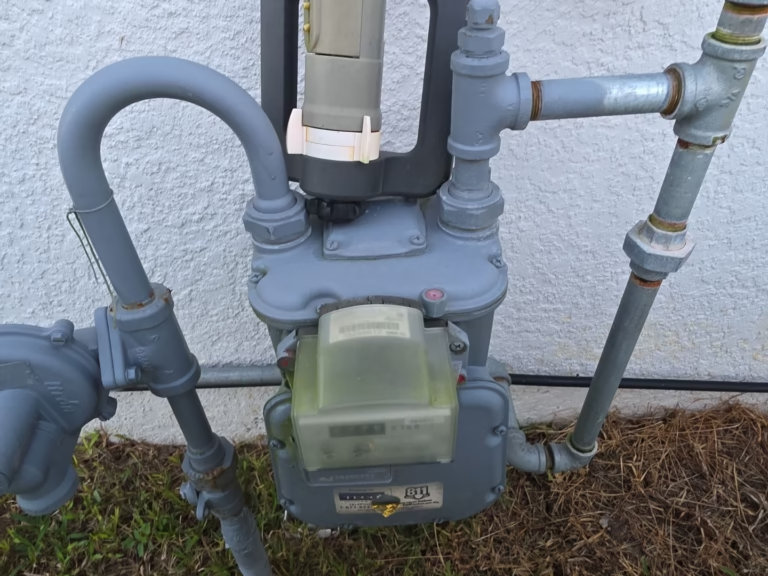
New Gas Line Installation
Running a new supply line to a location that has no existing gas — single appliance or zone
A new gas line installation runs a supply line from the existing gas distribution system in the home to a location that currently has no gas: a kitchen island where a range will be installed, a laundry room where a gas dryer will replace an electric model, an exterior wall where an outdoor gas connection will serve a built-in grill, or a dedicated line for a whole-house generator. The installation scope includes assessing the existing distribution system’s capacity for the additional load, selecting the correct pipe size and material for the run length and BTU demand, routing the line through the structure or along the exterior, installing the shutoff valve at the new connection point, and pressure testing the full installation before the connection to the new appliance is made. Always Fire & Gas pulls the required permit for every new gas line installation, coordinates the final inspection with the jurisdiction, and documents the pressure test results. Gas is not connected to the appliance until the installation passes inspection.
- Existing system capacity confirmed before new line is sized - undersized distribution piping at the source produces pressure drop at all connected appliances
- Pipe material: CSST (corrugated stainless steel tubing), black iron, or approved flexible connector selected by application and jurisdiction requirement
- Shutoff valve installed at the new connection point - lockable where required by jurisdiction
- Pressure test performed on new line segment before appliance connection - test results documented
- Permit pulled for all new gas line work - jurisdiction determines permit requirement by scope
- Final inspection coordinated with jurisdiction - gas not turned on until inspection passed and documented
- Utility coordination where new load requires meter or service upgrade
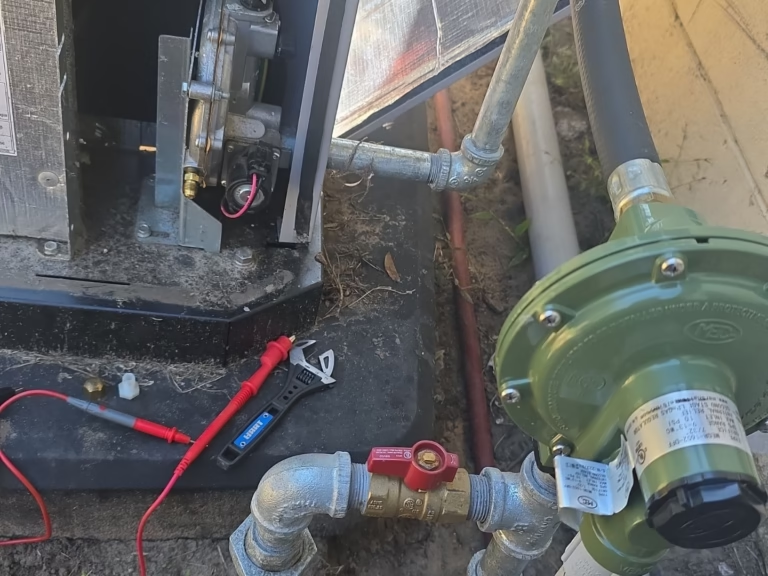
Whole-Home Gas System Installation
Full gas distribution system for new construction, major renovation, or propane-to-natural-gas conversion
A whole-home gas system installation designs and installs the complete gas distribution network for a property: service entrance from the utility meter, main distribution trunk line, branch lines to each gas appliance location, shutoff valves at each connection point, and the appliance connections. This scope serves three buyer situations: new construction where gas service is part of the initial build plan, a major renovation where multiple gas appliances are being added and a new distribution system is more appropriate than extending and patching an existing one, and a propane-to-natural-gas conversion when the gas utility has extended natural gas service to the neighborhood and the homeowner is converting from a propane tank system. Always Fire & Gas designs the distribution system to the confirmed appliance list and BTU demands, pulls the permit, installs the system, pressure tests the full distribution network, and coordinates with the utility for the service connection and meter installation.
- Load calculation: total BTU demand across all gas appliances confirmed, main line and branch sizing calculated to meet demand at all points simultaneously
- Service entrance sizing coordinated with gas utility - meter and regulator sizing confirmed before distribution system is designed
- Full distribution system installed: main trunk, all branch lines, shutoff valves at each appliance connection point
- CSST bonding installed per NFPA 54 and Florida Building Code requirements - all CSST installations require bonding to the electrical grounding system
- Full system pressure test at completion - test duration and test pressure documented per Florida Building Code gas provisions
- Permit pulled and final inspection coordinated - gas utility service activated after inspection approval
- Gas fireplace and insert installations include MCT-credential venting system installation in same scope
- As-built documentation provided at project close - gas system layout recorded for future reference
Every Scope. Three Non-Negotiables. One Rule Before Gas Goes On.
Gas installation scope varies from a single appliance hookup to a full whole-home distribution system. The process does not vary. Every Always Fire & Gas gas installation – regardless of scope – is permitted where required, pressure tested at completion, and documented before gas is activated. That is not a policy preference. It is the Florida Building Code requirement and the condition that makes the installation insurable and inspectable.
NON-NEGOTIABLE
Permit pulled by AAS
Pressure test at completion
Gas utility coordination where applicable
WHAT IT MEANS
Always Fire & Gas pulls the permit for every gas installation scope that requires one under the Florida Building Code and local jurisdiction amendments
Every new gas line and every modified segment of an existing system is pressure tested at the completion of installation before any appliance is connected
For installations that require a new service connection, meter upgrade, or regulator replacement, AAS coordinates with the gas utility before and after installation
WHY IT MATTERS
An unpermitted gas installation is not inspected and not documented. If an incident occurs on an unpermitted installation, the homeowner’s insurance may deny the claim. AAS does not install gas without the required permit.
A pressure test at completion confirms the installation is leak-free before gas flows. Test pressure and test duration are documented. A system that does not hold test pressure is not connected to the gas supply until the leak is found and corrected.
The gas utility controls the service entrance and the meter. An installation that requires more capacity than the existing meter provides needs a utility upgrade request before the installation is complete. AAS confirms utility requirements at the assessment stage, not after the pipe is in the wall.
NON-NEGOTIABLE
WHAT IT MEANS
WHY IT MATTERS
Permit pulled by AFG
Always Fire & Gas pulls the permit for every gas installation scope that requires one under the Florida Building Code and local jurisdiction amendments
An unpermitted gas installation is not inspected and not documented. If an incident occurs on an unpermitted installation, the homeowner’s insurance may deny the claim. AFG does not install gas without the required permit.
Pressure test at completion
Every new gas line and every modified segment of an existing system is pressure tested at the completion of installation before any appliance is connected
A pressure test at completion confirms the installation is leak-free before gas flows. Test pressure and test duration are documented. A system that does not hold test pressure is not connected to the gas supply until the leak is found and corrected.
Gas utility coordination where applicable
For installations that require a new service connection, meter upgrade, or regulator replacement, AFG coordinates with the gas utility before and after installation
The gas utility controls the service entrance and the meter. An installation that requires more capacity than the existing meter provides needs a utility upgrade request before the installation is complete. AFG confirms utility requirements at the assessment stage, not after the pipe is in the wall.
What Happens Between the Assessment Call
and the Day the Gas Goes On
Assessment and System Evaluation
Before any permit is pulled or pipe is purchased, Always Fire & Gas assesses the existing gas system and the requested installation location. The assessment confirms: the existing distribution system’s capacity for the additional BTU load, the routing options for the new line, the pipe material appropriate for the application and jurisdiction, the permit requirement for the specific scope, and whether the installation requires a utility notification or upgrade request. For whole-home systems and major installations, a load calculation is performed to confirm the main line and branch sizing will meet the total BTU demand of all connected appliances simultaneously. The assessment produces a written scope and price. Nothing is ordered or permitted until the homeowner approves the scope.
1
Permit Application
Always Fire & Gas submits the permit application to the appropriate jurisdiction – county or municipality depending on the property location. The permit application identifies the scope of work, the license under which it will be performed (#LI45277 & LP Gas Master Qualifier License #MQ31416), and the installation specifications. Permit processing time varies by jurisdiction in North Central Florida: some jurisdictions issue over-the-counter permits for straightforward residential gas work, others require plan review. AAS confirms the expected permit timeline at assessment so the homeowner knows what to expect. Work does not begin until the permit is issued.
2
Installation
With permit in hand, installation proceeds per the permitted scope. Pipe routing, connections, shutoff valve placement, and appliance connection points are installed per the approved plan. CSST installations are bonded per NFPA 54 and Florida Building Code requirements. All work is performed by or directly supervised by a licensee under #LI45277 & LP Gas Master Qualifier License #MQ31416. Appliance connections are made but not activated – the appliance is connected to the supply line but gas does not flow until the pressure test and inspection are complete.
3
Pressure Test
At the completion of installation, the new gas line or modified system segment is pressure tested per Florida Building Code gas provisions. The system is pressurized to the required test pressure, isolated from the gas supply, and held for the required test duration. Test pressure and duration are documented. If the system holds test pressure with no drop, the installation is confirmed leak-free. If the system does not hold test pressure, the leak is located and corrected before the test is repeated. The pressure test documentation is part of the final inspection package.
4
Final Inspection and Gas Activation
AFG schedules the final inspection with the jurisdiction and is present at the inspection. The inspector confirms the installation matches the permitted scope, reviews the pressure test documentation, and issues the inspection approval. After inspection approval, AFG coordinates with the gas utility if the installation requires a new service connection or meter activation. Gas is activated at the installation after inspection approval is in hand. The homeowner receives the closed permit documentation, the pressure test record, and the as-built system layout for their property records.
5
Five Situations. One Licensed Process. Permitted and Pressure Tested Every Time.

New Appliance Purchase - Range, Dryer, Water Heater, or Generator

New Construction or Major Renovation

Propane-to-Natural-Gas Conversion
Outdoor Gas - Grill Station, Fire Pit, or Generator Connection

Upgrading an Aging Gas System
A gas distribution system that was installed more than 20 to 30 years ago may include galvanized steel pipe, uncoated black iron in damp locations, or flexible connectors that have exceeded their expected service life. A whole-home renovation or kitchen renovation is the correct time to address aging gas distribution rather than patching around it. Always Fire & Gas assesses aging gas systems as part of renovation scopes and provides a full-system replacement option alongside a targeted repair option where appropriate. An aging system assessment confirms which components are approaching end of service life and which can remain, producing a scope that addresses the actual risk rather than replacing everything or nothing.
Call (352) 282-0158 if your home is more than 25 years old and has an original gas system that has not been inspected or updated. We assess the full system and provide a written report identifying any components approaching end of service life before you commit to any replacement scope.
Gas Fireplace Installation Requires Both Licenses. We Hold Both.
A gas fireplace or gas insert installation has two components that must be completed correctly for the installation to be safe: the gas supply line and the venting system. The gas supply line – from the distribution system to the appliance, including the flex connector, shutoff valve, and burner connection – is covered by FL Gas Contractor License #LI45277 & LP Gas Master Qualifier License #MQ31416. The venting system – the liner, the cap, the draft configuration, and the clearances between the venting components and the surrounding structure – is covered by the Master Chimney Technician credential.
A gas fireplace installed with a correct gas line and an incorrect venting system is not safe to use. The venting failure mode is not always immediately obvious: a partially blocked or incorrectly configured vent may perform adequately in warm weather and fail in cold weather when the draft differential changes. Always Fire & Gas installs gas fireplaces and inserts as a single scope under both licenses: gas line and connection under #LI45277 & LP Gas Master Qualifier License #MQ31416, venting system under the MCT credential, single permit, single pressure test, single inspection. For the full gas fireplace and insert installation service detail, see Gas Fireplaces.
Power Your Home the Safe Way
Natural gas is one of the cleanest, most reliable energy sources for Florida homes. From kitchen ranges and dryers to fireplaces, grills, and standby generators, a properly installed natural gas system gives you both comfort and efficiency.
But natural gas is also dangerous in the wrong hands. That’s why Florida law requires licensed professionals for gas line installations – and why homeowners across Ocala, Gainesville, and The Villages call Always Fire & Gas.
We hold the Certified Category V Gas License (LI45277) – one of the highest gas credentials in the state – along with LP Gas Master Qualifier License #MQ31416 and Florida Contractor’s License (#CRC1333200). That makes us one of the most qualified gas contractors in North Florida.
Natural Gas Installation Questions, Answered Directly
Yes, in most cases. Florida Building Code requires a permit for new gas line installations, gas line extensions, and gas system modifications that go beyond a direct appliance connection swap. The specific permit requirement depends on the scope of work and the jurisdiction – some jurisdictions require a permit for any new gas line run regardless of length, while others have thresholds based on the type of work. A licensed gas contractor pulls the permit on behalf of the homeowner as part of the installation scope. Always Fire & Gas pulls every required permit for gas installation work under FL Gas Contractor #LI45277 & LP Gas Master Qualifier License #MQ31416. A gas installation completed without the required permit is not inspected, not documented in the property record, and may not be covered by homeowner’s insurance in the event of an incident.
No. Gas line installation in Florida must be performed by a licensed gas contractor. Florida Statutes and the Florida Building Code require that any person who installs, maintains, extends, alters, or repairs gas piping hold a valid gas contractor license issued by the state. A handyman or appliance delivery service that installs a gas line – even a short flex connector run – without a license is performing unlicensed contracting, which is a violation of Florida law. More importantly, an installation performed by an unlicensed person is not permitted, not inspected, and creates an uninsured liability for the homeowner. Always Fire & Gas holds FL Gas Contractor License #LI45277 & LP Gas Master Qualifier License #MQ31416 and pulls every required permit for gas installation work.
Timeline depends on scope and permit processing time. A single appliance hookup at an existing gas supply point can typically be completed in a few hours on the same day as the assessment. A new gas line run to a single new appliance location is typically one to two days of work, plus permit processing time which varies by jurisdiction in North Central Florida. A whole-home gas system installation for new construction or a full propane-to-natural-gas conversion is typically two to four days of installation work, coordinated with the GC’s timeline on construction projects and with the gas utility’s service connection timeline on conversions. Always Fire & Gas confirms the expected timeline at the assessment, including the permit processing estimate for the specific jurisdiction.
The three most common pipe materials for residential natural gas installation in Florida are CSST (corrugated stainless steel tubing), black iron pipe, and approved flexible connectors. CSST is the most commonly used material for new residential gas line runs in Florida – it is flexible, which simplifies routing through walls and floors, and it carries the required pressure ratings for residential applications. CSST installations require bonding to the electrical grounding system per NFPA 54 and Florida Building Code requirements – an unbonded CSST installation does not meet code. Black iron pipe is used for certain applications and is required in some jurisdictions for specific installation configurations. Flexible connectors (the short connection between the supply line and the appliance) are limited in length and are not used for line runs. Always Fire & Gas selects pipe material based on the application, the run length, the BTU demand, and the jurisdiction’s requirements.
A propane-to-natural-gas conversion involves several steps beyond simply switching the fuel source. Natural gas and propane are delivered at different pressures and burn at different ratios – most gas appliances require a conversion kit (typically a different burner orifice and sometimes a different regulator) to operate correctly on natural gas rather than propane. The existing propane distribution system must be assessed for compatibility with natural gas service: regulators, valves, and some older fittings may need replacement. The gas utility must be contacted for the new service connection and meter installation. A permit is required for the service connection and for any distribution system modifications. Always Fire & Gas manages the full conversion scope: system assessment, appliance conversion coordination, permit application, utility coordination, installation, pressure test, and final inspection.
Natural gas line installation cost in North Central Florida depends on the scope: a single appliance hookup at an existing gas supply is the most contained scope. A new gas line run to a single new location costs more depending on the run length, the routing complexity, and the pipe material. A whole-home gas system installation for new construction or a propane conversion is the broadest and highest-cost scope. Permit fees are an additional line item and vary by jurisdiction. Always Fire & Gas provides a written scope and price after the assessment – before any commitment is required. Call (352) 282-0158 with the scope description and the installation location.
CSST – corrugated stainless steel tubing – is the flexible stainless steel pipe commonly used for residential gas line installation. CSST bonding is the requirement that the CSST tubing be electrically connected (bonded) to the home’s electrical grounding system. The bonding requirement exists because unbonded CSST can be damaged by electrical arcing from a nearby lightning strike, creating a potential gas leak from the damaged tubing. NFPA 54 (the National Fuel Gas Code) and the Florida Building Code both require CSST bonding. An older CSST installation that was installed before the bonding requirement was widely enforced may be unbonded – this is a finding that appears in home inspections and gas system inspections. Always Fire & Gas installs CSST bonding on all new CSST installations and can add bonding to existing CSST installations that lack it.