CSIA Certified Dryer Exhaust Technician #1149. DryerFlex Included. Before/After Photo Report. North Central Florida Since 1982.
Dryer Vent Cleaning in Ocala, Gainesville, Orlando, The Villages and All Surrounding Areas.
Always Fire & Gas has been cleaning dryer vents in North Central Florida since 1982. Our technicians hold CSIA Dryer Exhaust Technician certification – a dryer-specific credential, not a general chimney cert – and every service follows a documented process: full lint removal, a new DryerFlex transition duct, a complete inspection, and a before/after photo report you can keep. We have seen what a blocked vent looks like. We know what it takes to get the system clean and documented. And we make it straightforward.
Dryer Vent Cleaning
Dryer Taking Too Long. Burning Smell During a Cycle. Last Cleaned Over a Year Ago. You Deserve One Cycle, a Safe Vent, and Proof It Was Done Right.
Your dryer is running two cycles to dry a normal load. Or you caught a faint burning smell last Tuesday and you have been thinking about it ever since. Or it has been a couple of years and you know the vent should have been done by now. Whatever brought you here, you are right to take it seriously.
A clogged dryer vent is not a performance nuisance. The NFPA identifies dryer vents as the leading cause of appliance fires in American homes – nearly 15,000 house fires per year – and failure to clean the vent is the leading contributing factor. Lint that cannot exhaust gets hot. Hot lint eventually ignites. The warning sign is a dryer that takes too long, or a smell that should not be there.
Step 1: Call or Text (352) 282-0158
Tell us your situation – dryer symptoms, last cleaning date, fuel type (gas or electric). We confirm the scope and schedule the visit.
Step 2: We Show Up and Get It Done
Full vent cleaning, DryerFlex transition duct replacement, complete inspection. Zero mess. HEPA-filtered equipment contains all debris. Takes about an hour.
Step 3: You Get a Documented Safe System
Before/after photo report under CSIA #1149 documenting the condition before, what was done, and the clean system after. Your dryer works in one cycle. The risk is gone. You have proof.
- CSIA Certified Dryer Exhaust Technician #1149
- FL Residential Contractor #CRC133200
- BBB A+ Since 2018
CSIA Certified Dryer Exhaust Technician #1149. DryerFlex included. Before/after photo report. Zero mess. Ocala, Gainesville, The Villages, and all of North Central Florida.
Not ready to call? Read what the service includes and what the before/after report looks like. Scroll down.
Your Dryer Is Sending Signals. Here Is What They Mean.
A dryer vent does not fail suddenly. It fills gradually. Lint passes through the filter on every cycle and accumulates inside the vent line between the dryer and the exterior wall. The accumulation grows slowly – it might take a year or two before the restriction is serious enough to change how the dryer performs. By the time you notice the symptoms, the problem has been building for a while.
These five symptoms are the signals that the buildup has reached the point where service is required. Any one of them is enough.
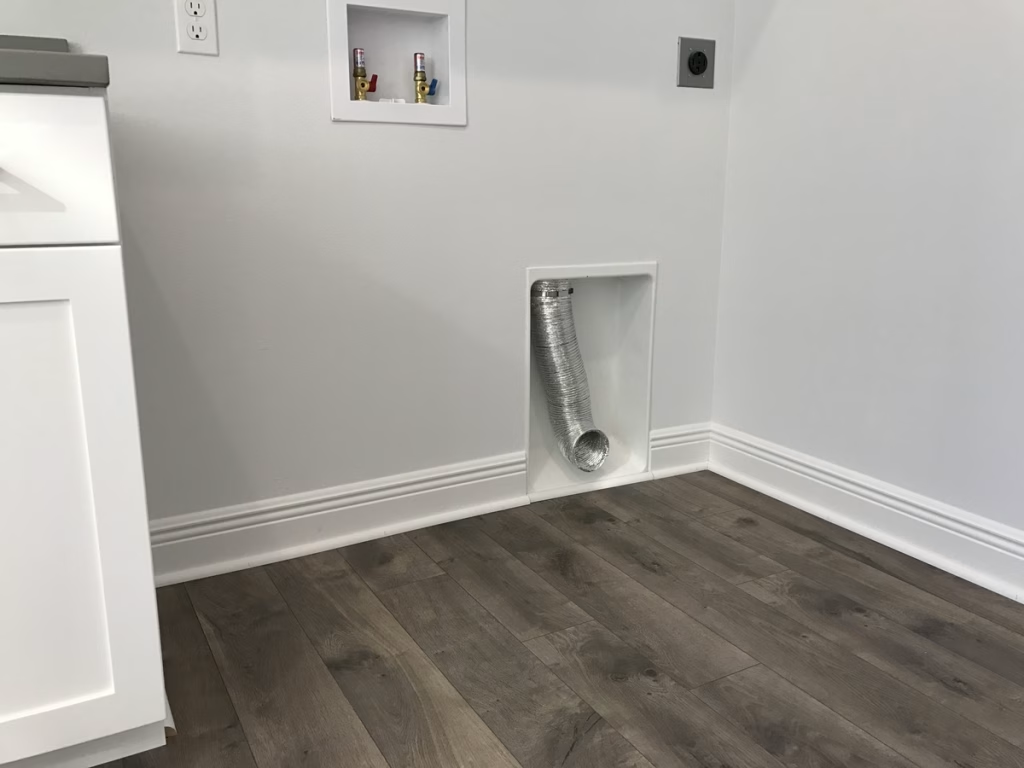
Dryer Taking More Than One Cycle to Dry a Normal Load
The single most common symptom – and the one most homeowners dismiss too long
Restricted airflow means the moisture your dryer pulls from the clothes has nowhere to go. The load ends the first cycle still damp. You run it again. This has been happening for weeks, maybe months. You have been treating it as a dryer problem when it is a vent problem. The fix is not a new dryer. It is a vent cleaning.
- Two cycles to dry a standard load - primary signal, most common presentation
- Clothes hot but damp at end of cycle - heat is staying in the drum instead of exhausting
- Drying time has increased gradually over several months - gradual restriction
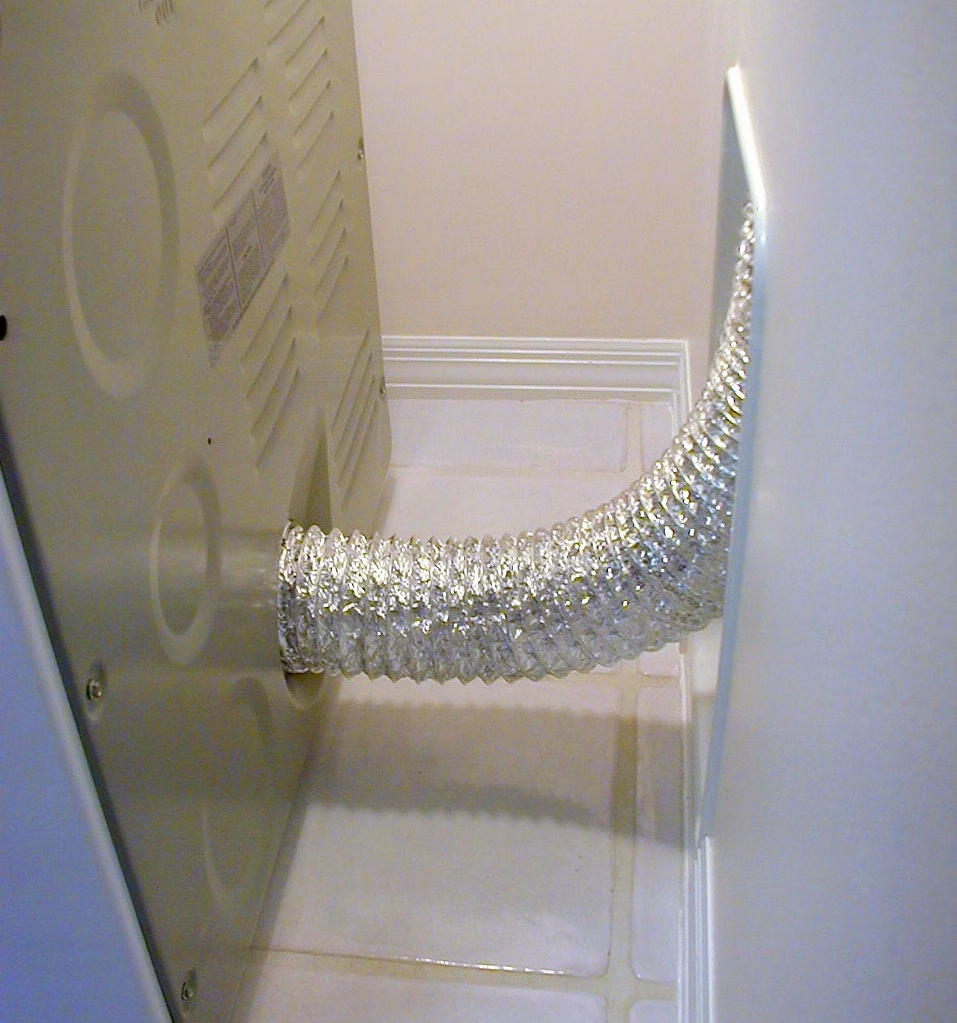
Burning Smell During or After a Cycle
This is not a mechanical smell. It is lint heated past the point of comfort.
The smell is organic, slightly musty, and strongest near the dryer. It means the lint accumulation in the vent line is hot enough to produce an odor – which means it is approaching the temperature at which it can ignite. Do not run the dryer again until this has been addressed. This is not a dramatic statement. It is the correct response to a specific warning signal.
- Burning smell during cycle: lint at pre-ignition temperature inside the vent
- Smell concentrated in laundry area, not throughout the home
- Do not continue using the dryer until the vent has been professionally cleaned
Excessive Heat in the Laundry Room During a Cycle
Heat that cannot exhaust through the blocked vent escapes back into the room
When the vent is significantly restricted, heat that should exhaust to the exterior backs into the drum and into the laundry area. The room feels stuffy and hot during cycles. The dryer cabinet is uncomfortable to touch. Clothes come out at a temperature that is hard to handle immediately. These are signs that the vent path is seriously restricted.
- Laundry room noticeably hotter during cycles than it used to be
- Dryer cabinet hot to the touch - heat retained, not exhausting
- Clothes come out very hot - elevated drum temperature from restricted exhaust
Exterior Termination Blocked, Covered, or Not Opening
The exit point is the most overlooked and most commonly blocked part of the system
The louvered or flapper cap where the vent exits the house wall should open fully when the dryer is running. A termination clogged with lint, sealed by bird nesting material, painted shut, or caulked closed is a complete blockage – regardless of how clean the rest of the vent is. Roof and soffit terminations are particularly vulnerable because homeowners cannot see them from the ground.
- Flapper or louver not opening during dryer cycle - complete or near-complete blockage
- Lint or nesting material visible at or around the exterior cap
- Roof or soffit terminations: not visible from ground, commonly blocked undetected
More Than Twelve Months Since Last Professional Cleaning
The CSIA recommendation: annual service for average household use
Here is the uncomfortable part. The CSIA recommends professional dryer vent cleaning at least once per year for an average household. Lint accumulation reaches dangerous levels before the dryer visibly underperforms – meaning a vent can be a serious fire risk before the homeowner notices any performance change. If it has been over a year, the vent needs attention regardless of whether the dryer seems to be working fine.
- CSIA: annual professional cleaning for households running the dryer 4-6 times per week
- Heavy-use households (gas dryers, large families): consider every 6-8 months
- Longer vent runs accumulate lint faster - homes with extended paths need more frequent service
- The risk precedes the symptom: dangerous accumulation builds before performance changes are obvious
You Should Not Have to Wonder If Your Laundry Room Is Safe.
Running a load of laundry should not require a risk calculation. You should not have to remember the last time the vent was cleaned, wonder whether the smell from last week was something or nothing, or feel vaguely uneasy every time you start a heavy cycle and leave the house. A home should be safe. An appliance you use every week should work without worry.
That is what a properly maintained dryer vent provides: not just a dryer that works in one cycle, but the confidence that the system is clean, documented, and not a fire waiting to happen. That is what Always Fire & Gas delivers.
Why CSIA Dryer Exhaust Technician Certification Matters for Your Service
The CSIA Dryer Exhaust Technician (DET) credential is a dryer-specific certification – not a general chimney or home services certificate. CSIA DET #1149 means the technician has been trained and tested specifically on dryer exhaust systems: how lint accumulates and why, what the correct installation standards are for dryer vent materials and routing, how to identify code compliance issues in an existing system, and how to clean and inspect a dryer vent to a documented standard. Most dryer vent cleaning providers in North Central Florida hold no dryer-specific credential. Always Fire & Gas technicians do.
CSIA Dryer Exhaust Technician #1149
Dryer-specific training and testing on lint accumulation, vent materials, installation standards, and inspection protocol. Verifiable at csia.org.
Certified Category V Gas License #LI45277
Ability to inspect and rectify gas dryer concerns.
FL Residential Contractor #CRC133200
Supports permit authority for any associated residential work.
BBB A+ Since 2018
Independent third-party rating sustained over six years of service.
Family-Owned Since 1982
42 years serving North Central Florida homeowners.
Four Deliverables. Every Service. Here Is Exactly What You Get.
Here is what happens during an Always Fire & Gas dryer vent cleaning, from the moment the technician arrives to the moment they leave. Nothing is left to interpretation.
Full Lint Removal - Transition Duct to Exterior Termination
The complete vent path cleaned with HEPA-filtered professional equipment. Zero mess.
Lint accumulates throughout the vent: in the transition connector behind the dryer, in the rigid duct line through the wall cavities, at every elbow and turn, and at the exterior termination cap. A partial cleaning that addresses only one section of the path leaves the problem elsewhere. Always Fire & Gas cleans the complete path – transition duct, duct line, elbows, and termination – using rotary brush equipment and a HEPA-filtered vacuum that contains all debris during removal. Nothing is pushed further into the vent. Nothing is discharged into the laundry area. Airflow at the exterior termination is confirmed before the service is closed.
- Rotary brush + HEPA vacuum: professional equipment, complete extraction
- Complete path: transition duct, duct line, all elbows, and exterior termination
- Zero mess: HEPA filter contains all debris during removal
- Airflow confirmed at exterior termination at service close
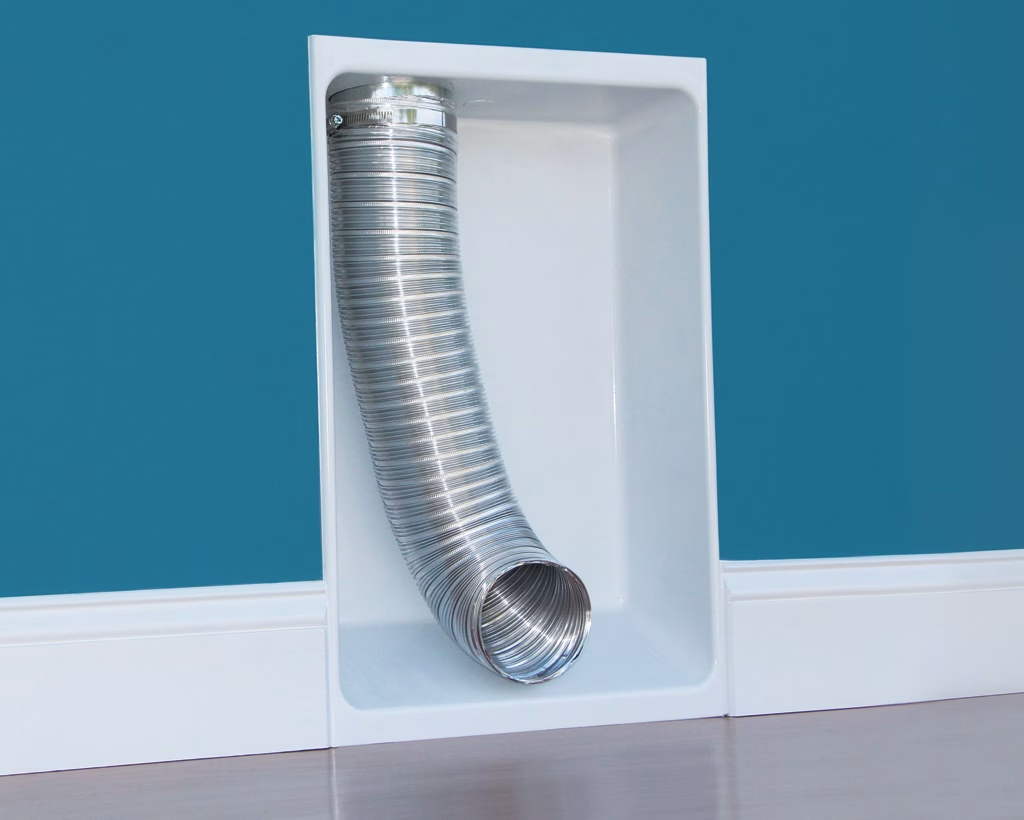
DryerFlex by InOvate - New Transition Duct on Every Service
The connector behind your dryer is replaced every time. Not inspected. Replaced.
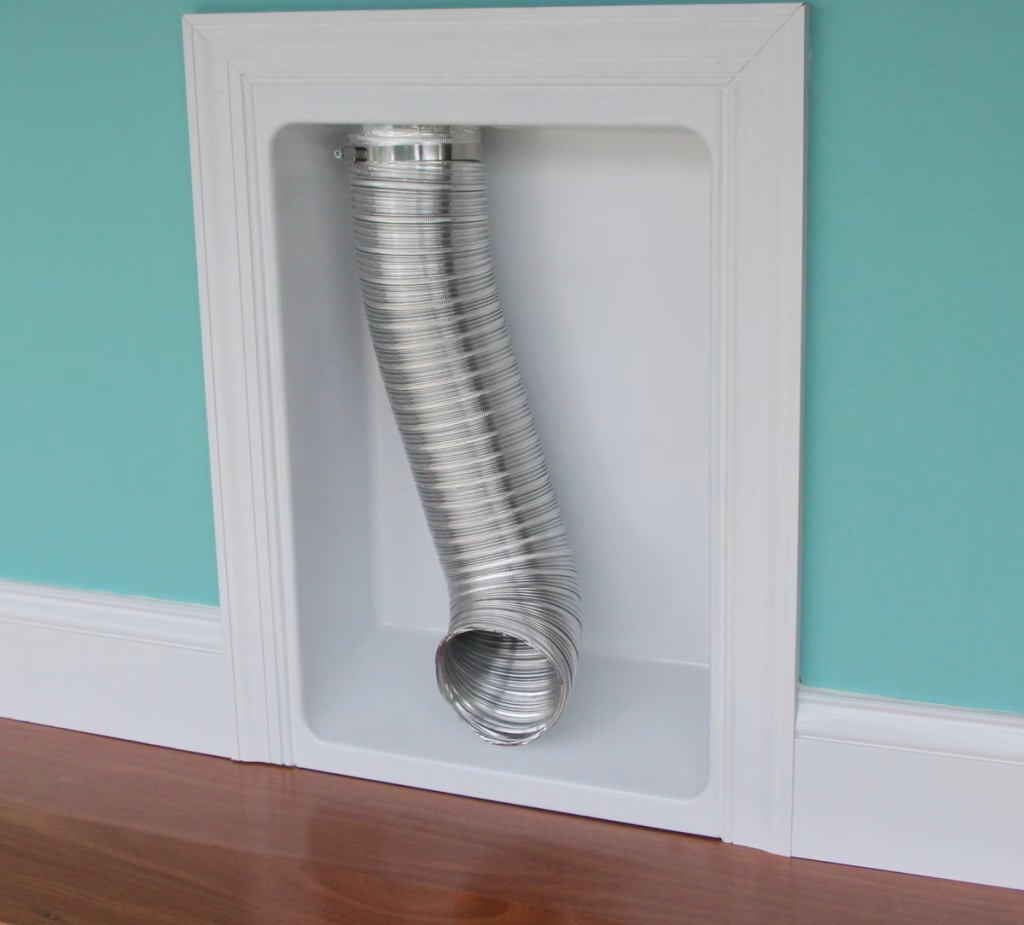
The transition duct is the flexible connector between the dryer’s exhaust outlet and the rigid duct inside the wall. Most homes have one of two wrong things in this position: foil accordion duct, which collapses when the dryer is pushed back against the wall and creates an instant blockage; or white plastic corrugated duct, which is a fire code violation in most Florida jurisdictions and traps lint at every corrugation. Neither is UL-listed for dryer exhaust use. DryerFlex by InOvate is. It is semi-rigid aluminum, designed specifically for dryer exhaust, and it does not collapse under normal placement. Always Fire & Gas removes whatever transition duct is behind your dryer – regardless of its apparent condition – and installs a new DryerFlex. This is not an optional add-on. It is included on every service because leaving the wrong duct in place undoes the cleaning.
- Foil accordion duct: collapses when dryer is repositioned, creating instant blockage
- White plastic corrugated duct: fire code violation in most FL jurisdictions, traps lint at corrugations
- DryerFlex by InOvate: UL-listed, semi-rigid aluminum, dryer-exhaust rated, does not collapse
- Installed on every service - not optional, not conditional on the existing duct's apparent condition
Full Vent Line Inspection - Routing, Materials, Code Compliance
Cleaning is what restores the system. Inspection is what confirms there is nothing wrong that will make the problem come back faster.
A vent that has been cleaned can still have a defect that restricts airflow, traps lint preferentially, or poses a fire risk independent of lint accumulation. The inspection component of the AAS service checks the entire accessible vent system for: improper vent materials (PVC and non-rated plastics are a code violation and trap moisture); runs that exceed the length allowed for the duct diameter and number of elbows; elbows that are configured to create turbulence and accelerate lint deposit; wall penetration gaps that allow conditioned air to escape; and terminations that do not meet current code. Any finding requiring additional work is documented and presented separately — no surprise charges.
- Vent material inspection: PVC and non-rated plastics flagged (fire code violation)
- Vent run length and elbow count: checked against code for the duct diameter
- Termination condition and code compliance confirmed
- Any finding requiring separate work: documented and priced before anything additional is performed
Written Inspection Report with Before/After Photos
Cleaning is what restores the system. Inspection is what confirms there is nothing wrong that will make the problem come back faster.
A vent that has been cleaned can still have a defect that restricts airflow, traps lint preferentially, or poses a fire risk independent of lint accumulation. The inspection component of the AAS service checks the entire accessible vent system for: improper vent materials (PVC and non-rated plastics are a code violation and trap moisture); runs that exceed the length allowed for the duct diameter and number of elbows; elbows that are configured to create turbulence and accelerate lint deposit; wall penetration gaps that allow conditioned air to escape; and terminations that do not meet current code. Any finding requiring additional work is documented and presented separately – no surprise charges.
- Before photos: vent opening, transition duct, and termination before cleaning
- After photos: same three points after cleaning and DryerFlex installation
- Airflow confirmation and inspection findings documented
- Produced under CSIA DET #1149 - suitable for insurance, landlord, or real estate use
What Happens If You Do Not Address a Blocked Dryer Vent
A dryer vent that stays blocked does not stay the same. The lint accumulation increases with every cycle. The temperature at the restriction point increases. The dryer works harder and runs longer, shortening the appliance’s life and increasing electricity or gas costs on every load. At sufficient temperature, lint ignites. The NFPA documents nearly 15,000 dryer fires per year in U.S. homes, the majority in residential structures, and failure to clean the vent is the leading contributing factor in those fires.
A dryer fire is a house fire. It starts inside the wall. By the time it is detectable, it has already been burning for some time. Homeowner’s insurance policies commonly include exclusions for fires attributable to deferred maintenance. A vent that has not been cleaned in three years, in a home with documented prior symptoms, is the definition of deferred maintenance.
This is not presented to alarm you. It is presented because the stakes are real, the service is simple, and the outcome is completely within your control.
What Life Looks Like After a Properly Cleaned Dryer Vent
You start a load of laundry. One cycle. The clothes come out dry, warm, not hot. You are not running it twice. You are not adding forty-five minutes to your morning because the first cycle left everything damp.
There is no smell. There is no lingering question about whether the burning odor from last week was something to worry about. There is no vague background anxiety when you run a heavy load and leave the house.
You have a photo report. You know when it was cleaned, what was found, what was installed, and what the system looked like after service. If your insurance company ever asks, you have documentation. If you sell the house, you have a maintenance record. If you just want to know it was done right, you have proof.
That is the outcome we deliver. Every time. In about an hour.
One call. About an hour. Documented safe system. CSIA Certified Dryer Exhaust Technician #1149. Ocala, Gainesville, The Villages, Orlando, and all of North Central Florida.
Five Situations. One Process. One Call to Start.
1
Your Dryer Is Taking Too Long
You have been running two cycles. Maybe for weeks. Maybe longer. You have been treating it as a dryer problem. It is a vent problem, and it has a simple fix. A clogged vent that is not addressed keeps getting worse – the accumulation increases with every cycle, the dryer works harder, the risk grows. A cleaning, a new DryerFlex, and a photo report, and your dryer is back to one cycle. That is it. That is the whole story.
Call or text (352) 282-0158. Tell us how many cycles it takes, how long the problem has been present, and the last time the vent was cleaned if you know. AAS confirms the scope and schedules the visit.
2
You Caught a Burning Smell During a Cycle
You noticed a smell last week – or last night – and it has been on your mind since. You are right to take it seriously. A burning smell during a dryer cycle means lint in the vent is hot enough to produce an odor. That is one step before ignition. Do not run the dryer again until the vent has been cleaned. If there is visible smoke or any sign of active combustion: leave the building and call 911 first. For the burning-smell-but-no-fire situation – which is the most common call – AAS cleans the vent, installs DryerFlex, confirms the termination clear, and gives you a before/after report documenting the system safe. You can run your dryer again without worry.
Call or text (352) 282-0158. Describe the smell: when it occurs, how strong it is, whether it is getting worse. AAS will confirm priority scheduling. Do not use the dryer between now and the service.
3
You Manage Rental Properties or a Multi-Unit Portfolio
You have multiple dryers in multiple units and a maintenance schedule to keep. One missed vent cleaning becomes a tenant complaint, a fire report, an insurance claim, or a liability question. Always Fire & Gas provides before/after photo reports on every service – documentation for the property file, the insurance carrier, and the maintenance record. Annual or semi-annual scheduling can be established for recurring portfolio service. The CSIA certification and documented process meet the documentation requirements of most property insurance carriers.
Call or text (352) 282-0158. Describe the portfolio: number of units, approximate number of dryers, current service schedule if one exists, and any specific documentation requirements for your insurance carrier. AFG will confirm the scope and establish a recurring schedule.
4
You Are Buying or Selling a Home and Need Documentation
A home inspection flagged the dryer vent. A buyer is requesting documented service as a closing condition. A seller wants proof of maintenance in the file. The AFG written inspection report is produced under CSIA Dryer Exhaust Technician #1149 and can be provided to the buyer’s agent, the listing agent, the buyer’s lender, or a title company. Service can typically be scheduled within a few days of the inspection finding. The report is provided at service close, ready for the transaction file.
Call or text (352) 282-0158. Provide the property address, the specific inspection finding or closing requirement, and the closing date or timeline. AFG will confirm scheduling and the documentation format.
You Know It Has Been Too Long - No Specific Symptom Yet
The dryer seems fine. But you know the vent has not been cleaned in over a year, or you have never had it done, or you are honestly not sure when it was last serviced. This is the right time to act – before the symptom appears, not after. Lint accumulation becomes a fire risk before it changes dryer performance, which means ‘the dryer seems fine’ is not a reliable indicator of vent safety. AFG will clean the vent, install DryerFlex, inspect the system, and give you a before/after report that establishes a documented baseline. You will know exactly when it was done and what the system looks like clean.
Call or text (352) 282-0158. Tell us when the vent was last cleaned if known, the type of dryer (gas or electric), and approximate household laundry volume. AFG confirms the scope and schedules the service.
Performance problem, safety concern, property management, real estate, or annual maintenance. CSIA Certified. DryerFlex included. Photo report on every service.
Three Homes. Three Problems Solved.
Ocala: Two Cycles Became One
A homeowner in Ocala had been running every load twice for months. The lint trap was clean. The dryer seemed to be running. The vent was not. AFG found a significant lint accumulation in the duct line and a foil accordion transition duct that had partially collapsed behind the dryer – two restriction points in the same system. The foil duct was removed. A new DryerFlex was installed. The complete vent path was cleaned from the dryer connection to the exterior termination. Airflow was confirmed at the cap. The before/after report documented the collapsed duct, the accumulation before cleaning, and the clean system after. The homeowner ran the first load after service. One cycle.
Same situation? Call (352) 282-0158.
Gainesville: A Landlord's Tenant Complaint Resolved with Documentation
A landlord in Gainesville received a tenant complaint about moisture and humidity in the laundry area during dryer cycles. The dryer was drying loads normally. The vent was not fully exhausting moisture. AFG found a white plastic corrugated transition duct that had been partially crushed when the dryer was repositioned – enough restriction to trap dryer moisture inside the vent path and push it back into the room. The plastic duct was removed (fire code violation in this jurisdiction). A new DryerFlex was installed. The vent was cleaned. The before/after report documented the crushed duct condition, the defect, and the corrected installation. The landlord received the report for the property maintenance file and provided a copy to their insurance carrier. Tenant complaint resolved. Documentation in hand.
Managing multiple properties? Call (352) 282-0158 to establish recurring scheduling.
The Villages: A Burning Smell Addressed Before It Became Something Worse
A couple in The Villages noticed a burning smell during laundry cycles. Faint at first, then consistent across every load. They stopped using the dryer before calling. AFG found a lint accumulation that had built over several years without cleaning, concentrated at an elbow in the vent run – the exact location where lint deposits preferentially in a routed system. The before photos documented the accumulation at the elbow. The vent was fully cleaned. The foil transition duct was removed and replaced with DryerFlex. The exterior termination was confirmed clear. The after photos documented the system clean. The homeowners received the photo report and ran the dryer that evening. No smell. The problem was addressed before it became a fire.
Burning smell? Do not run the dryer. Call (352) 282-0158.
Dryer Vent Cleaning Across North Central Florida
Always Fire & Gas performs dryer vent cleaning for residential and rental properties across Marion, Alachua, Lake, Sumter, Citrus, Putnam, Hernando, Orange, and Volusia Counties. CSIA Dryer Exhaust Technician #1149. DryerFlex included on every service. Before/after photo report on every service.
To schedule, call or text (352) 282-0158. Tell us the dryer type (gas or electric), the approximate date of last cleaning if known, and any specific symptoms. AFG confirms the scope and schedules the service.
Dryer Vent Cleaning Questions,
Answered Directly
The CSIA recommends professional dryer vent cleaning at least once per year for a household running the dryer four to six times per week. Households with higher laundry volume – gas dryers, five or more people, frequent heavy loads – should consider service every six to eight months. Homes with longer vent runs or more than two elbows accumulate lint faster and may need more frequent service. The critical point is that lint accumulation reaches dangerous levels before performance symptoms become consistently noticeable. Waiting for the dryer to stop working normally before scheduling service is not a safe approach. Always Fire & Gas provides a written report documenting the service date so homeowners can schedule the next annual cleaning with a documented baseline.
DryerFlex by InOvate is a UL-listed semi-rigid aluminum transition duct designed specifically for dryer exhaust. It replaces the transition connector between the dryer’s exhaust outlet and the rigid duct inside the wall. Most homes have foil accordion duct (collapses when the dryer is repositioned) or white plastic corrugated duct (fire code violation in most Florida jurisdictions; traps lint at the corrugations). Neither is UL-listed for dryer exhaust. DryerFlex is rated for dryer exhaust temperatures, has a smooth interior that does not accumulate lint at corrugations, and does not collapse under normal dryer placement. Always Fire & Gas removes the existing transition duct on every service – regardless of its apparent condition – and installs a new DryerFlex. It is included in the service price, not an add-on.
Every Always Fire & Gas dryer vent cleaning includes a written inspection report with before/after photographs. The report documents: the condition of the vent opening, transition duct, and exterior termination before cleaning (with photographs); the same three points after cleaning and DryerFlex installation (with photographs); the vent path length; the transition duct removed and the DryerFlex installed; airflow confirmation at the exterior termination; and any inspection findings such as improper vent materials, run length compliance issues, or termination defects. The report is produced under CSIA Dryer Exhaust Technician certification #1149 and is suitable for insurance documentation, landlord or property management files, real estate transaction records, and homeowner maintenance records.
No. Always Fire & Gas uses HEPA-filtered vacuum equipment during dryer vent cleaning. The HEPA filter captures lint particles at the equipment rather than allowing them to disperse into the laundry area. The rotary brush operates inside the vent line with the HEPA vacuum at the dryer connection containing everything the brush dislodges. The DryerFlex installation involves removing the existing transition duct and installing the new duct at the dryer outlet and wall connection – both interior operations that do not produce debris in the room. The laundry area is left in the same condition it was found.
The cleaning process itself is the same for gas and electric dryers. The difference is that gas dryers produce more moisture than electric dryers because they combust natural gas or propane, exhausting combustion byproducts along with dryer moisture. Lint in a gas dryer vent tends to be denser and more compacted than lint from a comparable electric dryer used for the same load volume. Gas dryer households with heavy laundry use should consider cleaning every six to eight months rather than annually. The inspection component of the AFG service also confirms that the gas dryer exhaust is venting correctly and is not mixing with combustion gas – the before/after photo report documents the vent condition at service close.
A standard residential dryer vent cleaning with Always Fire & Gas takes approximately 45 to 75 minutes on-site. Shorter vent runs with a single elbow take less time. Longer runs with multiple turns take more. The DryerFlex installation and inspection are performed as part of the service and are included in that estimate. The written report and photos are completed at service close before the technician leaves. AAS confirms the expected service time when scheduling based on the described vent configuration.
DIY dryer vent cleaning kits are available at home improvement stores. The limitation is that the brush can push lint further into the vent rather than extracting it, particularly at elbows and turns where lint accumulates. DIY kits also cannot reach the full vent path on longer runs, cannot inspect the vent for code compliance or damage, do not replace the transition duct, and do not produce documentation. Professional service with HEPA-filtered equipment extracts lint rather than displacing it and includes the DryerFlex replacement, full inspection, and before/after photo report. For a home without specific risk factors, annual professional service is the correct standard.