Installed to Code by CSIA and NFI Certified Professionals.
Wood Stoves in Ocala, Gainesville, Orlando, The Villages and All Surrounding Areas.
- CSIA Certified Chimney Sweep #10020
- NFI Certified Fireplace Installer #177069
- FL Residential Contractor #CRC133200
- EPA 2020 Certified Models Installed
Wood Stove Experts
Freestanding Stoves, Inserts, and Masonry Heaters. EPA 2020 Certified Models. FL Licensed Contractor #CRC133200.
A wood stove is one of the most efficient ways to heat a room in North Central Florida. When it is installed correctly, with the right clearances, the right liner, and a proper hearth pad, it burns efficiently and safely for decades. When it is not, it fails inspection, voids insurance, and creates hazards that the homeowner often does not discover until something goes wrong.
EPA 2020 Certified Wood Stoves: What the Standard Changed and Why It Matters for Florida Buyers
The EPA’s 2020 wood heater emission standards represent the most significant regulatory change in the wood stove industry in decades. If you are purchasing a new wood stove, you need to understand what the standard requires and what it means for the stove you buy and the installer you hire.
- Before EPA 2020: Wood stoves were required to meet a particulate emissions standard of 7.5 grams per hour for non-catalytic stoves and 4.1 grams per hour for catalytic stoves.
- After EPA 2020: The standard tightened to 2.0 grams per hour for all certified wood heaters, a reduction of more than 70 percent for non-catalytic stoves. Stoves manufactured after May 15, 2020 must meet this standard to be certified for sale in the United States.
- What this means for buyers: Any new wood stove installed in a Florida home today must be an EPA 2020 certified model. Pre-2020 stoves that were manufactured and sold before the compliance date may still be installed, but a certified installer should verify EPA certification status before any installation proceeds.
- What this means for efficiency: The 2020 standard did not just reduce emissions. Cleaner-burning stoves are more efficient stoves. A stove that combusts fuel more completely wastes less heat up the flue and delivers more of that heat into the room. EPA 2020 certified stoves burn hotter, cleaner, and longer on the same load of wood than the stoves they replaced.
Why non-certified stoves are a problem
A wood stove that cannot produce an EPA certification number is not legally certifiable for new installation in Florida. Homeowner’s insurance underwriters are increasingly requiring EPA certification documentation at renewal. Home inspectors flag non-certified stoves at point of sale. If the stove you are considering does not have an EPA certification label, stop the conversation before the purchase.
What Always Fire & Gas verifies before installation
Every wood stove installation begins with verification of the unit’s EPA certification status, manufacturer clearance specifications, and required liner sizing. If the stove is not certified or the specifications cannot be met in the proposed installation location, we say so before work begins. Not after.
A Wood Stove Heats the Room. An Open Fireplace Mostly Heats the Outside.
It sounds counterintuitive, but an open wood-burning fireplace can actually make a room colder by pulling conditioned air up the chimney faster than the radiant heat from the fire replaces it. The efficiency of an open masonry fireplace is typically between 10 and 20 percent, meaning 80 to 90 percent of the heat generated goes straight up the flue.
A properly installed EPA 2020 certified wood stove or wood stove insert operates at 70 to 80 percent efficiency. That is not a marginal difference. It is the difference between a fire that warms the room and a fire that looks warm while you turn up the thermostat.
SYSTEM
EFFICIENCY
WHAT THIS MEANS IN PRACTICE
Open masonry
fireplace
10 to 20%
The fire looks warm. The room may actually lose net heat as conditioned air exits the flue.
Traditional (pre-EPA) wood stove
45 to 60%
Meaningful heat output but significant fuel waste through incomplete combustion.
EPA 2020 certified
wood stove
70 to 80%
Most of the fuel’s energy enters the room. Less wood, more heat, cleaner burn.
EPA 2020 certified catalytic stove
80 to 90%+
Catalytic combustor reignites exhaust gases for an additional combustion cycle. The most efficient wood-burning option available.
Wood stove insert (into existing fireplace)
65 to 80%
Converts an inefficient open fireplace into a sealed, high-output heating system. Same efficiency as a freestanding stove with the footprint of a fireplace.
SYSTEM
Open masonry fireplace
Traditional (pre-EPA) wood stove
EPA 2020 certified wood stove
EPA 2020 certified catalytic stove
Wood stove insert (into existing fireplace)
EFFICIENCY
10 to 20%
45 to 60%
70 to 80%
80 to 90%+
65 to 80%
WHAT THIS MEANS IN PRACTICE
The fire looks warm. The room may actually lose net heat as conditioned air exits the flue.
Meaningful heat output but significant fuel waste through incomplete combustion.
Most of the fuel’s energy enters the room. Less wood, more heat, cleaner burn.
Catalytic combustor reignites exhaust gases for an additional combustion cycle. The most efficient wood-burning option available.
Converts an inefficient open fireplace into a sealed, high-output heating system. Same efficiency as a freestanding stove with the footprint of a fireplace.
If you have an existing wood-burning fireplace that you want to use as an actual heat source rather than a visual feature, a wood stove insert is the single most cost-effective upgrade available. Always Fire & Gas installs inserts from five leading manufacturers and handles the liner installation as part of every insert job.
Clearance, Hearth Pad, and Code Compliance: The Part Most DIY Installs Get Wrong
Wood stove installation has more specific code requirements than almost any other home appliance. The requirements are not suggestions. They are the result of decades of fire investigation data showing exactly what happens when a stove is too close to a wall, installed on an inadequate hearth, or connected to a flue that is the wrong size or the wrong type.
In North Central Florida, wood stoves are often installed in rural homes by the homeowner or by a contractor who handles the mechanical work but does not specialize in hearth installations. The result is a large population of existing stoves that are out of compliance on one or more of the following requirements.
Inadequate clearance to combustibles
Every wood stove has manufacturer-specified minimum clearances to walls, ceilings, and furniture. These clearances vary by model and cannot be reduced without a tested clearance reduction system. A stove that is six inches too close to a wall is not a minor variance. It is a fire hazard.

Incorrect or absent chimney liner
A wood stove connected to an existing masonry chimney without a properly sized stainless steel liner is venting combustion gases through a system that may have cracks, deterioration, or incorrect draft characteristics for the appliance connected to it. Liner sizing must match the stove's flue collar diameter and the chimney's height and configuration.
Incorrect chimney height and termination
NFPA 211 specifies the 3-2-10 rule: the chimney must extend at least 3 feet above the roof penetration point and at least 2 feet above any portion of the roof within 10 feet horizontally. Violations cause downdraft, smoke spillage, and increased creosote accumulation.
Undersized or non-compliant hearth extension
NFPA 211 requires a hearth extension of specific dimensions in front of and to the sides of any wood stove. The extension must be non-combustible and of a thickness that can withstand radiant heat. A ceramic tile over plywood subfloor does not meet this requirement. A tile over a concrete backer board does.
Combustible floor protection at connector pipe
The connector pipe between the stove and the chimney also has clearance requirements that are frequently overlooked. The pipe must be single-wall or double-wall as specified by the manufacturer, maintained at proper clearances throughout its run, and supported correctly.
If you have an existing wood stove and are not certain it meets all of these requirements, an Always Fire & Gas CSIA-certified inspection will identify every compliance gap before it becomes an insurance claim or an incident.
A note on insurance:
Homeowner’s insurance policies typically require that wood stoves be installed to manufacturer specifications and applicable codes. A non-compliant installation does not just fail inspection. It can void your coverage for any claim related to the stove, including a chimney fire, carbon monoxide event, or structure fire.
Always Fire & Gas provides written documentation of every installation, including EPA certification verification, clearance measurements, liner sizing, and code compliance confirmation. That documentation is what your insurer asks for.
Freestanding Wood Stove or Wood Stove Insert. Always Fire & Gas Installs Both.
The most common question before a wood stove consultation is: should I get a freestanding stove or an insert? The right answer depends on whether you have an existing fireplace opening, how you want the stove to look in the room, and how the space will be used. Here is what you need to know.
FACTOR
FREESTANDING WOOD STOVE
WOOD STOVE INSERT
Installation
Requires a hearth pad, proper wall clearances, and connection to a chimney or factory-built flue system.
Slides into an existing masonry or prefab fireplace opening. Requires a liner through the existing flue.
Best for
Rooms without an existing fireplace. Rural properties with space for a dedicated stove installation.
Homes with an existing wood-burning fireplace that is inefficient, underused, or no longer maintained.
Heat output
Radiates heat in all directions from the stove body. Excellent for larger open spaces.
Sealed combustion chamber in an existing opening. Similar efficiency, more directed heat output.
Aesthetic
A furniture-like presence in the room. Cast iron, steel, or soapstone. Visible from all sides.
Integrated into the existing fireplace opening. Looks built-in. Surround options available.
Liner requirement
Requires a properly sized liner if connecting to an existing masonry chimney, or a listed factory-built flue system.
Always requires a liner through the existing flue, sized to the insert’s flue collar.
Cost
Lower product cost in most cases. Site preparation and chimney work vary by installation.
Insert unit plus liner installation. Total cost comparable to freestanding in most installations.
Best brands
Blaze King, Vermont Castings, Regency, Quadra-Fire
Regency, Ventis, Quadra-Fire, Vermont Castings
FACTOR
Installation
Best for
Heat output
Aesthetic
Liner requirement
Cost
Best brands
FREESTANDING WOOD STOVE
Requires a hearth pad, proper wall clearances, and connection to a chimney or factory-built flue system.
Rooms without an existing fireplace. Rural properties with space for a dedicated stove installation.
Radiates heat in all directions from the stove body. Excellent for larger open spaces.
A furniture-like presence in the room. Cast iron, steel, or soapstone. Visible from all sides.
Requires a properly sized liner if connecting to an existing masonry chimney, or a listed factory-built flue system.
Lower product cost in most cases. Site preparation and chimney work vary by installation.
Blaze King, Vermont Castings, Regency, Quadra-Fire
WOOD STOVE INSERT
Slides into an existing masonry or prefab fireplace opening. Requires a liner through the existing flue.
Homes with an existing wood-burning fireplace that is inefficient, underused, or no longer maintained.
Sealed combustion chamber in an existing opening. Similar efficiency, more directed heat output.
Integrated into the existing fireplace opening. Looks built-in. Surround options available.
Always requires a liner through the existing flue, sized to the insert’s flue collar.
Insert unit plus liner installation. Total cost comparable to freestanding in most installations.
Regency, Ventis, Quadra-Fire, Vermont Castings
Not sure which configuration is right for your home? That is the first question a consultation answers. Call or text (352) 282-0158.
Every Wood Stove Service. One Certified Team.
Freestanding Wood Stove Installation
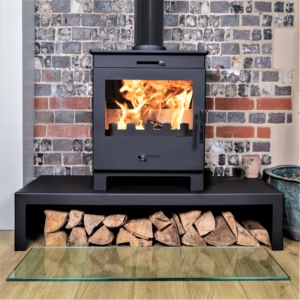
Always Fire & Gas installs freestanding wood stoves across Marion, Alachua, Lake, Sumter, Citrus, Putnam, Hernando, Orange, Volusia Counties and all surrounding areas. Every installation includes site assessment for clearance compliance, hearth pad specification and installation, stove placement and leveling, connector pipe installation with proper clearances, chimney liner installation where required, and final inspection documentation. Every stove we install is an EPA 2020 certified model. Every installation is permitted and completed under Florida Residential Contractor License #CRC1332000.
Wood Stove
Inserts
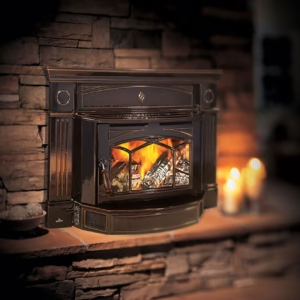
A wood stove insert is the most cost-effective way to transform an underperforming open fireplace into a high-efficiency wood-burning heating system. Always Fire & Gas installs wood stove inserts from Regency, Ventis, Quadra-Fire, and Vermont Castings into existing masonry and prefab fireplace openings. Every insert installation includes a properly sized liner through the existing flue, finished surround, and EPA certification verification. The result is an efficient sealed system that delivers actual heat.
Masonry Heater Construction
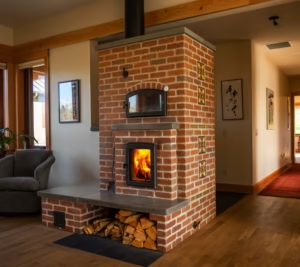
A masonry heater, also called a Russian fireplace, Finnish contraflow heater, or Kachelof, is the most thermally efficient wood-burning system ever designed. Thick masonry walls absorb heat from a hot, fast-burning fire and radiate it slowly into the room for 12 to 24 hours after the fire goes out. Always Fire & Gas constructs masonry heaters for homeowners who want the pinnacle of wood-burning heating efficiency. This is a specialty build. If you are interested, start with a consultation: (352) 282-0158.
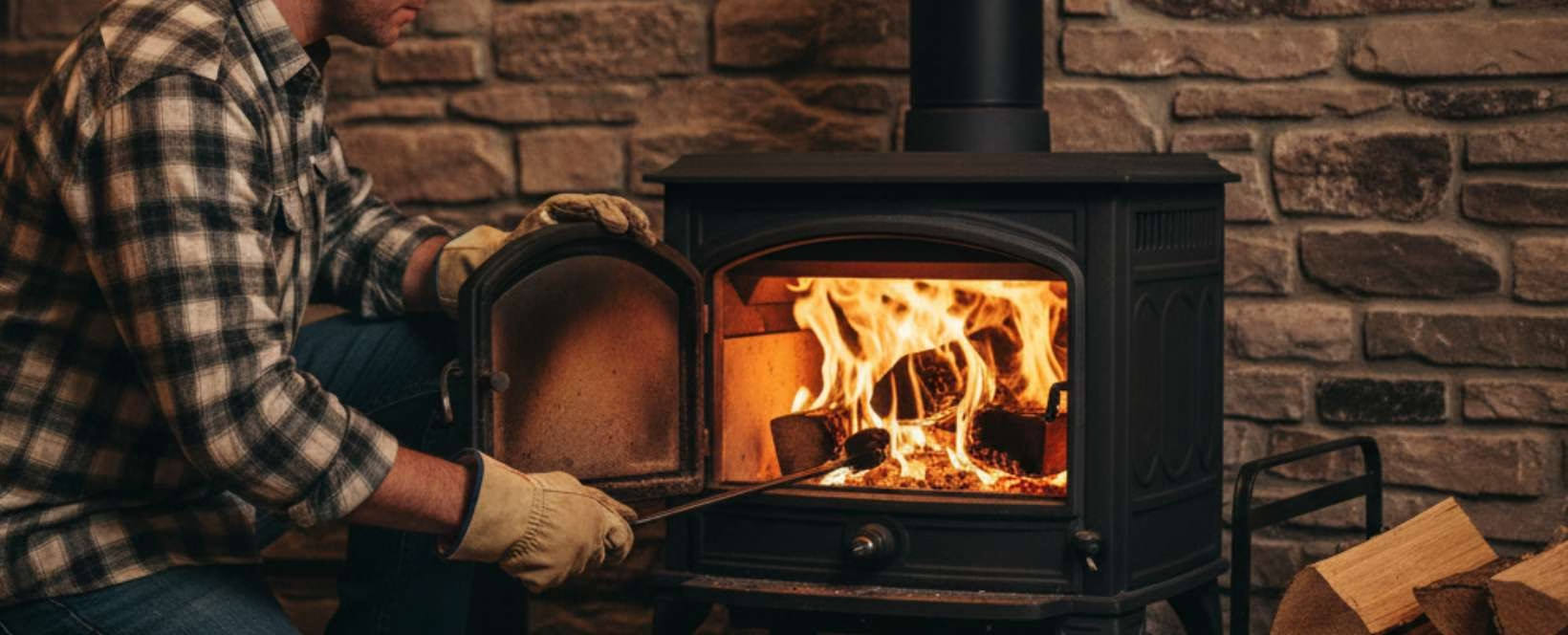
Wood Stove Relocation and Reinstallation
Purchased a stove and need it properly installed? Moving a stove from one location to another in your home? Always Fire & Gas handles wood stove relocation and reinstallation with full compliance review at the new location, new liner sizing where required, and complete hearth and clearance documentation. We also correct installations that were done without permits or outside of manufacturer specifications, bringing them into compliance with current Florida code and providing the documentation your insurer may require.
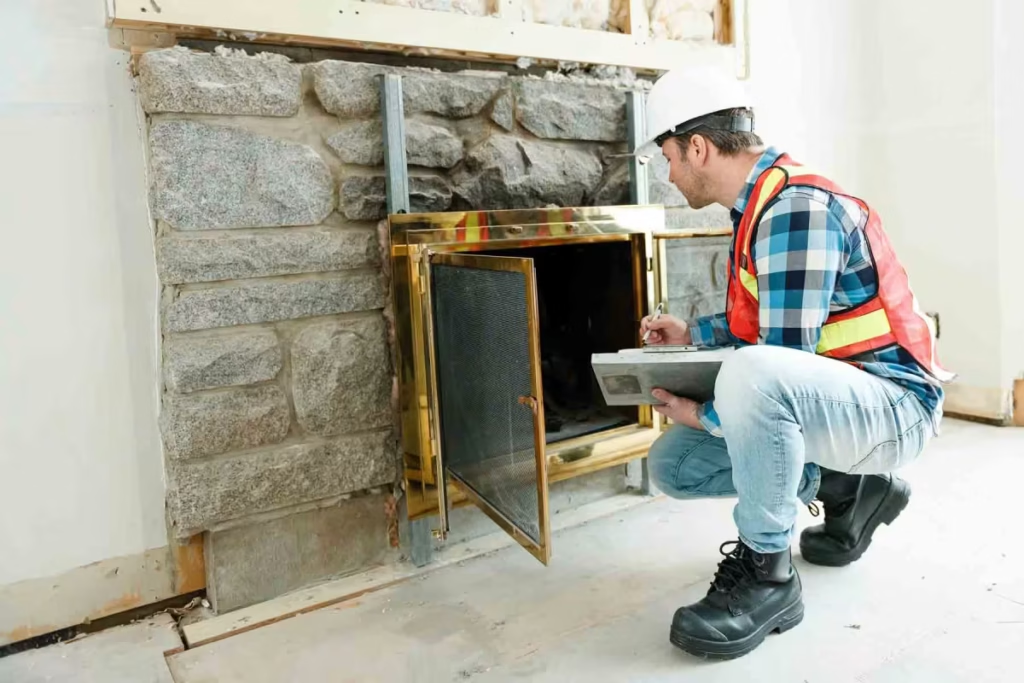
Wood Stove Inspection and Annual Service
The CSIA recommends annual inspection for all solid fuel appliances, including wood stoves. Always Fire & Gas performs CSIA-certified wood stove inspections covering the firebox, gaskets, baffle and combustion chamber, connector pipe, flue liner, and chimney exterior. Annual service includes cleaning, gasket condition evaluation, and documentation of any compliance or safety concerns. For wood stoves used as a primary or supplemental heat source in Florida, annual inspection before the heating season is the standard we recommend.
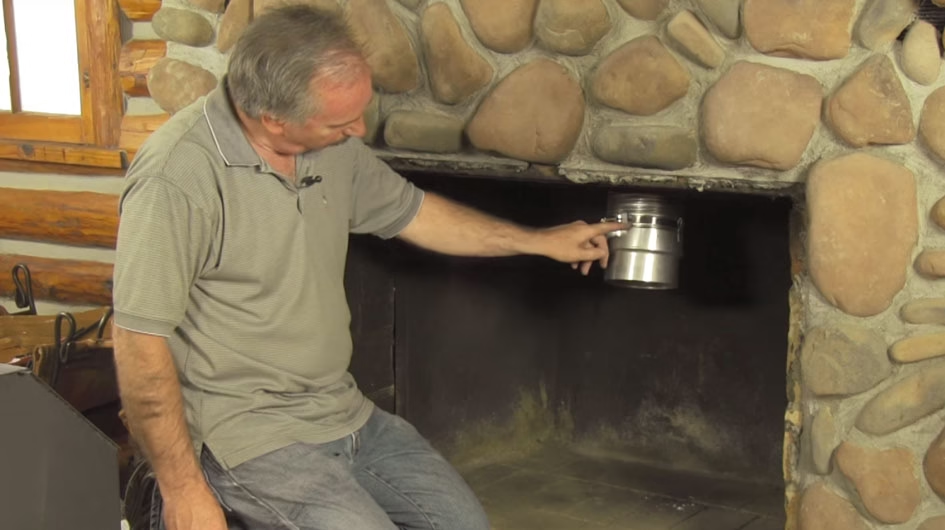
Chimney Liner Installation for Wood Stoves
A correctly sized and properly installed stainless steel liner is non-negotiable for a safe wood stove installation. Liner sizing must match the stove’s flue collar diameter and account for the chimney’s height, configuration, and the stove’s heat output. An undersized liner restricts draft and accelerates creosote accumulation. An oversized liner produces a slow, cool draft that does the same. Always Fire & Gas sizes, supplies, and installs chimney liner systems for wood stoves and inserts across North Central Florida.
Hearth Pad Design and Installation
A compliant hearth extension is required under NFPA 211 for every wood stove installation. The hearth pad must extend a specified distance in front of the stove door and to the sides of the stove body, and must be constructed of non-combustible materials over a backing that meets the thermal resistance requirements for the stove’s leg height. Always Fire & Gas designs and installs hearth pads as part of every new stove installation and as a standalone service for existing installations that need to be brought into compliance.
Wood Stove Repair: Gaskets, Glass, Baffles, and Firebrick
Wood stove components wear out with use. Door gaskets compress and lose their seal, allowing excess air into the firebox and reducing efficiency. Glass panels crack from thermal stress. Refractory baffles deteriorate and lose their ability to redirect heat through the combustion chamber. Firebrick lining in the firebox cracks and eventually fails. Always Fire & Gas repairs all of these components on wood stoves from the brands we install and most other major manufacturers. If your stove is burning less efficiently than it used to, a component service is often the answer before replacement.
Eight Dryer Vent Services. Find the One That Matches Your Situation.
Each service below addresses a specific dryer vent problem. The description tells you what the service fixes. Click through to the service page for the full scope, service deliverables, and scheduling.

Blaze King
Blaze King manufactures the highest-efficiency catalytic wood stoves available in North America. Their patented continuous-burn catalytic combustor reignites exhaust gases for a second combustion cycle, delivering tested efficiencies above 85 percent and burn times that can exceed 40 hours on a single load. For Florida homeowners who want maximum heat from minimum wood, Blaze King is the benchmark the rest of the industry measures against. Freestanding stoves and inserts available.

Vermont Castings
Vermont Castings has been producing cast-iron wood stoves in the United States since 1975. Their stoves are distinguished by the thermal mass of cast iron, which absorbs heat from the fire and radiates it long after the flames die down, and by a design heritage that makes them among the most aesthetically refined wood-burning appliances available. For homeowners who want a wood stove that is also a centerpiece of the room, Vermont Castings is the choice. EPA 2020 certified models available.

Regency Fireplace Products
Regency produces a comprehensive lineup of EPA 2020 certified wood stoves and wood stove inserts for a wide range of room sizes and installation configurations. Known for quality construction, efficient combustion, and a product range that covers everything from compact apartment-sized inserts to large freestanding stoves for open floor plans. A reliable choice for homeowners who want a proven product from a brand with a long track record in the industry.
Quadra-Fire
Quadra-Fire's patented Four-Point Burn System introduces combustion air at four points in the firebox, producing a more complete and efficient burn than conventional wood stoves. The result is higher heat output, longer burn times, and lower creosote production than standard combustion designs. For homeowners who want measurable combustion technology differences rather than just brand reputation, Quadra-Fire provides a specific and documentable engineering advantage.

Ventis (by SBI / Copperfield Chimney Supply)
Ventis is a professional-channel brand from SBI (Stove Builder International), distributed through Copperfield Chimney Supply and sold primarily through certified hearth professionals rather than retail outlets. For the buyer who wants a product that was designed for professional installation rather than big-box retail, Ventis delivers quality construction and a full range of EPA 2020 certified wood stoves and inserts. Product specifications available through Copperfield Chimney Supply.
Serving Wood Stove Customers Across North Central Florida
Always Fire & Gas installs, inspects, and services wood stoves and inserts across Marion, Alachua, Lake, Sumter, Citrus, Putnam, Hernando, Orange, Volusia Counties and all surrounding areas. With more than 20 certified professionals and a licensed contractor on every permitted installation, we serve the full region including rural properties throughout Marion, Alachua, Putnam, and Citrus Counties where wood stoves are a primary or supplemental heat source.

Ocala & Marion County
Marion County includes a significant rural population where wood stoves are a genuine heating choice, not just an aesthetic one. Always Fire & Gas serves rural Marion County properties, agricultural parcels, and established Ocala neighborhoods with the same certified installation standard. If your property is outside the city and you want a wood stove installed to code with proper permits and liner work, that is exactly what we do.

Gainesville & Alachua County
Alachua County’s mix of established Gainesville homes and rural properties throughout the county creates demand for both wood stove inserts in existing urban fireplaces and freestanding stove installations in rural settings. Always Fire & Gas serves the full county, from Gainesville neighborhoods with existing masonry fireplaces to acreage properties in Newberry, High Springs, and Hawthorne.

The Villages & Sumter, Lake, and Marion Counties
The Villages and the surrounding tri-county area includes both planned communities with existing wood-burning fireplaces and rural properties across Sumter, Lake, and Marion Counties where wood stoves serve as supplemental heat. Always Fire & Gas serves all of these markets with the same CSIA-certified, NFI-certified, licensed contractor standard.
Wood Stove Questions from North Central Florida Homeowners
EPA 2020 certified wood stoves meet the current federal emissions standard of 2.0 grams of particulate matter per hour, a reduction of more than 70 percent from the pre-2020 standard. EPA certification is required for new wood stove installations in Florida. Beyond compliance, EPA 2020 certified stoves are significantly more efficient than older models because cleaner combustion means more heat enters the room and less escapes up the flue. Always Fire & Gas installs only EPA 2020 certified wood stoves.
Yes, significantly. An open masonry fireplace operates at 10 to 20 percent efficiency, meaning most of the heat goes up the chimney. An EPA 2020 certified wood stove operates at 70 to 80 percent efficiency. A catalytic wood stove such as those made by Blaze King can exceed 85 percent efficiency. For homeowners who want wood burning to function as a real heat source rather than an ambiance feature, a wood stove or wood stove insert delivers substantially more heat from the same amount of wood.
In most Florida jurisdictions, yes. A wood stove installation involves a solid fuel appliance connected to a flue system and often includes hearth construction. Florida’s building codes require permits for these installations, and the permit process includes inspection of clearances, liner installation, and hearth compliance. Always Fire & Gas obtains required permits for every wood stove installation under Florida Residential Contractor License #CRC133200 and provides documentation of code compliance upon completion.
Minimum clearances between a wood stove and combustible walls depend on the specific model’s manufacturer specifications and whether listed clearance reduction systems are installed. Typical minimum clearances for freestanding wood stoves are 36 inches to unprotected combustible walls, reducible to 18 inches or less with tested clearance reduction assemblies. Always Fire & Gas verifies manufacturer clearance specifications for every model before installation and ensures compliance with both manufacturer requirements and NFPA 211 before any stove is connected.
Chimney liner sizing for a wood stove depends on the stove’s flue collar diameter, the chimney’s height, and the stove’s rated heat output. Under-sizing the liner restricts draft and concentrates creosote. Over-sizing produces a slow, cool draft with the same result. NFPA 211 provides sizing tables used by certified installers to correctly match liner diameter to stove and chimney specifications. Always Fire & Gas sizes every liner installation from these specifications, not from general estimates.
The CSIA recommends annual inspection for all solid fuel appliances including wood stoves, regardless of how often they are used. In Florida, where wood stoves may sit unused through warm months, annual inspection before the heating season is particularly important. The inspection covers the firebox, gaskets, baffle, flue liner, connector pipe, and chimney exterior. Cleaning removes creosote and ash accumulation. Always Fire & Gas performs CSIA-certified wood stove inspections across North Central Florida.
A homeowner may install a wood stove in their own primary residence in Florida under a homeowner permit in some jurisdictions, but the installation must still pass inspection for clearances, hearth compliance, liner installation, and EPA certification. Unpermitted or non-compliant installations are a common problem in North Central Florida and create insurance and resale complications. Always Fire & Gas recommends a professional installation under a contractor permit to ensure documentation of compliance that satisfies both inspectors and insurers.
Always Fire & Gas installs wood stoves and inserts from Blaze King, Vermont Castings, Regency, Quadra-Fire, and Ventis. All models installed are EPA 2020 certified. Always Fire & Gas also services wood stoves from other major manufacturers. Blaze King is recommended for maximum efficiency through catalytic combustion. Vermont Castings for cast-iron thermal mass and heritage design. Regency for a comprehensive range across room sizes. Quadra-Fire for Four-Point Burn combustion technology. Ventis for professional-specification construction. Call (352) 282-0158 to discuss the right fit.