Storm Damage. Rot. Siding Failure. One Licensed Team Handles the Full Scope.
Wood Frame Chimney Rebuilds and Repairs in Ocala, Gainesville, Orlando, The Villages and All Surrounding Areas.
- CSIA Certified Chimney Sweep #10020
- CCP (Certified Chimney Professional) #546
- Certified Chimney Specialist (CSIA) #59
- Certified Master Chimney Technician #34
- FL Residential Contractor #CRC133200
- FL Gas Contractor #LI45277
- Certified Chimney Re-liner #94
- Certified Chimney Journeyman #5053
Chimney Chase Repair
Chase Enclosure Rebuilds. Partial Chase Repair. Siding Replacement. Cricket Framing. Flashing. Chase Cover. Master Chimney Technician and FL Residential Contractor #CRC133200. North Central Florida Since 1982.
A factory-built chimney system is two things at once: a flue system that vents combustion gases and a wood frame chase enclosure that surrounds the flue pipe above the roofline. When the flue system fails — liner damage, cap problems, flashing leaks — that is chimney system work. When the chase enclosure fails — framing rot from chronic water intrusion, siding delamination, storm damage to the chase walls — that is building envelope work. Most chimney companies stop at the flue system. Most general contractors are not equipped to confirm that the flue system is intact before they close up the chase.
Always Fire & Gas performs both scopes under one license. We hold FL Residential Contractor #CRC133200 for structural framing and building envelope work and the Master Chimney Technician credential for flue system assessment. Every wood frame chimney rebuild and repair begins with a dual assessment: the chase enclosure for structural damage, rot, and siding failure, and the flue pipe and cap system for any damage that should be addressed before the new chase is closed. The homeowner does not coordinate two contractors. We assess, scope, and deliver the finished result.
Your Chimney Looks Like Siding Because It Is. Here Is What Is Inside It and Why It Fails.
FAILURE SOURCE
VISIBLE SIGNS
WHAT IS DAMAGED INSIDE
Failed or absent chase cover
Rust staining on chase siding below cap line, water in firebox after rain
Chase framing and sheathing saturated by direct water entry into chase interior on every rain event
Failed flashing at roofline
Water staining on ceiling adjacent to chimney, ceiling stain at wall/ceiling junction near chase
Water running along roof deck under failed flashing into wall cavity at chase base, soaking bottom courses of framing
Failed or deteriorated siding
Bubbling, delamination, or missing siding panels; soft spots in siding surface when pressed
Sheathing and framing behind failed siding exposed to moisture, accelerating rot and mold at those courses
Storm or wind damage
Visibly displaced or missing siding panels, dented or crushed chase wall section, lifted chase cover
Variable by impact — may be cosmetic siding damage only or may extend to structural sheathing and framing if impact was significant
Chronic condensation from flue pipe
Interior framing darkening or softening near flue pipe penetrations, no visible exterior water source
Moisture from flue pipe surface condensation in high-humidity season soaking framing members from inside the chase cavity
FAILURE SOURCE
Damper stuck open or will not close completelymper stuck closed or will not open fully
Failed flashing at roofline
Failed or deteriorated siding
Storm or wind damage
Chronic condensation from flue pipe
VISIBLE SIGNS
Rust staining on chase siding below cap line, water in firebox after rain
Water staining on ceiling adjacent to chimney, ceiling stain at wall/ceiling junction near chase
Bubbling, delamination, or missing siding panels; soft spots in siding surface when pressed
Visibly displaced or missing siding panels, dented or crushed chase wall section, lifted chase cover
Interior framing darkening or softening near flue pipe penetrations, no visible exterior water source
WHAT IS DAMAGED INSIDE
Chase framing and sheathing saturated by direct water entry into chase interior on every rain event
Water running along roof deck under failed flashing into wall cavity at chase base, soaking bottom courses of framing
Sheathing and framing behind failed siding exposed to moisture, accelerating rot and mold at those courses
Variable by impact — may be cosmetic siding damage only or may extend to structural sheathing and framing if impact was significant
Moisture from flue pipe surface condensation in high-humidity season soaking framing members from inside the chase cavity
Six Services. One Licensed Team. Chase Framing Through Finished Siding Surface.
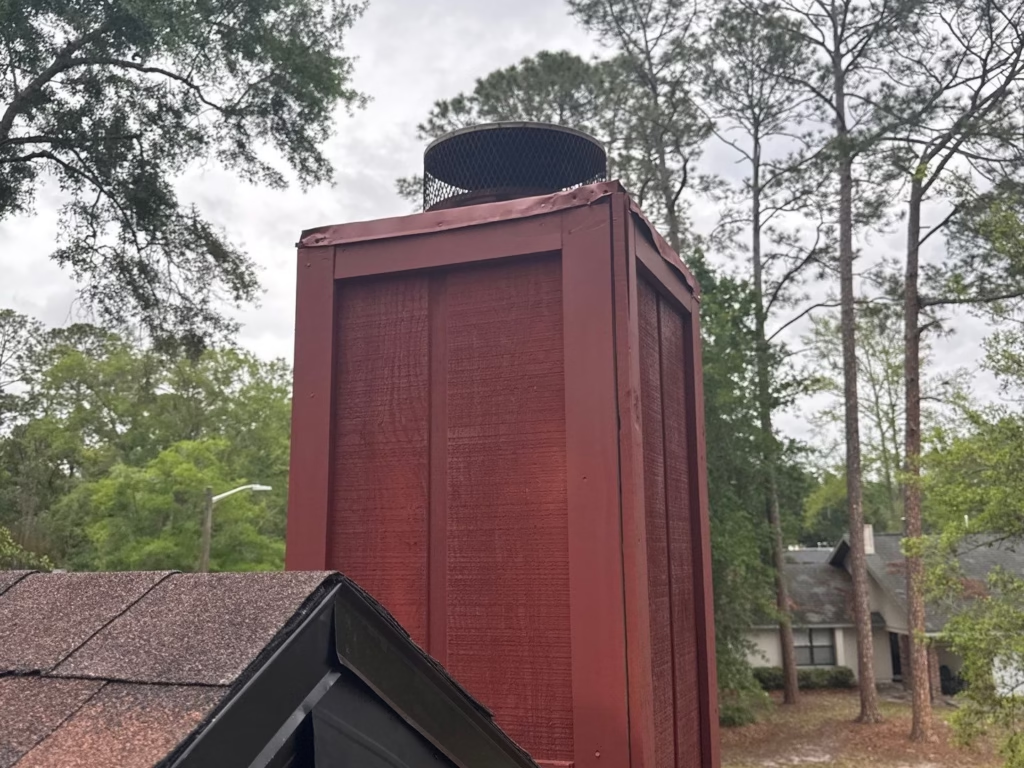
Chase Enclosure Rebuild
- Chase enclosure demolished to roof deck attachment point, debris removed from property
- Roof deck at chase base inspected and any moisture-damaged decking replaced before new framing begins
- New chase framing from dimensional lumber to original or updated chase dimensions, permitted under #CRC1332000
- Structural sheathing, house wrap, and siding installed to match or update home exterior profile
- Flue pipe and cap system inspected and confirmed before chase is closed
- Chase cover installed at top of new chase enclosure -- see /chimneys/chase-covers/ for material options
- Before-and-after photography and permit documentation provided at project close
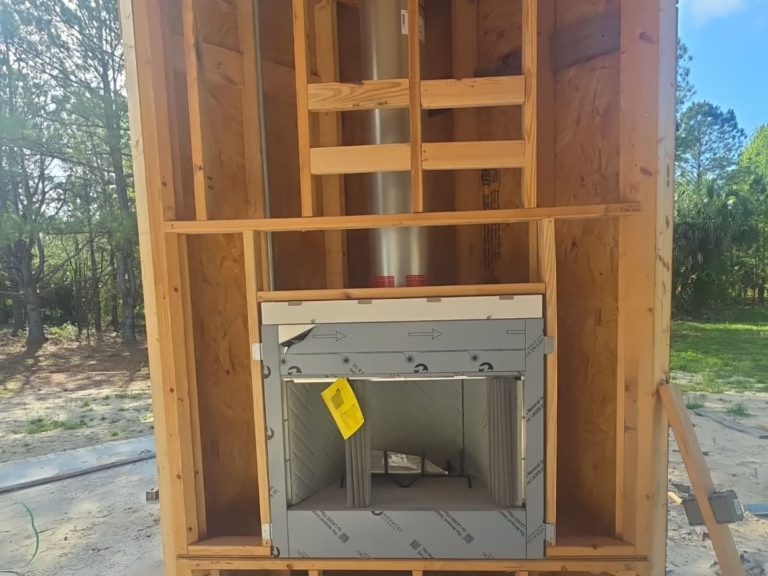
Partial Chase Repair
Damaged section only — rot, storm impact, or localized siding failure without full rebuild
Not every failed chase requires a full rebuild. A chase with localized rot at the base from flashing failure, a single course of storm-damaged siding over structurally sound framing, or a section of failed sheathing behind deteriorated siding can be addressed with a partial repair that removes and replaces only the damaged section. AAS opens the chase at the affected area, inspects the framing in the repair zone and the adjacent courses on either side, confirms the structural integrity of the surrounding framing, removes and replaces only what is damaged, and closes with matching siding and house wrap. Partial repair is significantly less expensive than a full rebuild and is the correct scope for damage that is genuinely localized. We will tell you which applies at the assessment.
- Affected siding section removed, sheathing opened at repair zone
- Framing inspection extended to adjacent courses to confirm extent of structural damage
- Damaged framing members sistered or replaced, sheathing replaced in repair zone
- House wrap lapped correctly at repair zone edges before siding installation
- Siding matched to existing home exterior profile as closely as possible
- Chase cover condition confirmed and replaced if failed -- localized siding repair does not address a failed chase cover
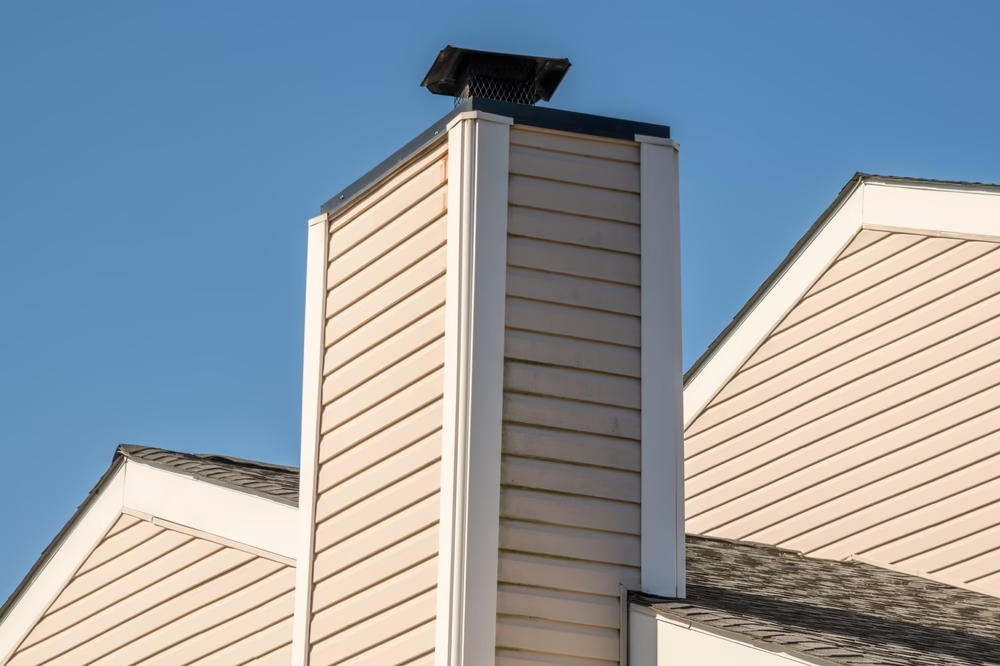
Chase Siding Replacement
Full exterior siding replacement on a structurally sound chase enclosure
Chase siding replacement is the correct scope when the framing is confirmed sound but the siding has reached the end of its service life: delaminated fiber cement, split or rotted wood siding, faded or failed vinyl. AFG removes the existing siding, inspects the sheathing and house wrap behind it, replaces house wrap where it has failed or is missing, and installs new siding to match or update the home’s exterior profile. Florida residential applications most commonly use HardiePlank fiber cement siding for chase replacement — it does not rot, does not absorb moisture, and is dimensionally stable in Florida’s thermal cycling environment. Vinyl and wood alternatives available where the homeowner’s exterior profile requires it.
- Existing siding removed, sheathing and house wrap exposed and inspected
- House wrap replaced where failed, torn, or absent behind removed siding
- HardiePlank fiber cement siding installed as recommended default -- vinyl or wood available
- Siding profile and color matched to home exterior as closely as available products allow
- All penetrations (cap cable, flue pipe clearance areas) flashed and sealed at siding installation
- Chase cover condition confirmed -- siding replacement is the correct time to address a failing chase cover before the new siding is installed
Cricket / Saddle Framing and Installation
Water diversion structure on the high side of the chimney — the repair most roofers defer
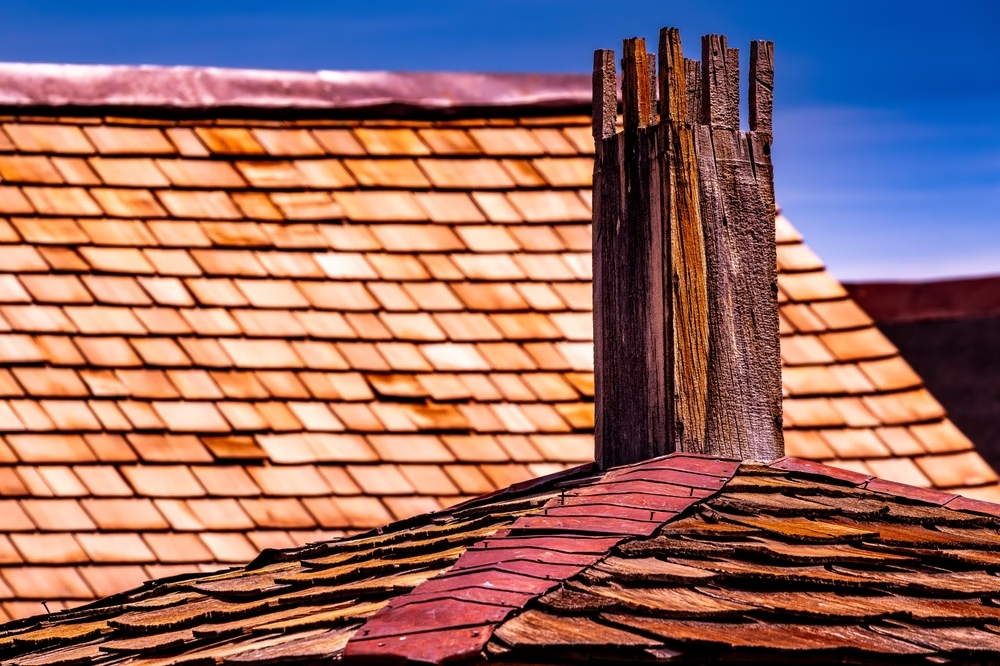
A cricket — also called a saddle — is a peaked framing structure built on the high side of a chimney chase where the chase meets the roof slope. Its function is to divert water around the high side of the chase rather than allowing it to pond against the back chase wall and the flashing at that junction. NFPA 211 and most state building codes require a cricket on chimney chases wider than 30 inches at the roofline. Many chase enclosures in North Central Florida do not have one, either because the original construction predates the requirement or because the builder did not install one. A missing cricket is one of the most consistent sources of chronic water intrusion at the back of the chase — water ponds at the high-side flashing joint, the flashing fails from standing water exposure, and water enters the chase wall at the base on the high side. AFG frames and installs crickets as a standalone service and as part of any chase rebuild or repair scope.
- High-side chase wall measured and cricket dimensions confirmed against NFPA 211 requirement
- Cricket framed from dimensional lumber, sheathed, and covered with roofing underlayment
- Cricket siding matched to chase siding material and profile
- High-side flashing replaced as part of cricket installation -- existing flashing designed for flat back-wall junction, not cricket geometry
- Cricket installation permitted under #CRC1332000 where required
- Post-installation inspection confirms water diversion path is clear and correct
Flashing Repair and Replacement
Chase-level flashing as part of rebuild, repair, or standalone scope
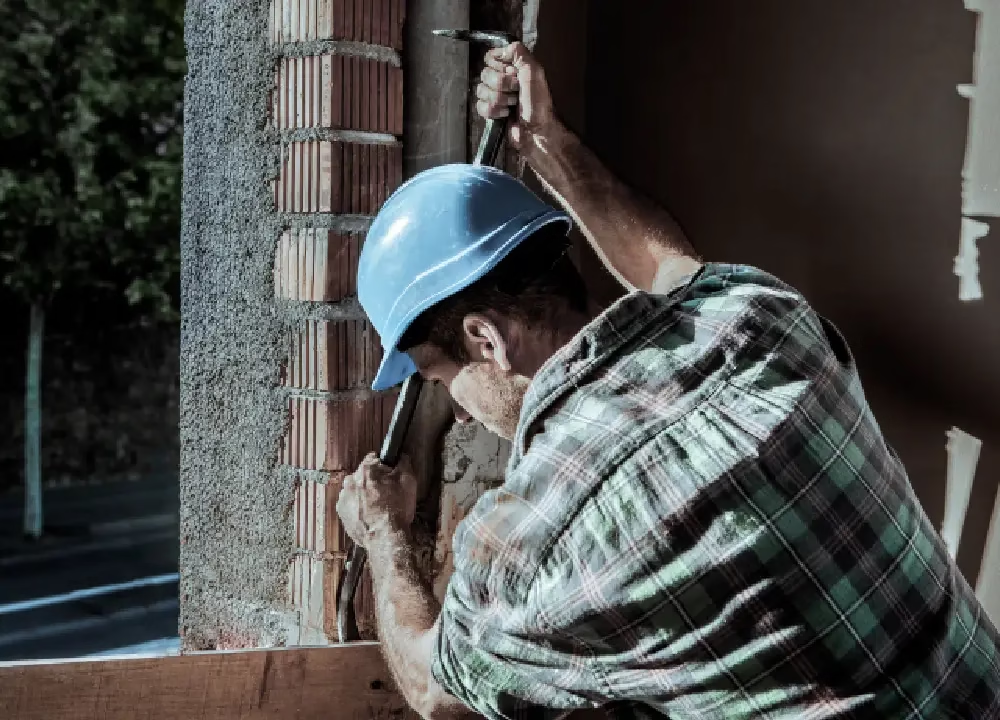
Flashing at the chimney-roof junction — step flashing along the chase sides and counter flashing at the chase wall faces, plus back-pan or saddle flashing at the high side — is addressed as part of every chase rebuild and most partial repair scopes. When the chase framing and siding are intact but the flashing is the documented water entry source, AAS performs flashing repair or replacement as a standalone scope. Chase-level flashing replacement is more involved than masonry chimney flashing: the counter flashing attaches to the wood-frame chase wall rather than to masonry, and the step flashing must be integrated with the chase siding rather than the masonry face. AFG performs all flashing work under #CRC133200. For active chimney leaks where the flashing condition relative to the chase and roof has not been confirmed, see /chimneys/leaky-repair/ for the water intrusion assessment process.
- Step flashing along both sides of the chase integrated with roof shingles and chase siding
- Counter flashing at the chase wall faces mechanically fastened -- not surface-applied with sealant only
- Back-pan flashing at high-side chase wall replaced as part of any cricket framing scope
- Flashing material: galvanized steel, aluminum, or lead-coated copper depending on scope and homeowner preference
- All flashing work permitted under #CRC133200 where structural chase work is disturbed
Chase Cover Replacement
Cross-reference with /chimneys/chase-covers/ for full material selection detail
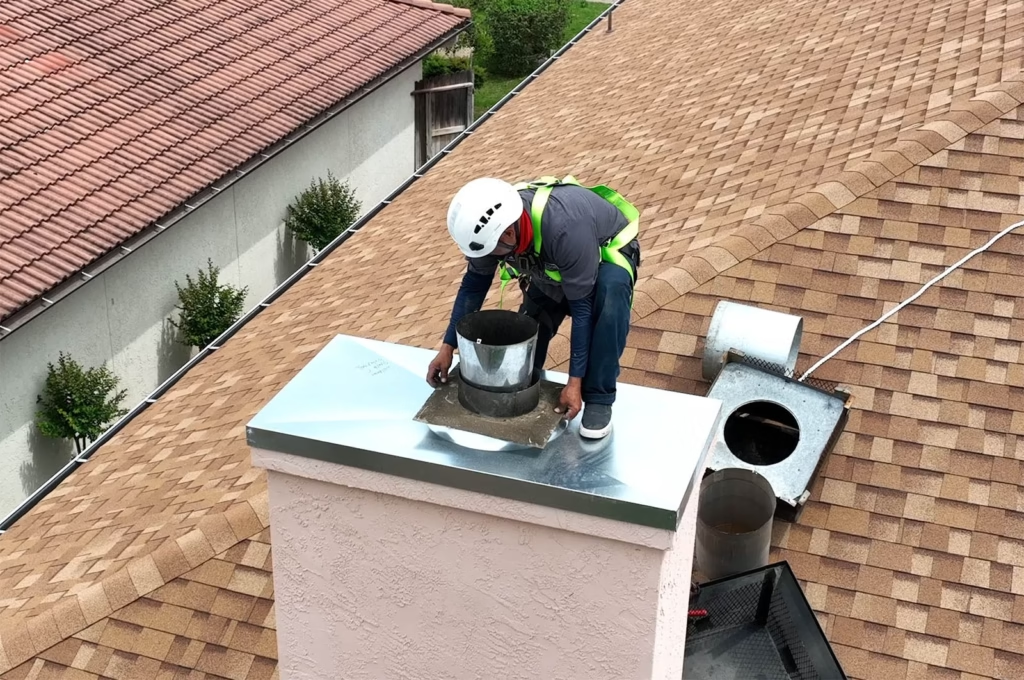
A chase cover is installed as the final step of every chase rebuild and confirmed or replaced as part of every partial repair scope. A newly rebuilt or re-sided chase installed under a failing or absent chase cover will begin to fail again immediately — the chase cover is the component that keeps the rebuild dry. AFG installs custom-fabricated chase covers in stainless steel, galvanized steel, aluminum, and copper, measured to the actual rebuilt chase opening dimensions. For the full material selection comparison and service life data by material in Florida’s climate, see /chimneys/chase-covers/. Every rebuild and re-side scope includes a line item for chase cover: the homeowner selects the material at the time of the initial scope discussion.
- Chase cover measured to rebuilt or repaired chase opening dimensions after framing is complete
- Custom-fabricated cover installed -- not a stock cover cut to approximate fit
- Formed drip edge on all four sides, flue pipe collar sized to actual pipe diameter
- Chase cover installation is the last step before project is considered complete
- Material selection: stainless steel (recommended default), galvanized, aluminum, or copper
- Full material detail and service life comparison: /chimneys/chase-covers/
What a Wood Frame Chimney Rebuild Project Looks Like From First Call to Finished Chase
Dual Assessment: Chase Enclosure and Flue System Together
Every wood frame chimney project begins with a dual assessment. The chase enclosure is assessed from the exterior — siding condition, visible damage, flashing condition at the roofline — and from the interior where access allows: the chase cover is removed and the interior framing is inspected from above for rot, moisture damage, and structural integrity. The flue pipe and cap system are confirmed: pipe connections, cap condition, liner condition where visible. This dual assessment is what produces an accurate scope. A chase that looks intact from the ground may have significant framing rot visible from the top. A chase that looks severely damaged externally may have a structurally sound frame behind failed siding. The scope is based on what is actually present, confirmed by inspection, before any demolition begins.
1
Written Scope Confirmation Before Any Demolition
After the dual assessment, AFG provides a written scope that identifies: which chase components require repair or replacement and which are confirmed sound; what the flue system assessment found and whether any flue work is included in the scope; what the siding specification is for the re-side or rebuild; whether a cricket is required or recommended; and the complete price before any commitment is required from the homeowner. The homeowner reviews and approves the scope before any demolition or structural work begins. If the assessment finds that the scope is less extensive than expected — framing sound behind failed siding, for example — the written scope reflects that and the price is adjusted accordingly.
2
Demolition, Deck Preparation, and Framing
With scope confirmed, demolition proceeds to the confirmed extent: siding only, siding and sheathing, or full chase enclosure to the roof deck attachment point. Debris is removed from the roof and property progressively — material is not dropped from the roofline. The roof deck at the chase base is inspected for moisture damage after the chase framing is removed; any damaged decking is replaced before new framing begins. New chase framing is built to confirmed dimensions from dimensional lumber. Permits are obtained under #CRC133200 before structural framing begins where the jurisdiction requires it.
3
Sheathing, House Wrap, Flashing, and Siding
With new framing complete, sheathing and house wrap are installed and lapped correctly at all edges and penetrations. Flashing is installed at the roofline junction — step flashing integrated with roof shingles, counter flashing mechanically fastened to the new chase wall faces, and back-pan or cricket flashing at the high-side junction. Cricket framing, where included in scope, is completed before back-pan flashing is installed. Siding is applied over the house wrap in the confirmed material and profile. All penetrations — cap cable access, clearance areas at the flue pipe — are flashed and sealed at the siding layer.
4
Chase Cover Installation, Final Inspection, and Documentation
The chase cover is the last component installed. It is measured to the rebuilt chase opening dimensions and installed with a formed drip edge on all four sides and a properly fitted flue pipe collar. The completed project is photographed from roofline level and at ground level from each elevation. Before-and-after photography is compiled. Permit documentation is provided where applicable. The homeowner walks through the finished scope with the project lead before the team leaves the property. If anything in the scope does not meet the agreed standard, it is corrected before the project is considered closed.
5
Five Situations. One Licensed Team. Full Scope From Assessment to Finished Surface.
Storm or Hurricane Damage to the Chase Enclosure
A chase enclosure that takes a direct hit from wind-driven debris, loses siding panels in a storm, or has the chase top lifted or displaced in a high-wind event needs to be assessed before the next rain. What looks like cosmetic siding damage from the ground may include sheathing and framing damage behind the displaced panels that will produce rapid moisture intrusion if left open through Florida’s rain season. Always Fire & Gas performs post-storm chase assessments with written documentation suitable for homeowner insurance claims. A written assessment from a licensed contractor — CRC133200 — is stronger insurance documentation than a description from an unlicensed inspector. We document what is damaged, what is structurally sound, and what the repair scope is before any work begins.
Call (352) 282-0158 after any storm event affecting the chase enclosure. Describe what is visibly displaced or damaged. We schedule the assessment and provide written documentation before any scope commitment is required.
Visible Siding Failure -- Rot, Delamination, or Missing Panels
Chase siding that is visibly delaminating, rotting at the bottom courses, or missing panels is past the point where a surface repair is the correct scope. Delaminated fiber cement or rotted wood siding at the bottom of the chase almost always indicates moisture at the sheathing behind it — the siding failed because water was reaching it from behind a failed flashing or missing house wrap, not just from the weather face. Always Fire & Gas opens the siding at the affected area before recommending any repair scope: the visible siding condition is the symptom, not the problem. The scope is set by what is found in the framing cavity, not by what is visible from the driveway.
Call (352) 282-0158 and describe what the siding looks like and on which elevation of the chase. We confirm whether a site visit is needed to assess the framing condition and give you a same-call estimate of scope range before we arrive.
Inspector or Roofer Flagged Wood Frame Chimney Damage
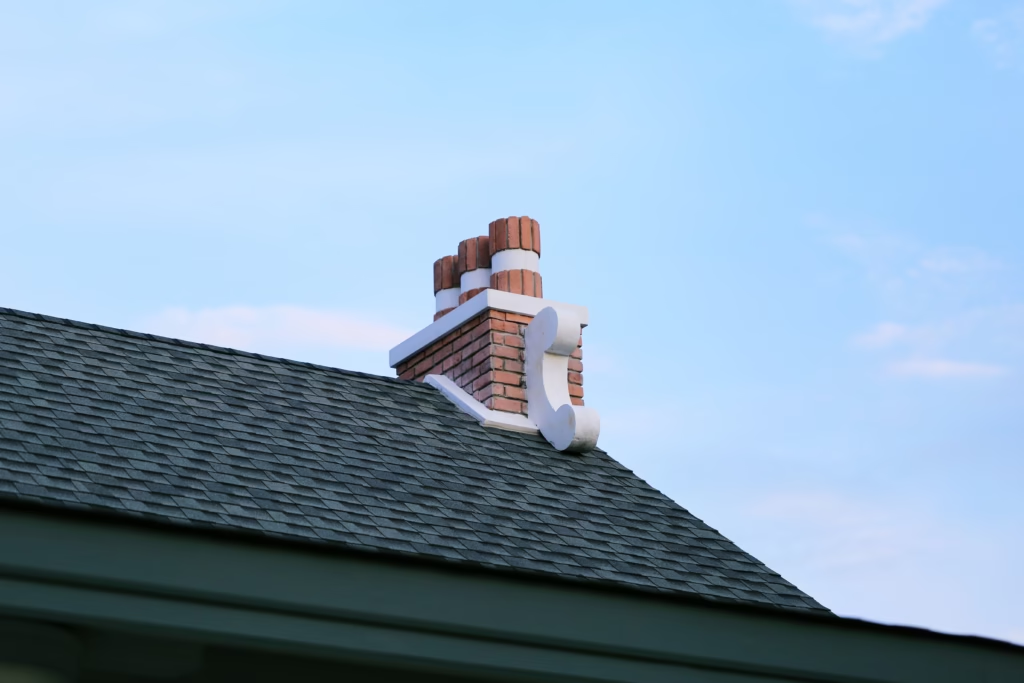
A home inspection report or a roofer’s assessment that notes damaged, rotted, or structurally compromised chase framing is an accurate finding that should be addressed before the next rain season. Roofers who encounter failed chase siding or visibly rotted chase framing during a reroofing project regularly refer that scope to Always Fire & Gas — not because they cannot install siding, but because the correct repair requires opening the chase, confirming the framing condition, and coordinating the flue system confirmation before closing. If your inspection report or roofer’s notes reference the wood frame chimney, call with the report in hand.
Call (352) 282-0158 with the inspection report or roofer’s notes. We confirm the finding, schedule the assessment, and coordinate scope and timeline with your roofer if reroofing is in progress.
Reroofing Coordination -- Your Roofer Said the Chase Needs Work First
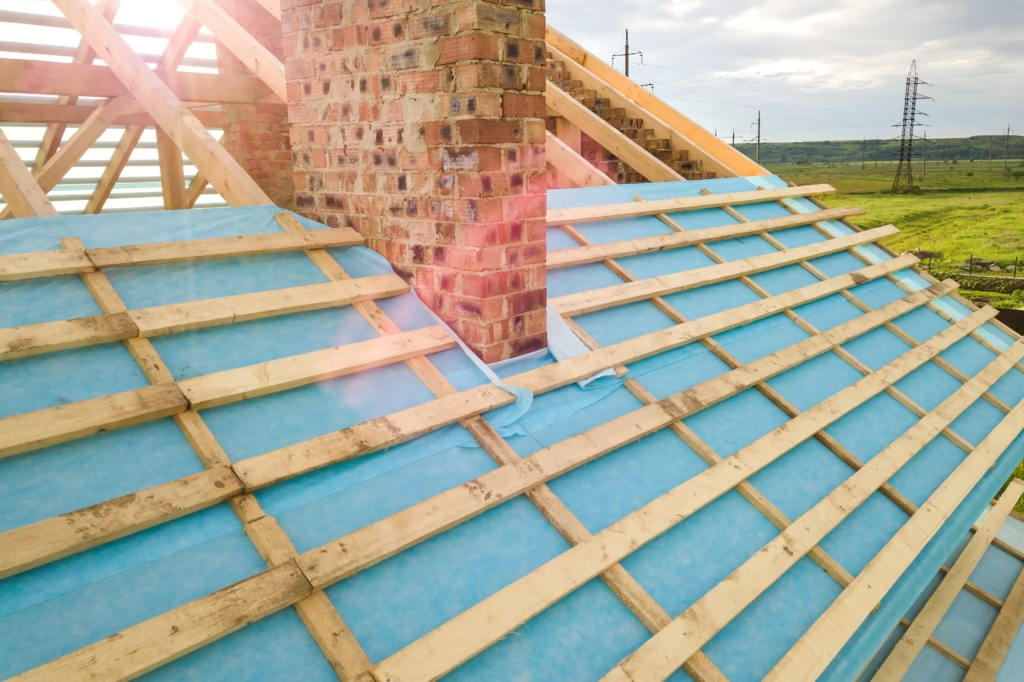
A roofer who tells a homeowner the chimney chase needs to be addressed before reroofing is giving accurate advice. Reroofing around a chase with failed siding, rotted framing at the base, or absent cricket creates warranty complications for the new roof and does not resolve the water intrusion that has been damaging the chase framing. Always Fire & Gas coordinates chase repair and rebuild work on reroofing timelines throughout North Central Florida. We phase the chase work to the reroofing schedule: chase demolition and framing before the roofer begins the adjacent roof sections, flashing and siding after the new roof courses are in place at the chase base. Roofers who work with us on chimney chase coordination can call (352) 282-0158 directly.
Call (352) 282-0158 or have your roofer call us. We confirm the chase scope, coordinate the phase sequence with the reroofing timeline, and provide permit documentation where required.
Whole-Home Renovation Requiring Chase Update or Full Rebuild
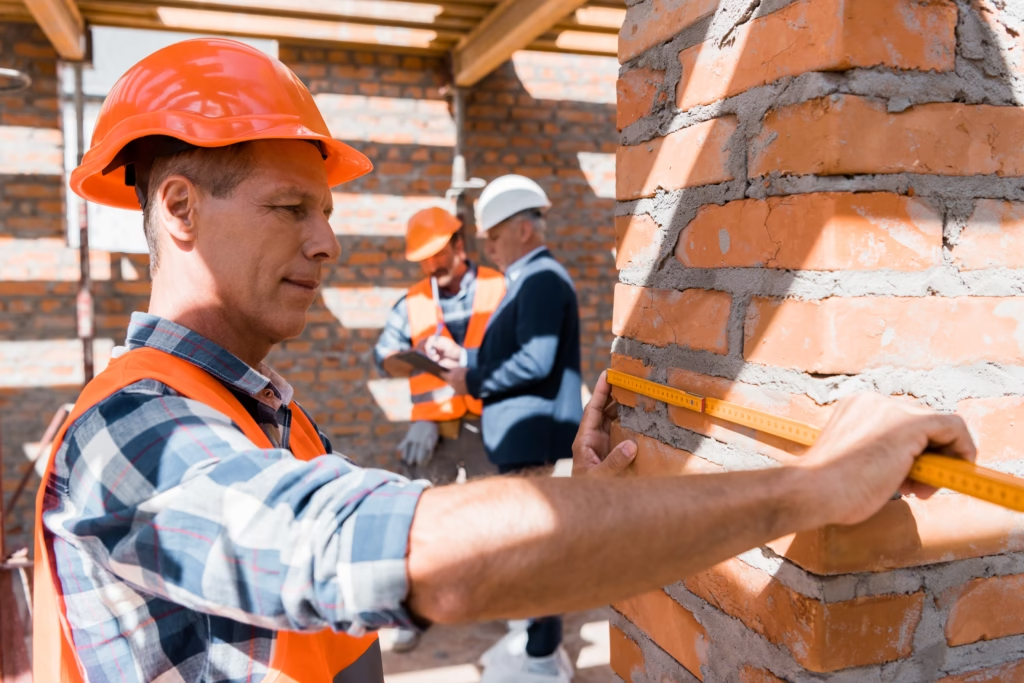
A whole-home renovation or re-siding project is the correct time to address a wood frame chimney chase that has been accumulating deferred maintenance. A chase that is re-sided to match a new home exterior profile needs its flashing confirmed and its chase cover assessed at the same time the siding goes on — doing the work in phases produces two mobilizations and two sets of flashing and siding seams at the chase walls. Always Fire & Gas coordinates with GCs and general siding contractors on renovation projects involving wood frame chimney chases throughout North Central Florida. We provide the chimney-specific scope — flue system confirmation, cricket framing, flashing, chase cover — and integrate it into the renovation timeline.
Call (352) 282-0158 or have your GC call us. We confirm the chimney scope within the renovation, coordinate timing, and provide permit documentation as part of the overall project record.
Whole-Home Renovation Requiring Chase Update or Full Rebuild
A whole-home renovation or re-siding project is the correct time to address a wood frame chimney chase that has been accumulating deferred maintenance. A chase that is re-sided to match a new home exterior profile needs its flashing confirmed and its chase cover assessed at the same time the siding goes on — doing the work in phases produces two mobilizations and two sets of flashing and siding seams at the chase walls. Always Fire & Gas coordinates with GCs and general siding contractors on renovation projects involving wood frame chimney chases throughout North Central Florida. We provide the chimney-specific scope — flue system confirmation, cricket framing, flashing, chase cover — and integrate it into the renovation timeline.
Call (352) 282-0158 or have your GC call us. We confirm the chimney scope within the renovation, coordinate timing, and provide permit documentation as part of the overall project record.
Chase enclosure and flue system assessed together. Written scope before any commitment. Roofer and GC coordination available.
Wood Frame Chimney Rebuilds and Repairs Across North Central Florida
Wood Frame Chimney Questions, Answered Directly
A wood frame chimney — also called a prefab chimney chase or chase enclosure — is a framed structure built from dimensional lumber, structural sheathing, house wrap, and siding that houses a factory-built metal flue pipe. It is the chimney configuration found on most homes built in North Central Florida since the 1970s. A masonry chimney is built entirely from brick, block, or stone with a clay tile or metal liner running through it. The two chimney types fail differently: masonry chimney problems are typically mortar joint deterioration, crown failure, or liner damage. Wood frame chimney problems are typically chase framing rot, siding failure, failed flashing at the roofline, or a failed chase cover that allows water into the chase interior. Always Fire & Gas holds both the Master Chimney Technician credential and FL Residential Contractor #CRC133200 to address both chimney types under one license.
The distinction between a rebuild and a repair depends on the extent of structural damage found in the chase framing, not on the appearance of the exterior siding. A chase that looks severely damaged from visible siding failure may have structurally sound framing if the siding failure is recent and the house wrap behind it is still intact. A chase that looks cosmetically intact may have significant rot in the framing from a failed chase cover that allowed water into the chase interior. Always Fire & Gas opens the chase during the assessment to confirm framing condition. The scope recommendation is based on what is actually damaged, confirmed by inspection, before any demolition begins.
HardiePlank fiber cement siding is the recommended default for wood frame chimney chase replacement in Florida. Fiber cement does not rot, does not absorb moisture, is dimensionally stable through Florida’s thermal cycling, and is available in profiles that match most residential siding patterns in North Central Florida. It carries a manufacturer warranty of thirty years for coating and fifty years for the substrate in the specified installation. Wood siding is available for applications where the home’s historic profile requires it, with the understanding that wood requires periodic painting and inspection in Florida’s moisture environment. Vinyl siding is an economy option for chase applications but is more susceptible to impact damage and UV degradation at roofline exposure than fiber cement.
A chimney cricket is a peaked framing structure built on the high side of a chimney chase where the chase meets the roof slope. Its function is to divert water around the back of the chase rather than allowing it to pond against the high-side chase wall and the flashing at that junction. NFPA 211 and most Florida jurisdiction building codes require a cricket on chimney chases wider than 30 inches at the roofline. Many existing wood frame chimney chases in North Central Florida do not have a cricket, either because they predate the requirement or because the original construction did not include one. A chase without a cricket that is wider than 30 inches at the roofline will have chronic water intrusion at the high-side flashing joint regardless of how many times that flashing is repaired or replaced. Always Fire & Gas measures chase width and recommends a cricket whenever the width exceeds the NFPA 211 threshold.
A roofer can install siding on a chase enclosure and can replace flashing at the chimney-roof junction. Most roofers do not perform structural framing work on chase enclosures, and most roofers are not equipped to assess or address the flue system condition before closing the new siding. A chase rebuild that is completed without confirming the flue pipe connections, cap, and liner condition inside the chase is a finished exterior with an unconfirmed interior. Always Fire & Gas holds CRC133200 for the structural framing and building envelope scope and the Master Chimney Technician credential for the flue system assessment — both under one license, on one project.
Wood frame chimney rebuild cost in North Central Florida depends on the extent of structural framing damage, the chase dimensions, the selected siding material, whether a cricket is required, and what flue system work is identified during the assessment. A partial repair addressing localized rot behind failed siding is priced differently from a full chase rebuild from the roof deck up. Always Fire & Gas provides a written scope and price after the on-site assessment — before any commitment is required. Call (352) 282-0158 to schedule. Bring inspection reports or roofer notes if you have them.
Wood frame chimney damage caused by a specific storm event — hurricane, tropical storm, wind-driven debris impact — is often covered under homeowner’s insurance as sudden and accidental damage. Chronic deterioration from deferred maintenance or gradual siding failure is typically not covered. The key distinction is whether the damage has a specific identifiable cause event. Always Fire & Gas provides written assessment reports for post-storm chase damage that document the cause, the extent of damage, and the repair scope — documentation suitable for insurance claims. A written assessment from a licensed contractor carrying CRC133200 is stronger insurance documentation than a description from an unlicensed inspector. Contact your insurer before any repair begins if you intend to file a claim, as some policies require the insurer to assess damage before repairs proceed.