Always Fire & Gas

Rain. Sparks. Animals. Downdraft. The Right Cap Solves All Four.ss. Done Right the First Time.

Chimney Caps in Ocala, Gainesville, Orlando, The Villages and All Surrounding Areas.

Chimney Caps

Single-Flue. Multi-Flue. Outside Mount. Custom-Fit. Stainless Steel, Galvanized, and Copper. Installed by a Licensed Contractor. North Central Florida Since 1982.

A chimney without a cap is an open pipe. Rain falls directly into the flue, saturating the liner and the smoke chamber below. Birds and squirrels nest in the uncapped opening. Embers from an active fire exit the flue with no screen to arrest them. Downdraft from wind pressure reverses the draft and pushes smoke into the living space. A correctly selected and correctly installed chimney cap addresses all four problems with one component.

Always Fire & Gas installs chimney caps across all chimney types and all flue configurations in North Central Florida. Where a manufacturer stock cap fits the flue correctly, we install it. Where the flue dimensions are non-standard or where the chimney configuration requires a custom solution, we fabricate. Every cap installation is documented. Every missing or damaged cap we find during an inspection is photographed and reported. Call (352) 282-0158 and we will confirm the right cap for your chimney in the same conversation.

WITHOUT A CAP

WHAT HAPPENS IMMEDIATELY

DOWNSTREAM CONSEQUENCE

No rain exclusion

Rain falls directly into the open flue on every rain event

Liner saturation, mortar joint deterioration, smoke chamber water damage, eventual structural damage to the flue system

No spark arrestor screen

Hot embers exit the flue and land on the roof surface, gutters, or adjacent landscaping

Roof ignition risk in dry conditions, gutter fires from accumulated debris, property and liability exposure

No animal exclusion

Chimney swifts, starlings, squirrels, and raccoons access the open flue for nesting

Nesting material in the flue is a fire hazard and a blockage, animals die in the flue producing odor and sanitation problems, wildlife removal and flue cleaning required

No downdraft control

Wind pressure from the prevailing direction creates negative pressure at the flue top that reverses draft

Smoke and combustion gases enter the living space during wind events, odor from the firebox when chimney not in use

WITHOUT A CAP

No rain exclusion

No spark arrestor screen

No animal exclusion

No downdraft control

WHAT HAPPENS IMMEDIATELY

Rain falls directly into the open flue on every rain event

Chimney swifts, starlings, squirrels, and raccoons access the open flue for nesting

Wind pressure from the prevailing direction creates negative pressure at the flue top that reverses draft

DOWNSTREAM CONSEQUENCE

Liner saturation, mortar joint deterioration, smoke chamber water damage, eventual structural damage to the flue system

Roof ignition risk in dry conditions, gutter fires from accumulated debris, property and liability exposure

Nesting material in the flue is a fire hazard and a blockage, animals die in the flue producing odor and sanitation problems, wildlife removal and flue cleaning required

Smoke and combustion gases enter the living space during wind events, odor from the firebox when chimney not in use

Inspection and sweeping are performed in the same visit. The inspection comes first: it assesses the chimney’s current condition, documents creosote stage, and identifies any issues that affect the scope of the sweep. The sweep follows immediately, using brush sizes and technique appropriate to what the inspection found. You leave the appointment with a documented condition report and a clean chimney — not two separate appointments scheduled weeks apart.

Five Things a Chimney Cap Is Designed to Do. The Right Cap Does All That You Need.

1

Rain Exclusion: Keep Water Out of the Flue

The cap’s primary and universal function. A correctly fitted cap with a solid or sloped lid sheds rain away from the flue opening on all sides. Rain that enters an uncapped flue falls directly onto the damper and into the smoke chamber, saturating the smoke chamber surfaces and the bottom courses of the liner. Over multiple rain seasons this produces the same interior water damage as a failed crown or flashing — mortar joint deterioration, smoke chamber damage, and eventually structural liner failure. A correctly installed rain cap is the single most cost-effective water protection measure for any chimney.

2

Spark Arrestor: Stop Embers Before They Land on the Roof

A spark arrestor is a wire mesh screen integrated into the cap that allows flue gases to exit while catching hot embers and sparks before they exit the flue opening. Florida law requires spark arrestors on chimneys in certain jurisdictions, and many homeowner insurance policies require them as a condition of coverage for wood-burning fireplaces. Always Fire & Gas installs caps with UL-listed spark arrestor screens on all wood-burning applications. The screen mesh size matters: too fine and creosote accumulates rapidly, restricting draft; too coarse and smaller embers pass through. Standard UL-listed spark arrestor mesh (5/8-inch openings) is the correct specification for residential wood-burning applications in Florida.

3

Animal and Bird Guard: Wildlife Exclusion for the Flue

The same mesh screen that arrests sparks also excludes birds, squirrels, and raccoons from the flue. In North Central Florida, chimney swifts are a federally protected migratory species that nest in open masonry flues. Once chimney swifts establish a nest in an uncapped flue, the nest cannot legally be removed until after the nesting season. A cap installed before the nesting season eliminates that situation entirely. Raccoons and squirrels access uncapped flues for denning, and their nesting material — leaves, insulation, debris — is a direct fire hazard in the firebox. A correctly fitted cap with intact mesh is the complete wildlife exclusion solution.

4

Downdraft Improvement: Caps That Redirect Wind Pressure

Chronic downdraft — wind entering the flue from the top and reversing draft, pushing smoke into the living space during and after fires — is not solved by all caps. A standard flat-lid rain cap provides no wind resistance. For chimneys with chronic downdraft problems, a draft-improving cap is required: a rotating cap, a wind-directional cap, or a top-sealing damper cap that prevents wind entry entirely when the fireplace is not in use. Always Fire & Gas assesses the downdraft cause before recommending a cap: some downdraft problems are caused by negative pressure inside the house from competing appliances, not by wind pressure at the flue top, and a cap change will not resolve them. We will tell you which situation applies before proposing any cap.

5

Flue Decommissioning: Permanently Sealing an Unused Flue

A cap can serve as a temporary measure for an unused flue — keeping rain and animals out while the flue remains structurally open. Permanent decommissioning of an unused flue requires a more complete solution than a cap alone. See /chimneys/removal-demolition/ for the full firebox decommissioning scope. If the goal is simply to prevent rain and wildlife entry into a flue that will not be used this season, a correctly fitted cap is the right interim measure. Call (352) 282-0158 to discuss whether a decommissioning cap or full firebox decommissioning is appropriate for your situation.

Seven Cap Configurations. Matched to the Flue, the Chimney Type, and the Problem Being Solved.

Ibsen, Bill

Flexible / Custom-Fit Cap

Flexible-band caps use an adjustable stainless steel band that can be tightened to fit a range of flue tile exterior dimensions. They are the correct first-call solution for flue tiles with non-standard outer dimensions, for oval or non-rectangular flue profiles, or for situations where a previous cap has left the tile surface uneven. Where the flexible-band range does not cover the flue dimension, Always Fire & Gas fabricates a custom cap collar to the measured tile dimension and installs a standard cap lid on the custom collar. This approach handles any flue dimension, including those that are completely outside the manufacturer stock range. Fits:  Any masonry flue with non-standard tile dimensions, oval or irregular profiles, or damaged tile surfaces where standard clamp caps do not seat correctly.
Roof vent image with case

Outside Mount Cap

An outside-mount cap brackets to the exterior face of the chimney crown rather than fitting over or around the flue tile opening. It is the correct solution when the flue tile is flush with or set below the crown surface and does not extend above the crown enough for a standard flue-mount cap to grip. Outside-mount caps provide the same rain exclusion and animal guard function as flue-mount caps but attach to the masonry rather than the tile. They are also used where the flue tile has cracked or deteriorated at the top course and cannot support a clamped cap without risk of damaging the remaining tile. Fits:  Masonry chimneys where the flue tile does not extend sufficiently above the crown surface for a standard clamp-mount cap. Older chimneys where the top flue tile course is damaged or where a flush-crown construction was used.
vent case image

Draft-Improving Cap

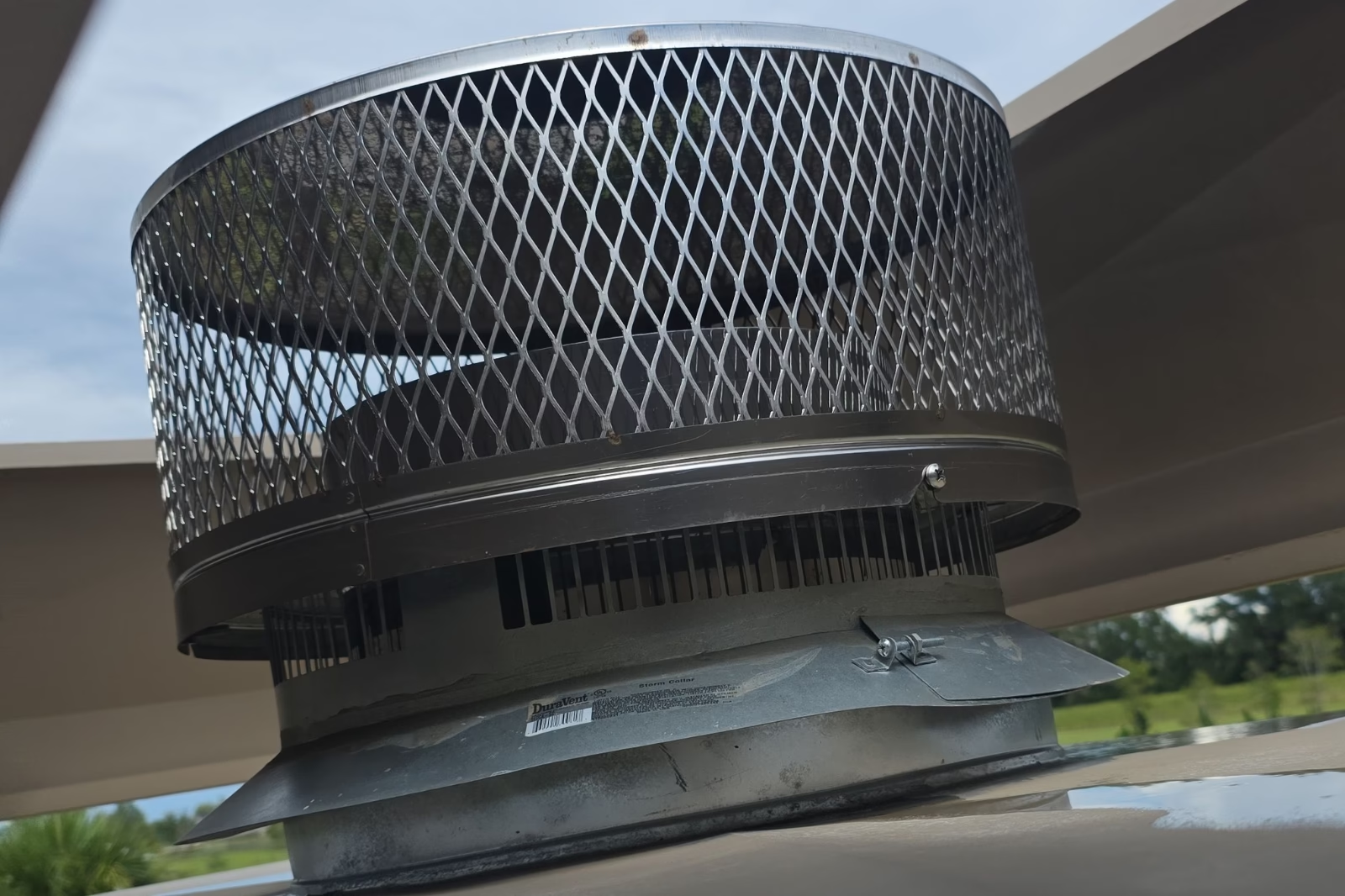
Draft-improving caps include rotating caps (a spinning cowl that creates a venturi effect drawing air up the flue), directional wind caps (fixed cowls that orient to deflect prevailing wind), and top-sealing damper caps (a damper mounted at the flue top that seals completely when the fireplace is not in use and opens to a draft-improving profile when in use). The correct type depends on the cause and pattern of the downdraft problem. Always Fire & Gas assesses the downdraft cause before recommending a draft-improving cap. A rotating cap works well for consistent directional wind problems. A top-sealing damper cap is the best solution for chimneys that produce odor or backdraft when not in use because it eliminates the flue as an air pathway entirely except when the damper is opened for a fire. Fits:  Masonry and factory-built chimneys with documented downdraft, smoke entry during wind events, or persistent odor from the firebox when not in use.
Roof vent image with steel case

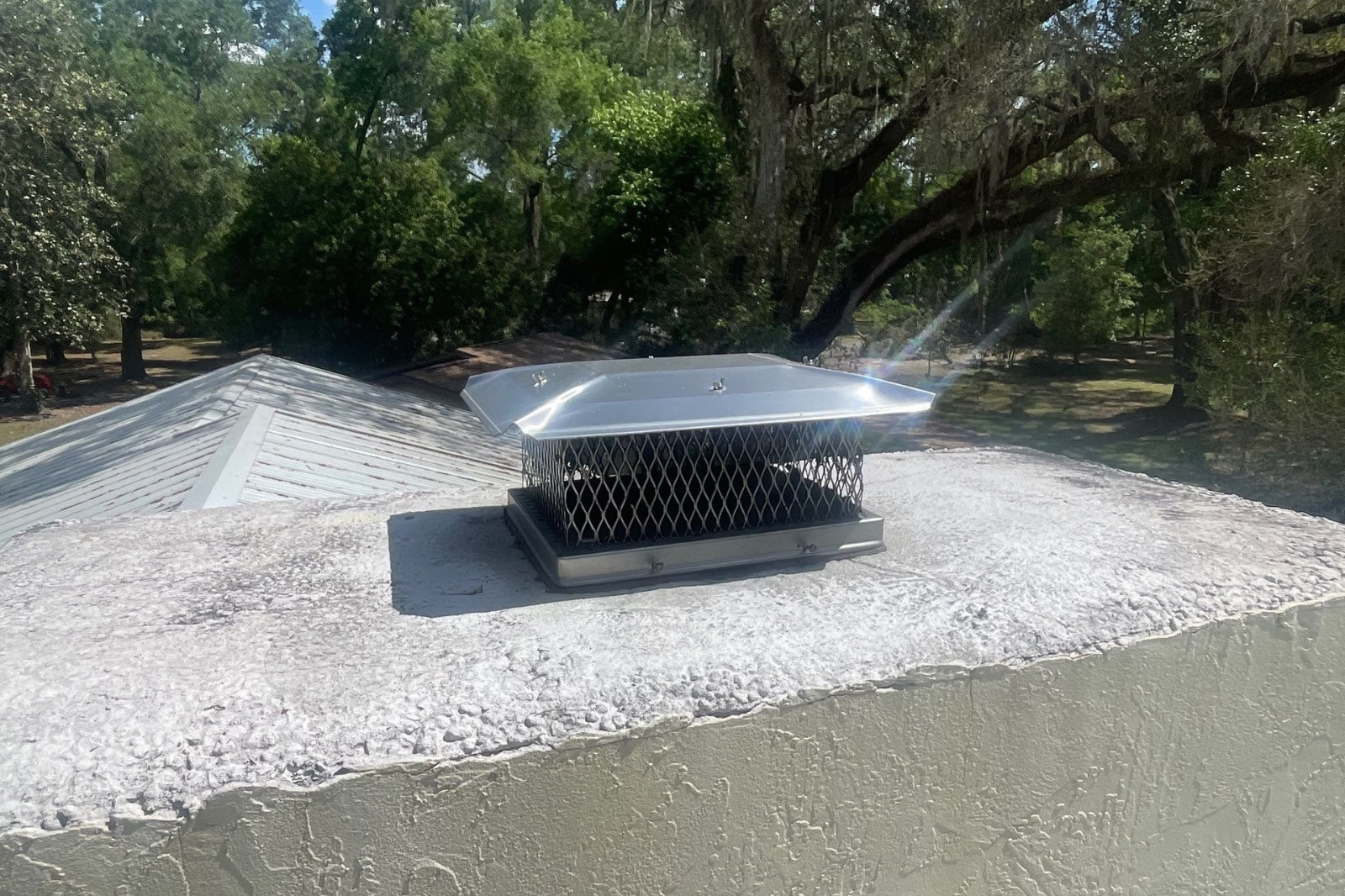
Stainless Steel Single or Multi-Flue

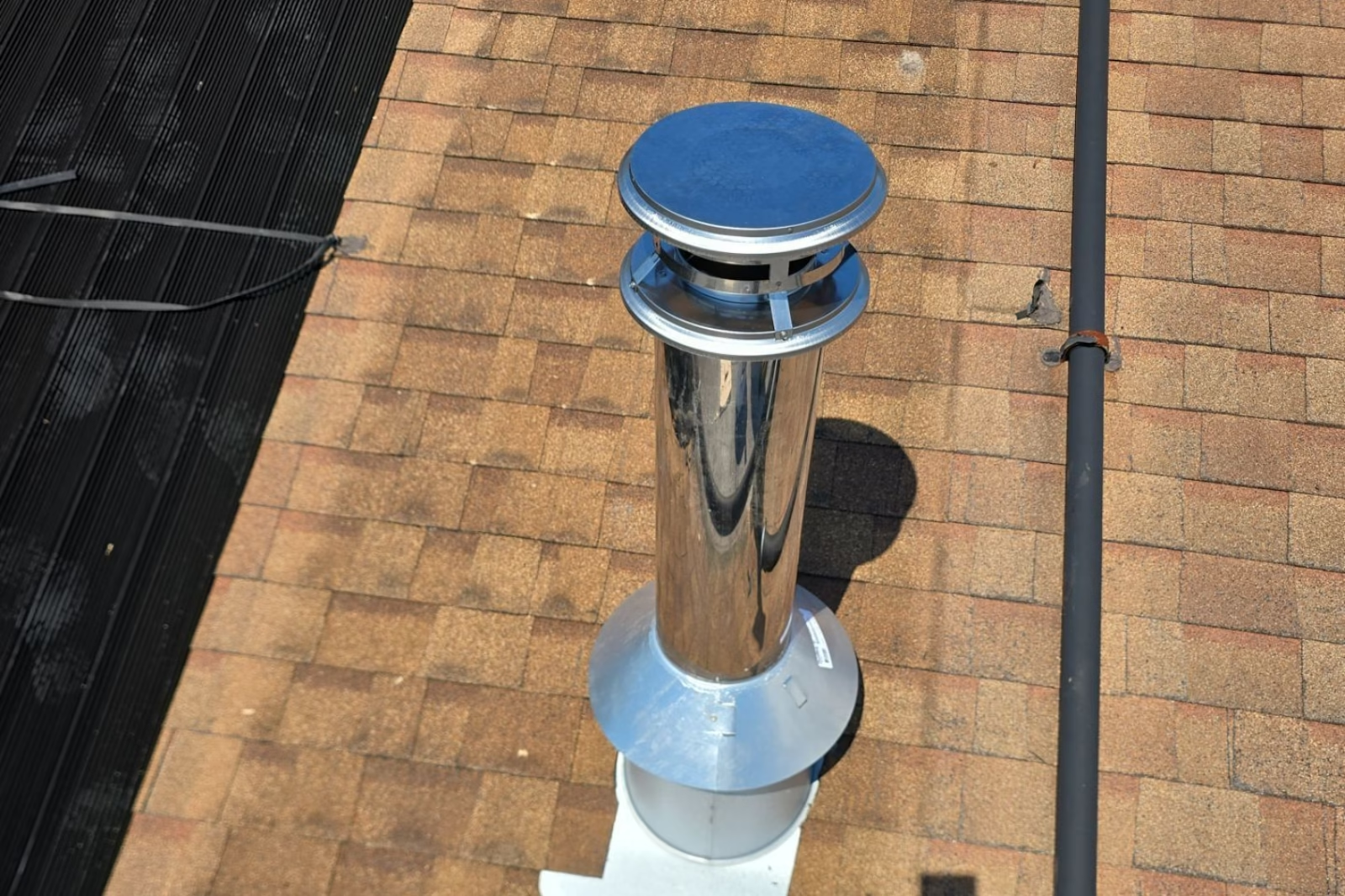
Stainless steel caps are the recommended standard for Florida residential installations. Type 304 stainless does not rust in Florida's coastal-adjacent humidity, requires no coating or maintenance, and carries a manufacturer lifetime warranty on most premium residential cap lines. The stainless construction applies to the cap body, lid, mesh, and fastening hardware -- a fully stainless cap has no components that rust independently. Available in single-flue and multi-flue configurations for all standard flue dimensions. Fits:  All masonry and factory-built chimney applications in Florida where budget does not specifically require galvanized. The recommended default.
Roof vent image with steel case

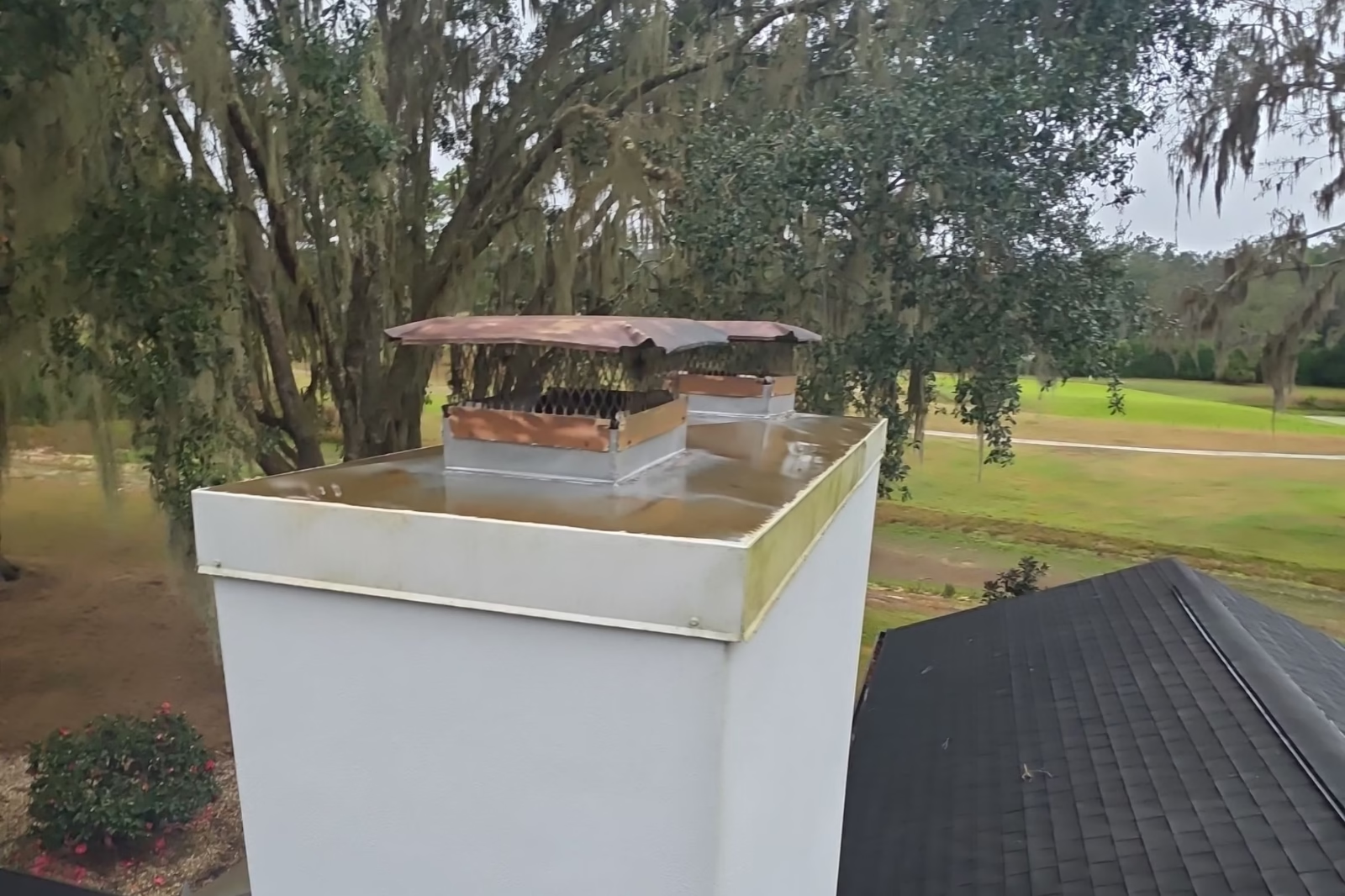
Copper Cap

Draft-improving caps include rotating caps (a spinning cowl that creates a venturi effect drawing air up the flue), directional wind caps (fixed cowls that orient to deflect prevailing wind), and top-sealing damper caps (a damper mounted at the flue top that seals completely when the fireplace is not in use and opens to a draft-improving profile when in use). The correct type depends on the cause and pattern of the downdraft problem. Always Fire & Gas assesses the downdraft cause before recommending a draft-improving cap. A rotating cap works well for consistent directional wind problems. A top-sealing damper cap is the best solution for chimneys that produce odor or backdraft when not in use because it eliminates the flue as an air pathway entirely except when the damper is opened for a fire. Fits:  Masonry and factory-built chimneys with documented downdraft, smoke entry during wind events, or persistent odor from the firebox when not in use.
Roof vent image with cap

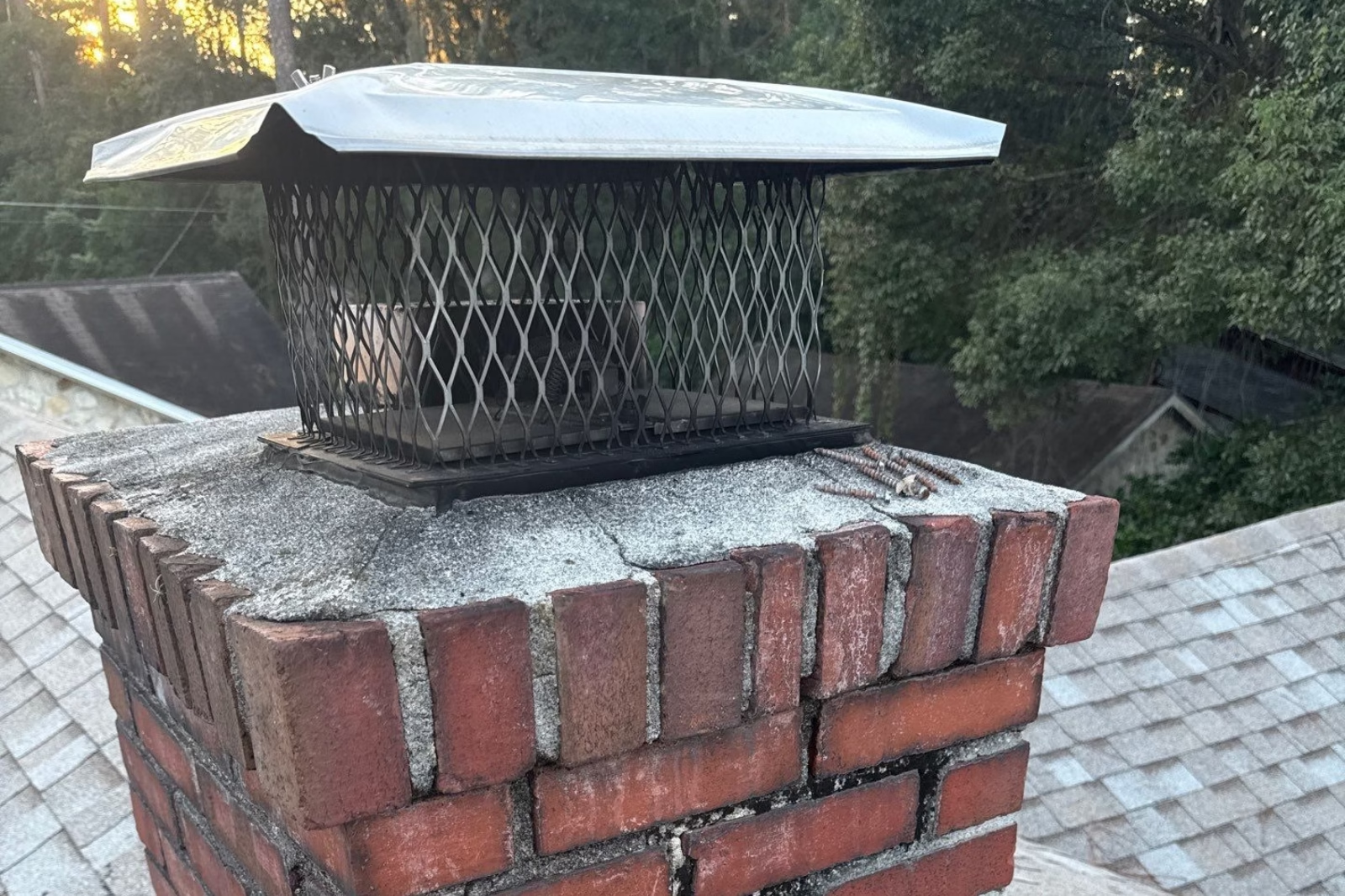
Single-Flue Cap

The most common residential chimney cap. Fits over the top of a single clay tile flue liner, clamped or friction-fit to the tile exterior. Available in square and round configurations to match the tile profile. Correct for masonry chimneys with one active flue. Provides rain exclusion, spark arrest, and animal guard in a single component. Stock sizes available for standard 8x8, 8x12, 12x12, and round tile profiles. Custom-fit available for non-standard tile dimensions. Fits:  Single masonry chimney flue with standard or non-standard clay tile liner. The most frequently installed cap on existing masonry chimneys in North Central Florida.
Roof vent image with cover

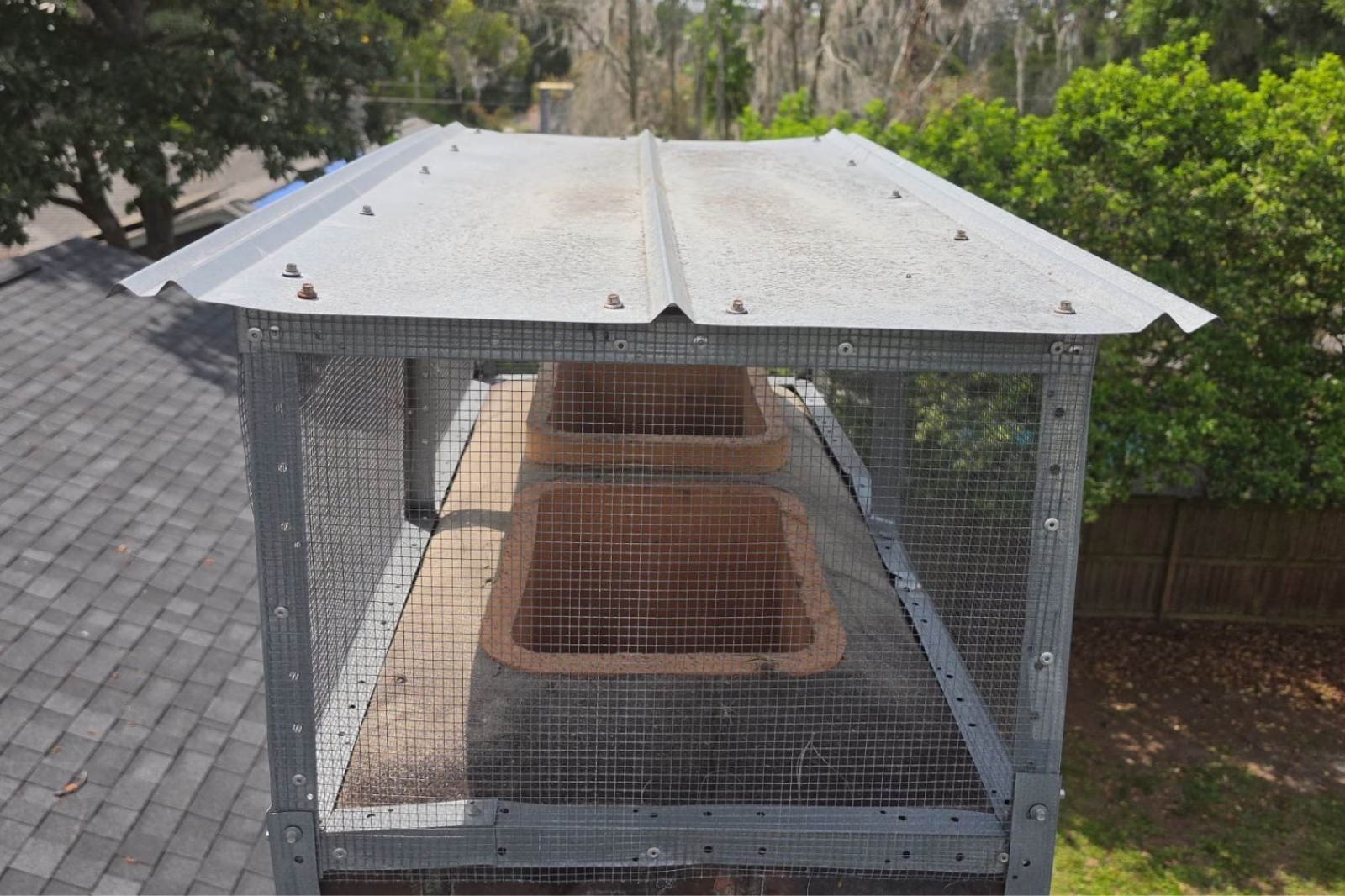
Multi-Flue Cap

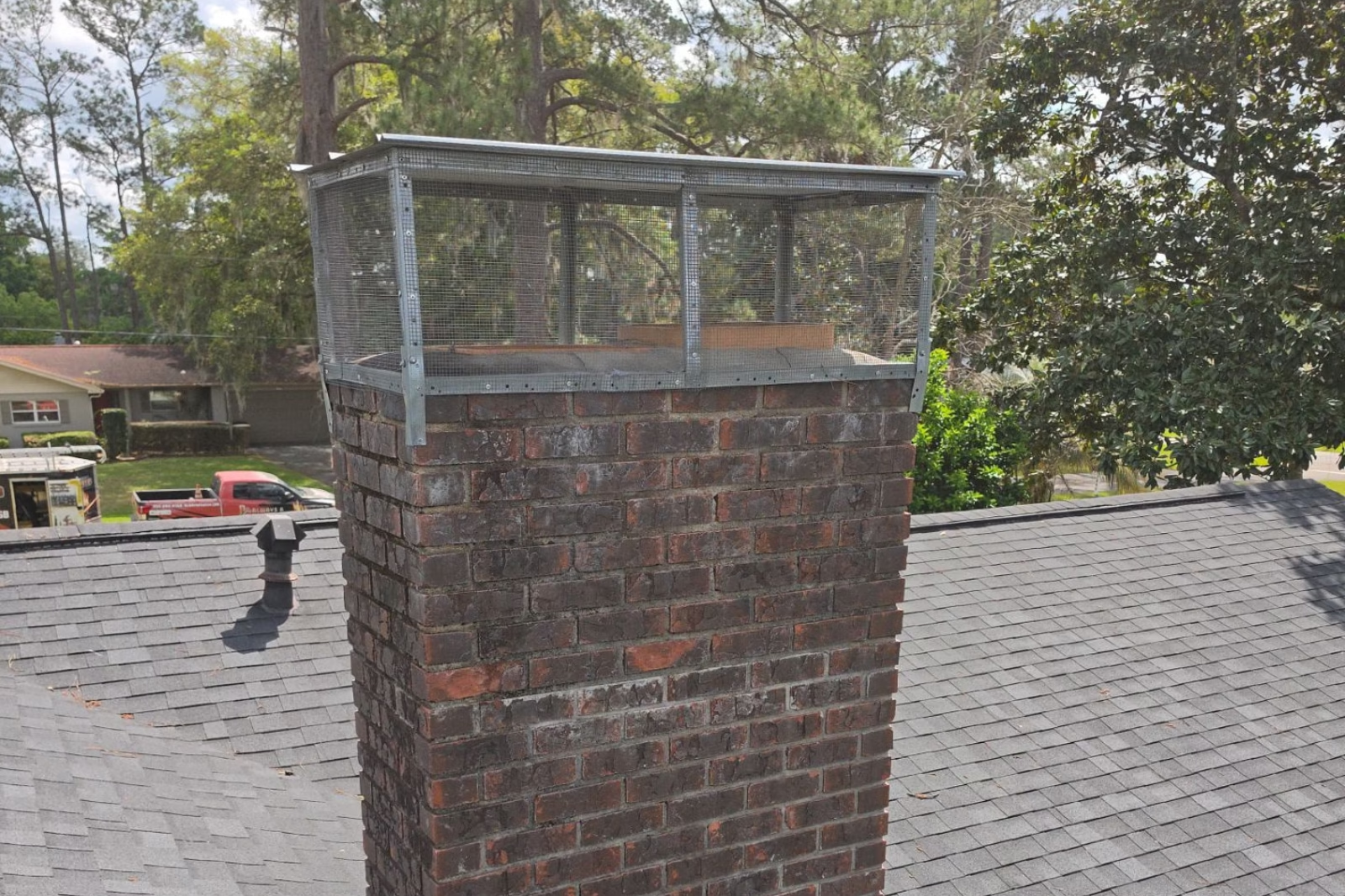
Amulti-flue cap is a larger enclosure that mounts to the chimney crown surface and covers all flue openings in a single unit. Correct for masonry chimneys with two or more flue tiles -- a common configuration in older homes where separate flues serve the fireplace and a furnace or water heater. The cap's enclosure extends past all flue openings, with mesh sides that allow exhaust from each flue to exit while preventing rain and wildlife entry at any opening. Multi-flue caps are available in manufacturer stock configurations for standard chimney crown dimensions. Where the crown dimensions fall outside standard range, custom fabrication is required. Fits:  Masonry chimneys with two or more flue tiles sharing a single chimney crown. Also appropriate for single-flue chimneys where a larger enclosure is preferred for aesthetic reasons or where the crown dimensions make a single-flue cap impractical.

Three Materials. One Florida Climate.
Here Is How They Perform.

Material selection for chimney caps in Florida follows the same logic as for chase covers: the sustained humidity, rainfall, and UV exposure in North Central Florida degrades galvanized steel significantly faster than it would in a moderate climate. Stainless steel is the recommended default for most residential applications. Here is how all three materials compare.

Stainless Steel

25 to 40+ years

Type 304 stainless, lifetime warranty on premium lines | Most installed material

Does not rust in Florida’s coastal-adjacent humidity. No coating required. Fully stainless hardware (no galvanized screws that rust independently). Manufacturer lifetime warranties on premium residential lines (HY-C, Gelco, Olympia). The correct choice for any chimney that should not require cap replacement within the homeowner’s tenure.

Galvanized Steel

5 to 12 years in FL

Zinc-coated steel, painted or bare | Economy option

Zinc coating provides initial corrosion resistance that degrades in Florida’s sustained humidity. Rust typically visible within five to eight years on the cap body, sooner on hardware. Acceptable for budget-constrained situations or short-term needs where the homeowner understands replacement will be required in eight to twelve years. Not recommended as the default choice for Florida installations.

Copper

50+ years

16 oz. copper sheet | Premium architectural

Develops a stable green patina over five to ten years. Does not rust or corrode. Heavier than steel — requires secure mechanical fastening. Highest cost. Correct specification for architectural applications where the cap is a visible design detail. Custom fabrication available for non-standard flue dimensions.

MATERIAL

FL SERVICE LIFE

RUST RISK

RELATIVE COST

RECOMMENDED

Stainless Steel

25 to 40 years

None

Mid

Default for most FL applications

Galvanized Steel

5 to 12 years

High by year 5-8

Low

Budget or short-term

Copper

50+ years

None

High

Architectural / premium

MATERIAL

Stainless Steel

Galvanized Steel

Copper

FL SERVICE LIFE

25 to 40 years

5 to 12 years

50+ years

RUST RISK

None

High by year 5-8

None

RELATIVE COST

Mid

Low

High

RECOMMENDED

Default for most FL applications

Budget or short-term

Architectural / premium

Four Situations. One Call. Cap Confirmed and Installed.

1

Your Cap Blew Off or Is Missing

A missing chimney cap — whether blown off in a storm, removed and not replaced during a previous service, or simply never installed on an older chimney — is an open flue that admits rain and wildlife on every rain event and every night. In Florida, an uncapped chimney during a tropical storm or hurricane can admit significant water volume in a single event. Always Fire & Gas stocks the most common residential cap sizes and installs same-day for standard flue dimensions. For non-standard dimensions, we measure on the first visit and install on the return visit, typically within three to five business days.

Call (352) 282-0158. Describe the chimney type (masonry or factory-built), the approximate flue size if known, and when the cap was last confirmed in place. We will confirm whether same-day installation is available for your flue dimensions.

2

Your Inspection Report Noted a Missing, Damaged, or Inadequate Cap

A chimney inspection report that notes a missing cap, a rusted-through cap, a cap with damaged mesh, or a cap that does not correctly fit the flue tile is a finding that should be addressed before the next fire season or rain season — whichever comes first. Always Fire & Gas performs cap installation as a standalone service following any inspection finding. If the inspection was performed by another company, bring the report. We confirm the finding, select the correct cap for the flue type and dimension, and install it in the same visit for standard sizes.

Call (352) 282-0158 with the inspection report. We confirm the finding and install the correct replacement cap. For non-standard dimensions identified in the report, we measure and return with a fabricated or sourced cap.

3

You Have Animals in the Chimney or Smell Something Dead Inside

Animals in the chimney — audible scratching or chirping, visible nesting material at the damper, or the unmistakable smell of something that died in the flue — are a direct consequence of a missing or damaged cap. In Florida, chimney swifts are the most common nesting bird in open masonry flues. They are federally protected under the Migratory Bird Treaty Act and cannot be removed once a nest with eggs or young is established. A cap installed before the nesting season prevents that situation. For chimneys with an active animal problem, Always Fire & Gas addresses the animal situation in coordination with the cap installation — we do not cap a flue with an active nest or a deceased animal inside without confirming the flue is clear first.

Call (352) 282-0158. If you suspect an active animal presence in the flue, describe the symptoms — sounds, smell, visible material at the damper. We confirm the flue condition and coordinate cap installation after the flue is confirmed clear.

4

You Have Chronic Downdraft or Smoke Entry During Wind Events

A chimney that produces smoke in the living space during wind events — not during the fire, but when the wind is from a specific direction, or when the home’s HVAC is running — has a downdraft problem that may or may not be solvable with a different cap. Always Fire & Gas assesses the downdraft cause before recommending a draft-improving cap. If the problem is wind pressure at the flue top, a rotating or directional cap will resolve it. If the problem is negative pressure inside the house from competing exhaust appliances (range hood, bathroom fans, HVAC return), a cap change will not fix it. We will tell you which situation applies before proposing any cap upgrade.

Call (352) 282-0158 and describe the downdraft pattern — when it occurs, which direction the wind is from, whether it happens when the HVAC is running. That description is enough to narrow the likely cause before a site visit.

Chimney Cap Installation Across North Central Florida

Always Fire & Gas installs chimney caps across Marion, Alachua, Lake, Sumter, Citrus, Putnam, Hernando, Orange, Volusia Counties and all surrounding areas. Stock caps available for same-day installation on standard residential flue dimensions. Custom-fit and fabricated caps scheduled within three to five business days of measurement.

Call (352) 282-0158 to confirm cap availability and scheduling for your address and chimney type.

Chimney Cap Questions, Answered Directly

Yes. A chimney cap is required for any active or unused chimney in Florida for three reasons: rain exclusion, wildlife exclusion, and spark arrest. Florida’s annual rainfall — averaging over 50 inches in North Central Florida — means an uncapped chimney admits significant water volume over a rain season, accelerating liner and smoke chamber deterioration. Florida law requires spark arrestors on chimneys in many jurisdictions, and homeowner insurance policies for wood-burning fireplaces frequently require them as well. Florida’s wildlife — chimney swifts, squirrels, raccoons — readily access uncapped flues for nesting, and chimney swifts are federally protected once a nest is established. A correctly installed cap addresses all three requirements.

Chimney cap sizing depends on the flue tile profile and the exterior dimensions of the flue tile. Standard clay tile flues are available in 8×8, 8×12, 12×12, 13×13, and round profiles in various diameters. The cap must fit the exterior of the tile, not the interior. For single-flue caps, measure the outside dimension of the flue tile at the top of the chimney — length and width for rectangular tiles, diameter for round. For multi-flue caps, measure the overall chimney crown surface dimension. If the flue tile dimensions fall outside the standard range or if the tile is damaged at the top, a custom-fit or fabricated cap is required. Always Fire & Gas measures on-site for every cap installation — we do not rely on homeowner measurements for cap sizing.

Stainless steel is the recommended default for Florida residential chimney cap installations. Type 304 stainless does not rust in Florida’s coastal-adjacent humidity and rainfall environment, carries manufacturer lifetime warranties on premium residential lines, and requires no maintenance. Galvanized steel is the economy option and is appropriate for budget-constrained or short-term applications — in Florida’s climate, galvanized caps typically show significant rust within five to eight years. Copper is the premium architectural choice for high-end residential applications with an effective service life exceeding fifty years. For most homeowners in North Central Florida, stainless steel is the correct choice.

A draft-improving cap can stop smoke entry caused by wind pressure at the flue top — but it will not stop smoke entry caused by negative pressure inside the house from competing exhaust appliances. The distinction matters because the two causes look identical from inside the house but require different solutions. Wind-pressure downdraft is intermittent, occurs during wind events from a specific direction, and is worse when the chimney is cold. Negative-pressure downdraft occurs when strong exhaust fans (range hoods, bathroom fans, dryer vents) are running simultaneously and depressurize the house, pulling air in through the chimney as makeup air. A rotating or directional cap resolves the first. A makeup air solution or air sealing resolves the second. Always Fire & Gas identifies which cause applies before recommending a cap upgrade.

Spark arrestor screens on chimney caps are required by law in many Florida jurisdictions for wood-burning chimneys. The specific requirement varies by county and municipality. Florida Fire Prevention Code references NFPA 211, which requires spark arrestors with 5/8-inch mesh openings on all exterior chimneys. Many jurisdictions adopt this as a local ordinance. Homeowner insurance policies for wood-burning fireplaces frequently require spark arrestors as a coverage condition independent of local code. Always Fire & Gas installs caps with UL-listed spark arrestor screens on all wood-burning applications as a standard specification.

Chimney cap installation cost in North Central Florida depends on the cap type, material, and flue configuration. Single-flue stainless steel cap installation for a standard residential masonry chimney is the most common and most straightforward scope. Multi-flue caps, draft-improving caps, and custom-fabricated caps for non-standard flue dimensions have different price points. Always Fire & Gas confirms cap selection and price in the same call for standard residential applications. Call (352) 282-0158 with the chimney type and approximate flue size if known.

Single-flue caps on accessible chimneys with standard tile dimensions are mechanically straightforward to install — set the cap over the tile, tighten the mounting clamp, confirm the lid is correctly seated. The challenges are access (working safely on a pitched roof) and sizing (a cap that does not fit the tile correctly either falls off or seats with a gap that admits rain and animals). Always Fire & Gas installs caps as a standalone service on the same visit as measurement for standard sizes. The labor cost is modest, the installation is documented, and the correct cap is confirmed before the tech leaves the roof. For homeowners comfortable with roofline access and confident in their measurement, self-installation is a viable option for standard-size caps. For non-standard dimensions, custom fabrication is required and self-installation is not practical.

Scroll to Top