Chimney Services in Ocala, Gainesville, Orlando, The Villages and All Surrounding Areas. Certified. Licensed. Built for Florida.
- CSIA Certified Chimney Sweep #10020
- CCP (Certified Chimney Professional) #546
- NFI Certified Fireplace Installer #177069
- Certified Chimney Specialist (CSIA) #59
- Certified Master Chimney Technician #34
- FL Residential Contractor #CRC133200
- FL Gas Contractor #LI45277
- Liquified Petroleum (LP) Gas Master Qualifier License #MQ31416
- Certified Chimney Re-liner #94
- Certified Chimney Journeyman #5053
Not sure what your chimney needs? → Book a Free Consultation
Certified Chimney Experts
CSIA Certified #10020. CCP #546. Inspections, Sweeping, Relining, Repair, and Rebuilds Across North Central Florida Since 1982.
A chimney in Florida does not fail the same way a chimney in Ohio fails. Humidity, sporadic use, wildlife, and tropical storms create a specific set of deterioration patterns that a chimney professional with northern-market experience may not recognize. Always Fire & Gas has been working on chimneys in this specific climate, in this specific market, since 1982. Every service is performed by or under the direct supervision of a CSIA Certified Chimney Sweep. Every inspection follows the NFPA 211 standard. Every liner installation is sized to the appliance and the flue, not to a general estimate.
Ten chimney services. Nine counties. One certified team that has been here long enough to have serviced the chimneys of homeowners who have since referred their children and their neighbors.
Five Reasons Florida Chimneys Need Different Care Than What the Northern-Market Advice Says
Most chimney content online is written for cold-climate markets where chimneys are used heavily through long winters and inspected annually as a matter of necessity. Florida homeowners often use their chimneys sporadically, live in a climate that is hard on masonry and liner systems in different ways, and face hazards that northern-market guides never mention.
Here is what is actually happening inside and on the chimneys of North Central Florida homes.
Humidity Deteriorates Masonry and Mortar Faster Than Cold Does.
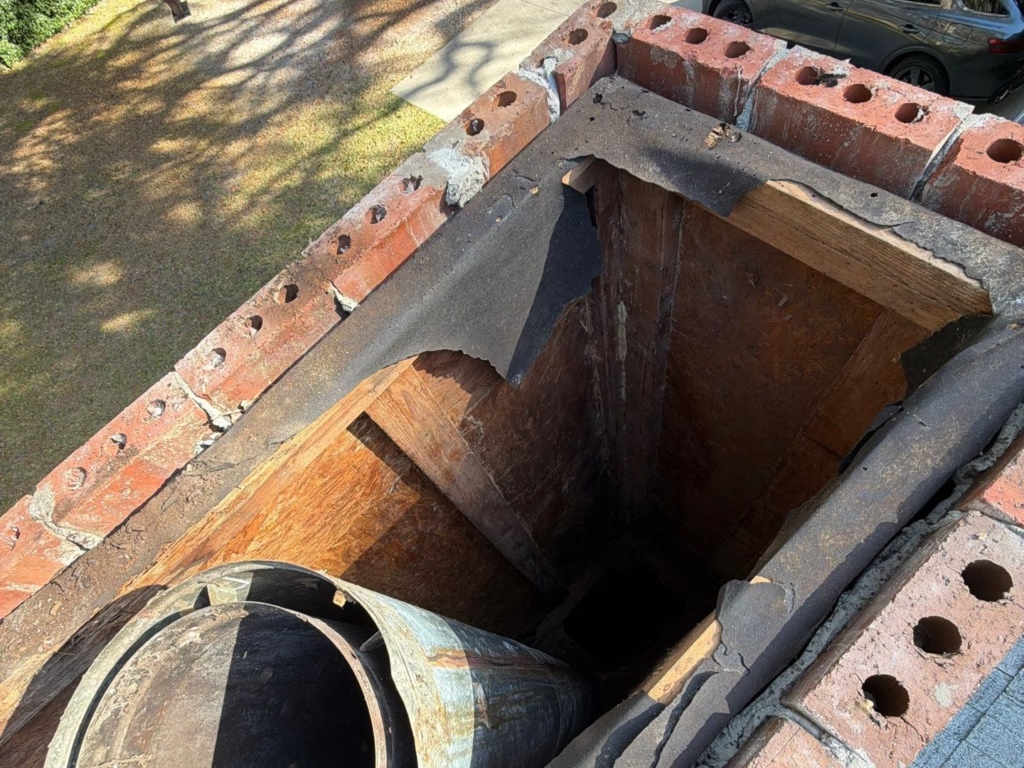
Florida's combination of heat, humidity, and alternating wet and dry seasons creates a specific freeze-thaw-free deterioration cycle: moisture penetrates mortar joints and brick facing, organic growth (mold, mildew, algae) establishes in the pores, and thermal expansion and contraction cycles accelerate the breakdown. Mortar that looks intact from ground level can be in advanced deterioration at the joints. The damage is not visible until it becomes a structural problem, a water infiltration problem, or both. What this means for Florida homeowners: Annual visual inspection of mortar and crown condition is not optional. Moisture penetration that is caught at the tuck-pointing stage costs hundreds. Moisture penetration caught at the rebuilding stage costs thousands.
Sporadic Use Creates Creosote and Moisture Hazards That Annual Use Does Not.
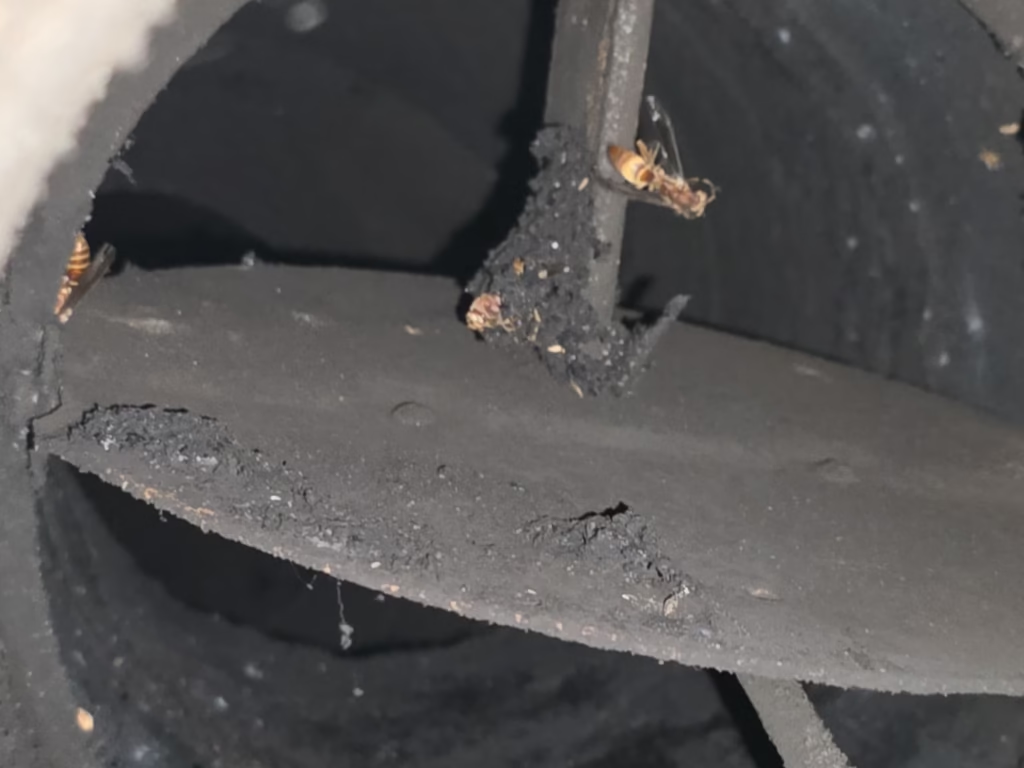
A chimney that sits unused from March through November in Florida's humidity does not simply wait for you to light a fire in December. Moisture infiltrates the liner and flue system during the unused months. When the first fire of the season is lit, it encounters a cold, damp flue, which dramatically increases creosote deposition rate and reduces draft. A chimney that was clean after last season's use can have meaningful creosote accumulation after just a few fires in an unchecked system.
A Level 2 Chimney Inspection Is Required at Every Property Transfer in Florida.
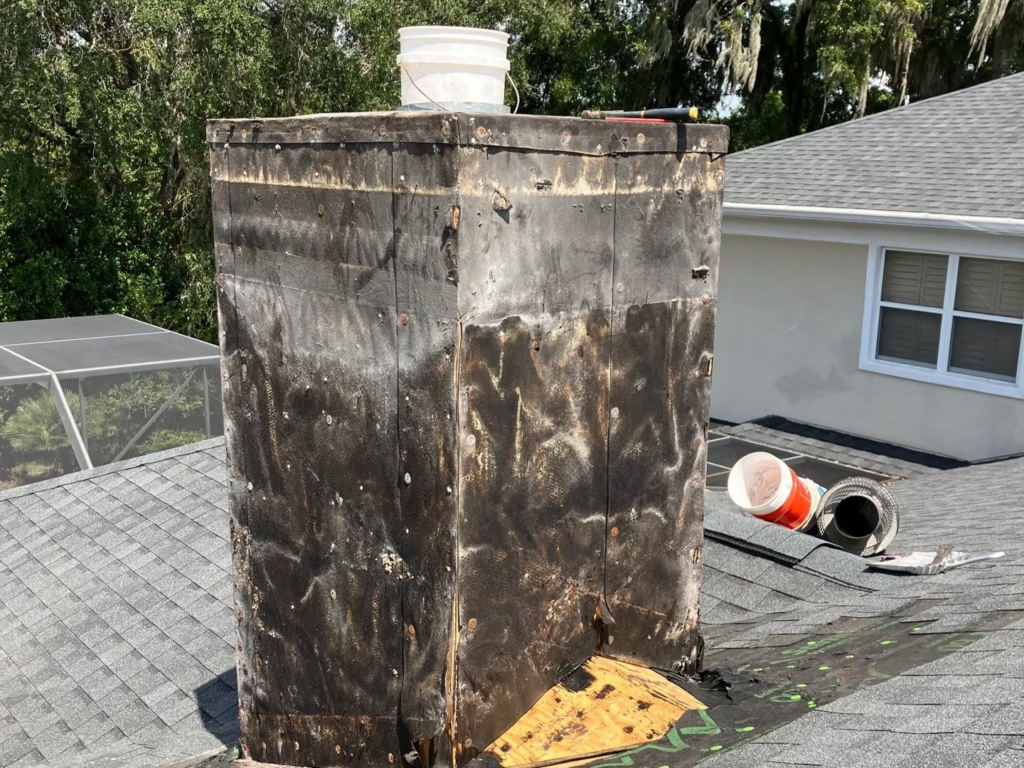
NFPA 211, the standard governing chimney inspection in the United States, requires a Level 2 chimney inspection whenever a property containing a chimney changes ownership. This is not a recommendation. It is a code requirement that applies to every home sale in Florida with a solid fuel or gas chimney system.
Tropical Storms and Hurricanes Damage Chimney Systems in Ways That Are Not Always Immediately Visible.
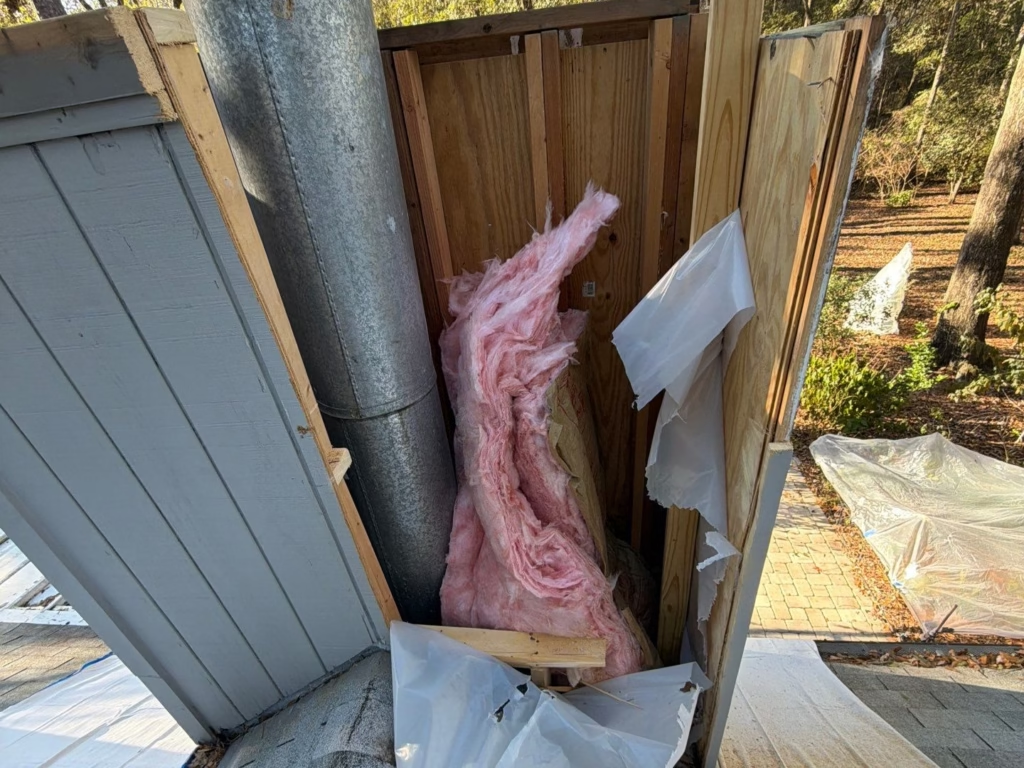
High-wind events stress chimney crowns, flashing, and the chimney structure itself in ways that may not produce visible exterior damage but compromise the system's integrity and water resistance. A crown that has shifted one-quarter inch is still a crown, visually. It is also a chimney that is now admitting water on every rain. Flashing that was pulled slightly from the chimney wall during a storm may appear intact from ground level and fail progressively over the following months.
Florida's Wildlife Is Actively Looking for Chimney Access.
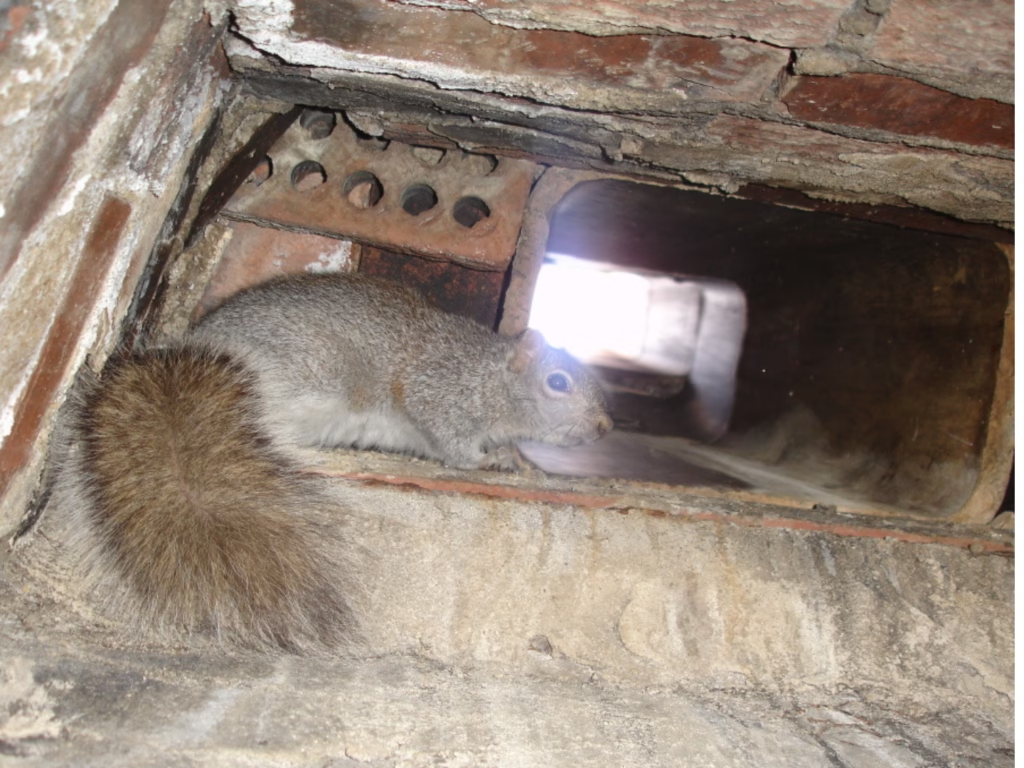
Squirrels, raccoons, chimney swifts, woodpeckers, and in some parts of Marion and Alachua Counties, flying squirrels treat uncapped chimneys as ideal nesting sites. A chimney cap that is cracked, rusted through, or simply missing is not just an aesthetic issue. It is an open access point for animals whose nesting materials are combustible, whose presence can block flue draft completely, and who, if deceased in the flue, create a hazard and an odor that pervades the home.
Chimney Inspection - Level 1, Level 2, and Level 3
NFPA 211 defines three levels of chimney inspection, each appropriate to a different situation. Always Fire & Gas performs all three. A Level 1 inspection covers the accessible portions of the chimney interior and exterior and is appropriate for chimneys in continuous service with no changes to the appliance or fuel type. A Level 2 inspection includes all Level 1 areas plus accessible attic, crawl space, and basement areas, plus a video scan of the internal flue surfaces, and is required at any change of ownership, any change of appliance or fuel type, and after any event such as a chimney fire or storm damage. A Level 3 inspection involves removal of specific components to access concealed areas of the chimney and is appropriate when a Level 1 or 2 inspection indicates a potential hazard that cannot be assessed without access to concealed areas.
Every inspection produces written documentation of findings. Every Level 2 inspection includes a video record of the flue interior. Documentation is suitable for insurance underwriting, real estate disclosure, and permit applications.
- Level 1: annual maintenance inspection for chimneys in continuous service
- Level 2: required at property sale, fuel type change, appliance change, or after any damaging event
- Level 3: when concealed hazard is suspected and Level 1/2 findings are inconclusive
- All inspections follow NFPA 211 standard • CSIA #10020 • Written report provided
Chimney Sweeping and Cleaning
Creosote accumulation in the flue is the primary cause of chimney fires. Always Fire & Gas sweeps chimneys using a 3-motor HEPA vacuum containment system that captures particulate before it enters the living space. Every sweep is performed with wire brushes sized to the flue diameter and documents pre- and post-cleaning condition. For wood-burning fireplaces and wood stoves used with any regularity in North Central Florida, annual sweeping before the heating season is the CSIA recommendation.
Creosote in Florida’s sporadic-use chimneys often presents in Stage 2 or Stage 3 form despite limited use, because damp, cold flue conditions at first-fire-of-season accelerate deposition rate. A chimney that was swept twelve months ago and used only six times may have more creosote than one used fifty times in a continuously heated northern home.
- HEPA containment - no dust or soot enters the living space
- Pre- and post-cleaning photography included
- Creosote stage assessment documented
- Annual sweep recommended for all solid fuel systems • CSIA #10020
Chimney Relining - Stainless Steel Liner Installation
A chimney liner is the single most safety-critical component of a masonry chimney system. It contains combustion gases, protects the masonry from heat and acid, and controls the draft characteristics of the flue. In Florida, original terracotta tile liners crack from thermal cycling, moisture intrusion, and, in older homes, from chimney fires that may have occurred years before the current owner took possession. A cracked or deteriorated liner is not a cosmetic issue. It is a carbon monoxide and chimney fire risk.
Always Fire & Gas sizes and installs stainless steel chimney liner systems for wood-burning fireplaces, gas fireplaces, wood stoves, and oil appliances. Liner diameter is sized to the connected appliance’s flue collar and the chimney’s height and configuration – not to a standard size estimate. Every relining project includes a post-installation video inspection confirming correct fit and seating.
- Flexible and rigid stainless steel liner systems
- Sized to NFPA 211 specifications for the connected appliance
- Required for wood stove inserts and most gas fireplace conversions
- Post-installation video inspection included • CCP #546
Chimney Repair - Mortar, Brick, and Crown
Florida’s humidity and thermal cycling deteriorate chimney mortar joints and crown surfaces faster than cold-climate exposure does. Tuck-pointing, the process of removing deteriorated mortar and replacing it with fresh mortar matched to the original specification, is the primary maintenance repair for masonry chimneys. Crown repair seals the concrete or mortar cap at the top of the chimney structure that directs water away from the flue opening. Spalling brick, where the face of the brick separates due to moisture intrusion, is repaired by brick replacement matched to the original size and color where possible.
Always Fire & Gas performs mortar, brick, and crown repairs under FL Residential Contractor License #CRC133200. Every repair is permitted where applicable and documented with before and after photography.
- Tuck-pointing: mortar joint removal and replacement
- Crown repair and resurfacing
- Spalling and damaged brick replacement
- Firebox back wall and smoke chamber parging
- All masonry repair under FL Contractor #CRC1332000
Chimney Rebuild - Partial and Full
When chimney deterioration has progressed beyond what repair can address – structural instability, widespread mortar failure, or a chimney that has been damaged to the point where the liner cannot be safely relined – a partial or full rebuild is the correct solution. Partial rebuilds address the chimney from the roofline up, replacing the above-roof section while preserving the sound below-roof structure. Full rebuilds reconstruct the entire chimney from the firebox up.
Always Fire & Gas performs partial and full chimney rebuilds under FL Residential Contractor License #CRC133200. Every rebuild is permitted, inspected, and documented. If you have received a rebuild recommendation from another provider and want a second opinion, call (352) 282-0158.
- Partial rebuild: above-roofline section
- Full rebuild: firebox through crown
- Matching brick and mortar specification where possible
- Permit, inspection, and documentation included
- All rebuild work under FL Contractor #CRC133200
Chimney Waterproofing
Masonry is porous. A masonry chimney that is not waterproofed is a chimney that is absorbing water every time it rains, which in North Central Florida means a chimney that is absorbing water for much of the year. ChimneySaver and similar penetrating water repellents allow vapor transmission from the inside out while blocking liquid water penetration from the outside. The difference between a waterproofed chimney and an uncoated one is measurable in years of service life.
Always Fire & Gas applies professional-grade penetrating water repellent to masonry chimneys as a standalone service and as part of repair and inspection packages. Application is appropriate for chimneys with sound mortar and brick – waterproofing over deteriorated masonry is not a substitute for repair.
- Professional-grade penetrating water repellent application
- Appropriate for chimneys with sound mortar and masonry
- Extends service life and reduces future repair frequency
- Combined with tuck-pointing and crown repair for maximum effect
Chimney Cap Installation and Replacement
A chimney cap is the first line of defense against rain, debris, and wildlife entry. In Florida, caps are also the primary barrier against the humidity-driven moisture infiltration that accelerates liner and mortar deterioration. A missing cap is a chimney that is open to rain, humidity, birds, and animals on every unprotected day. A rusted-through cap is a cap that no longer functions. A cap that does not fit the flue opening correctly is a cap that is solving neither problem.
Always Fire & Gas supplies and installs correctly sized stainless steel chimney caps for all flue configurations, including round and rectangular flue tiles, multi-flue chimneys, and oversized masonry openings. Cap installation is included in every annual inspection where the existing cap is found to be deficient.
- Stainless steel caps for all flue configurations
- Sized to the specific flue opening — not a standard size
- Multi-flue chimney cap configurations
- Wildlife exclusion verification included
Chimney Flashing Repair and Replacement
Chimney flashing is the metal seal between the chimney structure and the roof surface. It is the most common source of water entry in homes with masonry chimneys, and in Florida, where roof surfaces expand and contract significantly with temperature and humidity changes, it is also among the fastest to deteriorate. Flashing failure is frequently misdiagnosed as a roofing problem. If your roof was repaired and the water entry at the chimney location persists, the flashing is the likely cause.
Always Fire & Gas repairs and replaces chimney flashing under FL Residential Contractor License #CRC133200. Step flashing, counter flashing, and saddle flashing (cricket) installations are all within scope. Every flashing job is waterproofed at the termination points.
- Step flashing repair and replacement
- Counter flashing and saddle/cricket installations
- Waterproofing at all termination points
- Correct diagnosis before any flashing work begins • FL Contractor #CRC1332000
Smoke and Draft Problem Diagnosis
A fireplace that smokes into the room, a wood stove that will not draw, a gas fireplace with intermittent ignition problems related to draft – these are not always problems with the appliance. They are frequently problems with the chimney system: an undersized flue, a damaged liner, a blocked flue, negative house pressure, a crown or cap configuration that causes downdraft, or a chimney height that does not meet the 3-2-10 rule. Treating the appliance when the problem is in the flue produces repeated service calls without resolution.
Always Fire & Gas diagnoses smoke and draft problems by assessing the full system – appliance, connector pipe, liner, flue, and cap – before recommending any service or repair. The diagnostic approach finds the actual cause rather than the nearest plausible cause.
- Full system assessment: appliance through cap
- Draft measurement and documentation
- Negative pressure testing for house-pressure-related draft problems
- Smoke pencil testing for air infiltration at liner joints
- Diagnosis before any recommendation • CSIA #10020
Animal and Debris Removal
Squirrels, raccoons, chimney swifts, woodpeckers, and other Florida wildlife enter uncapped or damaged chimneys regularly. A live animal in the flue requires humane removal before any chimney work can proceed. A deceased animal requires removal and decontamination. Nesting materials, which are combustible, require complete removal and the flue swept before the system is safe to use. Chimney swifts are a federally protected migratory species: if chimney swifts are present in the flue during nesting season, the flue cannot be legally disturbed until the birds have departed.
Always Fire & Gas performs animal and debris removal as a standalone service and in conjunction with chimney inspection and cap installation. We advise homeowners on chimney swift nesting season timelines and on cap installation timing that protects both the homeowner’s chimney and the birds’ federally protected nesting site.
- Humane live animal removal
- Deceased animal removal and decontamination
- Complete nesting material removal and sweep
- Chimney swift nesting season guidance (federally protected species)
- Cap installation to prevent re-entry • CSIA #10020
What the Credentials Mean. And Why They Matter More for Chimney Work Than for Most Home Services.
Chimney work in Florida is not a licensed trade at the state level. Any person can represent themselves as a chimney sweep, charge for an inspection, and produce a report. There is no state exam. There is no required credential. There is no license number to look up on the Florida DBPR website for chimney sweeping specifically.
The credentials that matter in this industry are the national certifications issued by independent bodies with their own examination and continuing education requirements. Always Fire & Gas holds the three that matter most.
CSIA Certified Chimney Sweep #10020
csia.org • Verification: enter #10020
The CSIA examination is the baseline professional credential for chimney sweeps in the United States. It requires passing a written examination covering chimney systems, appliance types, NFPA 211, clearance requirements, and safety standards. CSIA certification requires continuing education for renewal. It does not expire and renew automatically – it must be actively maintained.
When you hire a CSIA Certified Chimney Sweep, you are hiring someone who passed a national examination on chimney systems and is required to stay current on standards changes.
CCP - Certified Chimney Professional #546
nfichimney.org • Verification: enter #546
The CCP designation, issued by the National Fireplace Institute, is the advanced credential for chimney professionals and requires a higher examination standard than the base CSIA certification. It covers liner systems, venting requirements, code compliance, and the full scope of chimney system evaluation and installation. The CCP is the credential that governs liner sizing and installation work specifically.
When a liner is undersized, the result is accelerated creosote accumulation and reduced draft. When it is oversized, the result is the same. The CCP credential is evidence that the professional sizing your liner has been examined on exactly that decision.
The contractor licenses that complete the picture:
FL Residential Contractor #CRC1332000 authorizes Always Fire & Gas to perform structural work – chimney rebuilds, masonry repair, crown replacement, and flashing – as a licensed contractor with permit authority. Verify at myfloridalicense.com.
FL Gas Contractor #LI45277 authorizes gas line installation and repair in Florida. Relevant for gas fireplace liner work and any chimney project involving a gas appliance connection. This license is not held by most chimney companies. Verify at myfloridalicense.com.
A chimney company that holds sweeping certifications but not a contractor license cannot legally pull permits for structural chimney work in Florida. A chimney company that holds a contractor license but not CSIA or CCP certification is a contractor doing chimney work, not a chimney professional. Always Fire & Gas holds both.
Buying or Selling a Home in North Central Florida with a Fireplace? A Level 2 Chimney Inspection Is Required.
NFPA 211 Section 17.3 requires a Level 2 chimney inspection when any real property with a chimney system changes ownership. This applies to every home sale in Florida where a wood-burning fireplace, gas fireplace with a chimney flue, or wood stove is present. It is not a recommendation from a real estate agent. It is the governing safety standard for chimney systems.
If you are the seller:
A Level 2 inspection before listing gives you a documented condition report to include in disclosure. Surprises at the buyer’s inspection are the most common source of fireplace-related renegotiations and delayed closings. A clean inspection report is a disclosure asset. A repair completed before listing is less expensive than the same repair negotiated as a closing credit under buyer pressure.
Always Fire & Gas schedules Level 2 inspections for pre-listing sellers with real estate timelines in mind. Call (352) 282-0158 to schedule.
If you are the buyer:
A general home inspector’s chimney assessment is a visual exterior check. It is not a Level 2 inspection. It does not include a video scan of the flue interior. It does not assess liner condition, firebox integrity, or smoke chamber parging. The problems that cost the most to repair – cracked liners, deteriorated smoke chambers, failed crowns – are not visible in a general home inspection.
Always Fire & Gas performs Level 2 buyer inspections that produce written documentation of every finding. If the inspection reveals problems, you have documented evidence for negotiation before closing.
For real estate agents in Marion, Alachua, Sumter, Lake, and surrounding counties:
Always Fire & Gas provides Level 2 chimney inspections with written reports on real estate timelines. Reports include photography, video documentation of the flue interior, and findings presented in plain language suitable for disclosure packages and insurance underwriting. Call (352) 282-0158 or have your clients book directly.
Chimney Services Across Nine Counties in North Central Florida
Always Fire & Gas serves Marion, Alachua, Lake, Sumter, Citrus, Putnam, Hernando, Orange, Volusia Counties and all surrounding areas. With a team of more than 20 certified professionals, we serve every part of our nine-county service area without the scheduling delays of a smaller operation.
Ocala & Marion County
Home market since 1982. Full chimney scope including masonry rebuild, liner work, and post-storm inspection for Marion County’s established residential and rural acreage properties.
Gainesville & Alachua County
Masonry and prefab chimney systems throughout Alachua County. Level 2 real estate inspections for Gainesville’s active resale market. Rural county properties served.
The Villages & Sumter County
Active adult community and senior living market. Level 2 inspections for The Villages’ high-volume real estate market. Wildlife exclusion and cap work common in Sumter County.
Ocala & Marion
County
Gainesville & Alachua County
The Villages & Sumter County
Home market since 1982. Full chimney scope including masonry rebuild, liner work, and post-storm inspection for Marion County’s established residential and rural acreage properties.
Masonry and prefab chimney systems throughout Alachua County. Level 2 real estate inspections for Gainesville’s active resale market. Rural county properties served.
Active adult community and senior living market. Level 2 inspections for The Villages’ high-volume real estate market. Wildlife exclusion and cap work common in Sumter County.
Also serving: Lake County, Citrus County, Putnam County, Hernando County, Orange County, Volusia County, and all surrounding areas. Rural and agricultural properties throughout the service area are fully served.
Schedule Your Chimney Inspection or Service Call Today.
The CSIA recommends annual inspection for all chimney and fireplace systems. In Florida, where humidity, sporadic use, and wildlife create specific hazards between uses, that recommendation is not a formality. It is the minimum standard for a safe system.
Always Fire & Gas has been providing CSIA-certified chimney services in North Central Florida since 1982. Call or text (352) 282-0158 to schedule.
Level 1, 2, and 3 inspections • Sweeping and cleaning • Relining • Repair and rebuild
Waterproofing • Cap installation • Flashing repair • Draft diagnosis • Animal removal
Chimney Questions from North Central Florida Homeowners
The CSIA and NFPA 211 recommend annual chimney inspection for all chimney and fireplace systems regardless of frequency of use. In Florida, annual inspection is particularly important because humidity during the unused months accelerates mortar deterioration, moisture infiltrates the liner system, and wildlife can establish in uncapped chimneys between uses. For wood-burning systems used seasonally, inspection before the first fire of the season is the minimum standard. Always Fire & Gas performs CSIA-certified chimney inspections across North Central Florida.
NFPA 211 defines three inspection levels. Level 1 covers accessible interior and exterior areas and is appropriate for chimneys in continuous service with no changes to appliance or fuel type. Level 2 adds accessible attic, basement, and crawl space areas plus a video scan of the flue interior, and is required at any change of ownership, any appliance or fuel change, and after any damaging event. Level 3 involves removal of components to access concealed areas when a hazard is suspected but cannot be confirmed at Level 2.
Chimney sweeping cost in North Central Florida varies by flue size, creosote level, and access. Always Fire & Gas provides pricing over the phone for standard residential sweeping after a brief conversation about the system. Call or text (352) 282-0158 for current pricing. We do not publish a fixed price because a chimney with Stage 2 or Stage 3 creosote accumulation requires a different scope of work than a clean annual sweep and quoting a single price for both is not honest.
Signs that a chimney liner requires inspection or replacement include: visible cracks or spalling in the firebox, white staining on the exterior chimney face (efflorescence, indicating moisture migration through the liner), a strong smoke or creosote odor in the house when the fireplace is not in use, reduced draft or smoke spillage into the room, and any history of a chimney fire. Many liner failures are not visible without a video scan of the flue interior, which is why Always Fire & Gas includes video documentation in every Level 2 inspection.
Yes. NFPA 211 requires a Level 2 chimney inspection when any property with a chimney system changes ownership. This applies to every home sale in Florida where a wood-burning fireplace, gas fireplace with a chimney flue, or wood stove is present. The inspection must be performed by a qualified chimney professional and must include a video scan of the flue interior. Always Fire & Gas performs Level 2 real estate inspection in Marion, Alachua, Sumter, Lake, and surrounding counties with written documentation for disclosure packages.
A general home inspector can perform a visual assessment of the chimney exterior and accessible interior, which is a Level 1 inspection at most. A Level 2 inspection, required at property transfer under NFPA 211, includes a video scan of the flue interior that a general home inspector typically does not perform and is not equipped to interpret. Problems found in a Level 2 inspection – cracked liners, damaged smoke chambers, failed crowns – are frequently not visible in a general home inspection and are among the most expensive chimney repairs.
Chimney sweeping itself is not a state-licensed trade in Florida. Any person can represent themselves as a chimney sweep without holding any license or credential. The credentials that provide verified professional competence are national certifications: CSIA (Chimney Safety Institute of America) and CCP (Certified Chimney Professional through the National Fireplace Institute). Always Fire & Gas holds CSIA #10020 and CCP #546, both verifiable through the issuing organization’s registry. Structural chimney work, including rebuilds and liner installation, requires a Florida Residential Contractor license (#CRC133200).
A CSIA Certified Chimney Sweep has passed a national written examination administered by the Chimney Safety Institute of America covering chimney systems, NFPA 211, appliance types, clearance requirements, and safety standards. The certification requires continuing education for renewal and is publicly verifiable at csia.org. It is the baseline professional credential for chimney sweeps in the United States. Always Fire & Gas holds CSIA certification #10020.
Yes. Squirrels, raccoons, chimney swifts, woodpeckers, and flying squirrels commonly enter uncapped or damaged chimneys in North Central Florida. Nesting materials are combustible and create fire risk. A deceased animal in the flue creates odor that pervades the home and requires removal and decontamination. Chimney swifts are federally protected during nesting season and cannot be disturbed while present. A correctly fitted stainless steel chimney cap is the only reliable prevention. Always Fire & Gas installs caps sized to the specific flue opening and confirms wildlife exclusion as part of every annual inspection.
Yes, in different ways. Cold-climate chimneys are primarily damaged by freeze-thaw cycles. Florida chimneys are primarily damaged by sustained moisture absorption, organic growth (mold, algae, mildew) in masonry pores, and the combination of heat and humidity that accelerates mortar deterioration at the joints. Florida chimneys also experience thermal cycling from intermittent use – a cold damp flue followed by high heat – that stresses liner systems differently than continuous cold-climate use. Annual inspection in Florida addresses these specific failure modes before they reach the repair or rebuild stage.