Always Fire & Gas

CSIA Certified Dryer Exhaust Technician #1149. FL Residential Contractor #CRC133200. Cleaning, Repair, Reroutes, and Installation. North Central Florida Since 1982.

Dryer Vent Services in Ocala, Gainesville, Orlando, The Villages and All Surrounding Areas.

Always Fire & Gas has been cleaning dryer vents in North Central Florida since 1982. Our technicians hold CSIA Dryer Exhaust Technician certification – a dryer-specific credential, not a general chimney cert – and every service follows a documented process: full lint removal, a new DryerFlex transition duct, a complete inspection, and a before/after photo report you can keep. We have seen what a blocked vent looks like. We know what it takes to get the system clean and documented. And we make it straightforward.

Dryer Vent Solutions

Your Dryer Takes Two Cycles. The Vent Has Never Been Cleaned. The Inspector Found Something. The Run Is Non-Compliant. Whatever the Starting Point, Always Fire & Gas Has the Certification and the License to Fix It.

 The eight services below cover every dryer vent scope Always Fire & Gas performs. If you are not sure which one applies to your situation, call or text (352) 282-0158 and describe what you are experiencing. AFG will identify the correct scope and tell you what the service involves before any work is scheduled.

Step 1: Describe What You Are Experiencing

Two-cycle dryer, never been serviced, inspection finding, recent renovation, relocated appliance - whatever you know, describe it. Call or text (352) 282-0158.

Step 2: AFG Identifies the Correct Service

Cleaning, repair, cap replacement, wall box, reroute, or installation. The scope and what it involves are confirmed before anything is scheduled or priced.

Step 3: Service Performed. System Documented.

Before/after photo report under CSIA DET #1149 on every service. Permit pulled and closed where required. You have a record.

All dryer vent services covered in Ocala, Gainesville, The Villages, Orlando and all of North Central Florida.

Eight Dryer Vent Services. Find the One That Matches Your Situation.

Each service below addresses a specific dryer vent problem. The description tells you what the service fixes. Click through to the service page for the full scope, service deliverables, and scheduling.

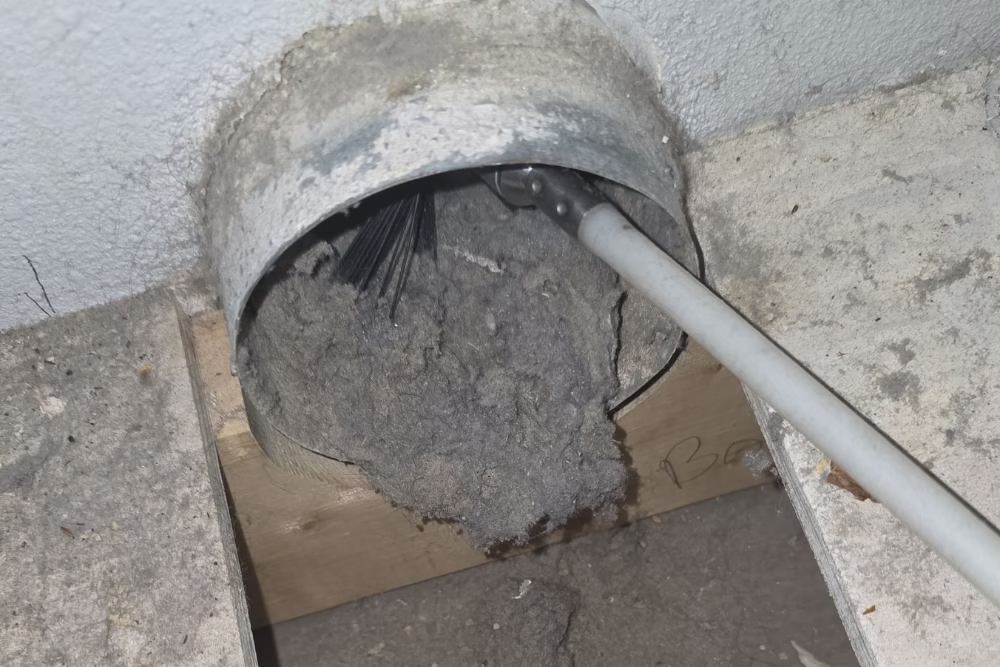
clean Ventilation pipe

Dryer Vent
Cleaning

The dryer takes two cycles. The vent has lint accumulation restricting airflow. Annual lint removal from the full duct run under CSIA Dryer Exhaust Technician #1149. DryerFlex by InOvate replaces the foil accordion duct at the transition on every cleaning. Before/after photo report at service close. Recommended annually for most North Central Florida homes - year-round dryer use means no seasonal slowdown in lint accumulation.
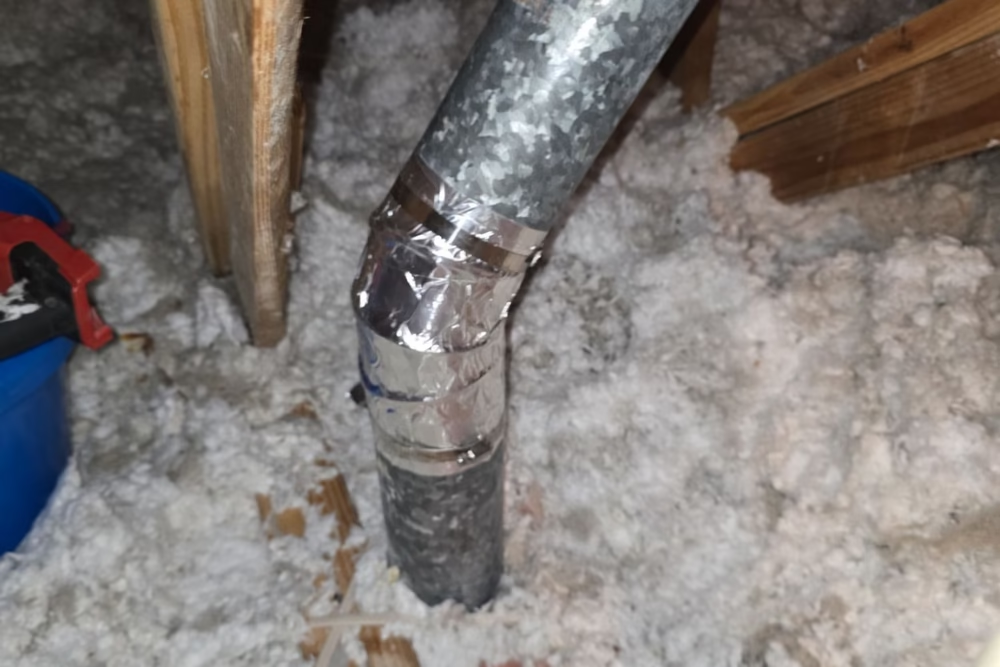
vent pipe joint

Dryer Vent
Repair

A specific component is wrong: disconnected joint, crushed duct, wrong material, or a section needing replacement. Section repair or full run replacement for structurally defective dryer vent components. Disconnected joints, crushed foil duct, plastic duct (fire code violation), over-length sections, or improper routing corrected under CSIA DET #1149. Before/after photo report documents the defect found and the repair performed.
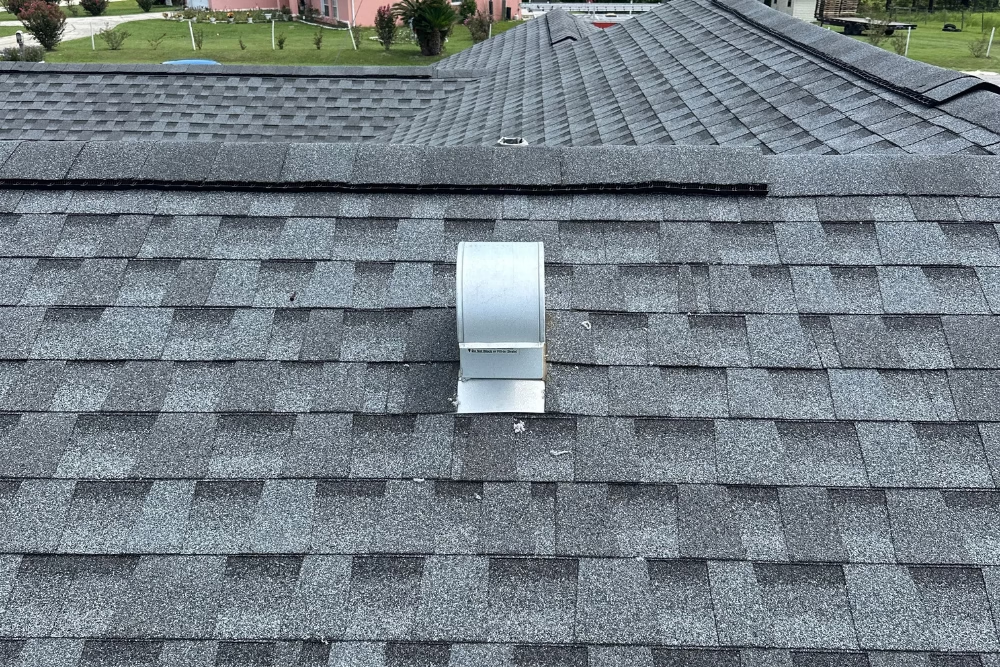
vent pipe roof look

Dryer Vent Roof Termination Replacement

The roof cap is blocked, broken, has a screen that violates code, or pests have nested in it. Roof termination cap removal and replacement under CSIA DET #1149 and FL Residential Contractor #CRC133200 for new penetration work. Blocked flap, pest nest, screen cap (prohibited by Florida Building Code and NFPA 91), or failed roof boot. Closed-body pest-resistant cap. Before/after photo report.
vent pipe outdoor look

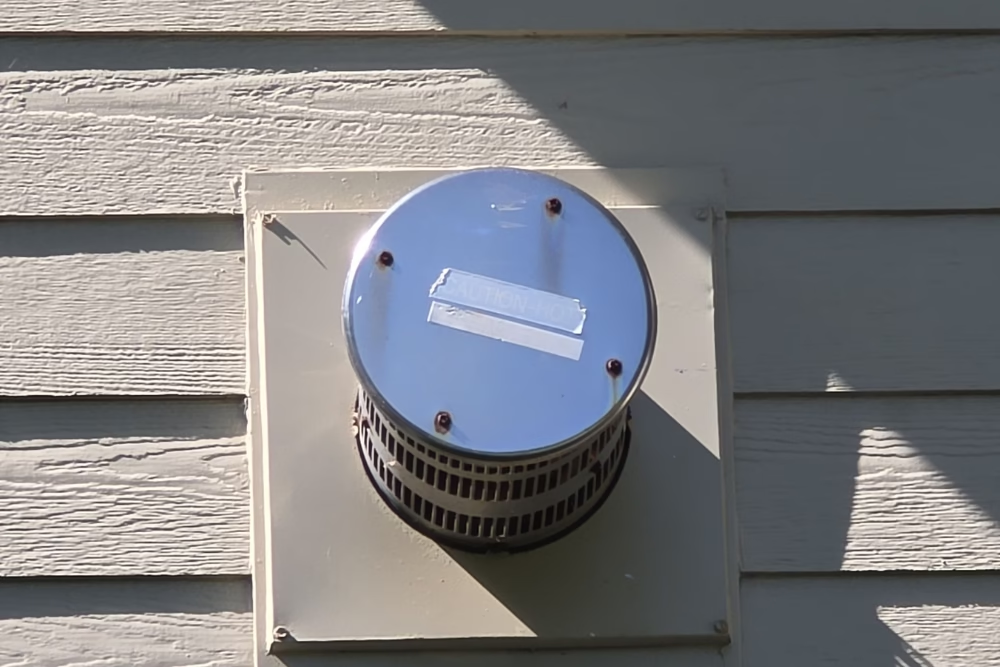
Dryer Vent Wall Termination Replacement

The exterior wall cap flap does not open, the housing is broken, or pests are entering through the cap. Wall termination cap removal and replacement under CSIA DET #1149. Stuck or non-opening flap, rusted or UV-degraded housing, screen cap (prohibited for dryer exhaust), pest nesting, or backdraft from a poorly sealing cap. Pest-resistant closed-body cap at pest-pressure locations. Before/after photo report.
vent pipe installation

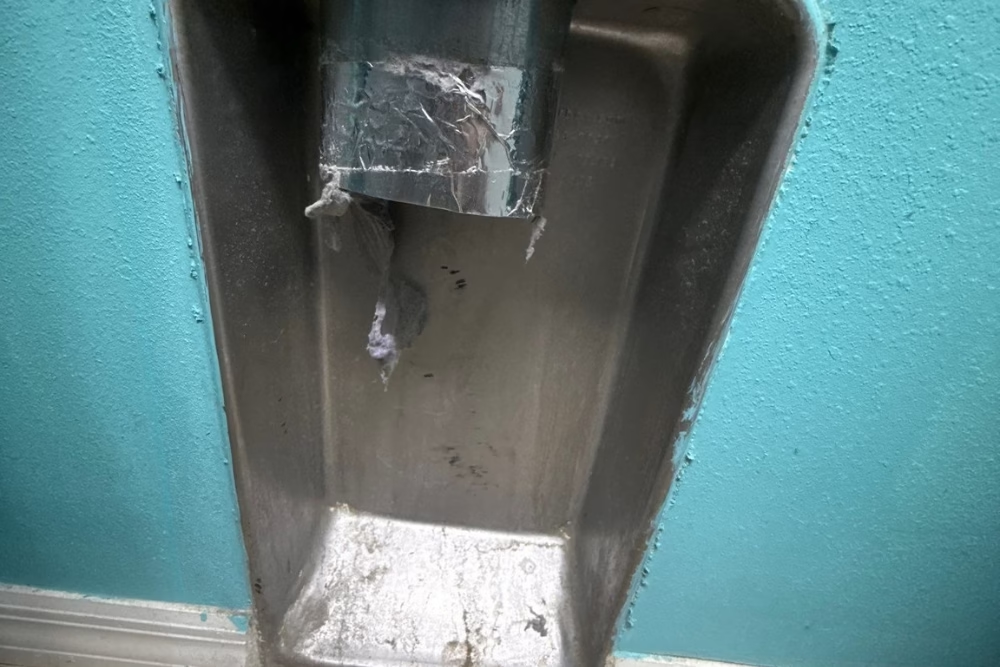
Dryer Wall Box
Installation

The foil duct behind the dryer crushes against the wall. The dryer cannot sit flush. Recessed dryer wall box installation with DryerFlex by InOvate - the permanent solution to the foil accordion duct problem. Wall box recessed into the wall cavity. DryerFlex at the transition. Dryer sits flush against the wall. Drywall patch at service close. Before/after photo report under CSIA DET #1149.
Dry Vent Installation

Dryer Vent
Installation

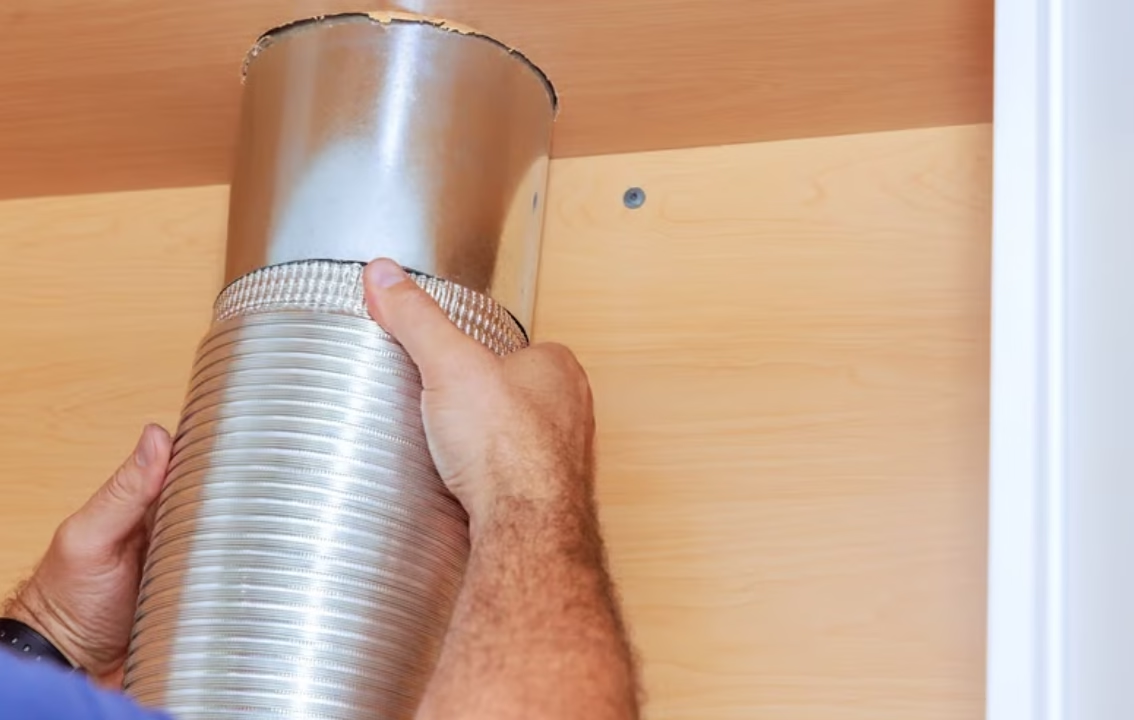
There is no dryer vent. The laundry room is new, the dryer moved, or no vent path was ever installed. Full new dryer vent installation from dryer exhaust outlet to exterior termination under FL Residential Contractor #CRC133200. New wall or roof penetration, permit pulled before first cut, rigid metal duct run, code-compliant cap, inspection closed. Before/after photo report under CSIA DET #1149. Every installation permitted and documented.

Dryer Vent Reroutes

The vent run is too long, terminates in a prohibited location, or the path needs to be changed.

Structural dryer vent path correction under FL Residential Contractor #CRC133200. Run exceeds NFPA 91’s 35-foot equivalent length maximum, vent terminates in a soffit, garage, crawl space, or attic, or path passes through living space without rated enclosure. Permit pulled before first cut. Before/after photo report under CSIA DET #1149.

Dryer Vent Inspection

You need a documented assessment of the full vent system for a home purchase, service finding, or annual verification.

Standalone dryer vent inspection under CSIA Dryer Exhaust Technician #1149. Full duct run assessment: equivalent length, duct material, elbow count, termination location and condition, airflow measurement. Written inspection report with findings and service recommendations. Suitable for real estate transactions, insurance documentation, and baseline service records.

CSIA Certified Dryer Exhaust Technician #1149. What the Credential Means and Why It Matters.

The Chimney Safety Institute of America (CSIA) Dryer Exhaust Technician certification requires passing a written examination covering dryer exhaust system design, installation standards, duct materials, equivalent length calculations, termination requirements, and the full technical scope of NFPA 91. It is not a product certification or a brand affiliation. It is a tested knowledge credential with a specific renewal requirement.

 CSIA DET #1149 governs every dryer vent service Always Fire & Gas performs: the inspection that precedes the service, the cleaning procedure, the duct material standards applied to any repair, the equivalent length calculation applied to any reroute, and the termination location requirements applied to any installation. When AAS produces a before/after photo report, it is produced under that credential – the credential is the technical authority behind the documentation, not just a logo on a business card.

 Where a dryer vent scope requires structural work – creating or modifying a penetration in an exterior wall or roof structure – FL Residential Contractor #CRC1332000 governs the work under Florida Statute 489.105. CSIA certification covers the dryer vent technical standards. The contractor license covers the structural scope. Always Fire & Gas holds both.

Why North Central Florida Dryer Vent Service Is Different From the National Average

Most dryer vent service information online is written for a national audience with temperate seasonal patterns: cooler winters mean more dryer use in winter and less in summer. North Central Florida does not have that pattern. Dryer use is consistent year-round. Lint accumulates in the duct at a steady rate in every month. Annual cleaning is the minimum recommended interval for most homes –  not a conservative recommendation.

 Florida’s UV index and humidity affect the materials used in dryer vent installations. Plastic duct materials degrade faster in Florida conditions than national averages predict. Rubber roof boots at dryer vent terminations have shorter useful lives in Florida’s thermal cycling. Wall cap plastic housings become brittle and crack in Florida UV within five to eight years rather than ten to fifteen years in northern markets. Always Fire & Gas selects materials for North Central Florida conditions, not for national average conditions.

 North Central Florida has year-round pest pressure at wall and roof cap terminations. Paper wasps, mud daubers, house sparrows, and starlings are active at dryer vent cap openings in every month. There is no dormant season. A nest removed at a cleaning without a cap replacement leaves the same access point open to re-nesting within weeks in peak season. Cap selection at AAS is matched to the specific pest pressure at the installation location.

Materials and cap selection matched to North Central Florida conditions. CSIA DET #1149. FL Residential Contractor #CRC133200. Before/after photo report.

What an Unserved Dryer Vent Costs Over Time

A dryer vent that is never cleaned accumulates lint from the first cycle. Lint accumulation restricts airflow progressively: each cycle that exhausts through a partially restricted vent leaves more lint in the restricted section than the previous cycle. The dryer runs longer to compensate for reduced exhaust efficiency. Energy consumption increases. The appliance motor, heating element, and drum bearing are under greater thermal and mechanical load on every cycle. The appliance fails earlier.

 The U.S. Fire Administration attributes approximately 2,900 home dryer fires per year to failure to clean – the leading cause of dryer fires nationally. A lint-packed dryer vent in a North Central Florida home, where the dryer runs year-round and lint accumulates without seasonal breaks, reaches dangerous density faster than in cooler markets with seasonal use patterns.

 A dryer vent that terminates in a prohibited location, has a run exceeding NFPA 91 equivalent length limits, or was installed by an unlicensed contractor without a permit is a liability problem as well as a safety problem. Insurance carriers have grounds to deny dryer-related claims where the vent system does not meet code. Real estate transactions require disclosure of unpermitted modifications. The deferred cost of not correcting a non-compliant vent is transferred to a future claim, a future sale, or a future inspection finding.

What a Correctly Serviced Dryer Vent System Looks Like

The dryer runs one cycle per load. The duct is clear from the dryer exhaust outlet to the exterior termination. The cap at the exterior opens during the cycle and closes completely at rest. The before/after photo report from the last service is filed. The permit record from any structural work is in the county system.

Annual cleaning maintains the system. The technician who comes next year has the previous service report as a baseline. If anything changes between service visits – lint accumulation rate increases, a cap fails, a component shows early deterioration – the change is visible against the documented baseline. The dryer vent is not something you think about. It is something that works.

All eight dryer vent services. CSIA Certified #1149. FL Licensed Contractor #CRC133200. Before/after photo report. Ocala, Gainesville, The Villages, Orlando, and all of North Central Florida.

Dryer Vent Services Across North Central Florida

Always Fire & Gas provides all eight dryer vent services for residential and rental properties across Marion, Alachua, Lake, Sumter, Citrus, Putnam, Hernando, Orange, and Volusia Counties and all surrounding areas. CSIA Dryer Exhaust Technician #1149. FL Residential Contractor #CRC133200. Before/after photo report on every service.

Primary service communities include Ocala, Gainesville, The Villages, Orlando, Leesburg, Inverness, Crystal River, Brooksville, Palatka, Dunnellon, Silver Springs, Lady Lake, Belleview, and all surrounding communities across North Central Florida.

 Call or text (352) 282-0158. Describe your situation. Always Fire & Gas will identify the correct service and confirm the scope before scheduling.

Dryer Vent Service Questions, Answered Directly

For most North Central Florida homes, annual dryer vent cleaning is the minimum recommended interval. Year-round dryer use means lint accumulates at a consistent rate in every month – there is no seasonal slowdown in winter that gives the duct a rest. Homes with gas dryers, large households with heavy laundry use, long duct runs with multiple elbows, or vents that have not been cleaned in over two years may need cleaning more frequently. After the first service, Always Fire & Gas will note the lint accumulation rate at the current service interval and recommend any adjustment based on what was found.

A CSIA Dryer Exhaust Technician (DET) is a technician who has passed the Chimney Safety Institute of America’s examination covering dryer exhaust system design, installation standards, duct materials, equivalent length calculations, termination location requirements, and the technical scope of NFPA 91. It is not a product certification or an industry membership. It is a tested knowledge credential that verifies the technician knows the code standards governing dryer vent systems. Always Fire & Gas holds CSIA Dryer Exhaust Technician certification #1149. The credential has a renewal requirement.

The most common signs of a clogged or restricted dryer vent are: clothes take two or more cycles to dry fully; the dryer exterior or the clothes feel unusually hot at the end of a cycle; the laundry area has a musty or burning smell during or after dryer operation; the exterior vent cap flap does not move or blows weakly during the cycle; or the last cleaning was more than twelve months ago. In North Central Florida, where dryers run year-round, lint accumulation reaches restricting levels faster than in seasonal-use markets. Any of these signs is sufficient reason to schedule a cleaning.

Yes. Failure to clean is the leading cause of home dryer fires in the United States, according to the U.S. Fire Administration. Lint is highly combustible, and a lint-packed dryer vent concentrates that fuel load in a confined duct directly connected to the dryer’s heat source. Annual cleaning removes the accumulated lint before it reaches a density that presents a fire risk. Cleaning alone does not address structural problems – a vent with a prohibited termination location, an over-length run, or prohibited duct materials is a fire risk regardless of how recently it was cleaned. The before/after photo report documents not just the lint removal but any structural or material findings that require follow-on service.

Yes. A dryer vent inspection at a home purchase confirms the vent run is code-compliant, documents the current lint accumulation level as a service baseline, and identifies any structural or material problems before they become the new owner’s deferred maintenance. Home inspectors check for the presence of a dryer vent and note obvious problems but typically do not perform a full duct run assessment with airflow measurement and equivalent length calculation. A standalone dryer vent inspection by a CSIA Certified Dryer Exhaust Technician is a separate scope that produces technical documentation the general inspection does not. Always Fire & Gas performs standalone dryer vent inspections under CSIA DET #1149 with written inspection reports.


Dryer vent cleaning is a service: lint is removed from the duct run, the transition duct is replaced with DryerFlex, airflow is confirmed, and a before/after photo report is produced. A dryer vent inspection is an assessment: the full duct run is evaluated for equivalent length, duct material compliance, termination location compliance, and overall system condition, and a written report documents all findings with service recommendations. An inspection does not include cleaning. A cleaning includes the observations that would be captured in an inspection report but is focused on remediation, not documentation of findings. For a home purchase or insurance documentation, a standalone inspection report is the deliverable. For annual maintenance, cleaning produces the documentation.

FL Residential Contractor #CRC133200 is the Florida license that authorizes new penetrations in residential roofs and exterior walls under Florida Statute 489.105. For dryer vent work, the license applies when the scope requires creating a new wall or roof penetration (new installation, reroute to a new termination location) or modifying an existing penetration. Dryer vent cleaning, duct repair at existing connections, and cap replacement at existing penetrations do not require the contractor license. A dryer vent service company, handyman, or contractor without this license cannot legally perform new-penetration dryer vent work in Florida. Always Fire & Gas holds FL Residential Contractor #CRC133200 and pulls permits for all applicable scopes before any structural work begins.


Scroll to Top