CSIA Certified. Zero Mess. Done Right the First Time.
Certified Chimney Reliner #94. Sized to Code. Verified by Camera.
About Certified Chimney Reliner #94:
The Certified Chimney Reliner (CCR) designation is issued by the Chimney Safety Institute of America and requires passing a specific examination covering liner materials, sizing principles, NFPA 211 compliance, and installation standards for all liner system types. CCR #94 places Always Fire & Gas among the earliest credentialed chimney reliners in the country. It is not a marketing designation — it is a verifiable examination credential with a specific number that can be confirmed through CSIA.
- CSIA Certified Chimney Sweep #10020
- CCP (Certified Chimney Professional) #546
- Certified Chimney Specialist (CSIA) #59
- Certified Master Chimney Technician #34
- FL Residential Contractor #CRC133200
- FL Gas Contractor #LI45277
- Certified Chimney Journeyman #5053
Chimney Relining
Flexible Stainless, Rigid Stainless, HeatShield, Cast-in-Place, and Aluminum Liner Systems. NFPA 211 Sizing on Every Project. Post-Installation Video Confirmation. North Central Florida Since 1982
A chimney liner is the most safety-critical component of a masonry chimney system. It contains combustion gases, protects the surrounding masonry from heat and acid, and controls the draft characteristics that make the fireplace or stove work correctly. When it fails, the failure is usually invisible without a camera — and the consequences are not.
Always Fire & Gas holds Certified Chimney Re-liner credential #94 — one of the earliest issued in the country. Every relining project is sized to NFPA 211 specifications for the connected appliance and the specific flue configuration. Every completed installation is confirmed by post-installation video inspection. We install five liner system types covering every residential and light commercial application across North Central Florida.
Three Reasons Florida Chimney Liners Fail Faster Than the Warranty Suggests They Should
The standard terracotta tile liner in a masonry chimney is designed to last the life of the chimney under normal use conditions. In North Central Florida, ‘normal use conditions’ is a phrase that does not apply. Three specific factors accelerate liner deterioration in this market.
Moisture Intrusion from Humidity Cycle
Terracotta tile liner sections are porous. The mortar joints between them are porous. In North Central Florida's climate — high humidity for eight to nine months per year, with periodic heavy rain — liner sections that are not protected by a functioning cap and crown absorb moisture continuously during the unused season. When the first fire of the season heats a moisture-saturated liner, the thermal shock from rapid heating of a cold, wet liner surface accelerates cracking at the tile faces and mortar joints. A liner that has cycled through ten Florida summers has experienced ten rounds of this process.
Thermal Cycling from Sporadic Florida Use
A chimney used steadily through a cold winter maintains relatively stable temperature differentials across its liner system. A Florida chimney cycles from ambient temperature (often 85°F in a warm garage or unconditioned space) to flue temperatures exceeding 1000°F during a fire and back to ambient within hours — repeated in clusters of a few fires at the start of the season, then not again for eight months. These rapid, wide-range thermal cycles stress the tile-mortar joint interface in ways that steady cold-climate use does not. Hairline cracks become open cracks over five to ten seasons of this pattern.
Age of the Housing Stock and Original Liner Material
Marion, Alachua, and Sumter Counties contain significant housing stock from the 1960s through the 1980s — the period when many masonry chimneys were constructed with terracotta tile liner systems that were appropriate for the standards of that era but were not designed for modern high-efficiency appliance venting requirements. A 40- or 50-year-old terracotta liner that has not been inspected recently may have deterioration that accumulated gradually over decades without triggering any visible symptom in the firebox. Level 2 video inspection is the only reliable assessment method for these systems.
Not Every Damaged Liner Needs Full Replacement. Here Is How to Tell the Difference.
The decision between relining and repair depends on the type, location, and extent of the liner deterioration. Always Fire & Gas assesses every liner condition with a video inspection before making any relining or repair recommendation. We do not recommend full relining for situations that HeatShield or targeted repair can address — and we do not recommend repair for situations where the liner integrity has deteriorated past the point where resurfacing is appropriate.
LINER CONDITION
Hairline surface cracks in tile faces, mortar joint deterioration without open gaps, minor spalling at tile edgesture.
Open cracks through the tile body, separated mortar joints with visible gaps, isolated broken or missing tile sections
Collapsed tile sections, liner offset or displacement, fire-damaged liner, distributed cracking throughout multiple tile courses
No liner present — original masonry chimney with no tile system
Appliance fuel type change (wood to gas, gas to solid fuel) with existing liner
Incorrectly sized liner installed by previous contractor
APPROPRIATE RESPONSE
HeatShield or poured resurfacing system
Assessment required: repair or relining depending on extent and location
Full relining — stainless steel flexible or rigid
New liner installation — type determined by connected appliance
New liner sized to new appliance — existing liner typically not reusable
Assessment and replacement or correction
WHY
Surface-level deterioration does not require tile replacement. Resurfacing restores the thermal and acid-resistant barrier without removing the existing tile structure.
Open cracks allow combustion gases into the wall cavity. Isolated damage in accessible sections may be repairable. Distributed damage or damage in the inaccessible midflue typically requires relining.
Structural failure cannot be addressed by resurfacing. The liner system must be replaced. Stainless steel liner inserted through the existing tile system is the standard correction.
An unlined masonry chimney is an open pathway for combustion gases into the wall and home structure. Liner installation is required before any appliance connection.
Gas appliances require different flue sizing than solid fuel appliances. A liner sized for a wood-burning fireplace is typically oversized for a gas insert, producing condensation and draft problems.
An undersized liner causes accelerated creosote deposition and reduced draft. An oversized liner causes condensation and gas appliance draft failure. Neither problem resolves without correct sizing.
Most chimney construction guidance available online — from manufacturer specifications to national chimney organization publications — is written for cold-climate markets where freeze-thaw cycles, frost-line footings, and heating-season chimney performance are the primary design drivers. Florida chimney construction operates under a different set of constraints.
LINER CONDITION
APPROPRIATE RESPONSE
WHY
Hairline surface cracks in tile faces, mortar joint deterioration without open gaps, minor spalling at tile edgesture.
HeatShield or poured resurfacing system
Surface-level deterioration does not require tile replacement. Resurfacing restores the thermal and acid-resistant barrier without removing the existing tile structure.
Open cracks through the tile body, separated mortar joints with visible gaps, isolated broken or missing tile sections
Assessment required: repair or relining depending on extent and location
Open cracks allow combustion gases into the wall cavity. Isolated damage in accessible sections may be repairable. Distributed damage or damage in the inaccessible midflue typically requires relining.
Collapsed tile sections, liner offset or displacement, fire-damaged liner, distributed cracking throughout multiple tile courses
Full relining — stainless steel flexible or rigid
Structural failure cannot be addressed by resurfacing. The liner system must be replaced. Stainless steel liner inserted through the existing tile system is the standard correction.
No liner present — original masonry chimney with no tile system
New liner installation — type determined by connected appliance
An unlined masonry chimney is an open pathway for combustion gases into the wall and home structure. Liner installation is required before any appliance connection.
Appliance fuel type change (wood to gas, gas to solid fuel) with existing liner
New liner sized to new appliance — existing liner typically not reusable
Gas appliances require different flue sizing than solid fuel appliances. A liner sized for a wood-burning fireplace is typically oversized for a gas insert, producing condensation and draft problems.
Incorrectly sized liner installed by previous contractor
Assessment and replacement or correction
An undersized liner causes accelerated creosote deposition and reduced draft. An oversized liner causes condensation and gas appliance draft failure. Neither problem resolves without correct sizing.
In every case, the correct determination requires a video inspection of the existing liner before any recommendation is made. Always Fire & Gas does not recommend relining without documented video evidence of the liner’s condition. If another company has recommended relining without performing a video inspection, call (352) 282-0158 for a second assessment.
Five Liner Systems. Every One Sized to NFPA 211 Standard. Every One Confirmed by Post-Installation Video.
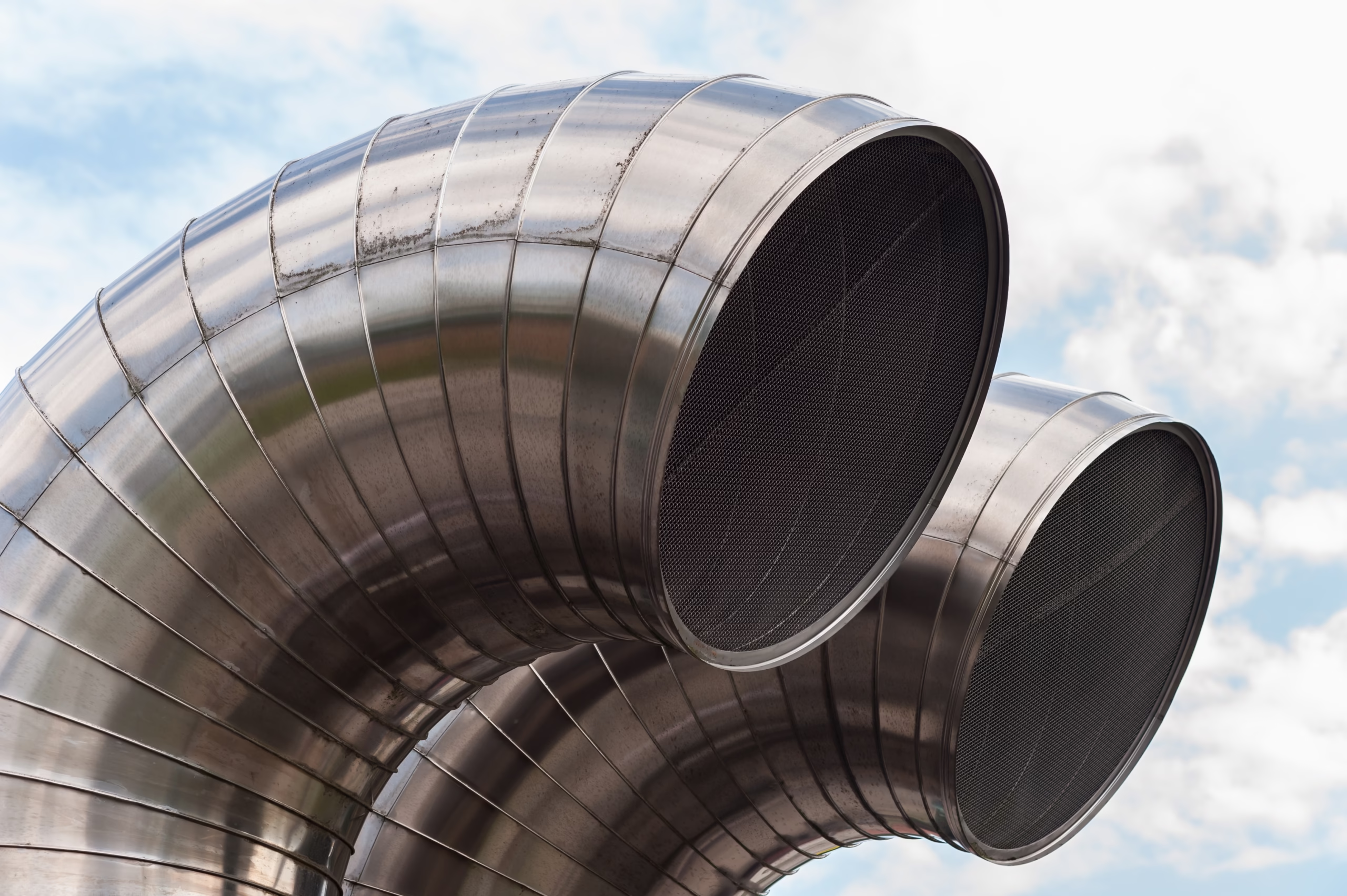
The correct liner system for a chimney is determined by the connected appliance type, the BTU input of the appliance, the height and configuration of the flue, and the specific failure mode being addressed. Always Fire & Gas installs all five liner system types used in residential chimney relining.

Flexible Stainless Steel Liner
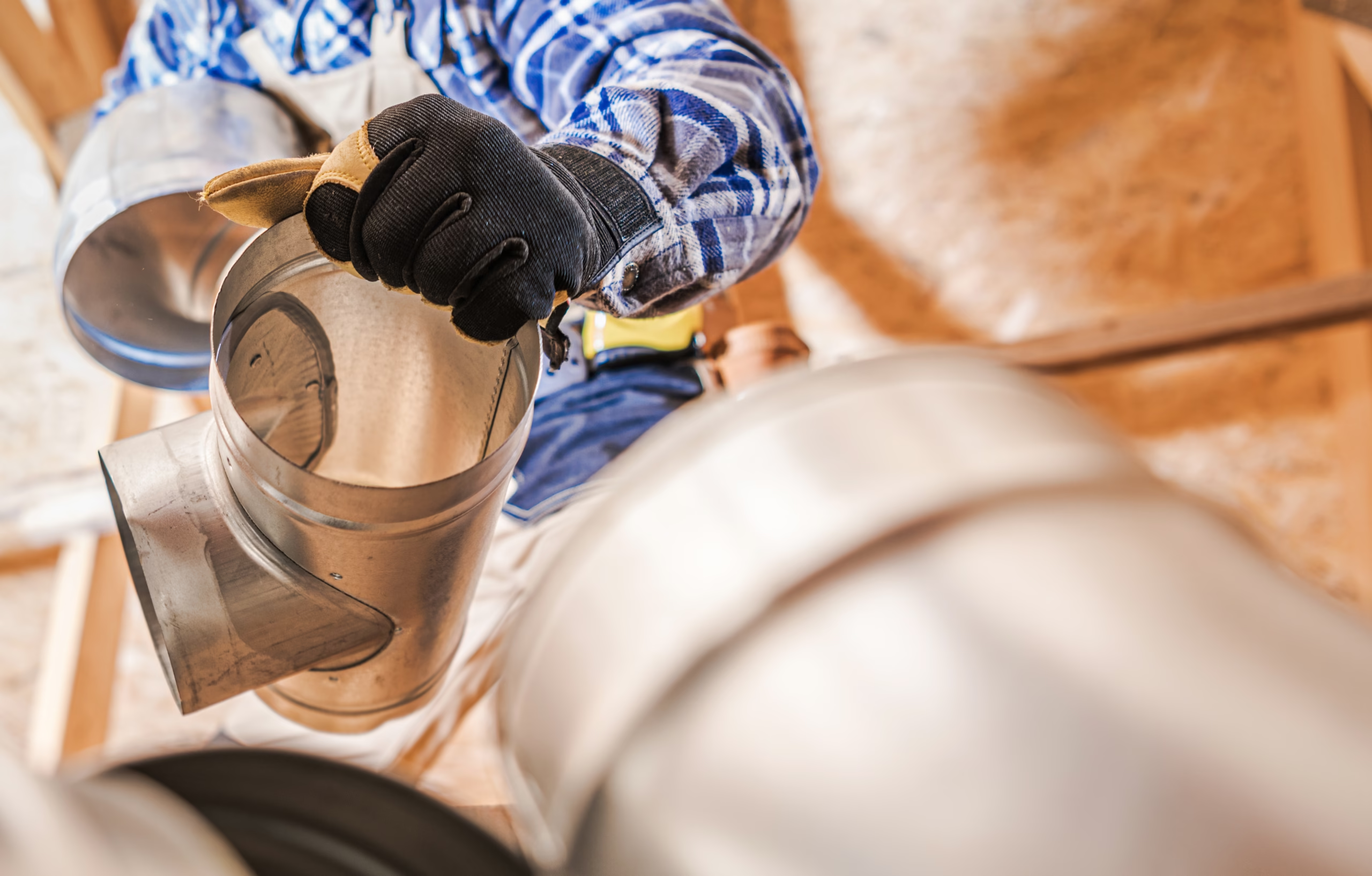
Most common residential relining system. Appropriate for most single-flue applications. A flexible stainless steel liner is a corrugated stainless steel tube — available in Type 304 for oil and gas appliances and Type 316L for solid fuel applications — that is inserted from the top of the chimney through the full length of the existing flue to the appliance connection point. The flexibility allows installation through offsets and bends that a rigid liner cannot navigate. It is the most commonly installed residential liner system and is appropriate for wood-burning fireplaces, wood stoves, gas fireplaces, and most insert installations. ✓ Type 304 stainless: oil and gas appliance applications ✓ Type 316L stainless: solid fuel (wood, coal, pellet) applications ✓ Installed from top through existing flue to appliance collar ✓ Appropriate for most single-flue residential applications ✓ Post-installation video confirmation included
Rigid Stainless Steel Liner
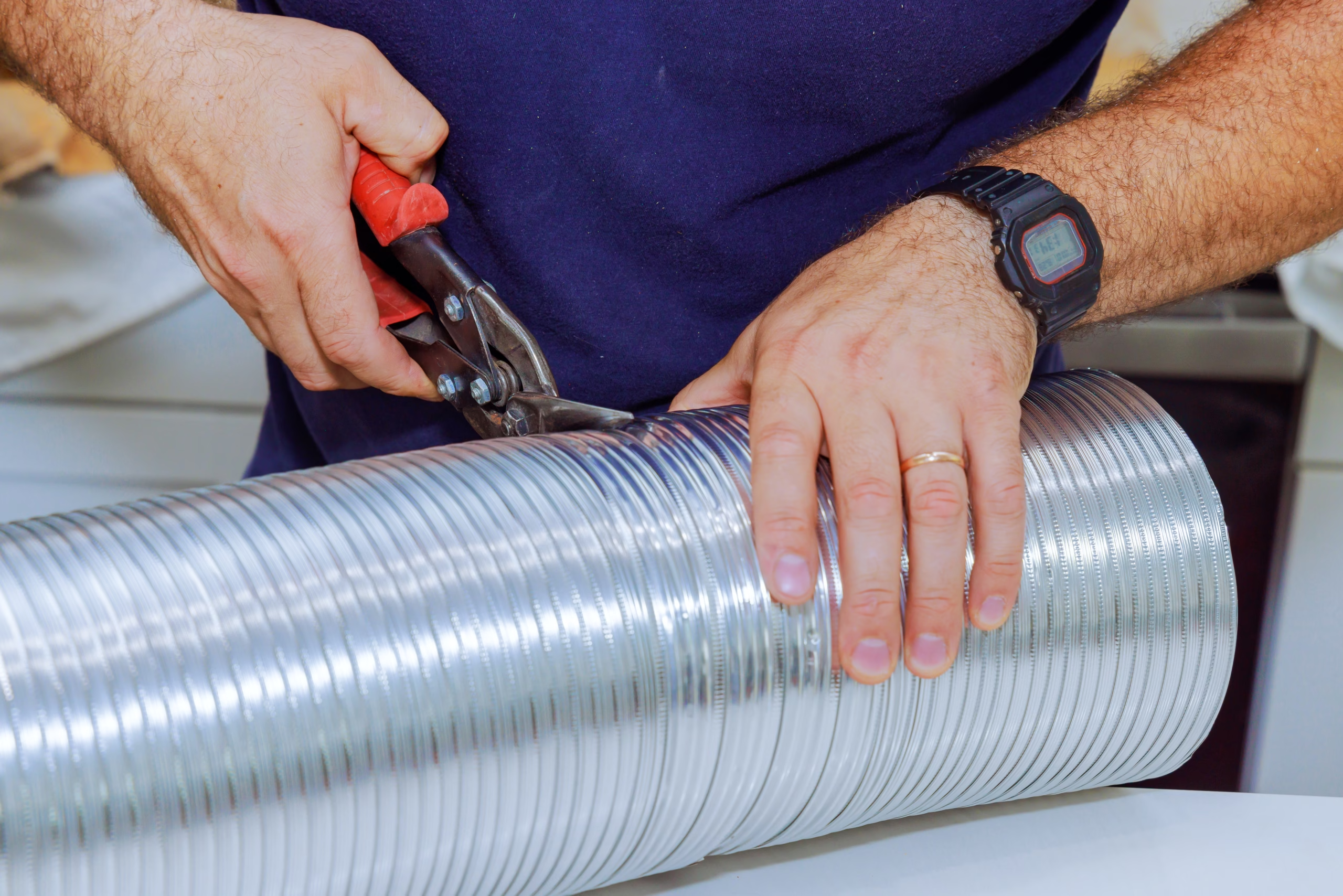
For straight-flue applications requiring maximum draft performance. A rigid stainless steel liner consists of interlocking rigid sections assembled inside the chimney flue. Rigid liner systems provide superior draft performance compared to flexible liner in straight-flue applications because the smooth interior surface has lower friction resistance than the corrugated flexible liner. Rigid liner is not appropriate for chimneys with significant offsets or bends. When the flue geometry allows for rigid installation, it is the preferred choice for high-BTU wood stoves and solid fuel appliances where draft optimization matters. ✓ Superior draft performance vs. flexible liner in straight flues ✓ Interlocking rigid sections assembled in flue ✓ Appropriate for straight or near-straight flue configurations only ✓ Type 304 or 316L alloy selected by appliance fuel type ✓ Post-installation video confirmation included
HeatShield Cerfractory Liner System
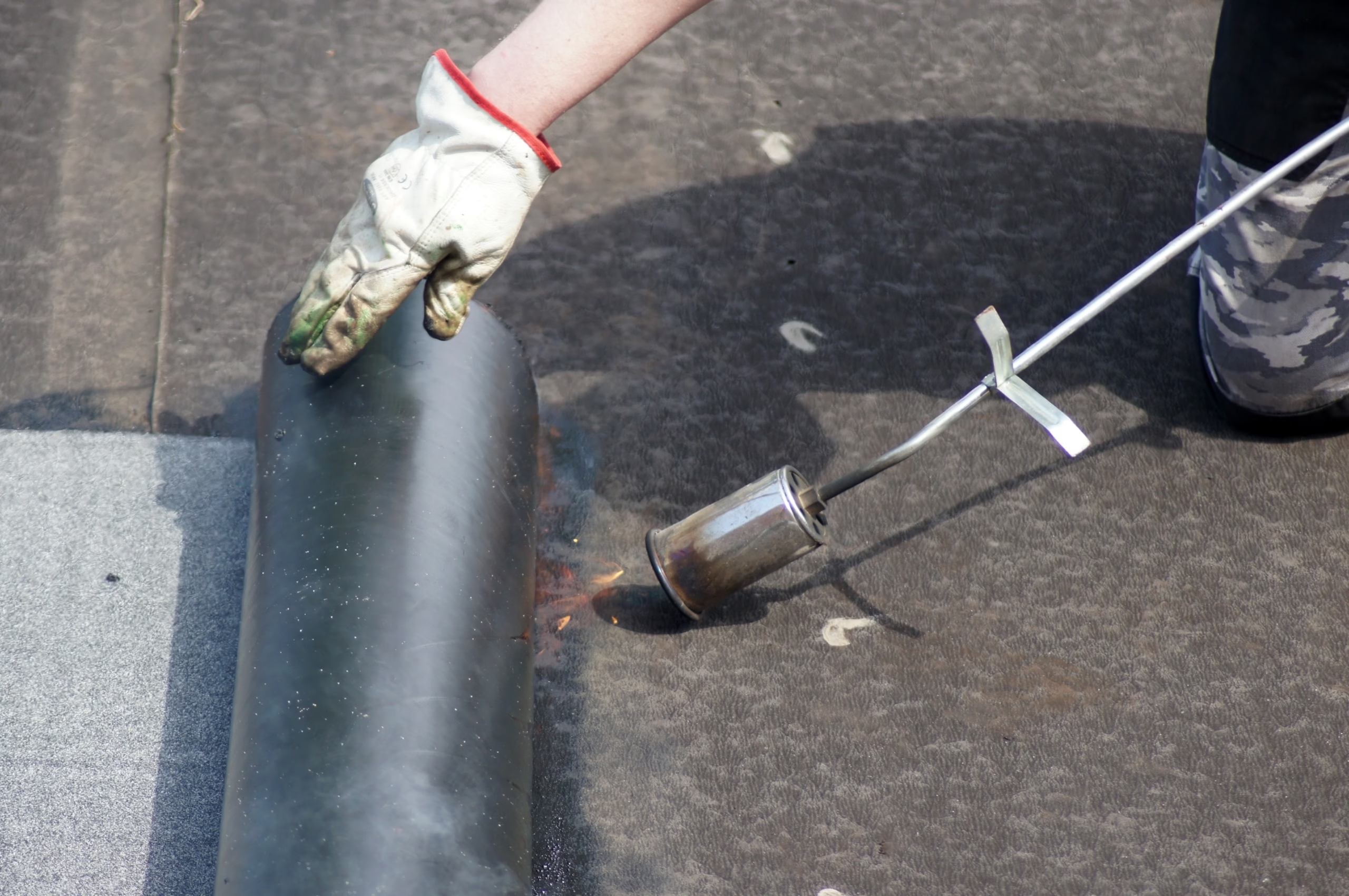
Resurfacing repair for sound liner structure with surface deterioration. Not a replacement for failed liners. HeatShield is a factory-engineered cerfractory (ceramic refractory) resurfacing compound applied to existing terracotta tile liner surfaces by a controlled spray or brush process. It restores the thermal and acid-resistant barrier on liner surfaces that have surface cracks, spalling, or minor mortar joint deterioration but retain structural integrity. HeatShield is not a repair for collapsed liner sections, open structural cracks, or liners with loss of tile integrity. It is the correct repair path for surface-level deterioration that does not require tile replacement — and at a cost point significantly below full stainless steel relining. ✓ Appropriate for: surface cracks, spalling, minor mortar joint deterioration ✓ Not appropriate for: collapsed tiles, open structural cracks, fuel type changes ✓ Applied to existing tile liner — tile structure must be intact ✓ Restores thermal and acid-resistant barrier ✓ Video documentation of pre- and post-application liner condition
Cast-in-Place Liner System
For older chimneys with irregular flue geometry or masonry that requires structural reinforcement. A cast-in-place liner is installed by inserting a form or inflatable bladder into the chimney flue and casting a insulative refractory compound around it to create a smooth, seamless liner that conforms to the exact geometry of the existing flue passage. Cast-in-place systems are appropriate for older chimneys with irregular or non-standard flue dimensions that do not accommodate standard liner sizes, for chimneys where the surrounding masonry requires structural reinforcement, and for applications where a seamless liner surface is required. The compound also provides thermal mass that improves draft performance. ✓ Seamless liner conforms to existing flue geometry ✓ Appropriate for non-standard or irregular flue dimensions ✓ Provides structural reinforcement of surrounding masonry ✓ Improves thermal mass and draft in older chimney structures ✓ Post-installation video and compressive strength documentation
Aluminum Liner
System
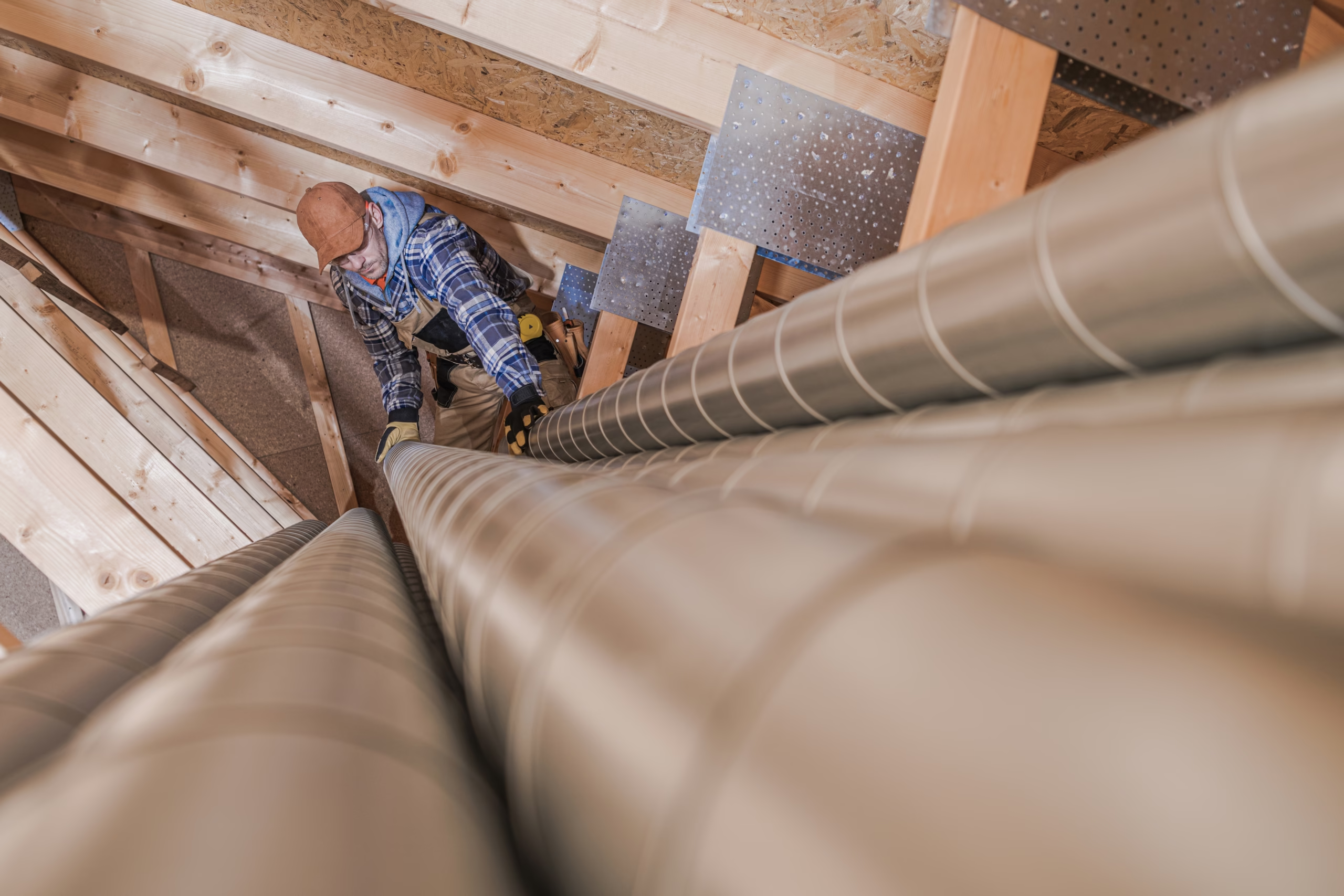
For gas appliances only. Specific BTU and venting category limitations apply. Aluminum liner systems are appropriate for specific gas appliance applications only — primarily Category I gas appliances (natural-draft, non-positive pressure) with BTU inputs within the aluminum liner's rated capacity. Aluminum liner is not appropriate for solid fuel appliances, Category III or IV positive-pressure gas appliances, or oil-burning appliances. Always Fire & Gas installs aluminum liner systems where the appliance specifications, venting category, and BTU input fall within the material's rated application range. We confirm appliance compatibility before any aluminum liner installation — misapplication of aluminum liner in a solid fuel or positive-pressure application is a safety failure. ✓ Gas appliances only: Category I (natural-draft, non-positive pressure) ✓ BTU input must be within aluminum liner's rated capacity ✓ Not for: solid fuel, oil, Category III/IV positive-pressure gas ✓ Appliance specifications confirmed before installation ✓ Post-installation video confirmation included
Liner Sizing Is an Engineering Calculation. Not a Best Guess. Here Is Why the Difference Matters.
The diameter of a chimney liner is not arbitrary. NFPA 211 specifies minimum and maximum liner cross-sectional area requirements for every appliance type, BTU input range, and flue height. An incorrectly sized liner — whether undersized or oversized — does not just underperform. It creates specific, predictable hazards.
What happens when a liner is undersized:
An undersized liner restricts flue gas volume below the appliance’s output requirements. The result is incomplete draft — the appliance cannot evacuate combustion gases fast enough, pressure builds in the firebox, and gases spill into the living space. Carbon monoxide from an undersized liner serving a gas appliance is the most serious consequence. For solid fuel appliances, undersizing also dramatically increases creosote deposition rate by slowing gas velocity and cooling the flue gases before they exit.
Common source of undersizing: installer uses a liner diameter ‘close to’ the appliance collar size without calculating the full flue system requirements.
What happens when a liner is oversized:
An oversized liner has more cross-sectional area than the appliance’s BTU output can heat effectively. The result is a flue that does not reach operating temperature — for gas appliances, this produces condensation of acidic flue gases on the liner interior, which accelerates liner corrosion and produces water infiltration at the base. For wood-burning applications, an oversized liner produces sluggish draft and heavy creosote accumulation because gases cool before they exit.
Common source of oversizing: installer uses the existing tile liner’s dimension as the new liner size without recalculating for the connected appliance’s actual BTU and flue height requirements.
How Always Fire & Gas sizes every liner installation:
Appliance BTU input confirmed: From the appliance data plate or manufacturer specification sheet — not from the homeowner’s description of the appliance.
Flue height measured: Actual measured height from appliance connection to cap termination — not estimated from exterior observation.
NFPA 211 sizing table applied:Â The liner diameter is calculated using the appliance BTU input, flue height, and appliance type against the NFPA 211 venting tables. The result is a specific minimum and maximum liner cross-sectional area, not a single number.
Liner type selected: Flexible vs. rigid, alloy type, and insulation requirements determined after sizing — not before.
Post-installation video confirmation:Â After installation, a video inspection confirms the liner is correctly seated at both the appliance connection and the cap termination, is free of kinks or improper bends in the case of flexible liner, and has no gaps at the connection points.
What a Chimney Relining Project Looks Like from Assessment to Confirmed Installation
Every relining project at Always Fire & Gas follows the same sequence. Here is what that looks like from the first call to the post-installation video confirmation.
Pre-Installation Video Inspection and Assessment
Before any relining recommendation is finalized, a video inspection documents the existing liner’s condition throughout the full flue length. This establishes the baseline that determines whether relining, resurfacing, or targeted repair is the correct response. If another company has recommended relining without performing this inspection, we perform it as the first step of our own assessment. No relining project begins at Always Fire & Gas without documented video evidence of the condition being corrected.
1
Appliance Specification Confirmation
The connected appliance’s BTU input, fuel type, venting category, and flue collar diameter are confirmed from the appliance data plate or manufacturer specifications. This information drives the NFPA 211 sizing calculation — it is not estimated.
2
NFPA 211 Sizing Calculation
Using the confirmed appliance specifications, the actual measured flue height, and the NFPA 211 venting tables, we calculate the required liner cross-sectional area and select the appropriate liner diameter. Liner type — flexible, rigid, HeatShield, cast-in-place, or aluminum — is selected after sizing, not before.
3
Liner Preparation and Top Access
The chimney cap is removed and the crown condition is assessed. The existing liner flue is cleaned if required before liner insertion. For flexible liner, the liner sections are pre-assembled to the required length at ground level before insertion. For rigid liner, sections are assembled sequentially from the top down inside the flue.
4
Liner Insertion and Seating
The liner is inserted from the top of the chimney and guided through the full flue length to the appliance connection point. For flexible liner, a weighted pull line is used to guide the liner through any offsets in the flue. The liner is secured at the top with a liner top plate and stainless steel clamp. The connection at the appliance collar is made with a stainless steel connector sized to the liner diameter.
5
Insulation (Where Required by Code or Appliance Spec)
Gas appliance liner installations typically require insulation wrap around the liner to maintain flue gas temperature and prevent condensation in longer flue runs. Insulation is applied before liner insertion or poured as an insulative fill around the liner after seating, depending on liner type and flue configuration. Insulation requirement is determined by appliance specification and flue height, not as a standard add-on.
6
Post-Installation Video Inspection and Documentation
After installation is complete, a video camera is run through the full liner length to confirm: the liner is correctly seated at both termination points, flexible liner has no improper kinks or bends that would restrict flue gas flow, all connection points are sealed and secured, and the liner diameter is consistent throughout the run. The video documentation is included in the installation report provided to the homeowner. This is not a courtesy check. It is the verification step that confirms the installation meets the NFPA 211 standard before the project is considered complete.
7
Permit and documentation note:
Chimney liner installation in Florida is structural work performed under FL Residential Contractor License #CRC133200. Always Fire & Gas obtains required permits for liner installations where applicable and provides installation documentation including the post-installation video record, sizing calculation, liner material specification, and permit confirmation for homeowner files.
Four Situations That Lead to a Chimney Relining Assessment
Inspection Finding: Your Level 2 Inspection Documented a Damaged Liner
A video inspection finding of cracked tile, open mortar joints, collapsed sections, or fire-damaged liner is the most common path to a relining assessment. If you have a written inspection report documenting liner damage — from Always Fire & Gas or from another certified inspector — call (352) 282-0158 to schedule a relining assessment. Bring the report. We will review the documented findings, confirm with our own video inspection, and give you a written scope and recommendation before any relining work is proposed. The relining recommendation should be supported by video documentation of the liner condition. If you were recommended relining without a video inspection, call us for a second assessment before proceeding.
Real Estate Transaction: A Failed Liner Was Found at the Level 2 Inspection
A chimney liner failure found during a real estate Level 2 inspection is typically a condition-of-sale issue. Buyers need documented remediation before closing. Sellers need a repair completed quickly enough to preserve the transaction timeline. Always Fire & Gas performs relining assessments and installations on real estate timelines across North Central Florida. We provide written installation documentation including the post-installation video record, liner specification, and permit confirmation suitable for closing packages and disclosure requirements. Call (352) 282-0158 with your closing date. We will confirm whether the relining scope can be completed on your timeline and what documentation we provide for closing.
Older Home: No Liner, Original Clay Tile in Unknown or Poor Condition
A masonry chimney built before 1980 with no record of liner inspection or replacement has a liner system that has cycled through four-plus decades of Florida humidity, thermal cycles, and sporadic use without documented assessment. Original terracotta tile liner in a home of this age is frequently at or past the end of its functional service life. The correct first step is a Level 2 video inspection to document current condition. If you have a fireplace in a home built before 1980 that has not had a video liner inspection in the last five years, call (352) 282-0158 before next use. We do not recommend relining on age alone. We recommend a video inspection, which documents the actual condition and determines whether relining, resurfacing, or continued annual monitoring is the appropriate response.
Improperly Installed Liner: Problems Began After Previous Liner Work
If your chimney was relined by another company and you are now experiencing draft problems, smoke spillage, creosote accumulation heavier than expected, condensation at the cleanout or liner base, or a gas fireplace that does not perform correctly — the liner installation is the most likely source. Incorrect sizing (undersized or oversized), improper liner type for the appliance fuel type, missing or incorrectly applied insulation, and unsealed connection points are all installation failures that produce predictable symptoms. Always Fire & Gas has CCR #94 and performs liner assessment on previously installed systems. If liner work was done without a video post-installation confirmation, we can assess whether the installation meets NFPA 211 requirements. Call (352) 282-0158 and describe what changed after the liner installation. Draft problems, creosote accumulation patterns, and condensation symptoms each point to specific sizing or installation failures that a video assessment can identify.
Chimney Relining Across North Central Florida
Always Fire & Gas installs all five liner system types across Marion, Alachua, Lake, Sumter, Citrus, Putnam, Hernando, Orange, Volusia Counties and all surrounding areas. Every project is permitted under FL Residential Contractor License #CRC1332000 and documented with post-installation video confirmation.
Ocala & Marion County
Gainesville & Alachua County
The Villages & Sumter County
Home market since 1982. Significant older housing stock with original tile liners requiring assessment and replacement. Rural properties with wood stoves throughout Marion County.
Active real estate market with high demand for pre-sale and post-inspection relining on real estate timelines. Older residential neighborhoods throughout Alachua County.
High-volume real estate market and active insert installation market. Gas and solid fuel liner installations throughout Sumter County. Senior living facility commercial applications.
Ocala & Marion County
Gainesville & Alachua County
Active real estate market with high demand for pre-sale and post-inspection relining on real estate timelines. Older residential neighborhoods throughout Alachua County.
The Villages & Sumter County
High-volume real estate market and active insert installation market. Gas and solid fuel liner installations throughout Sumter County. Senior living facility commercial applications.
Also serving: Lake, Citrus, Putnam, Hernando, Orange, and Volusia Counties. Call (352) 282-0158 to confirm project scope and scheduling for your address.
Chimney Relining Questions, Answered Directly
Chimney relining is the installation of a new liner system inside an existing masonry chimney flue. It is necessary when the original terracotta tile liner is cracked, collapsed, or deteriorated to the point where it cannot safely contain combustion gases; when the appliance fuel type changes and the existing liner is not correctly sized for the new appliance; when a new wood stove or fireplace insert is installed and requires a properly sized liner connection; and when the original chimney was built without a liner. Always Fire & Gas assesses liner condition with video inspection before any relining recommendation is made.
Chimney relining cost in North Central Florida depends on the liner system type, the flue height and configuration, the connected appliance’s BTU input and fuel type, and whether insulation is required. A flexible stainless steel liner installation for a standard single-flue residential chimney is priced differently than a cast-in-place system for an irregular flue or a HeatShield resurfacing for a liner with surface deterioration. Always Fire & Gas does not publish a fixed price because the correct scope varies significantly by project. Call (352) 282-0158 and describe your chimney and appliance — we will provide a price range in the same call.
The signs that a chimney liner requires assessment or replacement include: visible cracks or spalling in the firebox back wall, white efflorescence staining on the exterior chimney face indicating moisture migration through the liner system, strong smoke or creosote odor in the house when the fireplace is not in use, reduced draft or smoke spillage into the room during use, and any history of a chimney fire. Most liner failures are not visible without a video scan of the full flue interior. Always Fire & Gas includes video documentation in every Level 2 chimney inspection across North Central Florida.
Chimney liner diameter is calculated using NFPA 211 venting tables, which require the connected appliance’s BTU input, the appliance fuel type and venting category, and the actual measured height of the flue from appliance connection to cap termination. Always Fire & Gas confirms appliance specifications from the data plate or manufacturer specifications and measures the actual flue height before applying the sizing calculation. Liner diameter is never estimated — an undersized liner causes draft failure and carbon monoxide risk; an oversized liner causes condensation and creosote accumulation.
A flexible stainless steel liner is a corrugated tube that can navigate offsets and bends in the flue, making it appropriate for most residential chimney configurations. A rigid stainless steel liner consists of interlocking straight sections and provides superior draft performance in straight-flue applications due to its smooth interior surface. Rigid liner cannot accommodate significant offsets. The correct choice depends on the flue geometry — Always Fire & Gas assesses the flue configuration before liner type selection. Both types are available in Type 304 (gas and oil) and Type 316L (solid fuel) alloys.
HeatShield is a cerfractory resurfacing compound applied to existing terracotta tile liner surfaces to restore the thermal and acid-resistant barrier on liners with surface cracks, spalling, or minor mortar joint deterioration. It is appropriate when the tile structure is intact and the deterioration is surface-level — not when tiles are collapsed, structurally cracked through, or when the fuel type of the connected appliance is changing. HeatShield is significantly less expensive than stainless steel relining and is the correct solution for liners that do not require structural replacement. Always Fire & Gas documents liner condition by video before recommending HeatShield or relining.
Yes. Draft problems that begin after a liner installation are frequently caused by incorrect liner sizing. An undersized liner restricts flue gas volume and causes incomplete draft and potential smoke spillage or carbon monoxide risk. An oversized liner for a gas appliance causes the flue to remain below operating temperature, producing condensation and sluggish draft. Missing or incorrectly applied insulation on a gas liner installation produces the same condensation symptoms as oversizing. Always Fire & Gas, holding Certified Chimney Reliner #94, performs video assessments of previously installed liner systems to determine whether the installation meets NFPA 211 sizing requirements.
Chimney relining is not automatically required at property transfer, but a Level 2 chimney inspection is required under NFPA 211 when any property with a chimney system changes ownership. If that Level 2 inspection documents liner failure — cracked tiles, collapsed sections, open mortar joints — relining is the remediation required before the fireplace is safe to use. In a real estate transaction, liner failure found at inspection typically becomes a condition-of-sale item. Always Fire & Gas performs relining on real estate timelines with written documentation for disclosure packages and closing.
Chimney liner installation is structural work that typically requires a permit in Florida. Always Fire & Gas performs relining under FL Residential Contractor License #CRC133200 and obtains required permits for applicable installations. We provide installation documentation including the post-installation video record, liner material specification, NFPA 211 sizing calculation, and permit confirmation for homeowner files. Unpermitted liner installations create insurance and resale complications. A liner installed without the required permit by an unlicensed contractor is not a permitted installation regardless of the quality of the work performed.
The specific credential for chimney liner installation is the Certified Chimney Reliner (CCR) designation, issued by the Chimney Safety Institute of America and requiring a specific examination covering liner materials, NFPA 211 sizing requirements, and installation standards for all liner system types. Always Fire & Gas holds CCR #94 — one of the earliest issued nationally. In addition to the CCR, chimney relining in Florida requires a state Residential Contractor License (#CRC133200) for permitted structural work. A company without both credentials cannot provide a permitted, credentialed liner installation.