Licensed Contractor. Permitted Work. Done Right.
Chimney Rebuilds and Masonry Repair in Ocala, Gainesville, Orlando, The Villages and All Surrounding Areas.
- CSIA Certified Chimney Sweep #10020
- CCP (Certified Chimney Professional) #546
- Certified Chimney Specialist (CSIA) #59
- Certified Master Chimney Technician #34
- FL Residential Contractor #CRC133200
- FL Gas Contractor #LI45277
- Certified Chimney Re-liner #94
- Certified Chimney Journeyman #5053
Chimney Rebuild Specialists
Tuck-Pointing. Crown Repair. Spalling Brick. Firebox Repair. Smoke Chamber Parging. Partial and Full Rebuilds. FL Residential Contractor #CRC1332000. CSIA Certified. North Central Florida Since 1982.
Chimney masonry repair is not the same as chimney sweeping. Sweeping is not a licensed trade in Florida — any company can offer it. Structural chimney work — replacing a crown, repairing a firebox, rebuilding a chimney above or below the roofline — requires a Florida Residential Contractor License to pull the permits that make the work legal, insurable, and documentable at resale.
Always Fire & Gas holds FL Residential Contractor License #CRC1332000. Every structural repair and rebuild we perform is permitted where required, documented with before-and-after photography, and backed by 40-plus years of masonry chimney work in this specific market. We do not subcontract structural chimney work. The licensed contractor on your project is the same certified chimney professional who assessed it.
Chimney Masonry Deterioration Moves in One Direction. Here Is What Each Stage Looks Like and What It Costs to Wait.
Masonry chimney deterioration in North Central Florida follows a predictable progression. Mortar joints fail first. Exposed brick faces spall next. The crown cracks and admits water to the flue system. Structural integrity compromises. Each stage caught earlier costs significantly less to address than the same problem caught one stage later.
DETERIORATION STAGE
Early: mortar joint failure
Moderate: brick face spalling
Significant: crown failure
Severe: structural compromise
Critical: below-roofline structural failure
VISIBLE SIGNS
Hairline cracks at mortar joints, minor white staining (efflorescence) on brick face, mortar crumbling at joint surface
Brick face separating or missing in sections, exposed brick interior, mortar joint gaps visible from ground level
Visible crown cracks, crown sections missing or displaced, water entry at chimney top visible on rainy days
Chimney leaning or visibly off-plumb, multiple brick courses with mortar failure, large sections of brick face missing
Firebox structural compromise, smoke chamber failure, chimney structure compromised from firebox level
CORRECT RESPONSE
Tuck-pointing: remove deteriorated mortar, replace with fresh mortar matched to original spec
Brick replacement matched to original size and color, tuck-pointing of surrounding joints
Crown repair or full crown replacement, waterproofing of restored crown surface
Partial rebuild (above roofline) or full rebuild depending on extent — assessment required
Full rebuild from firebox to crown under FL Residential Contractor #CRC1332000
WHAT WAITING COSTS
Moisture enters joints, accelerates brick face spalling, advances to next stage within 1-3 Florida wet seasons
Water penetration into chimney structure, accelerated mortar failure throughout, potential liner damage from water infiltration
Water enters flue system directly, accelerates liner deterioration, damages smoke chamber and firebox components
Chimney becomes structural liability. Partial collapse risk. Insurance may not cover uninspected, unpermitted chimney damage.
Fireplace unusable. Structural risk to adjacent home structure. Requires full rebuild — no repair path.
DETERIORATION STAGE
VISIBLE SIGNS
CORRECT RESPONSE
WHAT WAITING COSTS
Early: mortar joint failure
Hairline cracks at mortar joints, minor white staining (efflorescence) on brick face, mortar crumbling at joint surface
Tuck-pointing: remove deteriorated mortar, replace with fresh mortar matched to original spec
Moisture enters joints, accelerates brick face spalling, advances to next stage within 1-3 Florida wet seasons
Moderate: brick face spalling
Brick face separating or missing in sections, exposed brick interior, mortar joint gaps visible from ground level
Brick replacement matched to original size and color, tuck-pointing of surrounding joints
Water penetration into chimney structure, accelerated mortar failure throughout, potential liner damage from water infiltration
Significant: crown failure
Visible crown cracks, crown sections missing or displaced, water entry at chimney top visible on rainy days
Crown repair or full crown replacement, waterproofing of restored crown surface
Water enters flue system directly, accelerates liner deterioration, damages smoke chamber and firebox components
Severe: structural compromise
Chimney leaning or visibly off-plumb, multiple brick courses with mortar failure, large sections of brick face missing
Partial rebuild (above roofline) or full rebuild depending on extent — assessment required
Chimney becomes structural liability. Partial collapse risk. Insurance may not cover uninspected, unpermitted chimney damage.
Critical: below-roofline structural failure
Firebox structural compromise, smoke chamber failure, chimney structure compromised from firebox level
Full rebuild from firebox to crown under FL Residential Contractor #CRC1332000
Fireplace unusable. Structural risk to adjacent home structure. Requires full rebuild — no repair path.
The most common pattern Always Fire & Gas sees in North Central Florida: a chimney that needed tuck-pointing five years ago now needs a partial rebuild. The tuck-pointing window closed when the second-stage spalling began. The partial rebuild window closes when the structural compromise reaches below the roofline. At that point, the only path is a full rebuild at four to five times the cost of the tuck-pointing that would have prevented it.
If you are not sure where your chimney sits on this progression, call (352) 282-0158. We assess chimney masonry condition with ground-level and roofline inspection, document findings with photography, and give you a written scope recommendation before any repair work is proposed.
Seven Services. Each With a Defined Scope. Each Permitted Where Required.
Tuck-Pointing
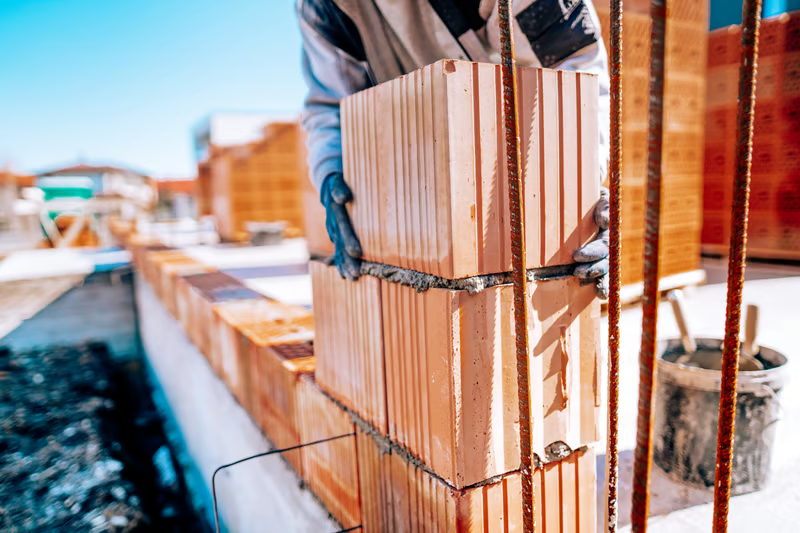
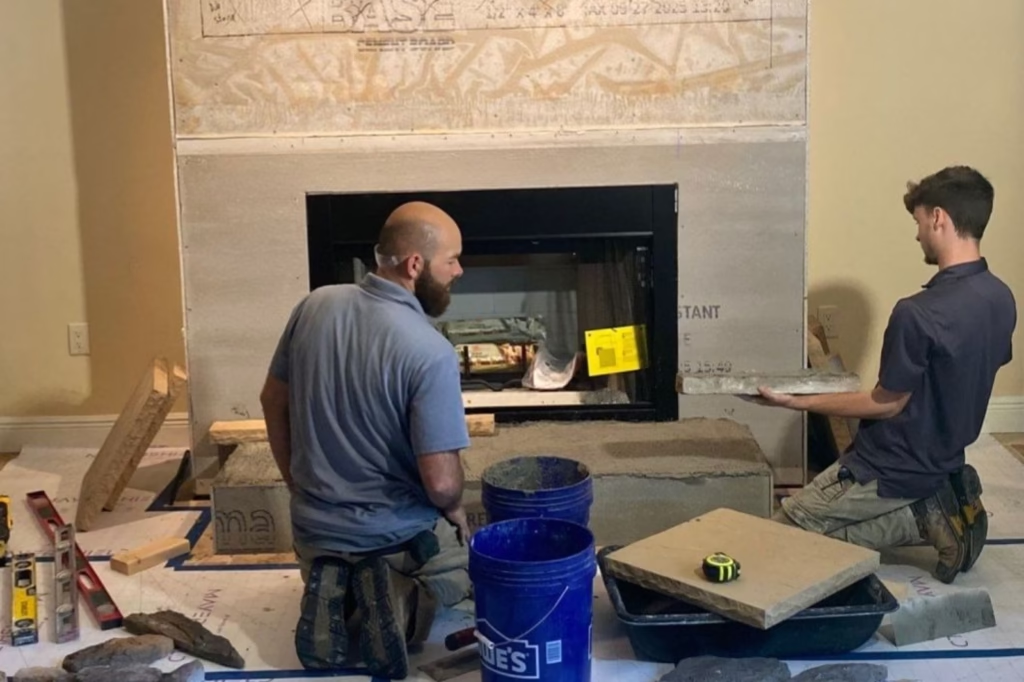
Tuck-pointing is the process of removing deteriorated mortar from chimney masonry joints and replacing it with fresh mortar matched to the original specification in composition, texture, and color. It is the first-line maintenance repair for chimneys where the mortar joints have cracked, crumbled, or separated from the brick faces — and the repair that, performed at the right time, prevents tuck-pointing from becoming a brick replacement or rebuild project. Always Fire & Gas matches mortar composition to the original (Type N, Type S, or Type O depending on chimney age and location) — mismatched mortar that is harder than the surrounding brick accelerates the brick face deterioration it is meant to prevent.
✓ Removes deteriorated mortar to sound depth before replacement
✓ Mortar composition matched to original specification
✓ Performed at roofline and below depending on chimney configuration
✓ Documented with before-and-after photography
✓ Permitted where applicable under #CRC1332000
Crown Repair and Replacement
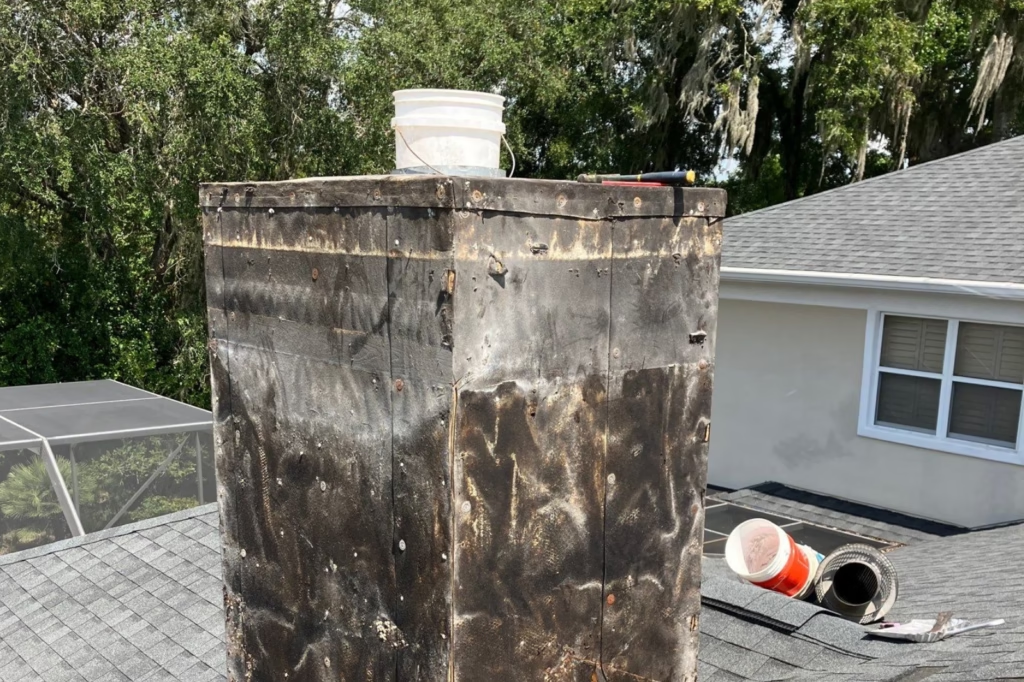
The chimney crown is the concrete or mortar cap that seals the top of the chimney structure around the flue opening, directing water away from the flue and the surrounding masonry. In Florida’s climate — heavy rain, UV exposure, and significant thermal cycling — crowns develop cracks within five to fifteen years of installation even when correctly constructed. A cracked crown is not a cosmetic issue: it is an active water entry point into the flue system, the liner, and the surrounding masonry. Crown repair addresses cracks and surface deterioration with a penetrating sealer or resurfacing compound. Crown replacement removes and rebuilds the crown from the chimney top when the existing crown has failed structurally or is incorrectly constructed — a crown without the proper slope or overhang directs water into the chimney rather than away from it.
✓ Crown repair for surface cracks and minor deterioration
✓ Full crown replacement when structural failure or incorrect construction requires it
✓ Correct slope and overhang built to NFPA 211 standard on replacement
✓ Crown surface waterproofed at completion — see /chimneys/waterproofing/ for full detail
✓ Documented with before-and-after photography and video where applicable
Spalling Brick Repair and Replacement
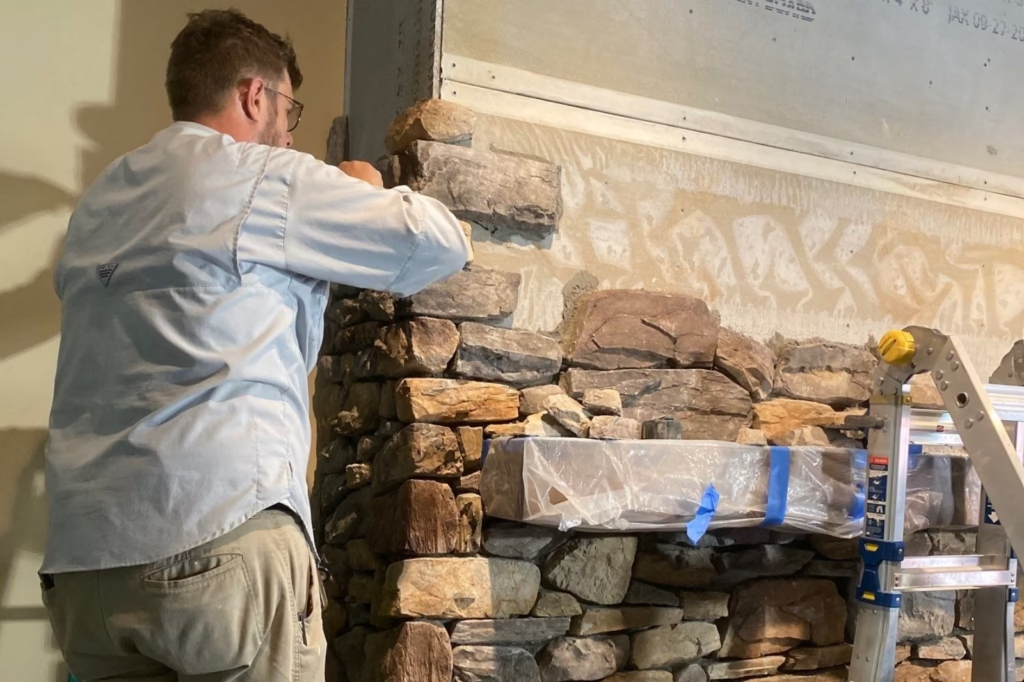
Spalling occurs when moisture penetrates the porous face of a brick, expands during temperature cycling, and causes the outer layer of the brick face to separate or flake away. In North Central Florida, where moisture intrusion is constant and thermal cycling is driven by rapid heating during use rather than freeze-thaw, spalling advances faster than in cold climates and is frequently the result of earlier mortar joint failure that was not addressed at the tuck-pointing stage. Always Fire & Gas removes spalled brick sections and replaces them with brick matched to the original size and color where available. The surrounding mortar joints are tuck-pointed at the same visit, and the replacement area is treated to address the moisture intrusion that caused the original spalling.
✓ Spalled brick removed and replaced with matched brick where available
✓ Surrounding mortar joints tuck-pointed at same visit
✓ Moisture intrusion source identified and addressed
✓ Color and texture matching documented in project photography
✓ Structural assessment performed to confirm spalling is not evidence of deeper masonry failure
Firebox Repair
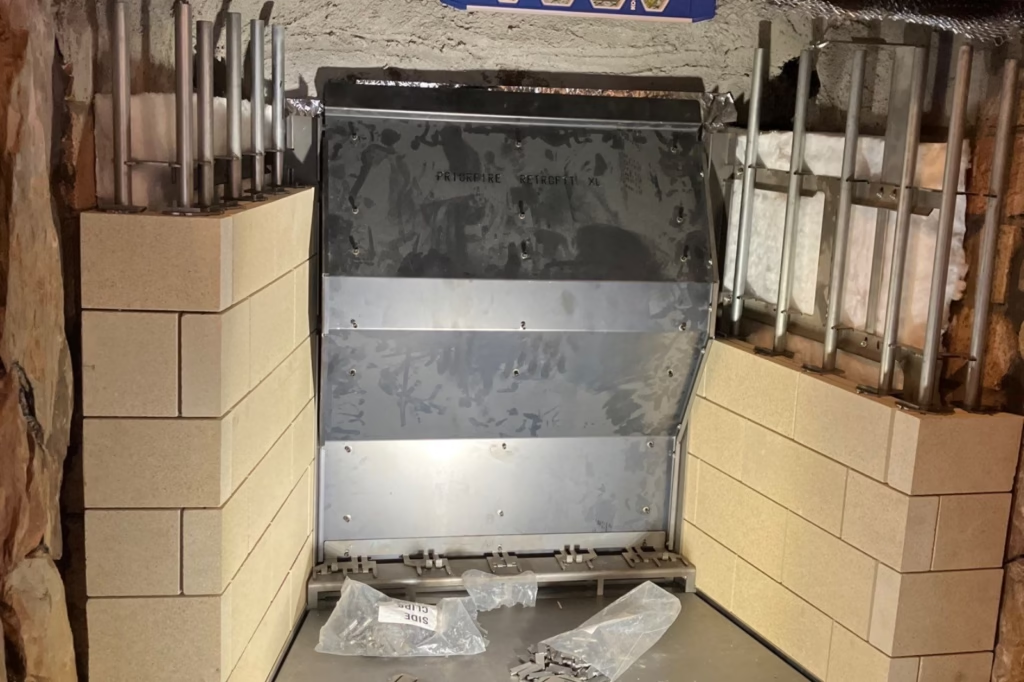
The firebox — the interior combustion chamber of the fireplace — is lined with refractory brick and refractory mortar, both rated for the high temperatures of direct fire exposure. Standard brick and standard mortar are not suitable replacements: a firebox repair made with standard masonry materials is a repair that will fail under the first significant fire and may create a carbon monoxide pathway into the home structure. Always Fire & Gas uses refractory brick and refractory mortar for all firebox repair work. Firebox repair addresses cracked refractory brick, deteriorated refractory mortar joints, and damaged firebox floor material. The firebox is the component most likely to be assessed during an annual inspection and found to have deterioration that has progressed unnoticed — refractory mortar erodes gradually and the change in joint depth is not visible to the homeowner without direct inspection.
✓ Refractory brick and refractory mortar only — standard masonry materials not used
✓ Cracked refractory brick replaced with matching refractory material
✓ Firebox floor repair and replacement where damaged
✓ Inspected and documented with before-and-after photography
✓ Assessed in context of full firebox system including damper and smoke shelf condition
Smoke Chamber Parging
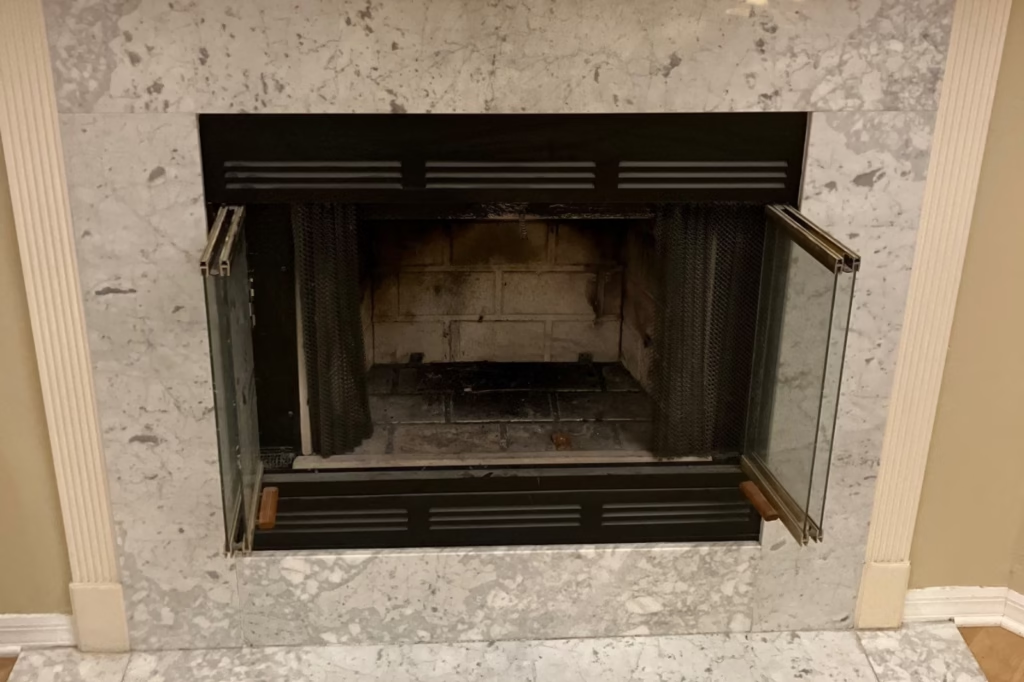
The smoke chamber is the funnel-shaped area between the top of the damper and the base of the flue that directs combustion gases from the firebox into the flue. In most residential masonry chimneys built before 1990, the smoke chamber is corbeled brick — stepped courses of brick angling inward from the firebox opening to the flue diameter. Corbeled brick smoke chambers have exposed mortar joints and brick edges on the interior surface that turbulate gas flow, accumulate creosote at the ledges, and in older construction may have open mortar joints that allow combustion gases to enter the wall cavity. Parging — the application of a refractory mortar coat over the interior smoke chamber surface — creates a smooth, code-compliant surface that improves draft, reduces creosote accumulation sites, and seals any open joints in the corbeled brick structure. NFPA 211 Section 13.2 requires smoke chambers to have smooth, properly sloped interior surfaces. An unparged corbeled brick smoke chamber in a home built before current code may not meet this requirement.
✓ Refractory mortar applied to full smoke chamber interior surface
✓ Smooths corbeled brick surface to NFPA 211 specification
✓ Seals open mortar joints in corbeled brick construction
✓ Reduces creosote accumulation at stepped brick edges
✓ Documented with before-and-after video of smoke chamber interior
When Repair Is No Longer the Answer: Partial and Full Chimney Rebuilds
A rebuild is recommended when chimney deterioration has progressed past what any combination of repair services can address — when the masonry structure itself has failed and requires reconstruction rather than restoration. Always Fire & Gas performs both partial and full chimney rebuilds under FL Residential Contractor License #CRC1332000. Every rebuild is permitted, inspected by the building department, and documented with before-during-after photography.
Partial Rebuild (Above Roofline)
When it applies: Chimney deterioration is concentrated in the above-roofline section: widespread mortar failure, structural instability, or storm damage to the chimney courses above the roof surface. The below-roofline structure is assessed and confirmed to be structurally sound before partial rebuild begins.
Scope of work: Removal of deteriorated above-roofline chimney courses to sound masonry. Reconstruction using brick matched to original or compatible specification. New crown constructed to correct slope and overhang. New chimney cap installed. Flashing assessed and repaired or replaced at same visit. Liner connection at chimney top confirmed or reconnected.
Permit required: Yes — FL Residential Contractor #CRC1332000. Building department inspection required.
Full Rebuild (Firebox to Crown)
When it applies: Chimney deterioration has reached below the roofline into the firebox structure, smoke chamber, or chimney chase. Structural failure at or below the roofline cannot be addressed by above-roofline partial rebuild. Assessment documents that the full chimney structure requires reconstruction.
Scope of work: Complete removal of the existing chimney structure from the firebox level to the crown. Reconstruction of firebox with refractory brick and mortar. Smoke chamber construction to current NFPA 211 specification including parging. Chimney chase reconstruction to roofline. Above-roofline chimney reconstruction with new crown, cap, and flashing. Liner installation sized to connected appliance per NFPA 211. Post-construction video inspection of full liner run.
Permit required: Yes — FL Residential Contractor #CRC1332000. Multiple building department inspections at foundation, framing, and completion stages where applicable.
Second opinion on a rebuild recommendation:
If you have received a chimney rebuild recommendation from another company and want a second assessment before committing to a project of that scope, call (352) 282-0158. Always Fire & Gas performs independent rebuild assessments with video documentation of the chimney’s current condition. If a repair path is appropriate and the rebuild recommendation was premature, we will tell you that. If the rebuild is necessary, we will document exactly why and give you a written scope that you can compare against the original recommendation.
Why the Contractor License Is Not a Formality for Chimney Masonry Work
In Florida, chimney sweeping is not a licensed trade. Chimney masonry repair and rebuild is. The distinction matters because structural chimney work — anything beyond cleaning and inspection — requires permits in most Florida jurisdictions, and permits require a licensed contractor to pull them.
What happens when structural chimney work is performed without a permit:
No building department inspection
The work was not inspected by an authority having jurisdiction. There is no official confirmation that it meets Florida Building Code.
Insurance claim complications
If the chimney is involved in a fire or structural failure event, the insurance company may deny coverage for unpermitted work — or for damage caused by unpermitted work.
Resale disclosure requirement
Unpermitted work must be disclosed at property sale in Florida. A buyer’s inspector who identifies a masonry repair without a permit record creates a disclosure and renegotiation issue.
No recourse if work fails
An unlicensed contractor performing unpermitted structural work has no bond or license at risk. If the work fails, the homeowner’s recourse is limited to civil action against a company that may have no assets to recover.
What FL Residential Contractor #CRC133200 authorizes Always Fire & Gas to do:
Pull building permits for structural chimney repair and rebuild work in Florida jurisdictions that require them.
Perform permitted structural masonry work — tuck-pointing, crown replacement, brick repair, firebox repair, smoke chamber parging, partial and full rebuilds — as the licensed contractor of record.
Provide homeowners with a permit record for the work performed — a document that confirms the work was inspected and approved, suitable for insurance files, resale disclosure packages, and future inspection requests.
Verify FL Residential Contractor License #CRC133200 at myfloridalicense.com before any work begins.
Five Situations That Lead to a Chimney Repair or Rebuild Assessment
1
Visible Deterioration: You Can See Something Wrong from Ground Level
Cracked mortar joints visible between brick courses, brick face material missing or falling, white staining on the chimney exterior, or a crown that is visibly cracked — these are the ground-level signs that chimney masonry deterioration has progressed past routine sweeping and into repair territory. In Florida’s climate, ground-level visible deterioration is typically the sign that the below-surface deterioration has been progressing for at least one to two seasons already. The correct response is a close-up assessment — not a visual estimate from the ground.
Call (352) 282-0158. We assess chimney masonry condition at roofline level with documentation. If what you can see from the ground is the full extent of the problem, we will tell you. If the roofline assessment finds more, we will document it and explain the scope.
2
Post-Storm Damage: Hurricane or Tropical Storm Affected Your Chimney
High winds stress chimney crowns, flashing, and the above-roofline masonry structure in ways that may not produce immediate visible damage but compromise structural integrity and water resistance. A chimney that looks intact from ground level after a storm may have shifted crown sections, separated flashing, loosened mortar courses, or displaced brick that will produce active water entry and accelerating deterioration over the following months. Always Fire & Gas performs post-storm chimney masonry assessments across North Central Florida with documentation suitable for insurance claims. If you are filing a homeowner’s insurance claim for storm damage, a written assessment from a licensed contractor with before-and-after documentation is stronger evidence than a description from an unlicensed sweep.
Call (352) 282-0158 after any significant storm event. Post-storm assessment includes roofline inspection, photography of all findings, and written documentation. We work with homeowners’ insurance documentation requirements.
3
Real Estate Transaction: Structural Chimney Issue Found at Level 2 Inspection
A Level 2 chimney inspection that documents structural masonry deterioration — crown failure, widespread mortar joint failure, partial brick collapse, or firebox structural compromise — creates a condition-of-sale issue that requires remediation before or at closing. Sellers need repair completed on a timeline that does not delay closing. Buyers need documentation of completed repair suitable for their lender and insurance underwriter. Always Fire & Gas performs chimney masonry repair and rebuild on real estate timelines under FL Residential Contractor #CRC133200 and provides written documentation including permit records for closing packages.
Call (352) 282-0158 with your closing date. We will confirm whether the repair scope can be completed on your timeline and what documentation we provide for the closing package.
4
Second Opinion: You Received a Rebuild Recommendation and Want It Verified
A chimney rebuild recommendation from an unlicensed chimney sweep — or from a licensed contractor without chimney-specific credentials — is a recommendation that deserves verification before you commit to a project of that scope and cost. Always Fire & Gas holds FL Residential Contractor #CRC133200, CSIA #10020, CCP #546, and CCR #94. If the chimney needs a rebuild, we will tell you why with documented video and photographic evidence. If a repair is sufficient and the rebuild recommendation was premature, we will tell you that too — with the same documentation. We do not recommend rebuild scope to generate rebuild revenue.
Call (352) 282-0158 for a second assessment. Have the original recommendation available if in writing. We provide an independent assessment with documentation regardless of what the prior recommendation said.
5
Rental or Investment Property: Deferred Chimney Maintenance Requires Documentation
A rental property with a fireplace has a documented maintenance obligation. A chimney with visible masonry deterioration on a rental property is not just a repair issue — it is a liability issue. If a tenant reports a chimney problem and it is documented that the condition was visible and not addressed, the liability exposure from any resulting incident is significantly greater than the cost of the repair. Always Fire & Gas schedules chimney masonry assessment and repair for property managers and investment property owners across North Central Florida. Permitted repair under #CRC133200 produces a building department record that a tenant cannot claim was unfulfilled.
Call (352) 282-0158 to discuss multi-property scheduling. We provide individual written reports and permit documentation for each property and can coordinate assessment and repair across multiple addresses.
Chimney Masonry Repair and Rebuilds Across North Central Florida
Always Fire & Gas performs chimney masonry repair and rebuild work across Marion, Alachua, Lake, Sumter, Citrus, Putnam, Hernando, Orange, Volusia Counties and all surrounding areas. Every structural project is performed under FL Residential Contractor License #CRC133200. Permits obtained in all applicable jurisdictions.
Ocala & Marion County
Gainesville & Alachua County
The Villages & Sumter County
Home market since 1982. Significant older housing stock with 40-plus-year chimneys requiring masonry repair or rebuild. Rural Marion County properties including large acreage homes with primary fireplaces.
Active real estate market with high demand for pre-sale andActive real estate market with high demand for pre-sale and post-inspection masonry repair on real estate timelines. Established older neighborhoods throughout Alachua County with aging chimney stock. post-inspection relining on real estate timelines. Older residential neighborhoods throughout Alachua County.
Active adult community with high property transaction volume. Post-storm assessment and repair market. Investment and rental property chimney maintenance throughout Sumter County.
Ocala & Marion County
Home market since 1982. Significant older housing stock with 40-plus-year chimneys requiring masonry repair or rebuild. Rural Marion County properties including large acreage homes with primary fireplaces.
Gainesville & Alachua County
Active real estate market with high demand for pre-sale andActive real estate market with high demand for pre-sale and post-inspection masonry repair on real estate timelines. Established older neighborhoods throughout Alachua County with aging chimney stock. post-inspection relining on real estate timelines. Older residential neighborhoods throughout Alachua County.
The Villages & Sumter County
Active adult community with high property transaction volume. Post-storm assessment and repair market. Investment and rental property chimney maintenance throughout Sumter County.
Also serving: Lake, Citrus, Putnam, Hernando, Orange, and Volusia Counties. Call (352) 282-0158 to confirm project scope and scheduling for your address.
Every Masonry Repair Holds Longer When the Chimney Is Waterproofed. Here Is Why.
Masonry is porous. A chimney crown that has been repaired or replaced, mortar joints that have been freshly tuck-pointed, and brick faces that have been repaired — all of them will begin absorbing moisture from the first rain after the repair if the masonry surface is not treated with a penetrating water repellent.
Professional-grade penetrating water repellents — ChimneySaver and similar products — allow vapor to escape from the masonry interior while blocking liquid water penetration from outside. The difference in service life between a waterproofed repair and an unprotected one in North Central Florida’s climate is measurable in years.
Waterproofing is a separate dedicated service — see /chimneys/waterproofing/ for full detail.
Always Fire & Gas applies waterproofing treatment as part of repair and rebuild projects where the masonry is in appropriate condition to receive it, and as a standalone service for chimneys with sound masonry that have not been previously treated. Waterproofing is not a substitute for repair — it is applied after repair to extend the life of the work performed.
Chimney Repair and Rebuild Questions, Answered Directly
Chimney masonry repair cost in North Central Florida depends entirely on the type, location, and extent of the deterioration. Tuck-pointing for a single section of mortar joint failure is priced differently from a crown replacement, which is priced differently from a firebox repair or a partial rebuild. Always Fire & Gas does not publish a fixed repair price because the correct scope varies significantly by chimney condition and configuration. Call (352) 282-0158 and describe what you are seeing — or schedule an assessment and we will document the condition and give you a written scope and price before any work begins.
The line between repair and rebuild is determined by the extent and location of the structural deterioration. Mortar joint failure, crown cracks, and isolated spalling brick are repair situations. Widespread structural instability, chimney lean, or deterioration that has reached below the roofline into the firebox or chimney chase are rebuild situations. The decision requires a close-up assessment — ground-level observation is not sufficient. Always Fire & Gas performs chimney masonry assessments with roofline inspection and photography, and provides a written scope recommendation distinguishing repair from rebuild before any work is proposed.
Tuck-pointing is the removal of deteriorated mortar from chimney masonry joints and replacement with fresh mortar matched to the original composition. It is needed when mortar joints show visible cracking, crumbling, or separation from the brick face — typically within ten to twenty years of original construction in Florida’s climate, and sooner for chimneys without cap or crown protection. Tuck-pointing performed at the right stage of deterioration prevents the mortar joint failure from progressing to brick face spalling and structural compromise. Always Fire & Gas matches mortar composition to the original specification — a harder mortar than the surrounding brick accelerates the brick deterioration it is intended to prevent.
A chimney crown with surface cracks and minor deterioration can often be repaired with a penetrating sealer or resurfacing compound. A crown that has failed structurally — large open cracks, sections missing or displaced, or a crown that was incorrectly constructed without adequate slope or overhang — requires full replacement. The distinction matters because repairing a crown that should be replaced extends the active water entry problem rather than resolving it. Always Fire & Gas assesses crown condition at roofline level and recommends repair or replacement based on documented condition — not on which option generates more revenue.
Smoke chamber parging is the application of refractory mortar to the interior surfaces of the smoke chamber — the area between the top of the damper and the base of the flue. NFPA 211 Section 13.2 requires smoke chamber interior surfaces to be smooth and properly sloped. Most residential chimneys built before 1990 have corbeled brick smoke chambers with exposed mortar joints and stepped brick edges that do not meet this standard. Parging is required to bring these systems into compliance, improve draft performance, and seal open joints that may allow combustion gases into the wall cavity. Always Fire & Gas documents smoke chamber condition with video before and after parging.
Structural chimney work — tuck-pointing, crown replacement, brick repair, firebox repair, smoke chamber parging, and chimney rebuilds — requires a Florida Residential Contractor License to pull the building permits that apply to this scope of work. Chimney sweeping is not a licensed trade in Florida, but structural masonry repair is a different category. Always Fire & Gas holds FL Residential Contractor License #CRC133200, verifiable at myfloridalicense.com, and obtains required permits for applicable projects. A company offering structural chimney repair without a contractor license is either performing unpermitted work or subcontracting the structural portion.
Structural chimney repair — including crown replacement, firebox repair, smoke chamber parging, and partial or full rebuilds — typically requires a building permit in Florida jurisdictions. Routine maintenance such as tuck-pointing of minor mortar joint deterioration may not require a permit depending on the jurisdiction and scope. Always Fire & Gas assesses permit requirements for each project under FL Residential Contractor #CRC133200 and obtains required permits before work begins. Unpermitted structural chimney work creates insurance claim complications and resale disclosure requirements that a permitted project avoids.
Yes. High-wind events stress chimney crowns, flashing, and above-roofline masonry in ways that do not always produce immediately visible damage but compromise structural integrity and water resistance. A crown shifted slightly by wind pressure still looks like a crown from ground level but may be admitting water on every subsequent rain. Flashing pulled slightly from the chimney wall during a storm may appear intact from below and fail progressively over the following months. Always Fire & Gas performs post-storm chimney masonry assessments with documentation suitable for insurance claims across North Central Florida.
Get a second assessment from a licensed contractor with chimney-specific credentials before committing to a rebuild. A chimney rebuild recommendation from an unlicensed sweep — or from a contractor without CSIA or CCP credentials — is a recommendation that benefits from independent verification. Always Fire & Gas holds FL Residential Contractor #CRC133200, CSIA #10020, CCP #546, and CCR #94 and performs independent chimney masonry assessments with video and photographic documentation. If the rebuild is necessary, we will document exactly why. If a repair is sufficient, we will tell you that instead.
Significantly faster than cold-climate chimneys, for different reasons. Florida chimneys do not experience freeze-thaw cycles, but they experience sustained moisture absorption through eight to nine months of high humidity per year, rapid thermal cycling from sporadic use, UV degradation of crown and mortar surfaces, and organic growth in masonry pores that accelerates joint deterioration. A chimney with minor mortar joint cracking that might remain stable for five years in a dry climate may progress to spalling brick within two to three Florida wet seasons without treatment. Annual inspection catches early deterioration at the tuck-pointing stage — before it reaches the rebuild stage.