Licensed Contractor. Complete Restoration. Clean from Start to Finish.
Chimney Removal and Demolition in Ocala, Gainesville, Orlando The Villages and All Surrounding Areas.
- CSIA Certified Chimney Sweep #10020
- CCP (Certified Chimney Professional) #546
- Certified Chimney Specialist (CSIA) #59
- Certified Master Chimney Technician #34
- FL Residential Contractor #CRC133200
- FL Gas Contractor #LI45277
- Certified Chimney Re-liner #94
- Certified Chimney Journeyman #5053
Chimney Removal & Restoration
Full Chimney Removal. Above-Roofline Reduction. Firebox Decommissioning. Roof Patching and Interior Restoration Included. FL Residential Contractor #CRC133200. North Central Florida Since 1982.
Not every chimney should stay. An unused chimney that has not been maintained is a water entry point, a wildlife access point, and a deferred maintenance liability. A chimney in the path of a planned renovation is an obstacle. A chimney on a property headed for sale can be a negotiating liability if its condition is unknown. Removing it — or decommissioning it correctly — resolves all of those problems cleanly.
Always Fire & Gas performs chimney removal and demolition under FL Residential Contractor License #CRC133200. We do not stop at the roofline and hand you a hole. Post-removal roof patching and structural restoration is part of every removal project. Interior wall patching and finishing is included when the scope requires it. One licensed team handles the full scope from demolition to finished surface.
Full Removal Is Not Always the Right Answer. Here Is How to Tell Which Option Fits Your Situation.
Before any chimney removal project begins, Always Fire & Gas assesses the chimney’s current condition, the homeowner’s reasons for removal, and the home’s construction to confirm whether full removal, above-roofline reduction, or firebox decommissioning is the most appropriate scope. In some cases the right answer is less invasive and less expensive than full removal. We will tell you that if it applies.
OPTION
Full Chimney Removal
Above-Roofline Removal
Firebox Decommissioning
Demolition for Renovation or Addition
WHAT STAYS
Nothing. The full chimney structure is removed from firebox to crown. Roof and interior wall fully restored.
Firebox and interior structure retained but permanently capped. Roofline restored.
Full chimney structure retained. Firebox permanently sealed and converted to non-functional decorative surround.
Depends on renovation scope. Partial or full removal as required by the structural plan.
WHAT IS REMOVED
Firebox, hearth, smoke chamber, flue, all masonry above and below roofline
All masonry above the roofline. Liner removed or capped. Crown and cap removed.
Active use of the appliance. Firebox opening closed and finished.
Whatever chimney structure conflicts with the renovation or addition footprint.
BEST FOR
Homeowners who want the space back. Renovations where the chimney is in the way. Properties where the chimney is a structural or maintenance liability.
Homeowners who want the roofline cleared and the active leak/maintenance liability eliminated but want to retain the interior fireplace look or future conversion option.
Homeowners who do not want to use the fireplace as a wood-burning appliance but want to retain the hearth as a design feature. Electric insert conversion is often part of this scope — see /fireplaces/electric/.
Homeowners whose renovation or addition requires chimney removal as part of the structural scope. Coordinated with GC or architect timeline.
OPTION
WHAT STAYS
WHAT IS REMOVED
BEST FOR
Full Chimney Removal
Nothing. The full chimney structure is removed from firebox to crown. Roof and interior wall fully restored.
Firebox, hearth, smoke chamber, flue, all masonry above and below roofline
Homeowners who want the space back. Renovations where the chimney is in the way. Properties where the chimney is a structural or maintenance liability.
Above-Roofline Removal
Firebox and interior structure retained but permanently capped. Roofline restored.
All masonry above the roofline. Liner removed or capped. Crown and cap removed.
Homeowners who want the roofline cleared and the active leak/maintenance liability eliminated but want to retain the interior fireplace look or future conversion option.
Firebox Decommissioning
Full chimney structure retained. Firebox permanently sealed and converted to non-functional decorative surround.
Active use of the appliance. Firebox opening closed and finished.
Homeowners who do not want to use the fireplace as a wood-burning appliance but want to retain the hearth as a design feature. Electric insert conversion is often part of this scope — see /fireplaces/electric/.
Demolition for Renovation or Addition
Depends on renovation scope. Partial or full removal as required by the structural plan.
Whatever chimney structure conflicts with the renovation or addition footprint.
Homeowners whose renovation or addition requires chimney removal as part of the structural scope. Coordinated with GC or architect timeline.
Not sure which option is right for your situation?
Call (352) 282-0158 and describe what you are trying to accomplish. We will tell you which scope fits in the same call — and if the honest answer is that decommissioning is less invasive and less expensive than what you were considering, we will tell you that too.
Four Removal Scopes. Each Defined. Each Permitted Where Required.
Full Chimney Removal
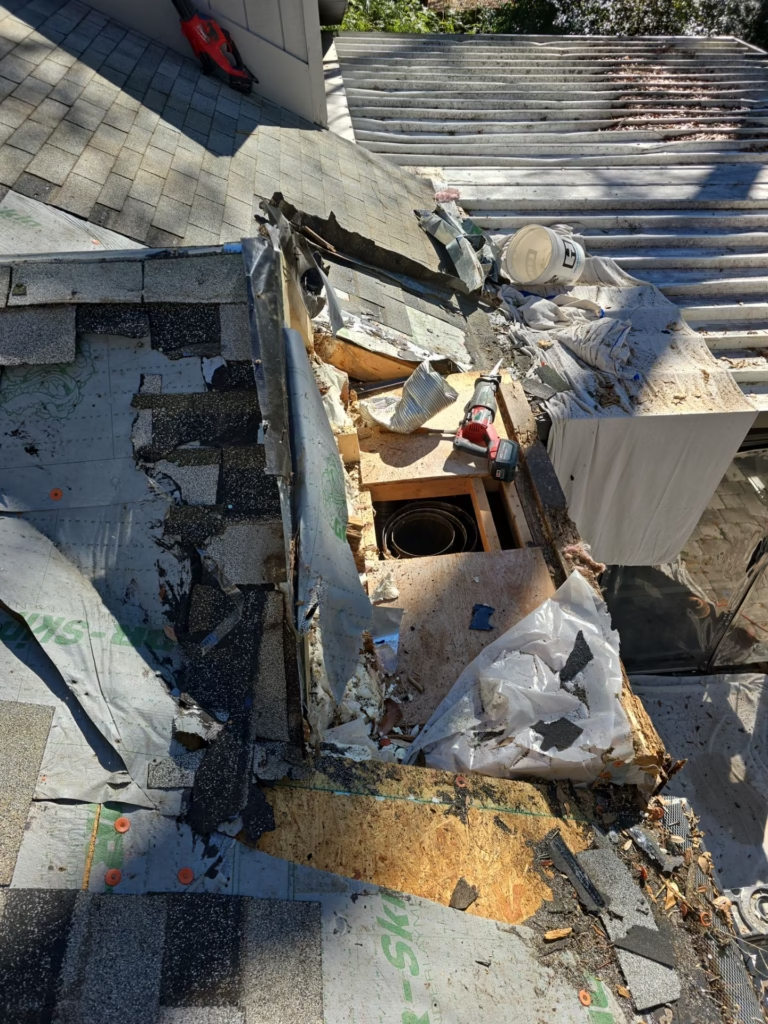
Full chimney removal is the most comprehensive scope: the entire chimney structure is demolished from the firebox level through the roofline and removed from the property. This includes the firebox, hearth, smoke chamber, damper, full flue liner, all masonry above and below the roofline, and the chimney cap and crown. After demolition, Always Fire & Gas patches and finishes the roof penetration, restores the interior wall where the firebox was located, and completes any structural framing required at the former chimney location. You do not coordinate a separate roofing contractor or a separate drywall contractor. The full scope – demolition through finished surface – is handled by one licensed team.
- Full masonry demolition from firebox to crown
- All masonry removed from property at project completion
- Roof penetration patched and shingled to match existing roof
- Interior wall framed, insulated, drywalled, and primed at former firebox location
- Hearth flooring addressed – tile or flooring match coordinated with homeowner
- Permitted under #CRC133200 where required
- Before-and-after photography provide

Above-Roofline Removal
Above-roofline removal reduces the chimney to below the roof surface without disturbing the interior firebox, smoke chamber, or below-roofline masonry. The existing chimney cap and crown are removed, the above-roofline masonry courses are demolished down to just below the roof surface, and the remaining flue top is permanently capped and sealed. The roof penetration is closed, framed, and shingled to match the existing roof. The interior firebox and surround remain in place – permanently non-functional unless further decommissioning is requested. This scope eliminates the above-roofline maintenance liability (crown, cap, flashing, above-roofline masonry) while retaining the interior hearth feature
- Above-roofline masonry demolished to below roof surface
- Flue top permanently capped and sealed
- Roof penetration closed, framed, and shingled to match existing
- Interior firebox and surround retained – non-functional
- Eliminates above-roofline maintenance: crown, cap, flashing, exterior masonry
- Permitted under #CRC133200 where required
Firebox Decommissioning
Firebox decommissioning leaves the chimney structure fully intact and addresses only the firebox opening: the opening is sealed, the damper is permanently closed or removed, and the firebox face is finished as a decorative surround. This is the least invasive scope and the appropriate answer for homeowners who want to retain the hearth as a design feature without the maintenance obligation of an active wood-burning system. Firebox decommissioning is also the first step in an electric fireplace insert conversion: once the firebox is decommissioned and the opening is properly sealed and framed, an electric insert can be installed in the former opening.
- Damper permanently closed or removed’
- Firebox opening sealed with non-combustible material
- Firebox face finished as decorative surround
- Chimney structure above and below roofline retained
- Electric insert installation available as next step
- Least invasive and least expensive removal scope
Demolition for Home Renovation or Addition
When a chimney is in the footprint of a planned renovation or home addition, removal must be coordinated with the structural scope of the larger project. The chimney removal timeline is set by the renovation schedule: the firebox and interior masonry are typically removed during the demolition phase of the renovation, before new framing begins. The above-roofline work is coordinated with roofing at the appropriate construction stage. Always Home Repair coordinates directly with the homeowner’s GC or architect on renovation-driven chimney removal projects, providing permit documentation as part of the overall project record
- Removal scope determined by renovation or addition structural plan
- Coordinated directly with GC or architect timeline
- Demolition phased to renovation schedule – firebox first, above-roofline at roof stage
Permit documentation provided as part of overall renovation project record
Both Always Fire & Gas (chimney) and Always Home Repair (licensed contractor) available for coordination
Always Fire & Gas Does Not Stop at Demolition. Here Is Every Restoration Step That Follows.
The most common complaint about chimney removal contractors is not the demolition – it is what they leave behind. A roofline with a rough patch of plywood where the chimney was. An interior wall with framing exposed and no drywall. A hearth area with a concrete slab where the firebox floor was and no flooring to match. Always Fire & Gas handles every step of the restoration scope.
Roof restoration:
After above-roofline masonry is removed, the roof deck at the former chimney penetration is inspected for any moisture damage caused by failed flashing or crown. Damaged decking is replaced. The opening is framed, sheathed, and covered with roofing underlayment. New shingles are installed to match the existing roof material as closely as possible. Step flashing and counter flashing removal sites are sealed. The finished roof surface at the former chimney location is weather-tight before we leave the project.
Shingle match note:
Exact shingle match is not always possible if the existing roof has aged or if the original shingle is discontinued. Always Fire & Gas uses the closest available match and documents the shingle specification used for the homeowner’s records. Where the aesthetic gap is significant, we discuss options before proceeding.
Interior wall and hearth restoration:
After below-roofline masonry and firebox removal, the interior wall at the former chimney location is framed with dimensional lumber, insulated to match surrounding wall insulation specification, drywalled, taped, mudded, and primed. AFG does not paint – primer is the handoff point to the homeowner’s painter. The hearth flooring area – where the raised hearth platform or firebox floor was – is addressed based on the homeowner’s finish preference: subfloor prepared for tile, hardwood, or LVP installation by the homeowner’s flooring contractor, or tile installation coordinated by AAS if requested.
What AFG provides at project close:
Framed, insulated, drywalled, and primed interior wall. Weather-tight patched roof. Before-and-after photography. Permit documentation where applicable.
What AFG does not provide at project close (and why):
Paint and finish-coat wall work: primer is the handoff to your painter – we do not paint because paint selection is the homeowner’s decision and painting over primer the homeowner later changes is wasted work.
Flooring installation (optional): subfloor is prepared and ready for your flooring contractor’s installation. If you want AFG to coordinate tile, we can – ask at the time of scope discussion.
Furniture moving and staging: we work around furnishings that cannot be moved, but large furniture removal is the homeowner’s responsibility before the project start date.
Five Situations. One Licensed Team. Your Path Forward.
The standard terracotta tile liner in a masonry chimney is designed to last the life of the chimney under normal use conditions. In North Central Florida, ‘normal use conditions’ is a phrase that does not apply. Three specific factors accelerate liner deterioration in this market.
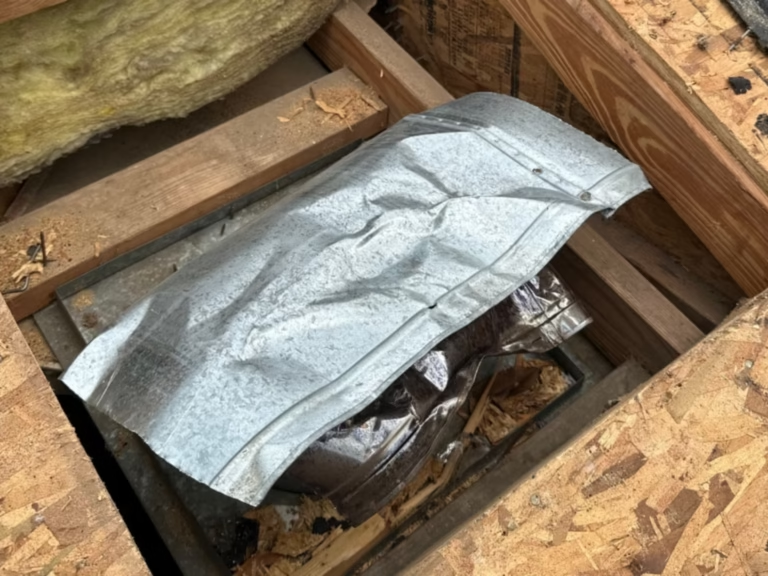
The Unused Chimney: It Has Not Been Used in Years and You Want It Gone
A chimney that has not been used in years is not a neutral feature. It is an active water entry point if the crown is cracked or the cap is missing. It is a potential wildlife access point if the cap is absent or damaged. It is a deferred maintenance liability that shows up as a negotiating point in every home inspection. Homeowners who have decided to remove an unused chimney have typically been thinking about it for at least one season – the decision is made, and what they need is a licensed contractor who can handle the full scope cleanly. Always Fire & Gas is that contractor.
Call (352) 282-0158 to schedule a removal assessment. We confirm scope, timeline, and price in the same visit. Full removal or above-roofline reduction – we will tell you which fits your situation and what the restoration scope looks like before you commit.
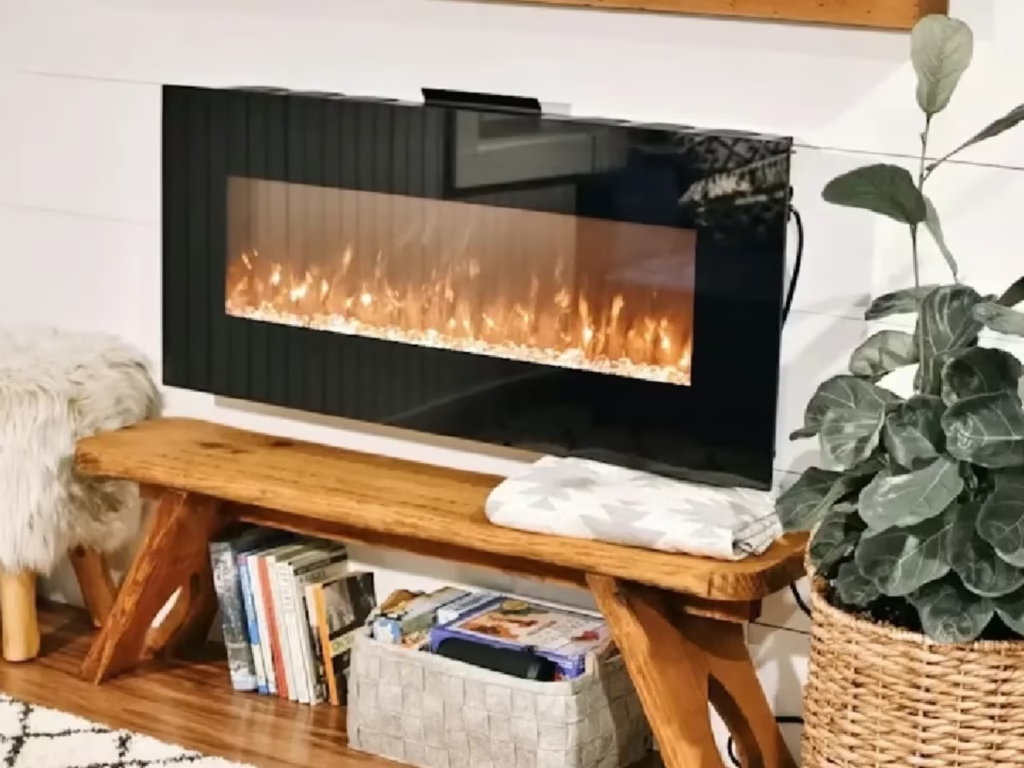
Converting to Electric or Gas: You Want to Keep the Hearth, Not the Chimney Function
A homeowner who wants to keep the fireplaces visual presence but eliminate the maintenance obligation of a wood-burning system does not need full removal. Firebox decommissioning – permanently sealing the firebox and damper – eliminates the active chimney system while retaining the hearth as a design feature. For homeowners who want a flame in the firebox without wood, gas, or maintenance, an electric fireplace insert installed in the decommissioned firebox opening is the complete solution. See /fireplaces/electric/ for the full electric insert range. Always Fire & Gas can decommission the firebox and coordinate the electric insert installation as a single project.
Call (352) 282-0158 to discuss firebox decommissioning. If electric insert conversion is the goal, we can walk through the insert options that fit your firebox dimensions at the same visit.
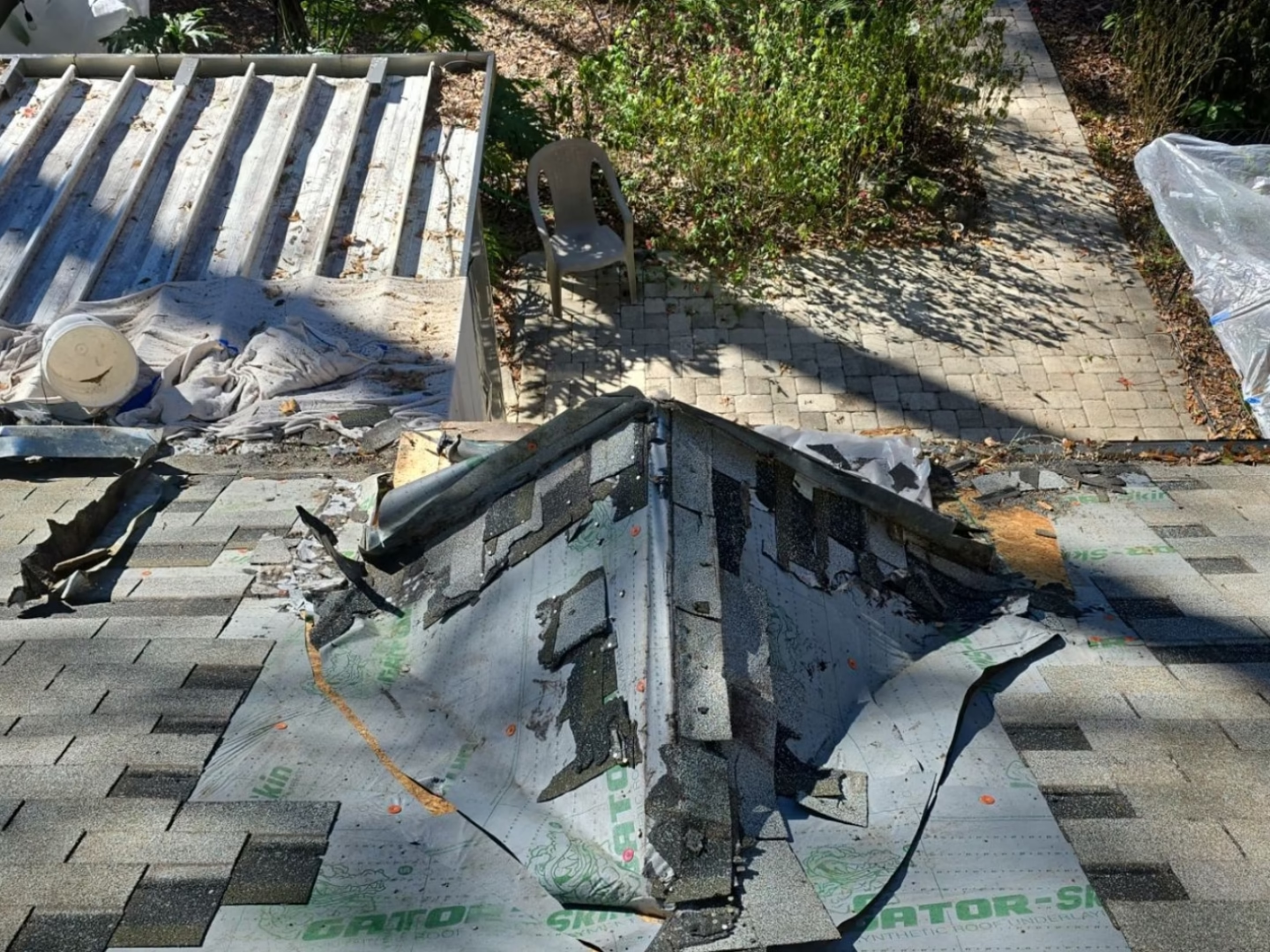
Home Renovation or Addition: The Chimney Is in the Way
A chimney in the footprint of a planned kitchen expansion, master suite addition, or whole-home renovation is a structural obstacle that has to be addressed before framing begins. Always Fire & Gas coordinates chimney removal with the homeowner’s GC or directly with the homeowner on renovation timelines. We phase the removal to the renovation schedule – interior demolition first, above-roofline work coordinated with the roofer at the appropriate construction stage – and provide permit documentation as part of the renovation’s overall project record. If you are working with a GC, they can call us directly.
Call (352) 282-0158 or have your GC call us. We discuss the renovation timeline, confirm the removal scope, and coordinate the permit documentation required for the overall renovation project.
Roof Replacement: Your Roofer Said the Chimney Needs to Be Addressed First
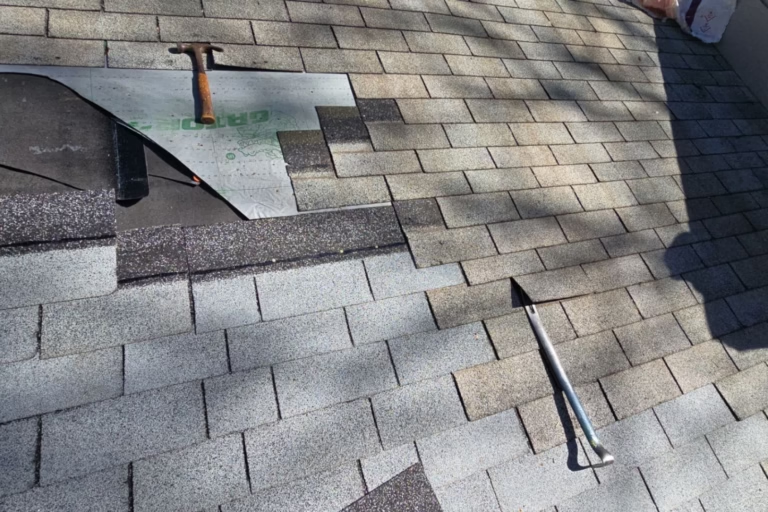
A roofing contractor who tells a homeowner that the chimney needs to be evaluated or removed before reroofing is giving accurate advice: reroofing around a chimney with failed flashing, a deteriorated crown, or structural masonry issues creates warranty complications for the new roof and does not resolve the water entry that is damaging the roof deck at the chimney penetration. Always Fire & Gas coordinates chimney removal or above-roofline reduction on reroofing timelines – the chimney work is completed before the roofer begins, or the chimney and roof work are sequenced so the new roofing is installed directly over the patched chimney area as one continuous project.
Call (352) 282-0158 with your reroofing timeline. We confirm whether removal, above-roofline reduction, or repair is the right scope for your chimney situation and coordinate the timing with your roofing contractor.
Estate or Property Sale: The Chimney Is a Liability Before You List
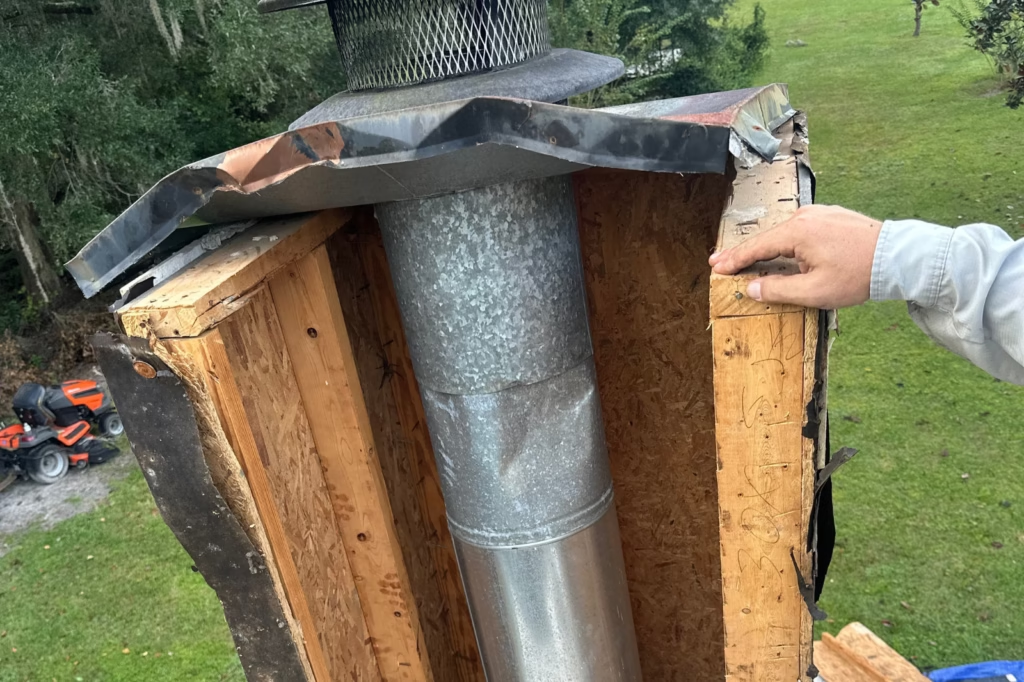
A chimney on a property headed to market carries specific risk in a buyer’s inspection: any chimney that has not had a recent Level 2 inspection will prompt a recommendation for one, and any chimney with deferred maintenance will generate a repair demand or a price reduction. For an estate sale or a property with a chimney in unknown condition, removal before listing eliminates that inspection finding entirely. A property without a chimney does not generate a chimney inspection finding. Always Fire & Gas performs pre-listing chimney removal on real estate timelines throughout North Central Florida. We provide permit documentation and before-and-after photography suitable for disclosure packages.
Call (352) 282-0158 with your listing timeline. We assess the chimney’s current condition, confirm which scope resolves the liability efficiently, and provide documentation for the disclosure package at project close.
Six Steps from Assessment to Finished Surface
Assessment and Scope Confirmation
Every removal project begins with an on-site assessment. We inspect the chimney’s condition from firebox to crown, identify any complications in the removal scope (structural masonry tied into house framing, unusual flue configurations, asbestos-era construction considerations for older homes), confirm the restoration scope for roof and interior, and provide a written scope and price before any commitment is required from the homeowner.
1
Site Protection and Interior Containment
Before any demolition begins, the interior of the home adjacent to the firebox and chimney is protected. Drop cloths cover flooring and furnishings in the work area. The firebox opening is sealed with a containment barrier that prevents demolition dust and debris from entering the living space. For above-roofline work, tarps protect the roof surface and surrounding landscaping from falling masonry.
2
Above-Roofline Demolition
Above-roofline masonry is removed from the crown down to the planned termination point — below the roof surface for full removal and above-roofline reduction, or to cap level for full removal. Masonry is lowered in controlled lifts, not dropped from the roofline. Debris is staged at ground level for removal from the property.
3
Below-Roofline and Interior Demolition (Full Removal Only)
For full chimney removal, interior demolition follows above-roofline work. The firebox, hearth, smoke chamber, and below-roofline masonry are removed. This stage is the most disruptive to the interior of the home and is completed as efficiently as possible. All debris is removed from the interior before framing and drywall work begins
4
Roof Patching and Structural Restoration
With masonry removed, the roof penetration is inspected, framed, sheathed, and shingled to match the existing roof. Any moisture-damaged roof decking identified during demolition is replaced before new shingles are installed. The finished roof surface is weather-tight before interior work begins. For interior full removal, wall framing, insulation, drywall, and primer follow roof completion
5
Site Cleanup, Documentation, and Finished Surface Confirmation
All demolition debris is removed from the property. The project area – interior and exterior – is cleaned and photographed. Before-and-after photography is compiled. Permit documentation is provided where applicable. The homeowner walks through the finished scope with the project lead before the team leaves the property. If anything in the restoration scope does not meet the agreed standard, it is corrected before the project is considered closed.
6
Chimney Removal and Demolition Across North Central Florida
Always Fire & Gas installs all five liner system types across Marion, Alachua, Lake, Sumter, Citrus, Putnam, Hernando, Orange, Volusia Counties and all surrounding areas. Every project is permitted under FL Residential Contractor License #CRC1332000 and documented with post-installation video confirmation.
Ocala & Marion County
Gainesville & Alachua County
The Villages & Sumter County
Home market since 1982. Significant older housing stock with original tile liners requiring assessment and replacement. Rural properties with wood stoves throughout Marion County.
Active real estate market with high demand for pre-sale and post-inspection relining on real estate timelines. Older residential neighborhoods throughout Alachua County.
High-volume real estate market and active insert installation market. Gas and solid fuel liner installations throughout Sumter County. Senior living facility commercial applications.
Ocala & Marion County
Home market since 1982. Annual inspections, pre-listing, and buyer inspections across Marion County. Rural and agricultural properties served.
Gainesville & Alachua County
Active resale market with high demand for Level 2 buyer and seller inspections. University-adjacent and established neighborhoods throughout Alachua County.
The Villages & Sumter County
High-volume real estate market. Large senior living and HOA-community population. Level 2 real estate inspections on tight closing timelines throughout Sumter County.
Also serving: Lake, Citrus, Putnam, Hernando, Orange, and Volusia Counties. Call (352) 282-0158 to confirm project scope and scheduling for your address.
Chimney Removal Questions, Answered Directly
Chimney removal cost in North Central Florida depends on the removal scope, the chimney’s construction and size, the height of the above-roofline section, access conditions at the property, and the restoration scope required after removal. Full chimney removal with roof patching and interior wall restoration is priced differently from above-roofline reduction only or firebox decommissioning. Always Fire & Gas does not publish a fixed removal price because the correct scope – and therefore the correct price – varies significantly by chimney and property. Call (352) 282-0158 for an on-site assessment and written scope before any commitment is required.
The right answer depends on what you are trying to accomplish. If the goal is to eliminate the above-roofline maintenance liability – failed crown, cap, flashing, exterior masonry – without removing the interior hearth feature, above-roofline removal or firebox decommissioning is the right scope. If the goal is to reclaim the interior space where the firebox sits, or if the chimney is a structural liability in its current condition, full removal is the right answer. If the goal is to retain the hearth as a design feature with a working flame, electric insert conversion after firebox decommissioning is the right path. Always Fire & Gas assesses your specific situation and recommends the scope that fits your goals – not the most expensive option.
After above-roofline chimney masonry is removed, the roof deck at the former chimney penetration is inspected for moisture damage. Any damaged decking is replaced. The opening is framed, sheathed with roofing plywood, covered with underlayment, and shingled to match the existing roof as closely as possible. Step and counter flashing removal sites are sealed. The finished roof surface is weather-tight before the project is considered complete. Always Fire & Gas handles roof patching as part of the chimney removal scope – the homeowner does not coordinate a separate roofing contractor for this work.
Above-roofline removal for a standard single-flue residential chimney is typically a one-to-two-day project including roof patching. Full chimney removal with interior wall restoration is typically two to four days depending on chimney size, access conditions, and the extent of the restoration scope. Firebox decommissioning is typically a one-day project. Always Fire & Gas provides a project timeline at the time of the written scope so the homeowner can plan accordingly. Projects requiring permits may have a permit timeline in addition to the installation timeline depending on the jurisdiction.
Structural chimney removal – including full removal below the roofline, firebox removal, and any associated wall restoration work — typically requires a building permit in Florida jurisdictions. Above-roofline removal may or may not require a permit depending on the specific jurisdiction and scope. Always Fire & Gas assesses permit requirements for each project under FL Residential Contractor #CRC1332000 and obtains required permits before work begins. Permitted removal produces a building department record confirming the work was inspected and approved – which matters for insurance and for resale disclosure.
Yes. Above-roofline removal reduces the chimney to below the roof surface without disturbing the interior firebox, smoke chamber, or below-roofline masonry. The flue top is permanently capped and sealed. The roof penetration is closed, framed, and shingled. The interior firebox and surround are retained in place – permanently non-functional unless further decommissioning is requested. Above-roofline removal eliminates the active maintenance liability of the above-roofline chimney (crown, cap, flashing, exterior masonry) while retaining the interior hearth feature at significantly lower cost than full removal.
It depends on the chimney’s current condition and how it is likely to present in a buyer’s inspection. A chimney with deferred maintenance – cracked crown, missing cap, visible mortar joint failure, or no documentation of recent inspection – will generate a Level 2 chimney inspection recommendation from the buyer’s home inspector and potentially a repair or price reduction demand. Removing the chimney before listing eliminates that inspection finding entirely. For estate sales or properties with chimneys in unknown or poor condition, pre-listing removal is often the cleanest path. Always Fire & Gas performs pre-listing chimney removal with documentation for disclosure packages throughout North Central Florida.
A roofer who says the chimney needs to be evaluated or removed before reroofing is identifying a real problem: reroofing around a chimney with failed flashing, a deteriorated crown, or structural masonry issues creates warranty complications for the new roof and does not resolve the water entry at the chimney-roof junction. The new roof will leak at the chimney within a few seasons if the chimney’s condition is not addressed first. Always Fire & Gas coordinates chimney removal or above-roofline reduction on reroofing timelines. The chimney work is completed before the roofer begins, or the chimney and roof work are sequenced so the new roofing is installed over the patched chimney area as one continuous project.
The impact of chimney removal on home value depends on the local market, the home’s price range, and the buyer pool. In North Central Florida’s market, an unused chimney in poor condition typically represents a net negative in buyer negotiations – the deferred maintenance liability and the cost of required inspection outweigh the feature value for most buyers. A properly removed and restored chimney – with patched roof, finished interior wall, and permit documentation – presents as a completed project rather than a liability. For homes where a fireplace is a meaningful feature for the target buyer, electric insert conversion after decommissioning preserves the visual presence of the hearth without the maintenance obligation.
After full firebox removal and interior wall restoration, the former fireplace space can be used as standard wall space: built-in shelving, a media wall, an accent wall, or simply a finished wall. The hearth platform area – where the raised hearth or firebox floor was – is restored to match the adjacent flooring or prepared as a subfloor ready for tile, hardwood, or LVP. For homeowners who want to retain a flame feature without wood burning or maintenance, electric fireplace insert conversion after firebox decommissioning is an option that uses the existing firebox opening and surround. See /fireplaces/electric/ for the full electric insert range.