Natural Gas and Propane. Line Runs Included When No Supply Exists. Permitted and Pressure Tested.
Gas Appliance Installation in Ocala, Gainesville, Orlando, The Villages and All Surrounding Areas.
- FL Gas Contractor #LI45277
- CSIA Certified #10020
- FL Residential Contractor #CRC133200
- Liquified Petroleum (LP) Gas Master Qualifier License #MQ31416
Gas Appliance Installation
Gas Range and Cooktop. Gas Dryer. Gas Water Heater. Standby Generator. Outdoor Gas Grill. Natural Gas and Propane. FL Gas Contractor #LI45277. Master Chimney Technician. North Central Florida Since 1982.
Gas appliance installation in Florida requires a licensed gas contractor. Florida Statutes are clear: installing, connecting, extending, or modifying a gas line or gas appliance connection without a Category V gas contractor license is unlicensed contracting. The appliance retailer who delivers and connects a gas range at an existing supply is working within a narrow exception. The handyman who runs a new gas line to a location that did not previously have gas is not. Always Fire & Gas installs gas appliances under FL Gas Contractor License #LI45277 for both natural gas and propane systems across North Central Florida.
Six Appliance Scopes. Natural Gas and Propane. Line Run Included When No Supply Exists.
Gas Range, Cooktop, and Oven Installation
Natural gas and propane – replacement hookup at existing supply or new line run to a location with no existing gas
A gas range or cooktop installation at a location with an existing gas supply connection requires a correctly sized flexible connector, a confirmed shutoff valve, and a pressure-tested hookup. That scope is often what appliance retailers offer at delivery. A gas range or cooktop at a location that has never had gas – a kitchen island, a location that was previously electric-only, or a second kitchen in a renovation – requires a new gas line run from the existing distribution system to the new appliance location, a permit, and a pressure test before the range is connected. Always Fire & Gas handles both scopes. For natural gas ranges, the connection uses the household natural gas supply. For propane ranges, the existing propane distribution system is the supply source, and the flex connector at the appliance must be the correct type for propane service.
- Existing supply confirmed: shutoff valve present, accessible, and operational before any connection is made
- Flex connector: correct type for fuel (natural gas or propane), correct length for the installation, not previously kinked or damaged – replacement is included in every installation scope
- Anti-tip bracket installation confirmed: gas ranges require anti-tip bracket per manufacturer specification and consumer safety standards
- New line run scope: existing distribution system capacity confirmed before new line is sized, permit pulled, new line installed and pressure tested before range is connected
- Propane ranges: flex connector must be rated for LP service – not all connectors are interchangeable between natural gas and propane
- High-BTU commercial-style ranges: BTU demand confirmed against existing supply line capacity – a commercial-style range at 60,000+ BTU requires a supply line sized for that demand
- Pressure test at completion before appliance is connected to gas supply
1
Gas Dryer Installation
Natural gas and propane – conversion from electric or replacement at existing gas connection
A gas dryer installation converting from electric typically requires a new gas line run: most laundry rooms in North Central Florida homes that were originally wired for electric dryers have no existing gas supply at the dryer location. The new gas line run routes from the nearest point in the existing distribution system to the laundry room, installs a shutoff valve at the dryer connection point, and is pressure tested before the dryer flex connector is made up. Always Fire & Gas confirms at the assessment whether an existing gas supply is present at the dryer location before the installation is scheduled – a homeowner who purchases a gas dryer expecting a simple hookup and discovers there is no gas at the laundry room is in a difficult position if the contractor is not prepared to run the line on the same visit. Always Fire & Gas scopes both the line run and the hookup together where applicable.
- Existing gas supply at dryer location confirmed at assessment – if no supply present, line run scope identified and priced before installation is scheduled
- New line run: routed from nearest supply point, sized for gas dryer BTU demand, shutoff valve at dryer location, pressure tested
- Dryer flex connector: appliance-rated connector in correct fuel type (natural gas or propane), correct length, no sharp bends
- Dryer vent: gas dryer requires correctly installed exhaust vent to exterior – AAS confirms vent termination is clear and correctly routed, does not leave a gas dryer connected without confirmed vent path
- Propane dryers: conversion kit required if appliance is shipped in natural gas configuration – AAS confirms appliance fuel configuration before installation
• Permit: new gas line to dryer location requires permit under Florida Building Code in most jurisdictions
2
Gas Water Heater Installation
Natural gas and propane – tank and tankless, replacement or new installation
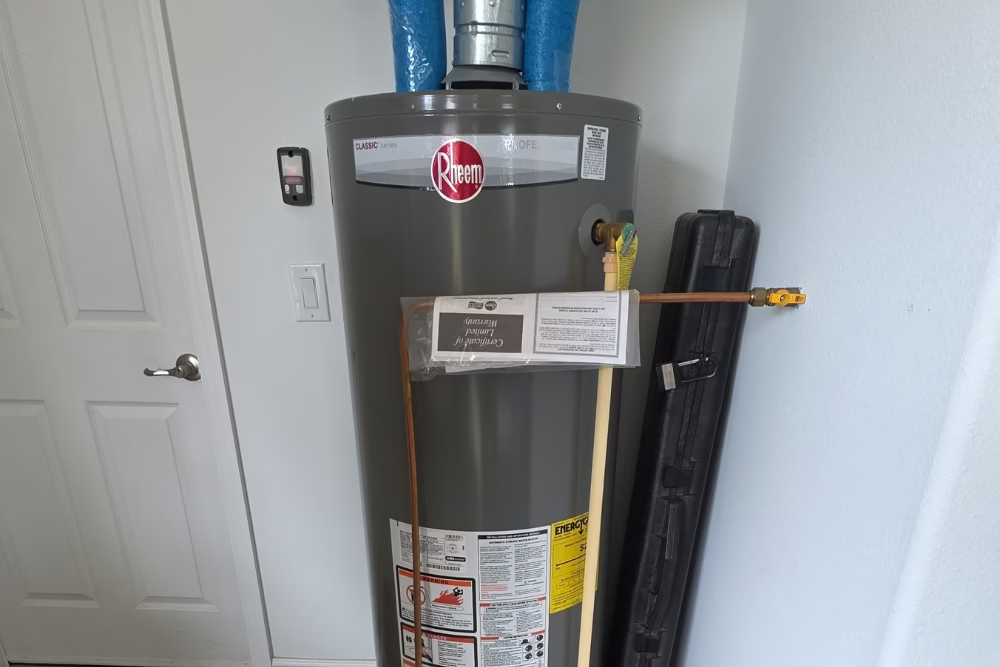
Gas water heater installation covers two distinct appliance types with significantly different installation requirements. A standard tank water heater replacement at an existing gas water heater location is typically a direct swap: existing gas supply, existing flue venting, existing water connections. The scope is a flex connector replacement, a pressure-tested hookup, and a venting confirmation. A tankless water heater installation has meaningfully different requirements: most tankless gas water heaters draw 150,000 to 200,000 BTU at full firing, versus 30,000 to 50,000 BTU for a standard tank water heater. An existing supply line sized for a tank water heater will not support a tankless unit at that demand. Always Fire & Gas confirms the existing supply line capacity for the tankless unit’s rated BTU demand before the installation is scheduled – not after the new unit is sitting in the garage.
- Tankless water heater BTU demand: confirmed against existing supply line capacity at assessment – undersized supply line identified and addressed before installation is scheduled
- Tankless water heater venting: most high-demand tankless units require a new direct-vent flue, either PVC or stainless Category III or IV liner, depending on the unit’s venting type – existing tank water heater flue is typically not compatible
- Tank water heater replacement: existing supply line, shutoff valve, and flex connector all assessed and replaced as needed
- Propane water heaters: BTU demand and supply pressure confirmed against existing propane system capacity
- Temperature and pressure relief valve: T&P valve and discharge line confirmed correctly installed and routed per Florida Plumbing Code
- Permit: water heater installation requires permit in most Florida jurisdictions regardless of whether the unit is a replacement or new installation
- Venting confirmation: gas water heater venting system confirmed correct type, correct pitch, and unobstructed before installation is closed out
3
Outdoor Gas Grill and Built-In Grill Station Installation
Natural gas and propane – dedicated line from existing distribution system to outdoor appliance
A built-in outdoor gas grill or permanent outdoor grill station requires a dedicated gas line from the interior distribution system or directly from the propane tank regulator outlet to the outdoor connection point. A portable gas grill on a cylinder exchange is a separate scope – this card is for permanent outdoor appliances that use a dedicated supply line. The outdoor line must be routed correctly from the interior supply to the exterior, protected at the wall or foundation penetration, buried at the correct depth where it crosses landscaping or grade, and equipped with a lockable shutoff valve at the connection point. Always Fire & Gas sizes the outdoor gas line to the grill’s BTU demand – a high-BTU built-in grill at 60,000 BTU or more requires a dedicated line, not a branch tapped from a low-demand household line.
- Grill BTU demand confirmed before line is sized – high-BTU built-in grills require a dedicated line, not a shared household branch
- Natural gas: line routed from interior natural gas distribution system to exterior connection, through or under exterior wall with correct protection at penetration
- Propane: line may route from interior distribution system or directly from tank regulator outlet depending on demand and tank proximity
- Buried segments: correct burial depth for jurisdiction and soil conditions, protected at grade transition points
- Lockable shutoff valve at outdoor grill connection point
- Outdoor grill connection fitting confirmed as correct type for natural gas or propane – quick-connect fittings for grill hoses are available in both fuel types and are not interchangeable
- Permit pulled for outdoor gas line installation where required under Florida Building Code
- Pressure test at completion before grill is connected
4
Whole-House Standby Generator Installation
Natural gas and propane – dedicated supply line, correct sizing, transfer switch coordination
A whole-house standby generator is the highest single-appliance BTU demand in most residential gas systems. A 20kW generator draws approximately 200,000 BTU at full load. A 22kW generator draws approximately 220,000 BTU. These demands exceed the supply capacity of a typical residential gas branch line sized for appliances, and in some cases exceed the capacity of the main distribution line at the point where the generator would branch off. Always Fire & Gas performs the gas supply assessment as the first step of every generator installation: confirming whether the existing system can support the generator demand simultaneously with all other gas appliances in the home, and whether a dedicated line from the meter (natural gas) or regulator outlet (propane) is required. A generator connected to an inadequate supply line will start and run, but will not reach rated output under full load – the failure mode is not obvious until a power outage occurs.
- BTU demand calculation: generator rated BTU demand confirmed against existing main distribution line and total system load before any line is run
- Dedicated supply line: most whole-house generator installations require a dedicated gas line from the meter or regulator outlet, not a branch from the household distribution system
- Natural gas: coordination with utility for meter capacity confirmation where generator BTU demand requires verification of service entrance adequacy
- Propane: dedicated first-stage regulator and dedicated supply line for generator may be required where generator demand would starve household appliances if shared
- Transfer switch: AAS coordinates with the electrical contractor on generator installation – generator gas connection is completed in coordination with the automatic transfer switch installation, not independently
- Permit: generator gas connection requires permit under Florida Building Code
- Pressure test at completion of gas line before generator commissioning
- Generator manufacturer connection requirements confirmed before installation: inlet size, thread type, and pressure specification confirmed against AAS installation scope
5
Natural Gas and Propane Appliance Installations: What Changes at the Connection
Always Fire & Gas installs gas appliances for natural gas and propane systems across North Central Florida. The appliances are often the same models – most major gas appliance manufacturers produce appliances that can be configured for either fuel with a conversion kit. The installation details differ at three points: the flex connector type, the appliance fuel configuration, and the supply pressure confirmation.
INSTALLATION DETAIL
Flex connector type
Appliance fuel configuration
Supply pressure
Permit requirement
Line run material
INSTALLATION DETAIL
Stainless steel corrugated connector rated for natural gas service 1/2 inch IPS thread common for residential appliances
Most appliances ship from manufacturer in natural gas configuration ready to connect at natural gas supply
Natural gas residential distribution: typically 1/4-inch water column (low pressure) at appliance inlet after second-stage regulation – appliance inlet pressure confirmed at hookup
Permit required for new gas line runs; direct appliance connection at existing supply may not require permit in all jurisdictions – AAS confirms at assessment
CSST, black iron, or approved flex connector depending on run length and application; CSST requires bonding per NFPA 54
PROPANE / LP
Stainless steel corrugated connector rated for LP service – LP-rated connectors are required, natural gas connectors are not rated for propane and should not be substituted
Many appliances ship in natural gas configuration and require a manufacturer-specific LP conversion kit: different burner orifices, sometimes a different regulator – AAS confirms appliance fuel configuration before installation
Propane residential distribution: typically 11-inch water column at appliance inlet after second-stage regulation – higher than natural gas, appliance must be LP-configured to operate correctly at LP pressure
Same permit requirement as natural gas – permit for new line runs, jurisdiction determines requirement for direct connections
CSST, black iron, or approved flex connector; CSST requires bonding per NFPA 54 – same material requirements as natural gas
INSTALLATION DETAIL
NATURAL GAS
PROPANE / LP
Flex connector type
Stainless steel corrugated connector rated for natural gas service – 1/2 inch IPS thread common for residential appliances
Stainless steel corrugated connector rated for LP service LP rated connectors are required, natural gas connectors are not rated for propane and should not be substituted
Appliance fuel configuration
Most appliances ship from manufacturer in natural gas configuration – ready to connect at natural gas supply
Many appliances ship in natural gas configuration and require a manufacturer-specific LP conversion kit: different burner orifices, sometimes a different regulator – AAS confirms appliance fuel configuration before installation
Supply pressure
Natural gas residential distribution: typically 1/4-inch water column (low pressure) at appliance inlet after second-stage regulation – appliance inlet pressure confirmed at hookup
Propane residential distribution: typically 11-inch water column at appliance inlet after second-stage regulation – higher than natural gas, appliance must be LP-configured to operate correctly at LP pressure
Permit requirement
Permit required for new gas line runs; direct appliance connection at existing supply may not require permit in all jurisdictions – AAS confirms at assessment
Same permit requirement as natural gas – permit for new line runs, jurisdiction determines requirement for direct connections
Line run material
CSST, black iron, or approved flex connector depending on run length and application; CSST requires bonding per NFPA 54
CSST, black iron, or approved flex connector; CSST requires bonding per NFPA 54 – same material requirements as natural gas
Four Situations. One Licensed Process.Permitted and Pressure Tested Every Time.
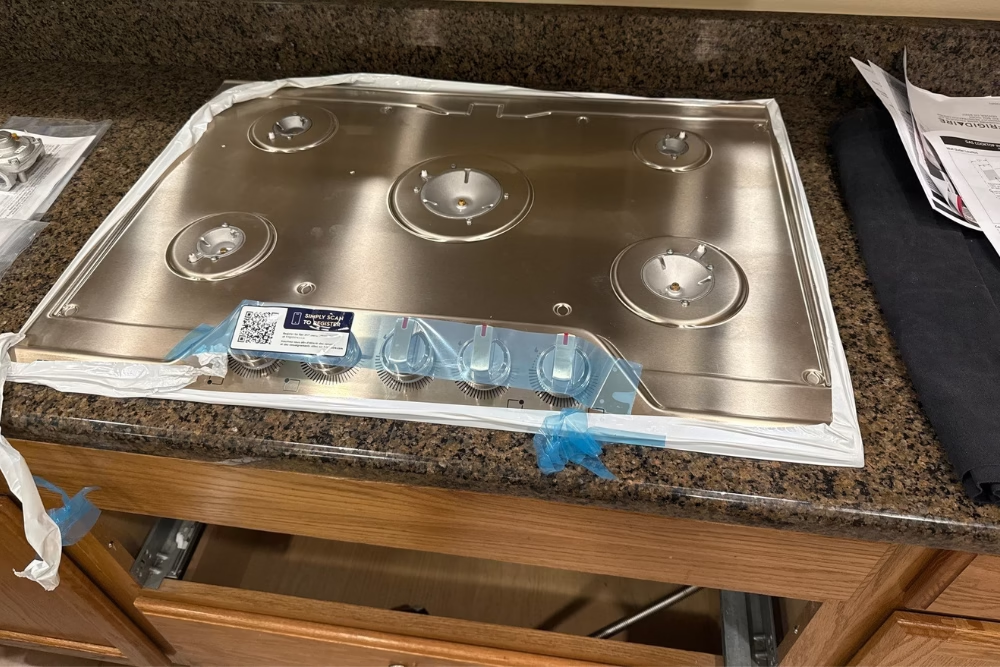
Replacing an Existing Gas Appliance at the Same Location
A new gas appliance replacing an existing gas appliance at the same location – same range, same water heater, same dryer – is the most contained installation scope. The gas supply is already present, the shutoff valve is already at the correct location, and the distribution line is already sized for the appliance type. The installation scope is a flex connector replacement, a pressure-tested hookup, and a confirmed shutoff valve operation. The flex connector should always be replaced when a gas appliance is replaced — a connector that served the previous appliance has been through years of thermal cycling and movement and should not be carried over to a new installation. Always Fire & Gas replaces the flex connector as a standard element of every appliance replacement, not an optional add-on.
Call (352) 282-0158 with the appliance type, the fuel type (natural gas or propane), and whether the existing appliance is being disconnected and removed or is already out. We confirm the scope and schedule the installation.
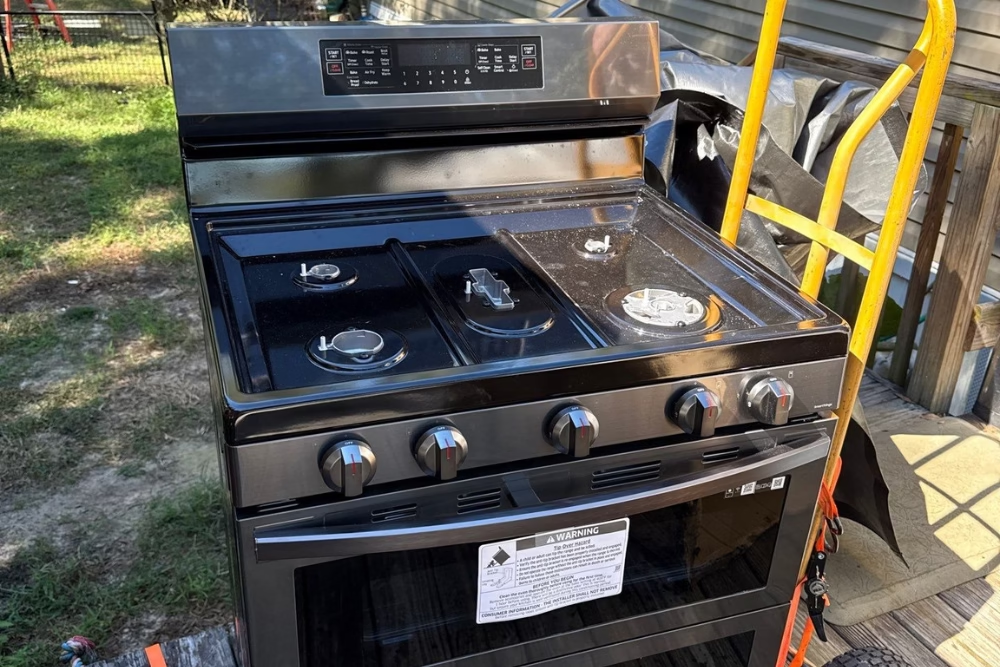
New Appliance at a Location With No Existing Gas Supply
A gas appliance going into a location that has never had gas – a kitchen island where a range is being installed for the first time, a laundry room being converted from electric to gas, a garage or exterior location where a generator or grill needs a dedicated supply line – requires a new gas line run in addition to the appliance connection. The line run is not a separate contractor call: Always Fire & Gas handles the line run, the permit, and the appliance connection as a single scope. The line run is sized to the appliance’s BTU demand and the route from the existing distribution system to the new appliance location. If the new appliance is at a particularly long distance from the existing distribution system, or if the BTU demand of the new appliance pushes the total system demand close to the main line’s capacity, AFG identifies that at the assessment — not after the pipe is in the wall.
Call (352) 282-0158 with the appliance type, the installation location, and the approximate distance from the existing gas supply or meter. We assess the supply route and provide a scope for the line run and the appliance connection together.
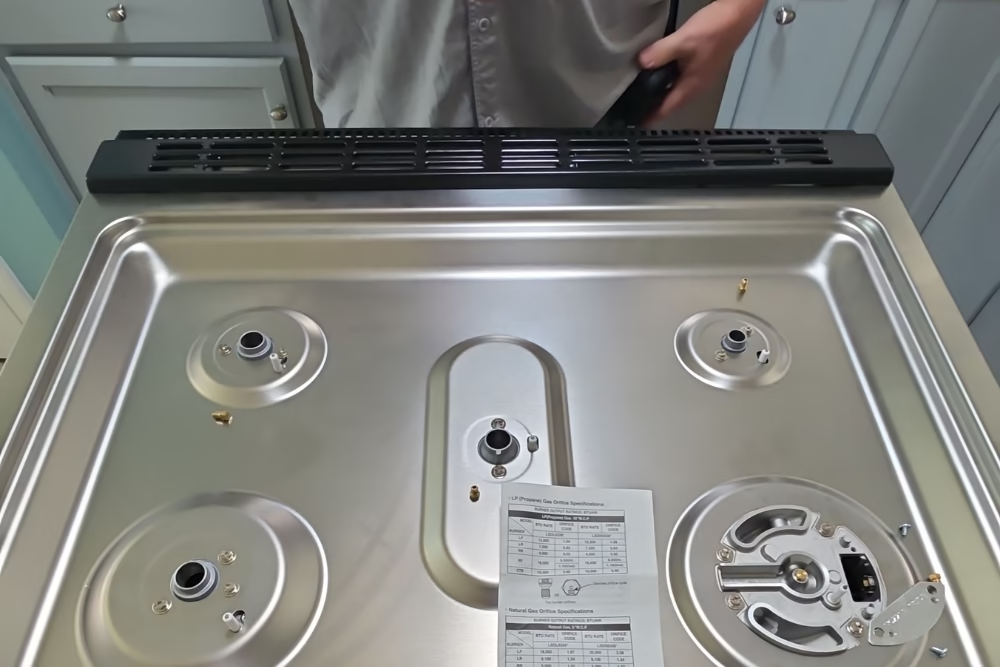
Appliance Installed by Delivery Service or Handyman - Needs Licensed Inspection
A gas appliance installed by an appliance delivery service, a handyman, or any person without a Florida gas contractor license is not a licensed installation. The connection may look correct. It may even pass a simple soap-bubble check. It has not been pressure tested, it is not permitted, and it is not documented. In the event of a gas incident at that appliance, the homeowner’s insurance carrier will ask for the permit and the licensed contractor documentation. If there is none, the claim may be denied. Always Fire & Gas performs licensed gas appliance inspection and connection confirmation for appliances that have been connected by unlicensed persons. The scope includes: electronic leak detection at all connection points, pressure test of the appliance supply line, shutoff valve confirmation, flex connector assessment, and the issuance of a written report documenting the findings under #LI45277.
Call (352) 282-0158 if a gas appliance was recently installed or connected by someone other than a licensed gas contractor. We inspect the installation, pressure test the connection, and provide written documentation of the licensed inspection. If any deficiency is found, we provide a correction scope and price before any work is authorized.
New Construction - Multiple Gas Appliances Being Connected as Part of a Build
A new construction project with gas appliances requires gas rough-in before drywall and final appliance connections after cabinets and appliances are set. Always Fire & Gas coordinates with the general contractor on both phases: gas rough-in (lines run to all appliance locations, capped, and pressure tested before drywall is closed) and final connections (flex connectors made up, shutoff valves confirmed, final system pressure test, permit inspection). The gas rough-in permit must be coordinated with the GC’s building permit schedule – gas rough-in is typically inspected before drywall as part of the rough-in inspection sequence. AFG provides the gas contractor on the project as a single-source scope: distribution system and all appliance connections under #LI45277, gas fireplace venting under the MCT credential where applicable.
Call (352) 282-0158 or have your GC call with the project schedule and the gas appliance list. We coordinate the rough-in timeline, pull the gas permit in coordination with the building permit, and provide a scope for both rough-in and final connections.
Flex Connector Replaced. Supply Line Pressure Tested. Shutoff Valve Confirmed. Written Documentation. Every Installation.
A gas appliance installation that consists of making up the flex connector and turning the gas on is not a complete installation. Always Fire & Gas includes four elements in every gas appliance installation regardless of scope: a new flex connector, a pressure test of the appliance supply line, a confirmed shutoff valve operation, and written documentation of the installation under #LI45277. These are not optional add-ons – they are the minimum that a licensed gas appliance installation requires.
1
New Flex Connector at Every Installation
The flexible connector between the gas supply line and the appliance is replaced at every Always Fire & Gas gas appliance installation. A flex connector carried over from the previous appliance has been through thermal cycling, movement during appliance use, and years of service. The condition of the internal corrugated tube and the end fittings cannot be confirmed by visual inspection. A new connector is included in every installation – it is not a billable upgrade. Natural gas and propane connectors are not interchangeable: the correct connector type for the fuel is installed.
2
Pressure Test of the Appliance Supply Line
The gas supply line to the appliance is pressure tested after the connection is complete and before the appliance is turned on. Pressure test confirms the connection is leak-free. For new line run scopes, the full new line segment is pressure tested. For replacement connections at existing supply points, the flex connector and all connection fittings are tested electronically. Test results are documented.
3
Shutoff Valve Confirmation
The dedicated shutoff valve at the appliance connection point is confirmed operational through full open-and-close travel and returned to the confirmed open position. A shutoff valve that does not operate correctly is replaced as part of the installation scope. Lockable shutoff valves are installed where required by jurisdiction or manufacturer specification.
4
Written Documentation Under #LI45277
Every gas appliance installation receives written documentation: appliance type and location, fuel type, flex connector replacement confirmed, pressure test results, shutoff valve confirmation, and the FL Gas Contractor #LI45277 license under which the installation was performed. This documentation is the homeowner’s record that the installation was performed by a licensed gas contractor – the documentation that an insurance carrier may request in the event of an incident.
Gas Appliance Installation Across North Central Florida
Always Fire & Gas installs gas ranges, cooktops, dryers, tank and tankless water heaters, standby generators, and outdoor gas grills for natural gas and propane systems across Marion, Alachua, Lake, Sumter, Citrus, Putnam, Hernando, Orange, Volusia Counties and all surrounding areas. All gas appliance installation work performed under FL Gas Contractor #LI45277. Line runs included when no supply exists at the appliance location. Permits pulled for all required scopes. Pressure tested before gas is activated.
Call (352) 282-0158 to schedule a gas appliance installation. Confirm the appliance type, the fuel type (natural gas or propane), the installation location, and whether an existing gas supply is present at that location. We confirm the scope – direct hookup or line run required – and provide a price before any work is scheduled.
Gas Appliance Installation Questions, Answered Directly
No. Florida law requires a licensed gas contractor to install, connect, or modify gas appliance connections. A handyman without a Florida gas contractor license who connects a gas range, water heater, or dryer is performing unlicensed contracting, which violates Florida Statutes. Beyond the legal issue, an appliance connected without a licensed installation is not pressure tested, not permitted, and not documented – meaning the homeowner has no licensed contractor documentation if an incident occurs and an insurance carrier asks for it. Always Fire & Gas connects gas appliances under FL Gas Contractor License #LI45277. If a gas appliance was connected by someone without that credential, AFG performs a licensed inspection and connection confirmation that documents the installation correctly.
It depends on the scope. A direct appliance connection at an existing gas supply point – replacing a gas range at a location that already has a gas supply line and shutoff valve – may not require a permit in all Florida jurisdictions. A new gas line run to a location that did not previously have gas always requires a permit under the Florida Building Code. A water heater replacement typically requires a permit in most Florida jurisdictions regardless of whether it is a direct swap or involves a new line. Always Fire & Gas confirms the permit requirement for the specific scope and jurisdiction at assessment and pulls the permit where required under #LI45277.
A flexible gas connector should be replaced whenever a gas appliance is replaced, not reused from the previous appliance. The corrugated stainless steel tube inside a flex connector undergoes thermal cycling from the heat of a gas dryer over years of use, and the end fittings experience stress from the appliance moving during operation and from the periodic connection and disconnection at service visits. A connector that passes a visual inspection can still have micro-cracking in the corrugated tube that is not visible. Connector manufacturers rate their products for a service life, and that service life is typically the life of the appliance it was installed with. Always Fire & Gas replaces the flex connector at every gas dryer installation as a standard element of the scope, not an optional add-on.
In most cases, no. A tankless gas water heater firing at 150,000 to 200,000 BTU requires a significantly larger supply line than a standard tank water heater rated at 30,000 to 50,000 BTU. The existing supply line at a tank water heater location is typically sized for the tank unit’s demand. Connecting a tankless unit to an undersized supply line will result in insufficient fuel pressure at the tankless unit’s gas valve, causing the unit to either fail to ignite under demand or cycle on and off erratically. Always Fire & Gas assesses the existing supply line capacity against the tankless unit’s rated BTU demand before the installation is scheduled. If the supply line requires upsizing, that scope is identified and priced before the new water heater is purchased or delivered.
A whole-house standby generator typically requires a dedicated gas supply line sized to its full-load BTU demand. A 20kW generator draws approximately 200,000 BTU at full load. A 22kW generator draws approximately 220,000 BTU. These demands exceed the capacity of a typical residential gas branch line sized for kitchen or laundry appliances. Most whole-house generator installations require a dedicated supply line run from the natural gas meter or the propane tank regulator outlet, not a branch from the household distribution system. The dedicated line must be sized for the generator’s peak demand without pressure drop, because a generator that underperforms during a power outage due to fuel starvation fails at the worst possible time. Always Fire & Gas performs the BTU demand calculation and supply line sizing assessment before any line is run.
Yes, on two points. First, the flex connector: flexible connectors are available in both natural gas and LP-rated versions. An LP-rated connector uses materials that are compatible with propane’s different chemical properties. The two types are not interchangeable and should not be substituted. Second, the appliance’s burner configuration: most gas appliances ship from the manufacturer in natural gas configuration (sized for natural gas delivery pressure and BTU content). Installing a natural gas-configured appliance on a propane supply without a manufacturer-specific LP conversion kit will result in incorrect combustion – the burners receive too much fuel at propane’s higher pressure, producing yellow or orange flame, incomplete combustion, and potential carbon monoxide production. Always Fire & Gas confirms the appliance’s fuel configuration and installs the correct LP conversion kit where required for propane installations.
Gas appliance installation cost in North Central Florida depends primarily on whether an existing gas supply is present at the appliance location. A direct hookup at an existing supply point – flex connector, pressure test, shutoff valve confirmation, documentation – is the most contained scope. A new gas line run to a location that has no existing supply adds the line run, the permit, and the inspection to the scope, with cost varying by run length, pipe material, and routing complexity. Generator installations are consistently the most involved scope due to dedicated line sizing, permit requirements, and coordination with the electrical contractor. Always Fire & Gas provides a written scope and price after the assessment. Call (352) 282-0158 with the appliance type, fuel type, and installation location.