CSIA Certified Dryer Exhaust Technician #1149. North Central Florida Since 1982.
Dryer Vent Repair in Ocala, Gainesville, Orlando, The Villages and All Surrounding Areas.
Always Fire & Gas repairs dryer vents under CSIA Dryer Exhaust Technician certification #1149. The repair process begins with an assessment of the complete vent system – not just the section that is visibly wrong. The repair is performed to current Florida Building Code and NFPA 91 standards. A before/after photo report is produced at service close documenting what was found, what was repaired or replaced, and the condition of the corrected system. You leave with a vent that works correctly and documentation that it was done right.
Dryer Vent Repair
Vent Disconnected Behind the Dryer. Plastic Duct That Should Not Be There. Run That Is Too Long. Cleaning Found a Problem That Needs More Than Cleaning. You Need It Fixed Right and Documented.
Something told you the vent was not right. Maybe a technician cleaned the vent and handed you a report with a line item you were not expecting. Maybe you pulled the dryer away from the wall and found the duct crushed, kinked, or completely disconnected. Maybe a home inspector flagged it. Maybe you have suspected for a while that the plastic corrugated duct behind your dryer is not what should be there – and you were right.
A damaged or improperly installed dryer vent is a continuous hazard. Cleaning removes lint from the vent path, but it does not fix a crushed duct, reconnect a disconnected line, replace plastic duct that is a fire code violation, or correct a vent run that exceeds the legal length for its diameter. Those problems persist through every cleaning and every cycle until the vent system is repaired or replaced.
Step 1: Call or Text (352) 282-0158
Describe what you found or what you were told. We confirm whether the issue can be assessed and repaired in a single visit or requires an initial assessment, and schedule accordingly.
Step 2: We Assess and Repair
Full vent system assessment. Defective sections repaired or replaced. Code compliance confirmed. DryerFlex installed at transition. About one to two hours on-site depending on scope.
Step 3: You Get a Documented Correct System
Before/after photo report under CSIA #1149. Code-compliant, properly routed, pressure-confirmed airflow. Written record of what was repaired and what the system looks like corrected.
- CSIA Certified Dryer Exhaust Technician #1149
- FL Residential Contractor #CRC133200
- Certified Category V Gas License #LI45277
- BBB A+ Since 2018
- Family-Owned Since 1982
CSIA Certified Dryer Exhaust Technician #1149. Assessment, repair, and before/after photo report. Ocala, Gainesville, The Villages, and all of North Central Florida.
Not sure what type of repair you need? See the five most common dryer vent repairs below – one of them is probably what you are dealing with.
Five Dryer Vent Problems That Require Repair, Not Just Cleaning
Dryer vent problems fall into two categories: accumulation problems (lint buildup that cleaning resolves) and structural problems (damage, wrong materials, or improper installation that cleaning cannot fix). These five structural problems require repair or replacement of part or all of the vent system.
Disconnected or Separated Vent
The duct came apart somewhere in the run – the most dangerous vent defect
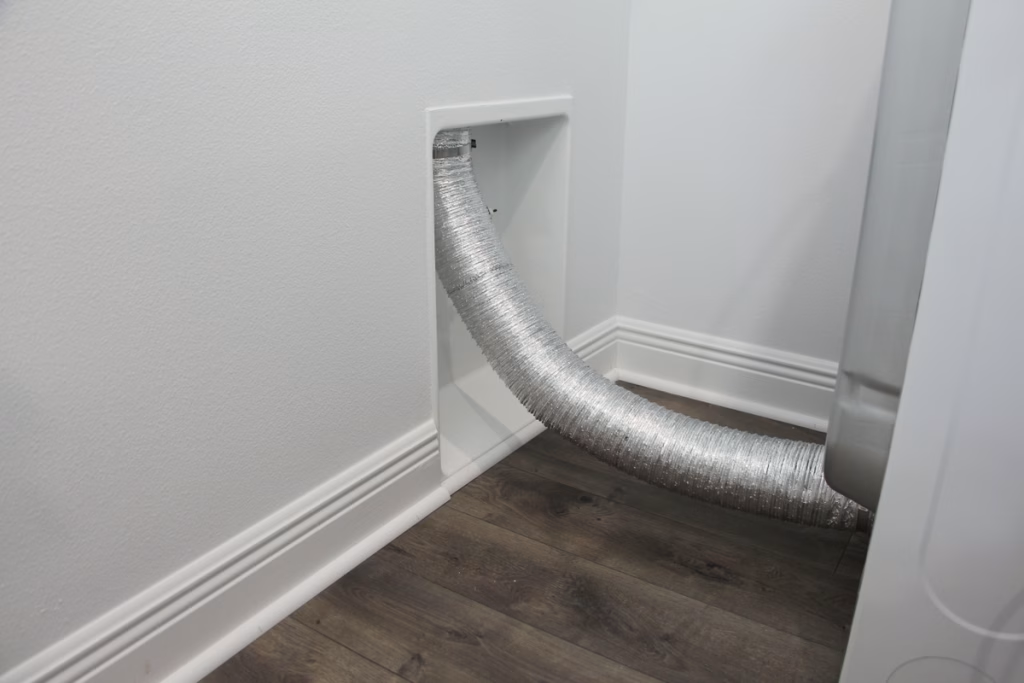
A disconnected vent means dryer exhaust – hot air, lint, and in the case of a gas dryer, combustion byproducts – is being discharged into a wall cavity, floor cavity, or attic space rather than to the exterior. Lint accumulates inside the structure. Moisture accumulates and promotes mold growth. In a gas dryer installation, combustion byproducts can migrate into living spaces. Disconnections occur most commonly at duct joints inside walls, at the transition from flexible to rigid duct, and at connections that were never properly secured. The disconnection is frequently not visible from the laundry area – the dryer appears to be running normally because the exhaust is going somewhere, just not outside.
- Exhaust discharged into wall or floor cavity: lint accumulates inside the structure
- Gas dryer: combustion byproducts migrate into cavities and potentially living spaces
- Moisture accumulation: promotes mold growth in cavities adjacent to the disconnection
- Often not visible from the laundry area: dryer runs normally, problem undetected for years
- Requires: locating the disconnection, accessing the joint, reconnecting and securing, confirming airflow
Crushed, Kinked, or Collapsed Duct
The duct was physically deformed – most commonly at the transition behind the dryer
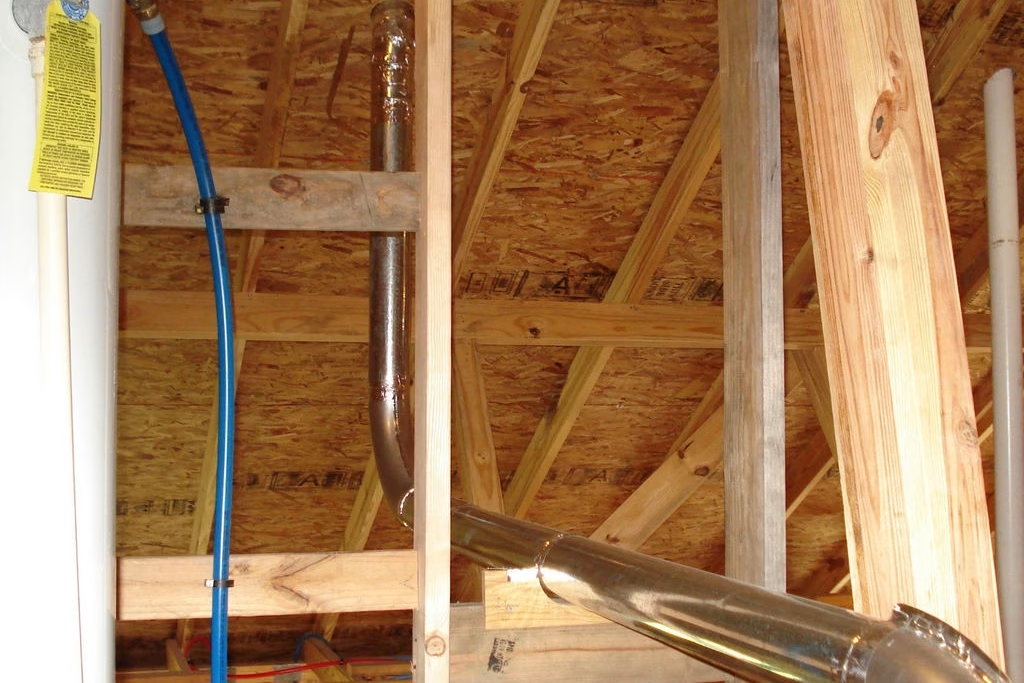
Foil accordion duct and flexible duct at the transition between the dryer and the wall are the most common sites of crushing and collapse. When the dryer is pushed against the wall for installation or repositioning, the flexible duct behind it compresses. A crushed or kinked duct restricts airflow at the point of deformation regardless of how clean the rest of the vent is. A duct that has been partially crushed for an extended period may hold the deformed shape permanently and cannot be restored by straightening. In some cases the crush is severe enough to create a near-complete blockage. Crushed ducts also accumulate lint at the kink point faster than straight duct sections.
- Foil accordion duct behind dryer: compresses when dryer is pushed against wall
- Deformation restricts airflow at the crush point regardless of cleaning
- Severely crushed duct holds deformed shape: cannot be restored by reshaping
- Lint accumulates at kink points faster than in straight sections
- Repair: replace transition duct with DryerFlex by InOvate, UL-listed semi-rigid aluminum that does not crush under normal placement
Wrong Vent Material - Plastic Duct or Non-Rated Flex
The existing duct is a fire code violation – this is more common than most homeowners expect
White plastic corrugated duct (the kind sold at big box stores in the dryer accessories aisle) is prohibited by Florida Building Code and most local jurisdiction adopted codes for dryer exhaust use. Plastic duct is a combustion hazard: it softens at dryer exhaust temperatures, can melt in a duct fire, and accumulates lint at every corrugation. The same problem applies to foil accordion duct used anywhere other than the short transition connector behind the dryer: foil duct inside wall cavities and duct runs is not listed for dryer exhaust and is not appropriate for anything other than the transition position where it can be inspected and replaced. Repair requires removing the non-rated material and replacing it with rigid metal duct (galvanized steel or aluminum) in the duct run and DryerFlex at the transition.
- White plastic corrugated duct: prohibited by Florida Building Code for dryer exhaust
- Plastic duct softens at dryer exhaust temperatures - combustion hazard
- Foil accordion duct in wall cavities: not listed for dryer exhaust in duct run positions
- Corrugated duct (plastic or foil): accumulates lint at every corrugation, accelerates blockage
- Repair: remove non-rated material, install rigid metal duct in duct run, DryerFlex at transition
Vent Run Too Long for the Duct Diameter and Elbow Count
The vent path exceeds what the Florida Building Code allows – typically discovered at inspection
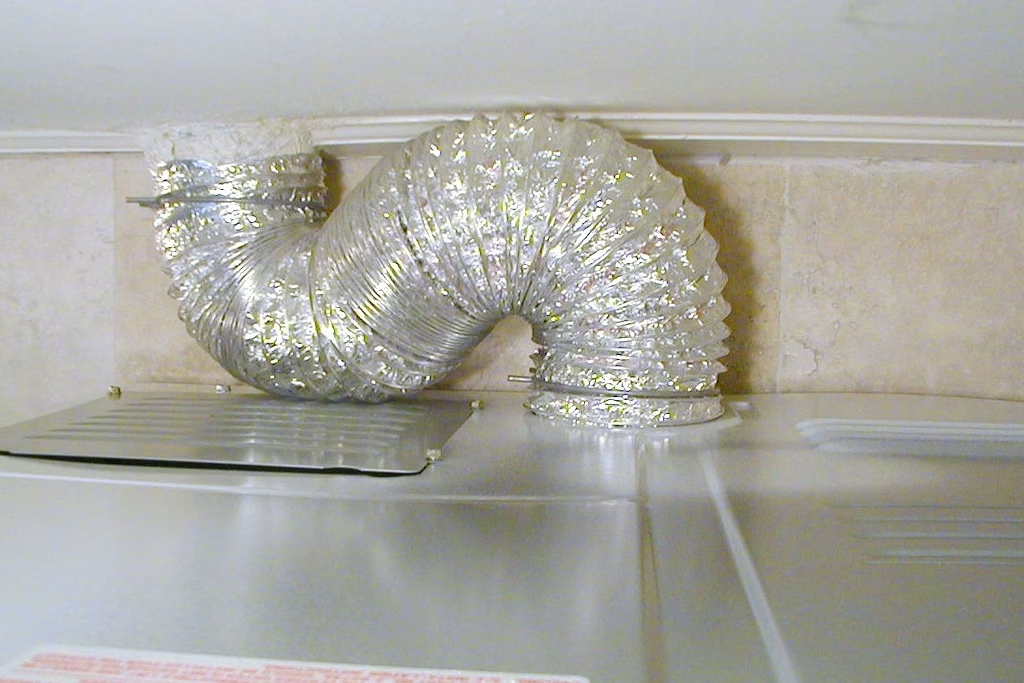
Florida Building Code establishes maximum equivalent duct lengths for dryer vent runs based on duct diameter and the number of 90-degree elbows in the run. Each 90-degree elbow is equivalent to a certain footage of straight duct. A 4-inch round duct has a maximum equivalent length of 35 feet (unless a longer run is specifically tested and labeled by the manufacturer). Each 90-degree elbow deducts from that allowance. A home with multiple elbows in a long run may be over the code limit even if the physical length of the duct appears reasonable. Exceeding the maximum length means the dryer cannot exhaust moisture and lint adequately at the end of the run, creating chronic blockage at the termination end regardless of cleaning frequency.
- 4-inch round duct: 35-foot maximum equivalent length per Florida Building Code
- Each 90-degree elbow deducts from the maximum equivalent length allowance
- Exceeding maximum length: chronic blockage at termination end, reduced cleaning interval
- Repair options: reroute to shorten the run, add a booster fan where code allows, or reconfigure elbows to reduce equivalent length
- Code compliance confirmed and documented at repair close
Improper Routing or Termination
The vent exits through the wrong location, terminates improperly, or was never designed to code
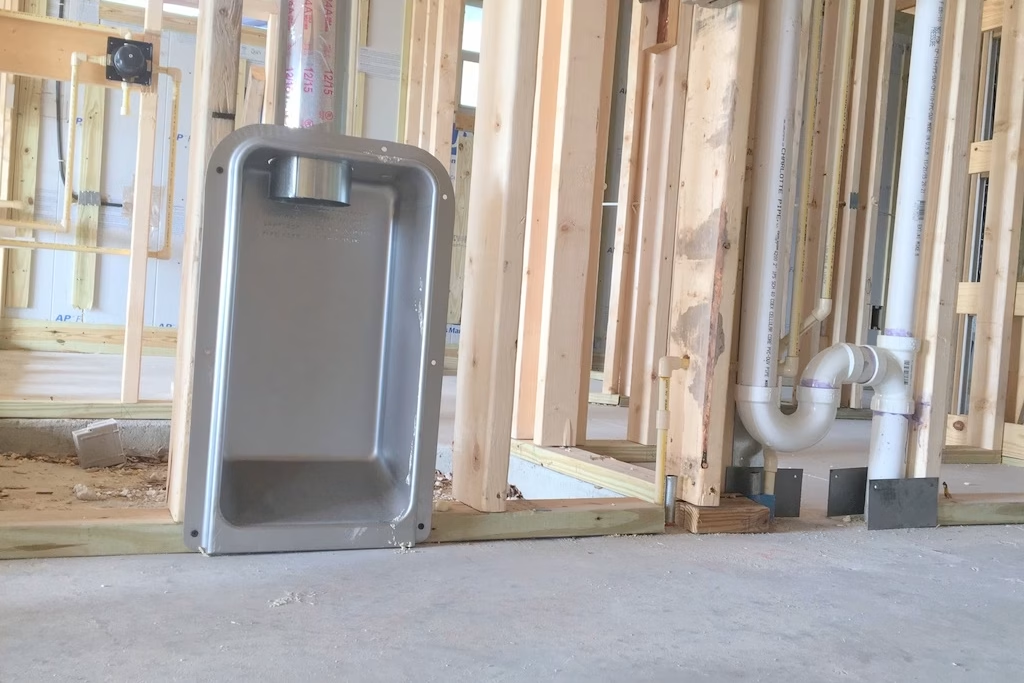
Dryer vents that were routed by a contractor without specific dryer vent knowledge often terminate in locations that are not permitted: into an attic, crawlspace, or garage rather than to the exterior; through a soffit opening where exhaust recirculates into the attic; or through a wall at a location too close to a window, door, or air intake. Interior terminations violate Florida Building Code and NFPA 91 and create lint accumulation in unconditioned spaces, humidity problems, and potential exposure to combustion byproducts. Exterior terminations that face into a prevailing wind direction, terminate under an overhang, or use a screen cap (prohibited for dryer exhaust) also require correction.
- Interior terminations (attic, crawlspace, garage): prohibited by Florida Building Code and NFPA 91
- Soffit terminations where exhaust recirculates into attic: common improper routing
- Terminations too close to windows, doors, or HVAC air intakes: code violation
- Screen caps on terminations: prohibited for dryer exhaust - accumulate lint and block airflow
- Repair: reroute to correct exterior termination location, install code-compliant louvered or flapper cap
SUMMARY: Five Dryer Vent Problems That Require Repair
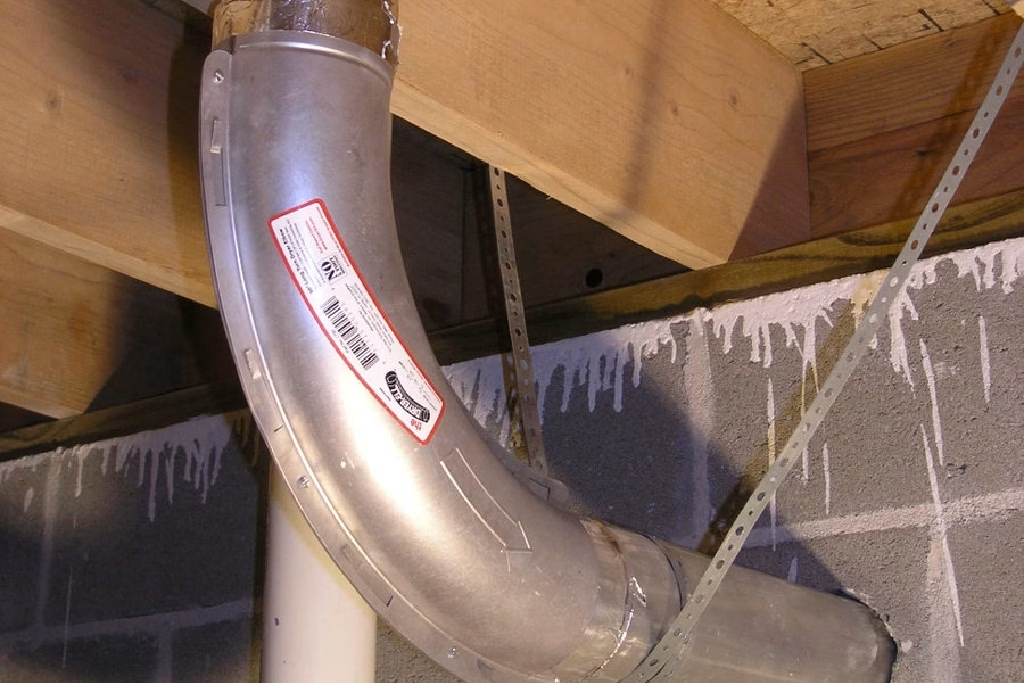
Dryer vent problems that require repair rather than cleaning include: a disconnected vent discharging exhaust into a wall or floor cavity; a crushed or kinked duct restricting airflow at the point of deformation; prohibited plastic duct or non-rated flex duct that is a fire code violation; a vent run that exceeds the Florida Building Code maximum equivalent length for the duct diameter and elbow count; and improper routing or termination that discharges exhaust inside the structure or violates clearance requirements. Always Fire & Gas diagnoses and repairs all five types under CSIA Dryer Exhaust Technician certification #1149, serving Ocala, Gainesville, The Villages, and all of North Central Florida.
Disconnected, crushed, wrong material, too long, or improperly routed. Assessment, repair, and before/after photo report. CSIA Certified #1149.
You Found Out the Problem Is Bigger Than a Cleaning. We Help You Understand What You Are Actually Dealing With.
The most common call we get for dryer vent repair starts the same way: someone had the vent cleaned, the technician found something wrong, and now the homeowner is trying to understand what the finding means, what fixing it involves, and what it will cost. That is a reasonable place to be. The findings on a dryer vent inspection report can reference code sections and technical standards that are not self-explanatory.
Always Fire & Gas will explain what was found in plain terms, confirm what the correct repair scope is, and give you a price before any work begins. No surprise charges. If the full scope cannot be confirmed until the vent is accessed, we will tell you that upfront and confirm the assessment process before scheduling.
Why CSIA Dryer Exhaust Technician Certification Matters for Vent Repair
Repairing a dryer vent is not the same as cleaning one. Repair requires knowledge of the Florida Building Code requirements for dryer exhaust duct materials, maximum run lengths, elbow configurations, termination requirements, and clearance distances. It requires knowing which materials are code-compliant and which are violations, how to access duct runs inside wall cavities when needed, and how to confirm the repaired system meets code before closing the service. CSIA Dryer Exhaust Technician certification #1149 means the technician has been trained and tested on all of these requirements – not just on cleaning technique. Most dryer vent service providers in North Central Florida do not hold this credential.
Assessment before repair:
Every dryer vent repair begins with a complete assessment of the accessible vent system, not just the section that was flagged. A finding in one section frequently reveals related issues elsewhere in the run. The assessment confirms the full repair scope and price before any repair work begins.
Repair scope confirmation:
The repair scope is explained in plain terms and confirmed with the homeowner before any work is performed. If the scope changes after the wall or cavity is accessed, the change is communicated and approved before proceeding.
Code compliance confirmation:
Every repair is confirmed to meet Florida Building Code and NFPA 91 requirements. The repair materials, duct routing, and termination are each checked against the applicable standard at service close.
Before/after photo report:
The complete service is documented with before/after photographs under CSIA DET #1149. The report records the defect found, the repair performed, the materials installed, and the airflow confirmation at the termination.
Need to understand the difference between repair and full replacement? See the section below on when a vent section can be repaired versus when the full run needs to be replaced.
When Can a Section Be Repaired? When Does the Full Run Need to Be Replaced?
Most dryer vent repair situations require replacement of one or two sections of duct, not the entire vent run. Understanding which situation applies to your vent system removes the uncertainty about scope and cost before the technician arrives.
SECTION REPAIR One or Two Segments Replaced - Most Common Outcome
The correct scope when the defect is isolated and the rest of the run is compliant
A section repair replaces the defective portion of the vent and leaves the compliant portions in place. This is the correct approach when: the transition duct behind the dryer is crushed or wrong material but the rigid duct in the wall is correct metal duct in good condition; a joint separated in one location but the rest of the run is intact and properly connected; the exterior termination cap is non-compliant but the duct run to the termination is correct; or plastic duct was used in one short section of an otherwise correctly installed run. Section repair is faster, less expensive, and less disruptive than full run replacement, and it is the correct scope in the majority of dryer vent repair situations.
- Transition duct only: DryerFlex replacement at the dryer-to-wall connection
- Single disconnection: access the joint, reconnect, secure, confirm airflow
- Termination cap only: remove non-compliant cap, install code-compliant louvered or flapper cap
- Short plastic duct section: remove and replace with rigid metal duct in the affected section
FULL RUN REPLACEMENT Complete Duct Run Replaced - Less Common, Required in Specific Situations
The correct scope when the run is non-compliant throughout or the routing must change entirely
A full vent run replacement is required when: the entire run uses plastic duct or non-rated flex throughout; the run is correctly configured at most points but exceeds the maximum equivalent length and cannot be shortened by section removal alone; the existing routing terminates improperly and the correct termination location requires a completely different path through the structure; or the duct inside wall cavities is in poor condition throughout the run rather than at an isolated point. Full run replacement involves removing the existing duct system, installing new rigid metal duct in the correct routing, installing a new DryerFlex at the transition, and confirming airflow and code compliance at service close. It is a more involved scope, confirmed before starting, and priced completely upfront.
- Entire run is plastic or non-rated material: full removal and replacement required
- Run exceeds maximum equivalent length and rerouting is the only compliant solution
- Improper termination requiring a completely different routing path through the structure
- Duct in poor condition throughout the run, not at an isolated section
- Full run price confirmed upfront: no surprises, scope confirmed before any wall access
Five Entry Points. One Certified Repair Process.
1
Cleaning Found a Problem - You Have a Report With a Repair Line Item
The cleaning was done. The report came back with a finding: wrong duct material, a disconnection inside the wall, a run that exceeds code length, or an improper termination. You are now trying to understand what the finding means, whether it is serious, and what the repair will cost. The short answer: yes, it is serious. Cleaning removes lint from a vent that has a structural defect, but the defect is still there after the cleaning. It will restrict airflow, accumulate lint faster, or continue discharging into the structure on every subsequent cycle. The repair finding should be addressed. Always Fire & Gas will review the inspection report, confirm the repair scope, and price the work before scheduling.
Call or text (352) 282-0158. Have the inspection report available when you call if possible. Describe the finding as it appears on the report. AFG will explain what it means, confirm the repair scope, and schedule the service.
2
You Found the Problem Yourself - Visible Damage, Disconnection, or Wrong Material
You have multiple dryers in multiple units and a maintenance schedule to keep. One missed vent cleaning becomes a tenant complaint, a fire report, an insurance claim, or a liability question. Always Fire & Gas provides before/after photo reports on every service – documentation for the property file, the insurance carrier, and the maintenance record. Annual or semi-annual scheduling can be established for recurring portfolio service. The CSIA certification and documented process meet the documentation requirements of most property insurance carriers.
Call or text (352) 282-0158. Describe the portfolio: number of units, approximate number of dryers, current service schedule if one exists, and any specific documentation requirements for your insurance carrier. AFG will confirm the scope and establish a recurring schedule.
3
Home Inspector Flagged the Dryer Vent
The home inspection report included a dryer vent finding: wrong material, improper routing, inside termination, excessive run length, or a general ‘have inspected and repaired by a qualified contractor’ note. The inspection finding needs a response before closing – either a repair documented under a licensed and certified contractor, or a written assessment explaining why the finding does not require repair. Always Fire & Gas can perform the repair and produce the written before/after report under CSIA DET #1149 within the typical closing timeline. The report is suitable for the buyer’s agent, the listing agent, the buyer’s lender, or the title company.
Call or text (352) 282-0158. Provide the property address, the inspection finding as it appears in the report, and the closing date or timeline. AFG will confirm the repair scope and the documentation format.
4
Recently Purchased a Home - Want the Vent Assessed Before Using the Dryer
You moved in and the dryer vent has never been inspected since you took ownership. It may have been cleaned for the sale, or it may not have been. You do not know the routing, the materials, the run length, or whether the previous owner ever had it serviced. Before running the dryer regularly, you want a certified technician to assess the vent, confirm it is code-compliant, and document the system baseline. Always Fire & Gas performs the full assessment, cleans the vent if cleaning is needed, repairs any defects found, and provides the before/after photo report documenting the system condition.
Call or text (352) 282-0158. Provide the property address and the closing date if recent. Describe any known information about the dryer type (gas or electric) and any visible vent concerns. AFG will confirm the combined assessment/cleaning/repair scope.
Previous Repair Did Not Fix It - The Problem Came Back or Was Not Fully Resolved
The vent was repaired – by a handyman, by a general contractor, by someone who cleaned the vent and also made a repair attempt – and the problem persisted or returned. The dryer is still taking two cycles. The smell came back. The technician who cleaned it found the same issue that was supposedly fixed. This situation typically means the previous repair addressed a symptom rather than the correct cause, or addressed one defect without diagnosing a second. Always Fire & Gas begins with a complete vent system assessment rather than going directly to the previously reported defect. The assessment confirms whether the previous repair was correct but incomplete, or whether the problem was misdiagnosed.
Call or text (352) 282-0158. Describe the previous repair: who performed it, what they said was wrong, what they did, and what happened after. AFG will confirm the assessment approach and schedule the service.
A Known Defect Does Not Become Less Dangerous Over Time
A dryer vent defect that has been identified – by an inspection report, by a technician’s finding, or by the homeowner directly – is an active hazard from the moment it is found until it is corrected. Running the dryer while a disconnected vent continues to discharge into the wall, while crushed duct restricts airflow and generates heat, or while plastic duct approaches its temperature limit does not become safer because the defect has been documented. Documentation is the first step. Repair is the resolution.
Deferring a documented vent defect also creates a liability exposure. A homeowner who has an inspection report noting a dryer vent code violation and continues to use the dryer has acknowledged the hazard in writing. If a dryer-related fire or moisture event occurs in the period between the inspection report and the repair, the documented finding establishes that the homeowner was aware and chose not to act.
What You Get at the End of a Correctly Repaired Dryer Vent
The defect is gone. Not covered. Not cleaned around. Gone. The duct runs the correct path, through the correct materials, to the correct termination. The airflow is confirmed at the exterior cap. The dryer exhausts fully on every cycle.
You have a before/after photo report documenting what was wrong, what was replaced or repaired, and what the system looks like corrected. It references the CSIA Dryer Exhaust Technician certification it was produced under. If an inspector, an insurance company, a buyer, or a lender asks whether the vent was repaired and documented, you have the answer.
You do not need to think about the dryer vent again until next year’s cleaning.
Two Repairs. Two Homeowners Who Now Have a Correct System.
Ocala: Cleaning Report Led to a Full Plastic Duct Removal
A homeowner in Ocala had the dryer vent cleaned and received an inspection report noting plastic corrugated duct throughout the duct run and a suspected disconnection at a joint inside the wall cavity. The homeowner was not sure whether the findings were serious or whether the cleaning technician was upselling work that did not need to be done. They called AFG for a second opinion. The assessment confirmed both findings: the run used white plastic corrugated duct from the wall connection to the termination – a fire code violation throughout – and the joint at a 90-degree elbow inside the wall cavity had separated, discharging dryer exhaust into the wall for an unknown period. AFG removed the plastic duct, reconnected and secured the separated joint, installed rigid metal duct in the duct run and DryerFlex at the transition, and confirmed airflow at the exterior termination. The before photos documented the plastic duct and the separated joint. The after photos documented the corrected metal duct run and the secured elbow. The homeowner received the report under CSIA DET #1149.
Similar situation? Call (352) 282-0158.
Gainesville: New-Purchase Assessment Found Soffit Termination and Corrected It
A couple moving into a home in Gainesville requested a combined dryer vent assessment and cleaning before they began using the dryer regularly. The home had not been inspected since the previous owner’s tenure. The assessment found that the vent run terminated into the soffit rather than through the exterior wall – a common improper installation in homes where the laundry was added or relocated after original construction. Soffit termination allows dryer exhaust to recirculate back into the attic, depositing lint and moisture where they should not be. The duct run was rerouted through the exterior wall at a compliant location. A new louvered termination cap was installed. The existing duct run material (foil duct inside the wall, which is non-rated for this position) was replaced with rigid metal duct. DryerFlex was installed at the transition. Before photos documented the soffit termination and the foil duct inside the wall. After photos documented the new exterior termination and the corrected duct run. The before/after report established the system baseline for the new owners.
Moving into a new home? Call (352) 282-0158 for an assessment before first use.
Dryer Vent Repair Across North Central Florida
Always Fire & Gas performs dryer vent repair for residential and rental properties across Marion, Alachua, Lake, Sumter, Citrus, Putnam, Hernando, Orange, and Volusia Counties and all surrounding areas. CSIA Dryer Exhaust Technician #1149. Assessment confirms scope before any repair begins. Before/after photo report on every service.
Call or text (352) 282-0158 to schedule. Describe the problem or the finding as you understand it. AAS confirms the assessment approach and schedules the service.
Dryer Vent Repair Questions, Answered Directly
Dryer vent repair involves identifying and correcting a structural defect in the dryer vent system – as opposed to dryer vent cleaning, which removes lint accumulation from an otherwise intact system. Repair may include: replacing a crushed or collapsed transition duct with a UL-listed DryerFlex semi-rigid aluminum duct; reconnecting a separated or disconnected duct joint inside a wall or floor cavity; removing non-code-compliant duct material (plastic duct or non-rated flex) and replacing it with rigid metal duct; rerouting a vent run that is too long, has too many elbows, or terminates improperly; or installing a code-compliant termination cap in place of a screened, painted, or otherwise blocked exterior termination. Every repair by Always Fire & Gas includes a written inspection report with before/after photographs produced under CSIA Dryer Exhaust Technician certification #1149.
Yes. White plastic corrugated duct is prohibited by Florida Building Code and NFPA 91 for dryer exhaust applications. Plastic duct softens at dryer exhaust temperatures and can melt or deform in a duct fire, which prevents the fire from being contained and allows it to spread into the wall cavity. Plastic corrugated duct also accumulates lint at every corrugation more aggressively than smooth-interior metal duct, increasing the rate of blockage and the lint density at the blockage point. If your dryer is connected to white plastic corrugated duct – the kind commonly sold in the dryer accessories section at home improvement stores – it should be replaced with rigid metal duct in the duct run and a UL-listed DryerFlex semi-rigid aluminum duct at the transition. Always Fire & Gas removes and replaces non-code-compliant duct material as part of dryer vent repair service.
A disconnected dryer vent inside a wall cavity discharges dryer exhaust – hot moist air, lint, and in a gas dryer installation, combustion byproducts – directly into the wall rather than to the exterior. The lint accumulates inside the wall cavity. The moisture promotes mold growth in the wood framing and drywall adjacent to the discharge point. In a gas dryer installation, combustion byproducts can migrate through the wall cavity and into adjacent living spaces. The dryer will appear to run normally because the exhaust is going somewhere – it just is not going outside. A disconnection inside a wall is frequently undetected for months or years because the dryer does not show obvious performance symptoms until lint accumulation in the wall cavity reaches the point where it begins to restrict the disconnected duct.
Florida Building Code and NFPA 91 establish a maximum equivalent length of 35 feet for a 4-inch round dryer exhaust duct. Equivalent length accounts for the physical length of the duct plus the equivalent length assigned to each fitting and elbow: a 90-degree elbow is equivalent to approximately 5 feet of straight duct, and a 45-degree elbow is approximately 2.5 feet. A vent run with multiple 90-degree elbows can exceed the 35-foot equivalent limit even when the physical duct length appears reasonable. Some dryer manufacturers list longer maximum run lengths on the dryer itself – when the manufacturer-listed maximum is longer than the code default, the longer manufacturer specification applies, but this must be verified from the dryer’s installation manual. Exceeding the maximum equivalent length means the dryer cannot exhaust moisture and lint adequately, resulting in chronic blockage regardless of cleaning frequency.
Simple transition duct replacement – replacing the flexible connector between the dryer and the wall with a new DryerFlex – is a task a homeowner can perform if the only defect is a crushed or wrong-material transition duct and the rest of the vent system is correct. The DryerFlex is available at home improvement stores and installation involves connecting the semi-rigid duct to the dryer’s exhaust outlet and the wall connection. Beyond the transition duct, dryer vent repairs inside wall cavities, rerouting, and termination correction require accessing the duct inside the structure, which typically involves opening wall or ceiling sections, and confirming that the repaired or replaced section meets code requirements. These scopes are best performed by a certified dryer exhaust technician who can confirm code compliance and provide documentation of the corrected installation.
Simple repairs – transition duct replacement, joint reconnection, termination cap replacement – typically do not require a permit in Florida. Repairs that involve opening wall cavities, rerouting the duct through the structure, or creating a new exterior wall penetration may require a permit depending on the scope and the local jurisdiction’s requirements. Always Fire & Gas confirms the permit requirement at assessment for any repair scope where the permit question is not immediately clear. Permit is pulled before any work requiring one, under FL Residential Contractor #CRC1332000.
A transition duct replacement takes approximately 30 to 45 minutes on-site. A repair involving a disconnected joint with accessible duct takes approximately 60 to 90 minutes. A more involved repair – replacing a full duct run with non-compliant material, rerouting through a wall cavity, or correcting an improper termination – takes two to three hours or more depending on the access complexity. Always Fire & Gas confirms the expected service time when scheduling based on the described repair scope. If the full scope cannot be confirmed until the vent is accessed, the assessment duration and the repair duration are explained separately before scheduling.