Electric to Gas. Natural Gas and Propane. New Gas Line Run Included. Permitted and Pressure Tested.
Gas Range Conversions in Ocala, Gainesville, Orlando, The Villages and All Surrounding Areas
- Master Chimney Technician #34
- FL Gas Contractor #LI45277
- CSIA Certified #10020
- FL Residential Contractor #CRC133200
- LP Gas Master Qualifier License #MQ31416
- BBB A+ Since 2018 Family-Owned Since 1982
Electric to gas, natural gas or propane. New line run included. Conversion kit installed. Permit pulled. Pressure tested. #LI45277.
Gas Range Installation
New Gas Line Run to Range Location. Conversion Kit Installation. Anti-Tip Bracket. Pressure-Tested Hookup. Full Scope Under FL Gas Contractor #LI45277 & LP Gas Master Qualifier License #MQ31416. Master Chimney Technician. North Central Florida Since 1982.
Converting an electric range to gas in North Central Florida almost always requires a new gas line run. Most homes in the Ocala, Gainesville, and The Villages markets that were built with electric cooking do not have a gas supply line at the range location. The conversion is not a matter of swapping the appliance – it is a matter of running a correctly sized gas line from the existing distribution system to the range, pulling the permit, installing the conversion kit if the range is being configured for propane, making the connection, installing the anti-tip bracket, and pressure testing the installation before the first burner is lit.
Always Fire & Gas performs the full electric-to-gas range conversion scope under FL Gas Contractor License #LI45277 & LP Gas Master Qualifier License #MQ31416. That means the gas line, the permit, the conversion kit, the hookup, the anti-tip bracket, and the documented pressure test. It does not mean running the line and leaving the conversion kit to someone else.
Why an Electric-to-Gas Range Conversion Is More Than Swapping the Appliance
The conversation that most homeowners have with a gas range conversion contractor begins with ‘I want to switch to gas cooking.’ What is actually involved depends entirely on what is at the range location right now. In a home that was built or renovated with gas cooking, there is already a gas supply line, a shutoff valve, and in many cases a flex connector stub at the range location. The conversion in that case is a flex connector replacement and a pressure-tested hookup.
In a home that was built or configured for electric cooking – which describes the majority of homes in North Central Florida’s newer subdivisions and many resale homes – there is no gas supply at the range location at all. The electric range plugs into a 240-volt circuit. The gas range needs a gas supply line, a shutoff valve, and a correctly sized flexible connector. The conversion in this case is a new gas line installation that happens to end in a range connection.
EVERY electric-to-gas range conversion in a home with no existing gas supply at the range location requires all of the following:
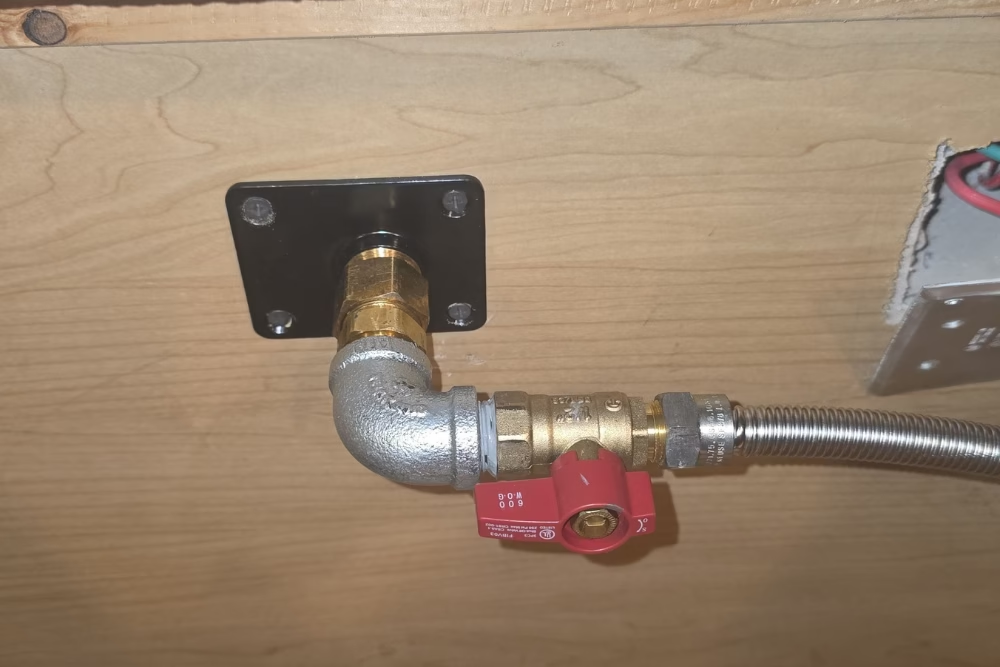
New gas line run to the range location
The existing gas distribution system (natural gas from the utility meter, or propane from the tank) does not automatically reach the range location in a home that was configured for electric cooking. A new supply line must be run from the nearest accessible point in the distribution system to the range location, correctly sized for the range’s BTU demand and the line’s run length. This is a permitted gas line installation, not a maintenance task.
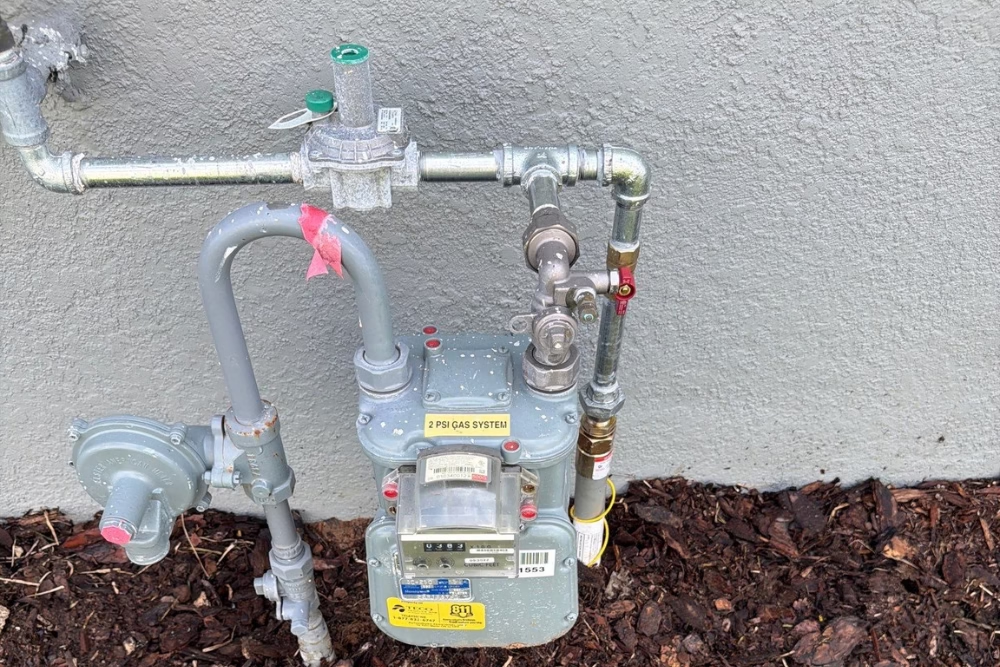
Shutoff valve at the range location
Florida Building Code and NFPA 54 require a dedicated shutoff valve within six feet of the gas range, in a location that is accessible without moving the range. Many electric-to-gas conversions require installing a new shutoff valve as part of the line run – it is not present because the location never had gas.
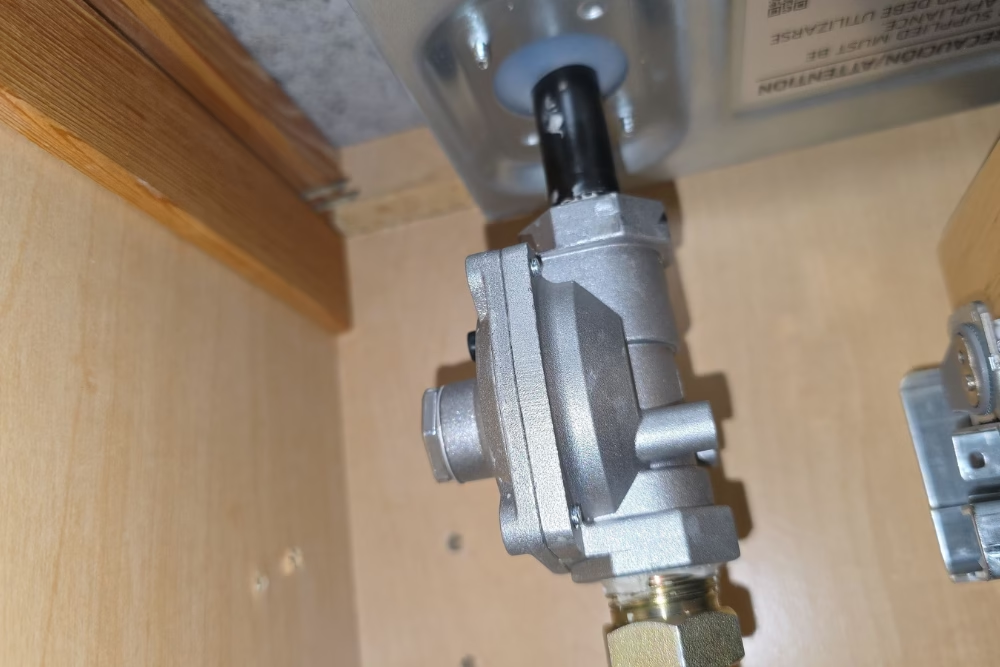
Flexible connector
The flexible connector between the shutoff valve and the range inlet must be the correct type for the fuel (natural gas or propane), the correct length for the installation, and correctly rated for a gas range application. The connector included with many gas ranges is not always the correct type for propane service – AAS confirms the correct connector before the installation is completed.
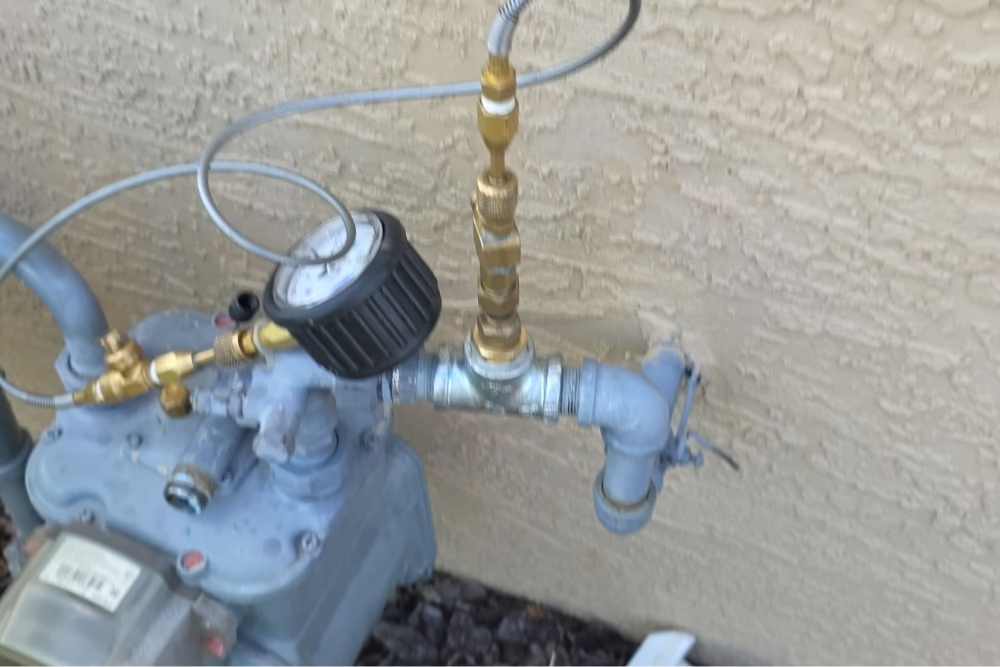
Conversion kit for propane installations
A gas range shipped from the manufacturer is typically configured for natural gas: the burner orifices are sized for natural gas’s lower delivery pressure and BTU content. A range connected to a propane supply in natural gas configuration will produce a yellow, oversized flame that indicates incomplete combustion and produces excess carbon monoxide. The LP conversion kit – a set of smaller burner orifices sized for propane’s higher pressure, and in some cases a different pressure regulator – is required for every propane range installation. Always Fire & Gas verifies the appliance’s current fuel configuration and installs the correct LP conversion kit before the range is connected to a propane supply.
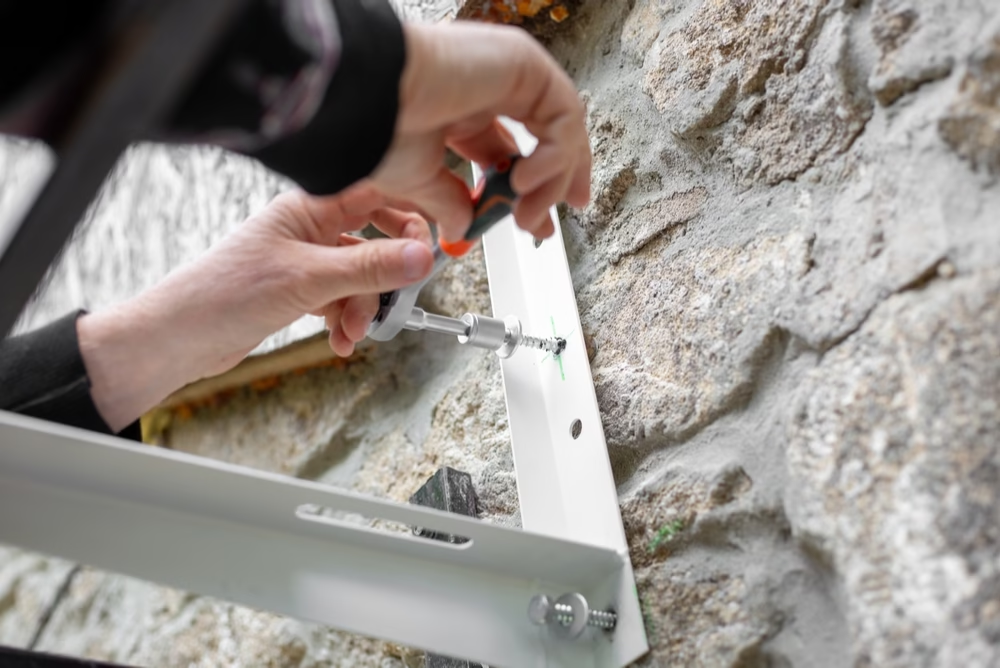
Anti-tip bracket
Gas ranges are required to be secured with an anti-tip bracket that prevents the range from tipping forward when a heavy pan is placed on the open oven door. This is not a suggestion – it is a manufacturer requirement, a Consumer Product Safety Commission requirement, and an item that any licensed inspector will flag if it is missing. Always Fire & Gas installs the anti-tip bracket as a standard element of every range installation.
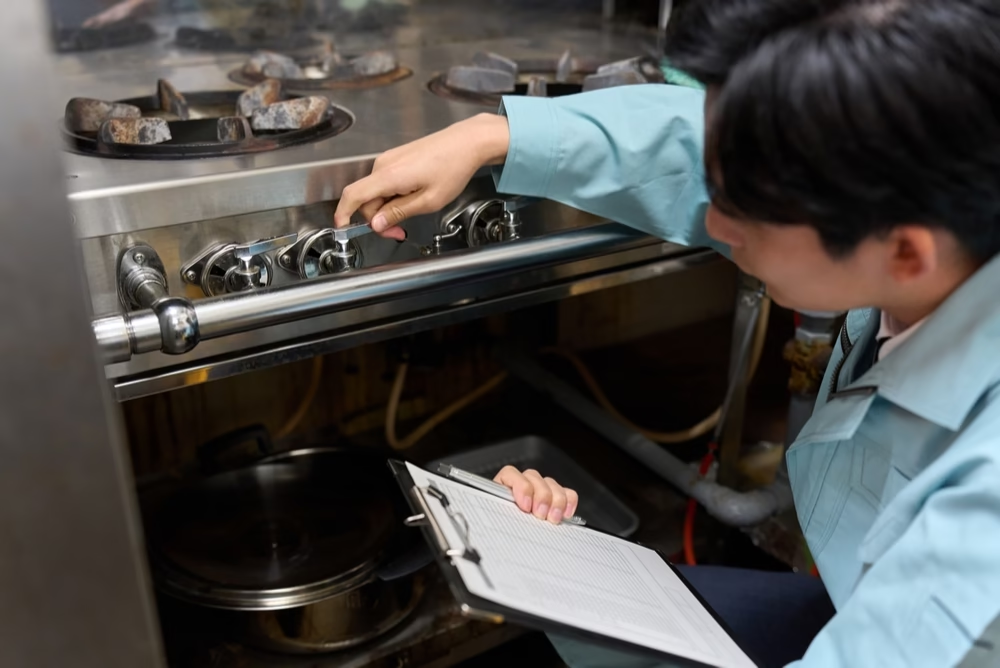
Permit and pressure test
A new gas line to a range location requires a permit under the Florida Building Code in all North Central Florida jurisdictions. The installation is pressure tested at completion before the range is connected. Gas does not flow to the range until the pressure test passes and the permit inspection is complete.
The LP Conversion Kit: What It Is, What Happens Without It, and How AAS Verifies the Correct One
Most gas ranges are manufactured and shipped in natural gas (NG) configuration. The burner orifices – the small brass fittings that meter the gas flow to each burner – are sized for natural gas’s delivery pressure of approximately 3.5 inches water column and its BTU content of approximately 1,020 BTU per cubic foot. Propane is delivered at approximately 11 inches water column and contains approximately 2,500 BTU per cubic foot. A burner orifice sized for natural gas, when supplied with propane at more than three times the pressure and more than twice the energy content, receives far more fuel than it was designed to meter. The result is a large, yellow flame that does not fully combust. Incomplete combustion produces carbon monoxide.
The LP conversion kit addresses this by replacing the burner orifices with a smaller set sized for propane’s higher delivery pressure. Some ranges also require a different pressure regulator for propane service. The conversion kit is manufacturer-specific: a kit designed for one brand and model range is not interchangeable with a kit for a different model even within the same brand. Always Fire & Gas confirms the range’s model number before the installation date, verifies the correct LP conversion kit for that specific model, and installs the kit as part of the installation scope – not as a separate service call after the range is already connected.
CONDITION
FLAME APPEARANCE
COMBUSTION RESULT
Range correctly configured for natural gas connected to natural gas supply
Blue, compact cone flame at each burner
Complete combustion, correct heat output, no excess CO
Range correctly configured for propane (LP kit installed) connected to propane supply
Blue, compact cone flame at each burner
Complete combustion, correct heat output, no excess CO
Range in NG configuration (no LP kit) connected to propane supply
Large yellow or orange flame, may lift off burner, may produce soot
Incomplete combustion, elevated carbon monoxide production, reduced cooking performance
Range with wrong LP kit (incorrect orifice size for model) connected to propane supply
Flame may appear undersized, intermittent ignition, burners may not stay lit
Under-supply of fuel, incorrect heat output, ignition problems
CONDITION
Range correctly configured for natural gas connected to natural gas supply
Range correctly configured for propane (LP kit installed) connected to propane supply
Range in NG configuration (no LP kit) connected to propane supply
Range with wrong LP kit (incorrect orifice size for model) connected to propane supply
FLAME APPEARANCE
Blue, compact cone flame at each burner
Blue, compact cone flame at each burner
Large yellow or orange flame, may lift off burner, may produce soot
Flame may appear undersized, intermittent ignition, burners may not stay lit
COMBUSTION RESULT
Complete combustion, correct heat output, no excess CO
Complete combustion, correct heat output, no excess CO
Incomplete combustion, elevated carbon monoxide production, reduced cooking performance
Under-supply of fuel, incorrect heat output, ignition problems
Assessment to First Burner: Six Steps. Every Step Under #LI45277 & LP Gas Master Qualifier License #MQ31416
Assessment: Range Location, Supply Route, and Fuel Confirmation
Always Fire & Gas assesses the range location before any scope is committed to: confirming whether gas supply is present at the range location (if it is, the scope is a hookup only, not a line run), identifying the nearest accessible supply point in the existing distribution system, measuring the approximate line run length to the range location, confirming the fuel type (natural gas or propane), and confirming whether the range has been purchased or whether the buyer is still selecting a range. If the range has not yet been purchased, AAS can advise on BTU demand and connection type before the purchase is made. The assessment determines whether the scope is a hookup-only or a line run plus hookup, and produces the scope and price for the homeowner’s approval.
1
Range Model Confirmation and Conversion Kit Verificationior Containment
If the installation is for a propane supply, the range’s brand and model number is confirmed at assessment or as soon as the range is selected. The correct LP conversion kit for that specific model is identified and sourced before the installation is scheduled. A conversion kit that is unavailable or that must be factory-ordered will delay the installation — this is confirmed before the installation date is set, not discovered on the day of the installation.
2
Permit Application
Always Fire & Gas submits the permit application for the new gas line installation. The permit identifies the scope, the license (#LI45277), and the installation specifications. Permit processing time varies by jurisdiction in North Central Florida. AAS confirms the expected permit timeline at assessment. Work does not begin until the permit is issued.
3
Gas Line Installation
With permit in hand, the new gas line is run from the confirmed supply point to the range location. Pipe material (CSST, black iron, or approved flex connector) is selected by application, run length, and jurisdiction requirements. The shutoff valve is installed at the range location within six feet of the range, in an accessible location. If CSST is used, NFPA 54 bonding is installed. The range connection end of the line is capped for the pressure test.
4
Pressure Test
The new gas line is pressure tested before the range is connected. Test pressure and duration are documented. If the line holds test pressure with no drop, the installation is confirmed leak-free. Gas does not flow until the pressure test passes.
5
Range Connection, Conversion Kit, Anti-Tip Bracket, and Inspection
With pressure test complete, the range is connected using the correct flex connector for the fuel type. For propane installations, the LP conversion kit is installed: burner orifices replaced with the LP-rated set for the specific model, regulator adjusted or replaced per the manufacturer’s conversion instructions. Anti-tip bracket is installed per manufacturer specification. The permit inspection is coordinated and attended by AAS. Gas is activated after inspection approval. AAS confirms all burners ignite correctly and produce a correct blue flame before the installation is closed out.
6
Three Situations. One Licensed Conversion Scope. Gas Cooking in North Central Florida..
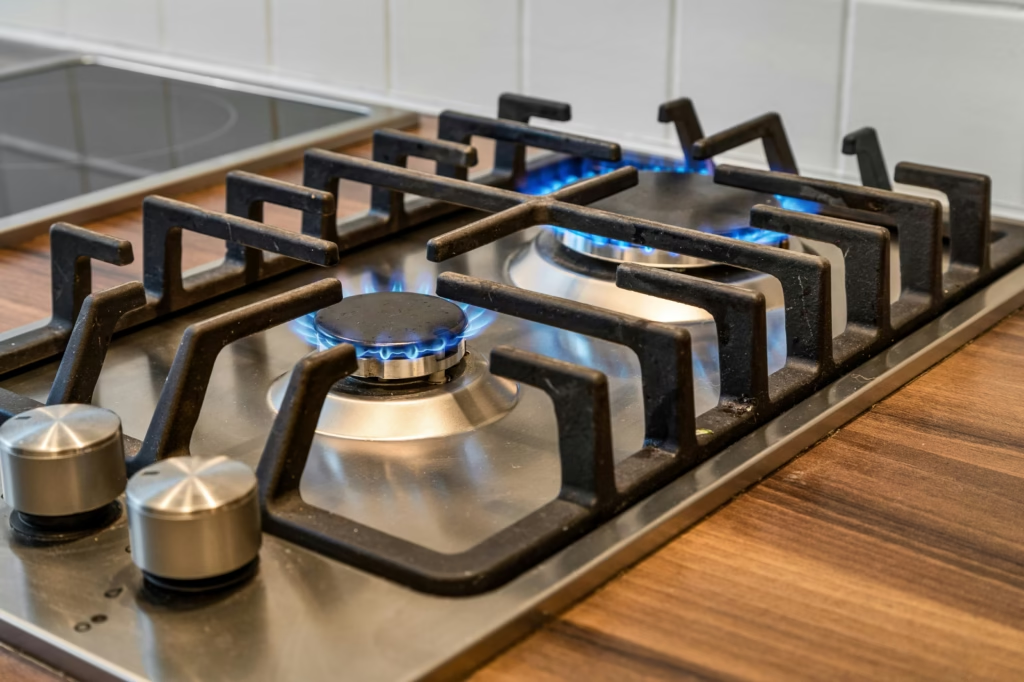
Switching to Gas Cooking for the First Time
A homeowner who has cooked on electric their entire life and is making the switch to gas is the most common gas range conversion buyer in North Central Florida. The motivation is usually a combination of cooking performance (gas burners respond immediately to heat level adjustments in a way that electric and even induction elements do not replicate), the ability to use any cookware including cast iron and carbon steel, and the long-term cost of gas versus electricity in Florida’s utility market. The concern is usually scope and cost: the homeowner does not know whether there is gas at the range location, how difficult it is to run a gas line to the kitchen, or whether the project is a one-day job or a multi-week process. For most North Central Florida homes, an electric-to-gas range conversion is a single-day project after the permit is issued: the line is run, the permit inspection is coordinated, and the range is connected and operational the same day as the installation.
Call (352) 282-0158 with the range location (kitchen island, wall alcove, standard freestanding location) and the fuel type (natural gas if you have a gas utility meter, propane if you have a propane tank). We confirm whether gas is already present at the range location and provide a scope and price for the conversion before any commitment is required.
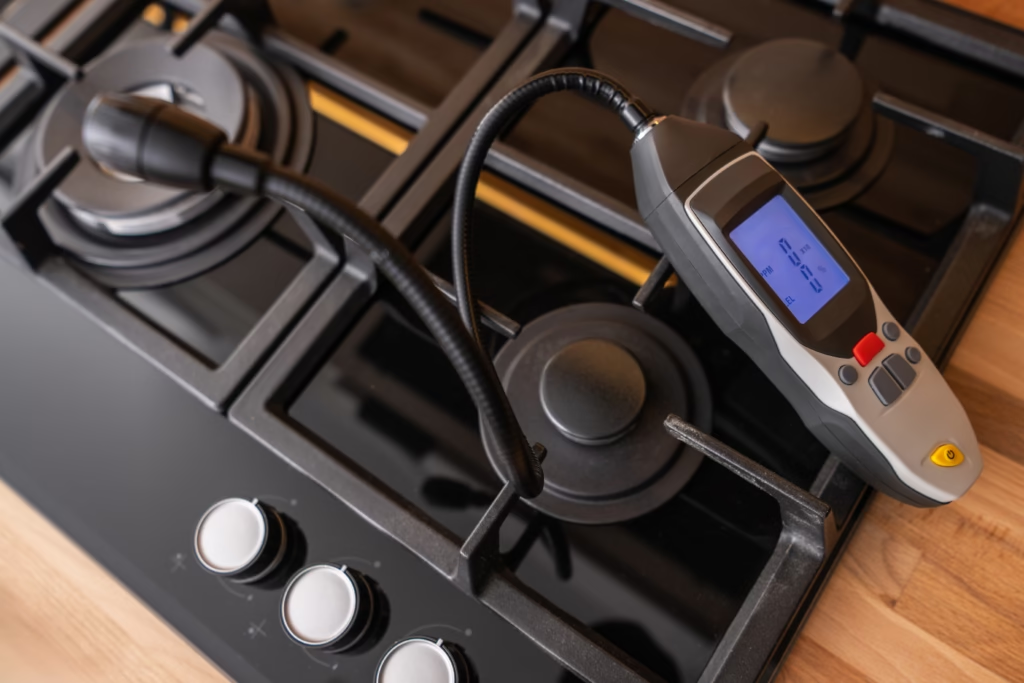
Home Purchased With an Electric Range - Wants Gas
A buyer who purchases a home with an electric range and wants to convert to gas typically discovers the scope at one of two moments: when they start shopping for gas ranges and realize the appliance retailer’s delivery service only connects at an existing gas supply, or when they call a plumber or handyman and are told the job requires a licensed gas contractor. Always Fire & Gas is the licensed gas contractor who handles the complete conversion scope. If the home already has a natural gas or propane supply for a water heater, dryer, or other appliance, the gas distribution system is already in the house – the new line needs to reach the range location from that existing system. AAS assesses the shortest and most practical route and scopes the conversion before any range is purchased.
Call (352) 282-0158 before you purchase the range if possible. Confirming the gas supply route and the scope at the assessment stage lets you purchase the range with the correct fuel configuration for your home’s gas type. If the range is already purchased, call with the brand, model, and fuel configuration shown on the rating plate.
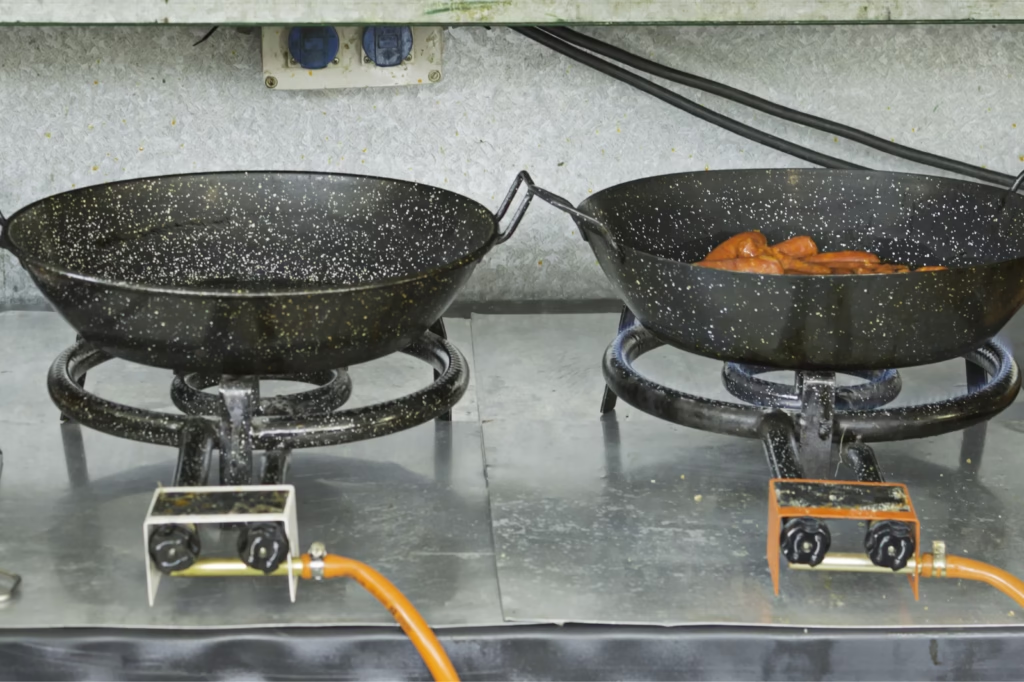
Snowbirds and Seasonal Residents Who Cook With Gas at Home
North Central Florida’s seasonal resident population includes a significant number of homeowners who come from markets where gas cooking is the default – Chicago, the Northeast, the Mid-Atlantic – and arrive in a Florida home with an electric range that does not match how they cook. The conversion request from seasonal residents is consistent: they know gas cooking, they want gas cooking, and they want the Florida home to match what they have at their primary residence. Always Fire & Gas performs electric-to-gas range conversions for seasonal residents on timelines that work around their arrival and departure schedules. If the range is being purchased locally, AAS can advise on the BTU range and connection specifications that match the Florida home’s gas supply type before the purchase is made. If the range is being shipped from a primary residence, AAS confirms the fuel configuration on the rating plate and whether an LP conversion kit is required for the Florida home’s propane supply before the range arrives.
Call (352) 282-0158 before your Florida arrival if you want the conversion complete before you settle in. Permit timing varies by jurisdiction – calling four to six weeks before arrival allows permit processing and scheduling to be confirmed before you arrive. We can advise on gas range selection for Florida’s propane or natural gas supply at your property if you have not yet made a purchase.
Permit. Pressure Test. Conversion Kit Verified. Anti-Tip Bracket. Combustion Air Confirmed.
1
Permit for the New Gas Line Run
A new gas line installation to a range location requires a permit under the Florida Building Code and local jurisdiction requirements throughout North Central Florida. The permit documents the installation, creates the property record that a future buyer, insurer, or inspector will look for, and requires a licensed final inspection before gas is activated. Always Fire & Gas pulls the permit under #LI45277 & LP Gas Master Qualifier License #MQ31416 for every new gas line run as part of the conversion scope.
2
Pressure Test After Connection
The new gas line is pressure tested at completion before the range is connected. The pressure test is performed on the new line segment from the supply connection point to the shutoff valve at the range location. Test pressure and duration are documented. A line that does not hold test pressure is not connected to the gas supply until the leak is found and corrected.
3
Conversion Kit Verified for the Specific Range Model
For propane installations, the LP conversion kit is confirmed for the specific range brand and model before installation is scheduled. The range’s model number is confirmed in advance. The correct kit is sourced before the installation date. AAS does not perform propane range installations without confirming the correct LP conversion kit for the specific appliance — a kit sourced for a different model is not acceptable even if it appears to fit.
4
Anti-Tip Bracket Installation
The anti-tip bracket that prevents the range from tipping forward when the oven door is loaded with a heavy pan is installed as a standard element of every range installation. The bracket is model-specific or uses a universal bracket appropriate to the range’s dimensions. Anti-tip bracket installation is confirmed in the written installation documentation. A range installation without an anti-tip bracket is not a complete installation.
5
Venting and Combustion Air Confirmation
Gas ranges installed in enclosed locations – inside a cabinet surround, in an alcove with limited open space on the sides and above, or in any configuration that restricts air circulation around and above the cooking surface – require confirmation that adequate combustion air and ventilation are available. A gas range in an enclosed location with insufficient combustion air will produce elevated CO even with correct burner orifices and correct fuel supply pressure. Always Fire & Gas confirms the installation location’s combustion air adequacy as part of every gas range conversion scope. Range hood installation is a separate scope – AAS confirms whether a range hood is present or planned and advises on ventilation requirements if the installation location does not have one.
Gas Range Conversions Across North Central Florida
Always Fire & Gas performs electric-to-gas range conversions for natural gas and propane systems across Marion, Alachua, Lake, Sumter, Citrus, Putnam, Hernando, Orange, Volusia Counties and all surrounding areas. Full scope under FL Gas Contractor #LI45277: new gas line run, shutoff valve, flex connector, LP conversion kit for propane installations, anti-tip bracket, permit, pressure test, and permit inspection. Gas cooking in your North Central Florida home.
Call (352) 282-0158 to schedule a gas range conversion assessment. Confirm the fuel type (natural gas or propane), whether the range has been purchased, and whether there is an existing gas supply at the range location. We provide a scope and price before any commitment is required.
Gas Range Conversion Questions, Answered Directly
Converting from electric to gas in a Florida home requires confirming whether a gas supply (natural gas or propane) is available at the property, running a new gas line from the existing distribution system to the range location if no supply is present there, obtaining the required permit from the local jurisdiction, making the gas connection and installing the anti-tip bracket, and completing the permit inspection before gas is activated. If the range will be connected to a propane supply, the LP conversion kit for the specific range model must be installed before the range is operated on propane. Always Fire & Gas performs the full electric-to-gas range conversion scope under FL Gas Contractor #LI45277 & LP Gas Master Qualifier License #MQ31416, including the new gas line run, the permit, the LP conversion kit for propane installations, and the pressure-tested hookup.
Yes. A new gas line run to a range location requires a permit under the Florida Building Code and local jurisdiction requirements in all North Central Florida counties. The permit is pulled by the licensed gas contractor performing the installation – the homeowner does not need to pull the permit separately. Always Fire & Gas pulls the permit under #LI45277 & LP Gas Master Qualifier License #MQ31416 as part of the conversion scope. An unpermitted gas line installation does not receive a licensed inspection, is not documented in the property record, and may not be covered by homeowner’s insurance in the event of a gas-related incident.
A gas range conversion kit (LP conversion kit) is required when a gas range configured for natural gas is being connected to a propane supply, or when a range configured for propane is being connected to a natural gas supply. Most gas ranges are manufactured and shipped in natural gas configuration. The LP conversion kit replaces the burner orifices with a smaller set sized for propane’s higher delivery pressure (approximately 11 inches water column, versus 3.5 inches water column for natural gas) and may include a different pressure regulator. Without the LP conversion kit, a natural gas-configured range connected to a propane supply will produce a large yellow flame, incomplete combustion, and elevated carbon monoxide. The kit is manufacturer-specific: it must be the correct kit for the specific range model. Always Fire & Gas confirms the correct LP conversion kit for every propane range installation and installs it as part of the conversion scope.
Appliance delivery services typically connect gas ranges at an existing gas supply connection – a shutoff valve and stub that is already at the range location. They do not run new gas lines, pull permits, or perform licensed pressure tests. In Florida, running a new gas line requires a licensed gas contractor under Florida Statutes. A delivery service that connects a range where no licensed gas line installation was previously performed, or that connects a propane range without installing the LP conversion kit, is not performing a complete or licensed installation. Always Fire & Gas handles the full scope that appliance delivery services cannot: the new gas line, the permit, the LP conversion kit, and the documented pressure test.
A gas range in natural gas (NG) configuration connected to a propane supply without the LP conversion kit receives propane at approximately three times the pressure and more than twice the BTU content the burner orifices were designed for. The result is an oversized, yellow or orange flame that does not fully combust at the burner. Incomplete combustion produces carbon monoxide. The range will appear to function – the burners light and produce heat — but it is not burning correctly and is producing CO at elevated levels. Yellow gas flames on a range are always a sign that something is wrong with the burner configuration. Always Fire & Gas installs the LP conversion kit as a mandatory element of every propane range installation and documents the installation in the written record.
For a standard electric-to-gas range conversion in a North Central Florida home, the physical installation – running the new gas line, making the connection, installing the anti-tip bracket – is typically a single day of work. The permit processing timeline adds time before the installation can begin: some jurisdictions in North Central Florida issue permits over the counter for straightforward residential gas line work, while others require a brief plan review period. Always Fire & Gas confirms the expected permit timeline at the assessment stage. For seasonal residents planning ahead of an arrival date, calling four to six weeks before the target date allows permit processing and scheduling to be confirmed in advance.
The 240-volt outlet that powered an electric range is not needed for a gas range. Most gas ranges use a standard 120-volt connection for the clock, ignition, and oven light. The 240-volt outlet will remain behind the wall after the electric range is removed – it is simply not connected to the gas range. Capping or removing the 240-volt outlet is an electrical scope that requires a licensed electrician, not a gas contractor. Always Fire & Gas handles the gas line and connection for the gas range; if the homeowner wants the 240-volt outlet addressed, AFG can refer to a licensed electrician in North Central Florida.
In new construction, the liner is specified before it is installed – which means it must be designed for the planned appliance, not adapted from whatever liner was convenient. Always Home Repair coordinates appliance selection with liner specification: the appliance’s BTU input and fuel type determine the minimum liner cross-sectional area per NFPA 211 venting tables, and the planned chimney height determines the liner diameter within the code-specified range. A liner specified correctly for the appliance at the design stage performs correctly from the first fire. A liner that was not specified to the appliance requires correction after construction – which is a relining project, not a warranty repair.
Always Home Repair provides a project documentation package at project close: the building permit record confirming code-compliant construction and building department inspection approval, the liner specification and NFPA 211 sizing calculation, construction photography documenting each phase of the build, a post-construction video inspection of the full liner run confirming correct installation, and a recommended service schedule for the chimney’s first five years. This documentation package is suitable for homeowner files, GC project close-out, real estate disclosure, and insurance records.
Always Fire & Gas – the sister company under the same ownership and the same team – provides annual inspection, sweeping, and service for chimneys built by Always Home Repair. Because the same team that built the chimney also services it, every inspection is performed with direct knowledge of the as-built configuration, the liner specification, and the appliance the system was designed for. You are not explaining your chimney’s construction history to a technician who has never seen it. You are working with the same people who built it. Call (352) 282-0158 to schedule either construction or service.