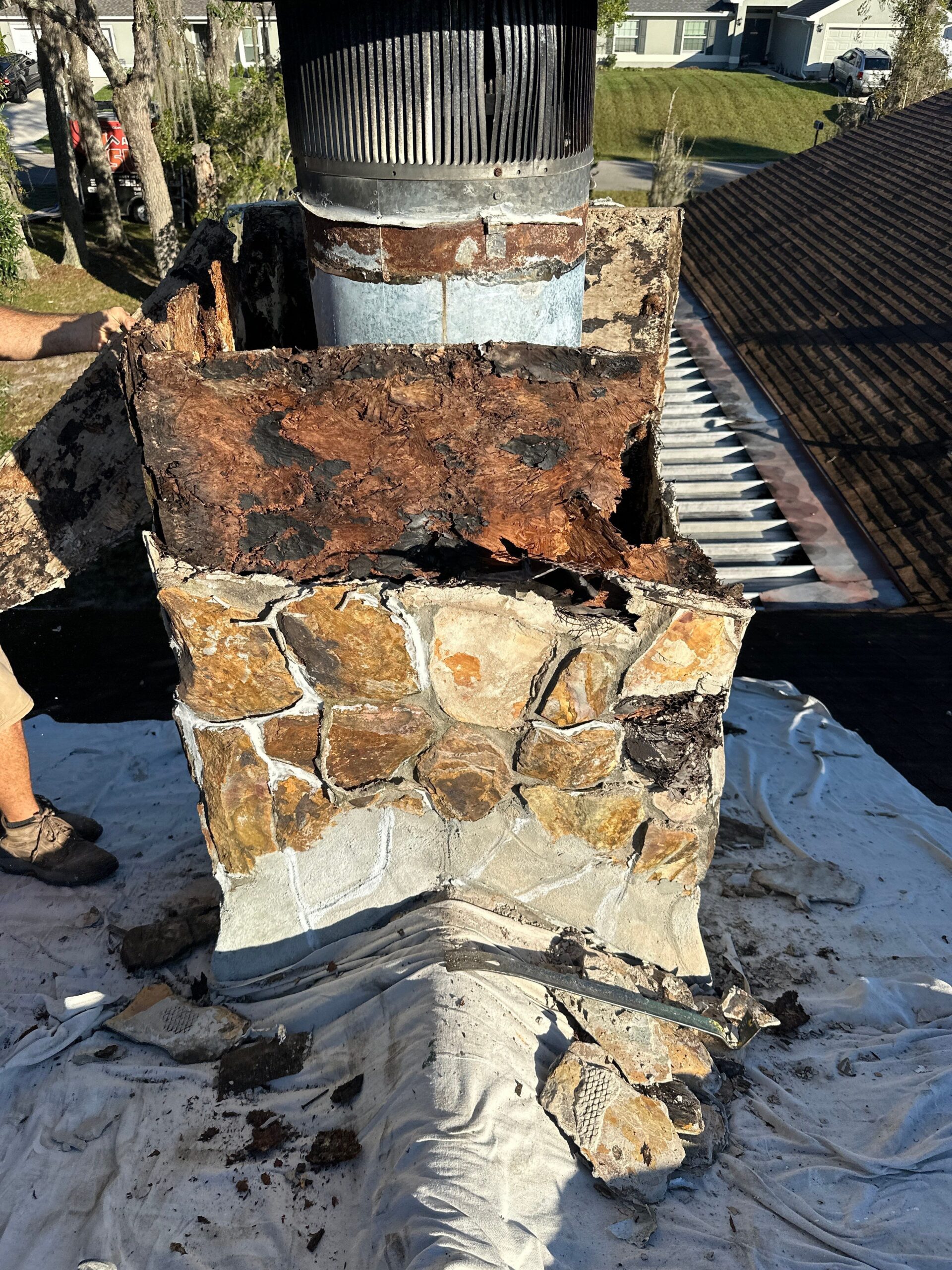
Wood chimney framing details are the hidden structural choices — stud spacing, firestops, and air gaps — that decide whether a chimney stays safe for decades or becomes a fire hazard. Most Central Florida homeowners never think about what’s inside their chase walls until a problem shows up. Get the framing wrong, and even a well-built fireplace can put a home at risk.
After nine years working chimneys across Marion County, I’ve opened up more chases than I can count — and the framing mistakes are almost always the same ones. This guide walks through what correct wood chimney framing looks like, the codes behind it, and the red flags that mean it’s time to call a pro.
📌 Key Takeaways
- Combustible framing must keep a minimum 2-inch clearance from masonry chimneys per fire codes.
- Chase (wood-framed) chimneys use fire-rated materials differently than true masonry chimneys.
- Discolored drywall, warped chase boards, or smoky odors often point to framing or flashing failures.
- A licensed chimney technician can inspect framing without demolishing finished walls.
- Florida humidity and pest activity make annual inspections more important than in drier climates.
In This Guide:
- What Wood Chimney Framing Actually Means
- Code-Required Clearances You Can’t Skip
- Common Framing Mistakes We Find in Central Florida
- Chase-Framed vs. Masonry Chimneys
- Warning Signs Your Framing Needs Attention
- DIY vs. Calling a Professional
- FAQ: Wood Chimney Framing Questions
What Wood Chimney Framing Actually Means
Quick Answer: Wood chimney framing refers to the lumber structure — studs, headers, and sheathing — built around or beside a flue to support siding, drywall, and the chase enclosure. It must never touch the hot flue components directly.
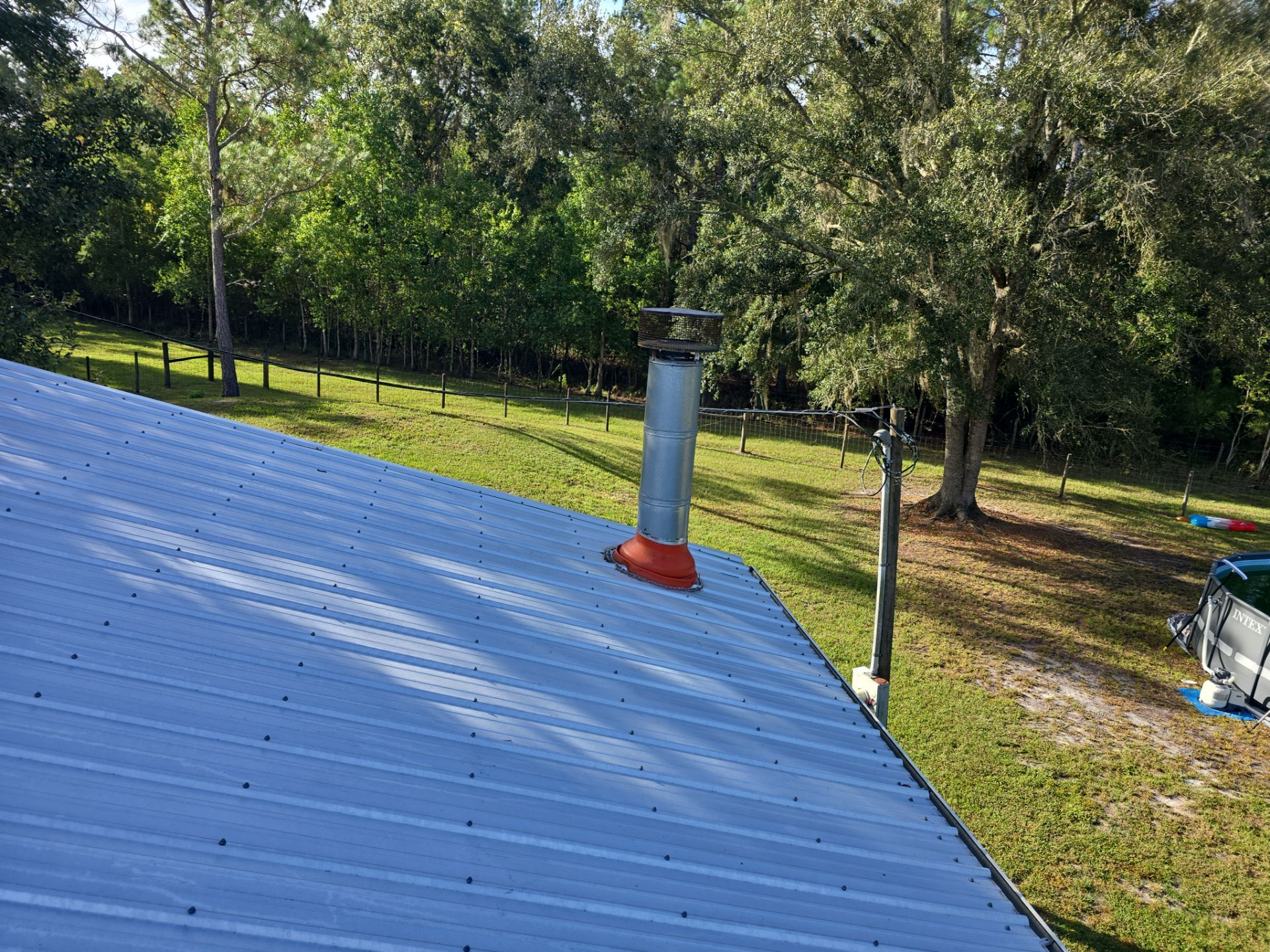
A chimney system has two basic parts: the flue, which carries smoke and gases, and the surrounding structure, which supports the home’s exterior finish. In a wood-frame chase chimney, carpenters build a box-like structure of 2×4 or 2×6 studs around a metal or masonry flue. This framing never bears the heat load directly — it simply dresses up the exterior.
Why Framing Quality Affects Fire Safety
The lumber itself isn’t fireproof, so spacing and firestop placement carry real weight. According to the National Fire Protection Association, improper clearance between combustible materials and chimney components is a leading contributor to residential chimney fires nationwide. That’s why correct chimney framing isn’t cosmetic — it’s a fire-prevention system.
💡 Expert Insight: I always tell homeowners the chase is basically a wooden sleeve around a very hot pipe. If that sleeve is built too tight, you’ve created a slow-cooking fire risk instead of a safety feature.
Code-Required Clearances You Can’t Skip
Quick Answer: Most residential codes require at least 2 inches of clearance between combustible framing and a factory-built chimney, and up to 2 inches from masonry chimneys depending on local amendments. These numbers come from the chimney manufacturer’s listing and the International Residential Code.
Clearance isn’t a suggestion — it’s tested and published by the manufacturer for a reason. The International Code Council publishes the base requirements that Florida’s building code adopts and modifies for our climate and wind conditions.
Typical Clearance Reference Table
| Chimney Type | Minimum Framing Clearance | Firestop Required? |
|---|---|---|
| Factory-built metal chimney | 2 inches (per listing) | Yes, at each floor/ceiling |
| Masonry chimney | 2 inches from combustibles | Yes, at roofline |
| Chase-framed wood chimney | 1-2 inches air gap around flue | Yes, top and bottom |
| Wood stove connector pipe | Often 6-18 inches unless shielded | Yes |
⚠️ Common Mistake: Builders sometimes pack insulation directly against the flue to save material or space. That insulation can ignite slowly over years of heat cycling, long after the original crew has moved on.
If you’re unsure what your home currently has, our chimney inspection service checks clearances without tearing into finished walls. We also handle new construction framing for homeowners building from scratch in Ocala, Dunnellon, and The Villages.
Common Framing Mistakes We Find in Central Florida
Quick Answer: The most frequent issues are missing firestops, framing built too close to the flue, and chase covers that let water reach the wood structure. Humidity accelerates all three problems here faster than in drier states.
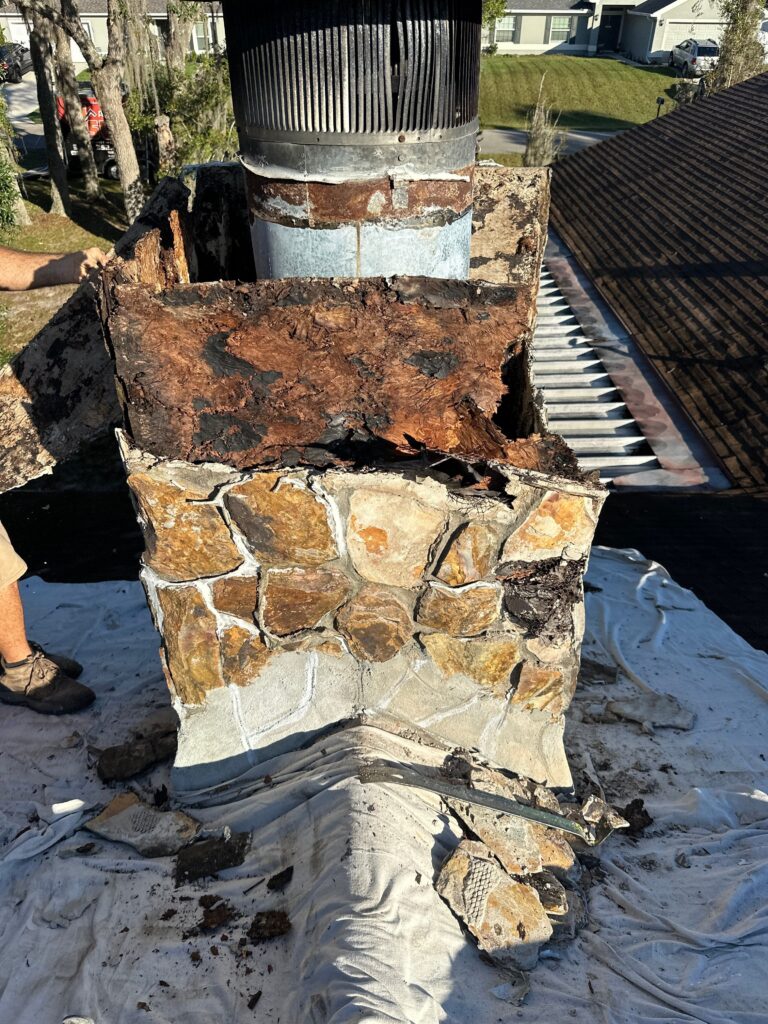
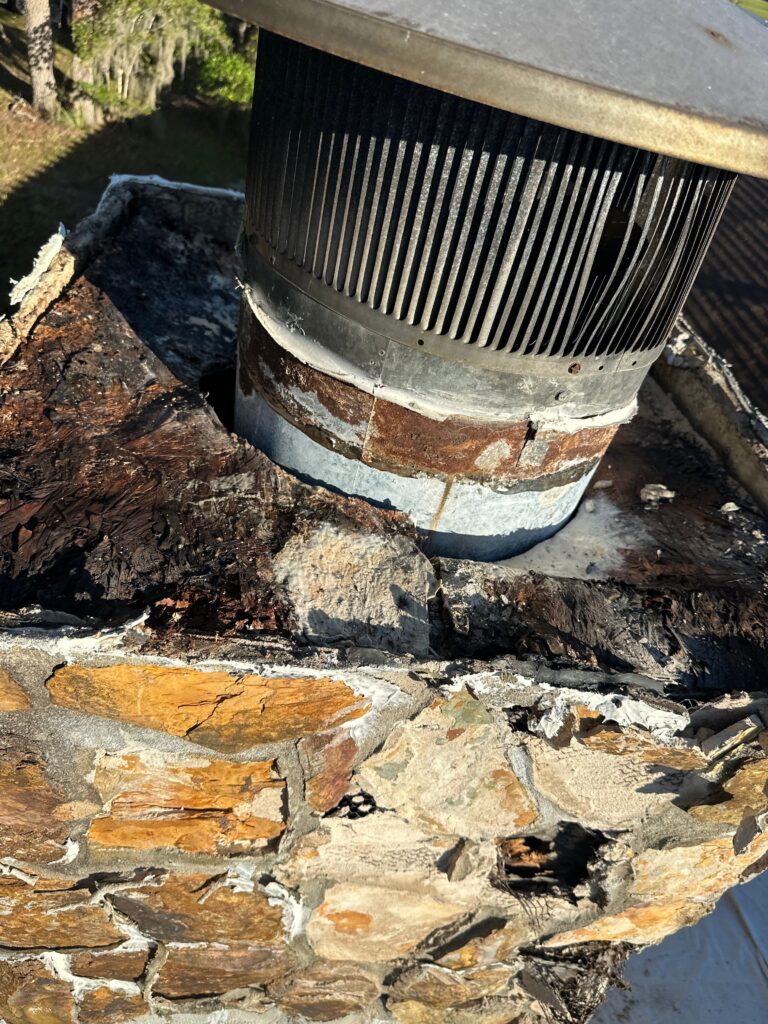
Central Florida’s heat and moisture are hard on any wood-framed structure, chimneys included. A chase built correctly in 1998 can still fail today if flashing or caps weren’t maintained.
Moisture Intrusion Into the Framing
Water finds the smallest gap in a chase cap or counter-flashing and works its way into the wood over years. We cover this in detail in our guide on cracked chimney crown repair, since the crown and the framing below it are closely linked.
📊 Data Point: The Chimney Safety Institute of America notes that moisture is the single most damaging force to chimney structures, more so than heat or soot buildup.
Firestops Skipped During Original Construction
Firestops — horizontal blocking that seals the gap between framing and flue at each floor line — slow fire spread between levels. Skipping them is invisible until an inspection or a real fire exposes the gap. Homes in older Ocala neighborhoods near Stonecrest and On Top of the World sometimes show this shortcut from builders decades ago.
Chase-Framed vs. Masonry Chimneys
Quick Answer: Chase-framed chimneys use a wood box around a metal flue, while masonry chimneys are built entirely of brick, block, or stone. Each has different framing rules, repair paths, and lifespans.
Masonry chimneys rarely need combustible framing around the stack itself, though the roofline penetration still requires clearance. Chase chimneys depend entirely on correct framing since wood is the primary structural material.
Why the Distinction Changes Your Repair Options
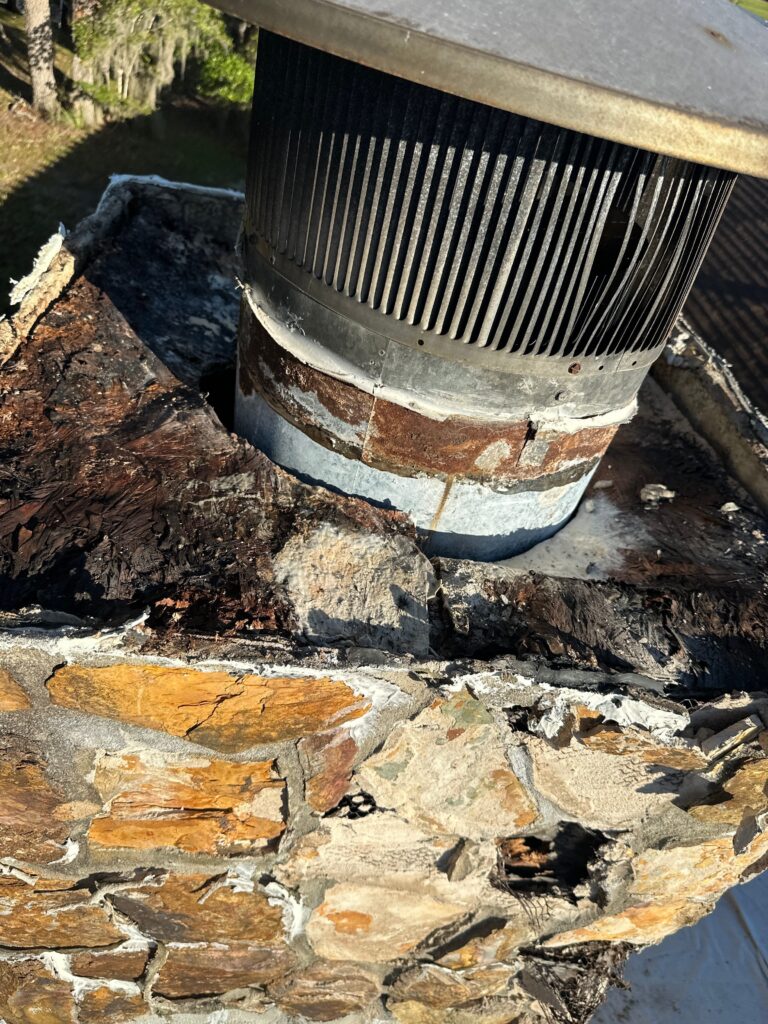
If you own a chase-framed chimney, our wood frame rebuilds service addresses rotted studs, failed firestops, and water-damaged sheathing without replacing the whole structure. Masonry owners are more likely to need crown or mortar repair instead.
✅ Quick Tip: Not sure which type you have? Look at the exterior — if it’s wood siding or stucco over studs, it’s chase-framed. If it’s solid brick from roof to ground, it’s masonry.
For a step-by-step look at how a chase is built from the ground up, see our companion post on framing a chimney, which walks through the sequence a licensed crew follows.
Warning Signs Your Framing Needs Attention
Quick Answer: Soft or bouncy chase walls, discolored drywall near the chimney, a faint smoky smell between fires, and visible gaps at the roofline all point to framing problems. Any one of these warrants a professional look.
Most homeowners notice something is wrong long before they understand why. A soft spot in the chase wall usually means rotted framing underneath, not just cosmetic wear.
Reading the Signs Before They Worsen
If you’ve noticed a lingering odor, our post on AC pulling fireplace smell into the house explains how air pressure differences can pull smoke through gaps that never should have existed in correctly sealed framing. Catching this early is far simpler than a full rebuild later.
⚠️ Common Mistake: Homeowners often paint over discolored drywall near a chimney chase instead of asking why it’s discolored. That stain is usually a message from the framing behind it.
When Mold Enters the Picture
Trapped moisture in framing doesn’t just rot wood — it feeds mold. Our detailed breakdown on chimney leaks and mold growth explains how a single failed cap can cascade into an indoor air quality issue within a single rainy season.
DIY vs. Calling a Professional
Quick Answer: Minor caulking or flashing touch-ups are reasonable DIY tasks, but any work involving clearance, firestops, or structural framing should go to a licensed technician. The stakes — fire and structural integrity — are too high for guesswork.
I understand the appeal of handling small repairs yourself, especially with how many online tutorials exist. But wood chimney framing details interact with fire code, flue manufacturer specs, and roofline waterproofing all at once.
A Side-by-Side Comparison
| Task | DIY Reasonable? | Why |
|---|---|---|
| Caulking small flashing gaps | Yes | Low risk, surface-level |
| Replacing a chase cap | Sometimes | Requires correct slope and material |
| Adjusting framing clearance | No | Fire code and structural risk |
| Installing firestops | No | Requires fire-rated materials and placement knowledge |
| Diagnosing hidden rot | No | Needs inspection tools and experience |
💡 Expert Insight: As a Certified Master Chimney Technician, I still pull permits and follow manufacturer listings on every chase rebuild. Framing isn’t a place to improvise, even for an experienced crew.
Our team holds Florida Contractor License CRC1333200 along with CSIA and National Fireplace Institute certifications, so framing work is checked against current standards rather than habit. If your home needs a damper assessed alongside the framing, our damper repair service often gets bundled into the same visit.
FAQ: Wood Chimney Framing Questions
What are the minimum clearance requirements for wood chimney framing details?
Most factory-built chimneys require at least 2 inches of clearance between combustible framing and the flue, per the manufacturer’s listing and the International Residential Code. Masonry chimneys typically require similar clearance from combustibles at the roofline, though exact figures vary by chimney model and local amendments.
How do I know if my chimney chase framing is rotted?
Soft, bouncy, or visibly warped chase walls are the clearest sign, along with discolored interior drywall near the chimney. A professional inspection can confirm rot without removing the finished siding.
Can I frame a chimney chase myself in Florida?
Framing work involving clearance, firestops, or structural support should be handled by a licensed contractor, since it affects both fire code compliance and your home’s structural integrity. Simple cosmetic trim work around an already-correct chase is lower risk for a confident DIYer.
Why does my chimney smell smoky even when there’s no fire?
This often points to a gap in the chase framing or flashing that lets air and odor migrate into the wall cavity. It can also relate to air pressure imbalances pulling smoke back through small gaps, especially when HVAC systems run.
How often should chimney framing be inspected in Ocala?
An annual inspection is a reasonable baseline given Central Florida’s humidity and storm exposure. Homes in Marion County and The Villages with heavy summer rainfall patterns benefit from checking chase caps and flashing each spring.
What’s the difference between a masonry chimney and a wood-framed chase chimney?
A masonry chimney is built from brick, block, or stone with little combustible material near the flue, while a chase chimney relies on wood framing around a metal flue liner. Each requires different clearance rules and different repair approaches when problems appear.
Does Florida have specific codes for chimney framing near the coast or in high-humidity regions?
Florida’s building code adopts the International Residential Code with state-specific amendments for wind and moisture resistance. Local jurisdictions, including Marion County, may add inspection requirements beyond the base code, so checking with a licensed local contractor is the safest approach.
Final Thoughts
Wood chimney framing details may be hidden behind drywall and siding, but they quietly determine how safely your fireplace or wood stove operates for years to come. Clearance, firestops, and moisture control aren’t optional extras — they’re the backbone of a fire-safe chimney system. Catching small framing issues early, before they become rot or fire risk, is almost always the cheaper and safer path. Central Florida’s humidity makes this even more true than in drier climates.
Next Steps:
- Check your chase walls for soft spots, stains, or odors.
- Note any visible gaps around the roofline penetration.
- Schedule a professional chimney inspection before the next burn season.
- Ask your technician to confirm clearance against the flue manufacturer’s listing.
Always Fire & Gas is licensed under Florida Contractor License CRC1333200 and staffed with CSIA and NFI-certified technicians serving Ocala, Dunnellon, The Villages, and the surrounding Marion County communities. Contact our team today to schedule a chimney framing inspection and keep your home protected this season.