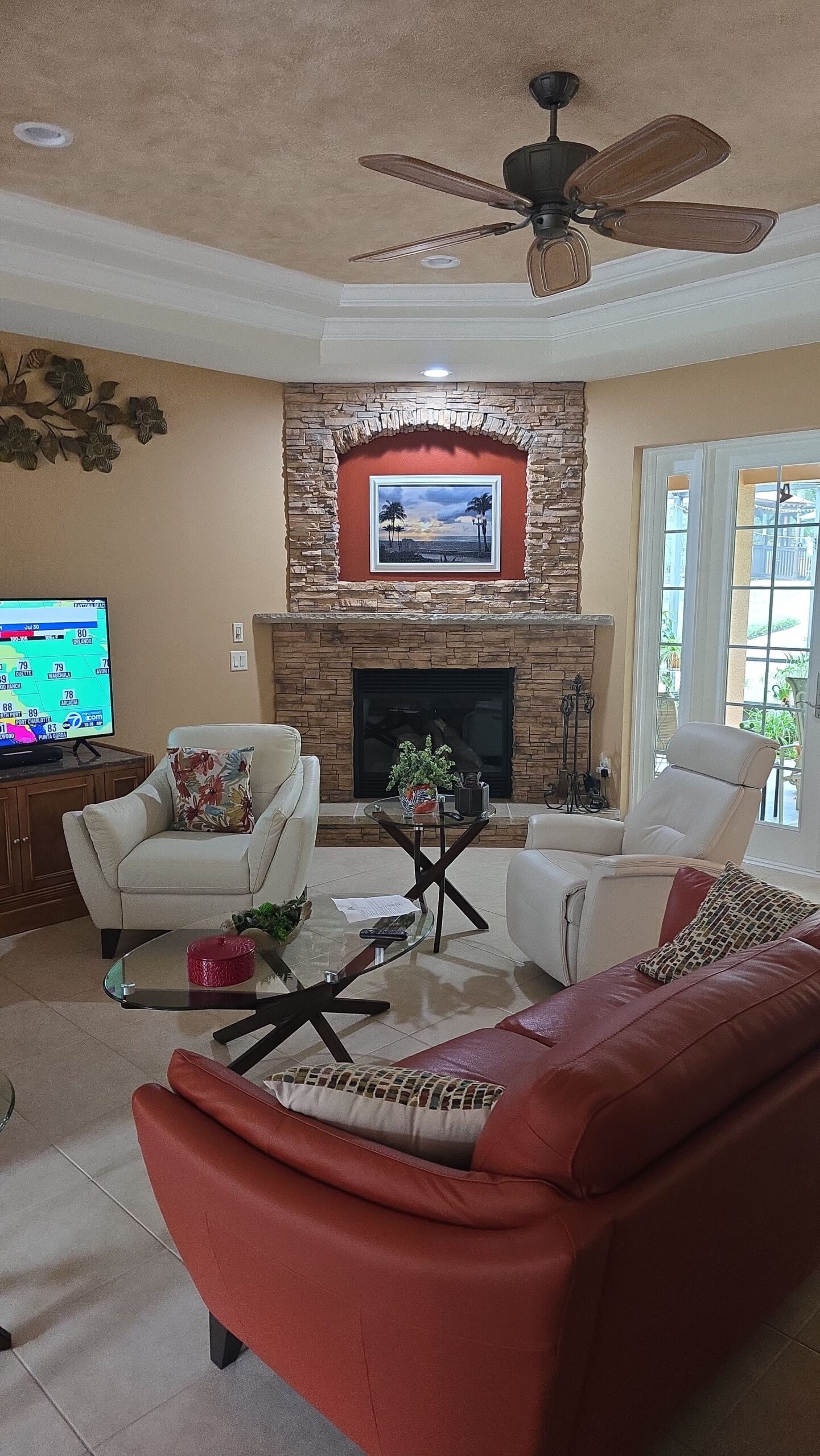
Electric fireplaces give Central Florida homeowners the glow and comfort of a traditional hearth without a chimney, gas line, or open flame. They plug into a standard outlet, mount almost anywhere, and run safely even in homes without existing venting. For families in Ocala, Dunnellon, and The Villages who want ambiance without the upkeep of wood or gas, they’re often the simplest upgrade available.
I’ve installed and inspected hearth systems across Marion County for nine years, and the question I hear most is some version of "can I really just plug this in?" Usually, yes—but the details matter. This guide walks through how electric units work, where they make sense, what to watch for electrically, and how they compare to gas, wood, and water vapor alternatives.
📌 Key Takeaways
- Electric fireplaces require no chimney, flue, or gas line—ideal for condos, additions, and homes without existing venting.
- Most units run on standard 120-volt outlets, but larger built-ins may need a dedicated circuit.
- They produce zero combustion byproducts, making them a strong option for allergy-sensitive households.
- Annual electrical inspection and dust removal keep units running efficiently for years.
- A professional consult can confirm whether your home’s wiring supports a larger installation.
Jump to a section:
- What Electric Fireplaces Actually Are
- Why Central Florida Homeowners Choose Them
- Comparing Your Hearth Options
- Styles and Installation Approaches
- Safety, Wiring, and Maintenance
- Choosing the Right Unit for Your Home
- FAQ
What Electric Fireplaces Actually Are
Quick Answer: An electric fireplace is a self-contained heating and lighting appliance that simulates flame using LED technology, with no real combustion involved. It requires electricity only—no gas, wood, or chimney.
Unlike a wood-burning unit, there’s no firebox lining to maintain and no creosote, a flammable byproduct of wood combustion that builds up inside chimneys. An electric fireplace insert simply generates light and optional heat through resistance coils or infrared quartz elements.
How the Flame Effect Works
Modern units use layered LED panels, mirrors, and sometimes water vapor to mimic dancing flames. The effect can run independently of the heater, so you get ambiance in summer without warming the room. This flexibility is one reason flameless fireplace technology has grown popular in Florida’s long warm season.
💡 Expert Insight: Many homeowners don’t realize the flame display and the heater are separate functions. You can enjoy the visual year-round and switch on heat only during the rare cold snap.
Why Central Florida Homeowners Choose Electric Fireplaces
Quick Answer: Electric fireplaces appeal to Florida homeowners because they skip venting, reduce fire risk, and work in almost any room—including interior walls and condos.
Our winters in Ocala, Belleview, and Crystal River are mild, so most households want ambiance more than heavy heat output. Electric units deliver that glow on demand, without the commitment of a masonry chimney or gas line installation.
No Venting, No Chimney Required
Because there’s no combustion, there’s no flue needed and no exterior penetration through your roof or wall. That makes an electric fireplace a realistic option for condos in Lake Mary or additions in Clermont where running a chimney would be impractical or costly.
Safety Advantages Over Open Flame
With no real fire, there’s no risk of sparks, embers, or chimney fires caused by creosote buildup. According to the National Fire Protection Association, heating equipment remains a leading cause of home fires nationwide, and flameless alternatives reduce several of those risk factors by design.
⚠️ Common Mistake: Homeowners sometimes assume "electric" means "zero maintenance." Dust buildup in the heater fan and loose plug connections are still real issues worth checking annually.
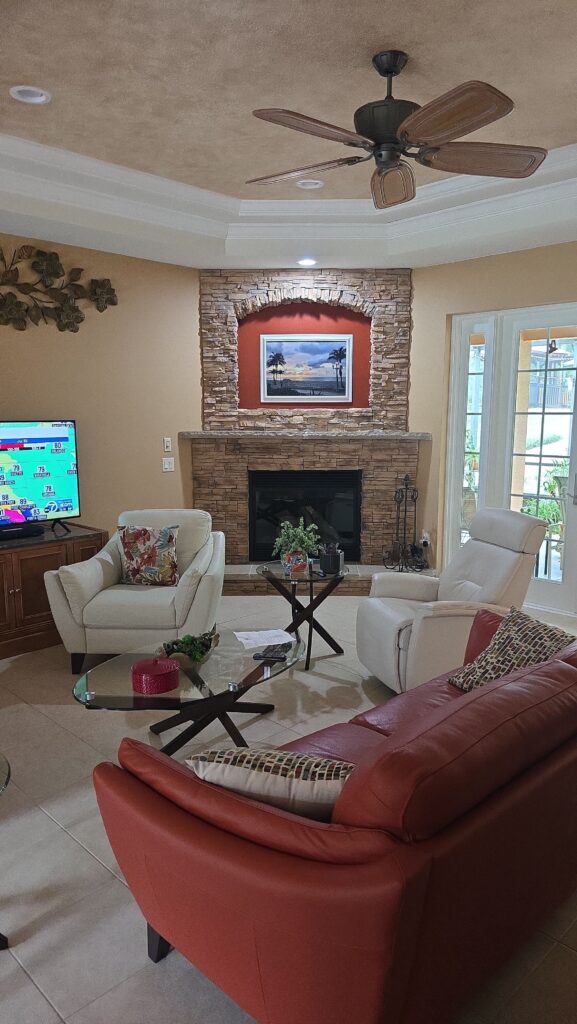
Comparing Your Hearth Options
Quick Answer: Electric fireplaces win on simplicity and safety; gas and wood-burning units offer more authentic heat output and ambiance, each with different maintenance needs.
Choosing between hearth types comes down to priorities: convenience, heat output, or traditional character. Here’s how they stack up for a typical Central Florida home.
| Feature | Electric Fireplace | Gas Fireplace | Wood-Burning Fireplace |
|---|---|---|---|
| Venting required | None | Yes, direct or natural vent | Yes, full chimney |
| Annual maintenance | Light dusting, electrical check | Burner and gas line inspection | Chimney sweep, creosote removal |
| Heat output | Supplemental | Strong, consistent | Strong but inconsistent |
| Best for | Condos, additions, low-upkeep homes | Whole-room heating | Traditional ambiance lovers |
| Installation flexibility | Nearly any interior wall | Requires gas line access | Requires masonry or listed chimney |
If you want authentic flame and stronger heat, our gas fireplace installation page covers what that process involves. Homeowners drawn to a softer, mist-based flame effect often ask about our water vapor fireplace options, which blend real moisture-based visuals with electric safety.
📊 Data Point: The U.S. Department of Energy notes that supplemental electric heaters, including fireplace inserts, can help reduce reliance on whole-home heating during mild shoulder seasons when used in frequently occupied rooms (energy.gov).
Styles and Installation Approaches
Quick Answer: Electric fireplaces come as wall-mounted units, built-in inserts, and freestanding stoves—each installs differently depending on your wall type and available outlets.
The right style depends on your layout more than your taste. A rental in Lady Lake and a custom build in Heathrow will have very different practical constraints.
Built-In and Wall-Mounted Units
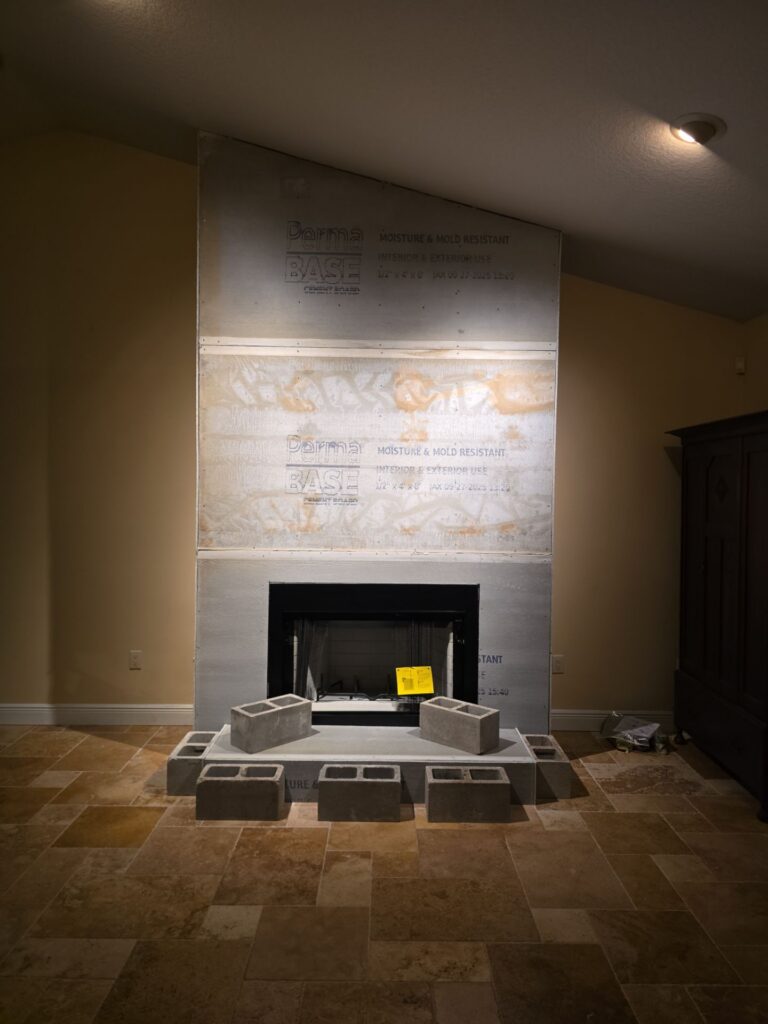
Built-in electric fireplace inserts recess into a wall cavity, often framed like a window opening, and finished with surrounding trim or stone veneer. Wall-mounted versions hang flush against drywall with minimal framing work, similar in spirit to mounting a large television.
Freestanding and Insert Conversions
Freestanding electric stoves sit anywhere with an outlet nearby, making them popular for renters or anyone wanting a no-commitment option. Some homeowners also convert an existing masonry firebox into an electric insert, keeping the mantel while retiring an old wood-burning setup.
✅ Quick Tip: If you’re converting an old masonry fireplace, have the firebox and flue checked first. Our chimney inspection process confirms the structure is sound before any conversion work begins.
Safety, Wiring, and Maintenance
Quick Answer: Most electric fireplace heaters run on standard household circuits, but larger built-ins may need a dedicated 20-amp line, and all units benefit from an annual electrical check.
Safety with electric units looks different from gas or wood, but it’s not nonexistent. The risks shift from combustion to electrical load and connection integrity.
Electrical Requirements
Smaller freestanding and wall-mounted units typically draw 1,500 watts or less and plug into a regular outlet. Larger built-in models, especially those paired with supplemental heaters, often need a dedicated circuit to avoid tripped breakers or overheated outlets. The Occupational Safety and Health Administration notes that overloaded circuits remain a common cause of residential electrical incidents, which is why sizing the circuit correctly matters.
When to Call a Professional
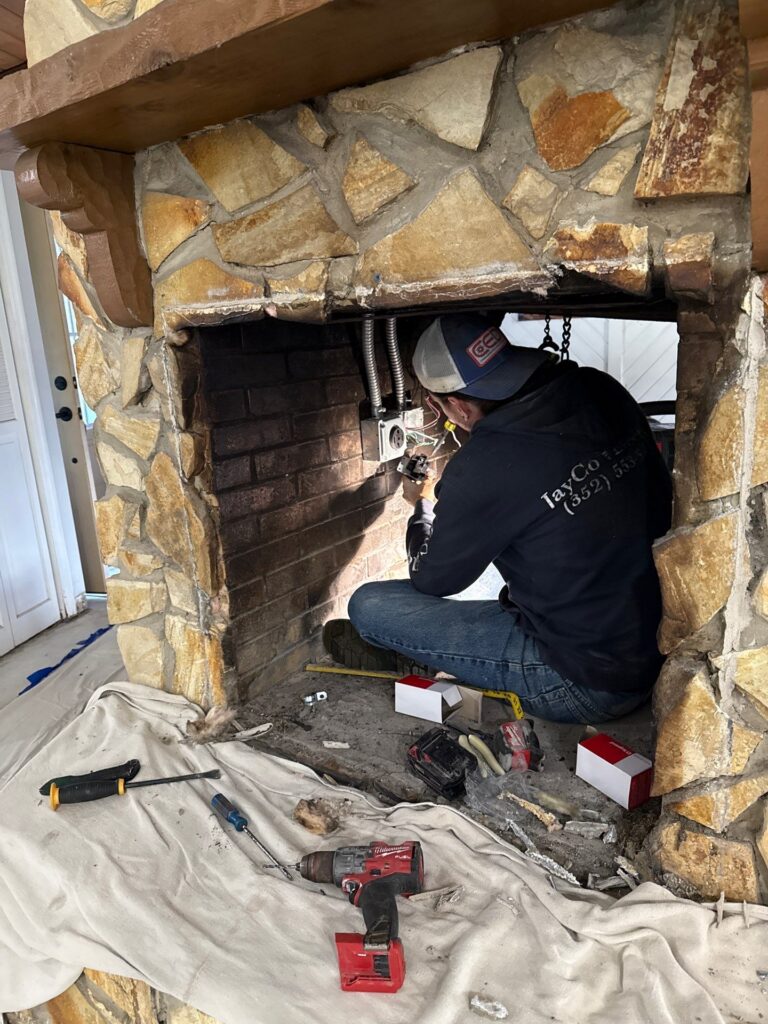
If your installation involves cutting into a wall, running new wiring, or recessing a unit into an existing fireplace opening, it’s worth having a licensed professional involved. Our team holds Florida Contractor License CRC1333200 and handles hearth conversions with that structural and electrical context in mind.
⚠️ Common Mistake: Plugging a high-wattage unit into an extension cord or power strip is a frequent cause of overheating. Electric fireplace heaters should always connect directly to a wall outlet.
For homes considering a different route entirely, our wood-burning fireplace page outlines the chimney and flue requirements involved, for comparison against the electric route.
Choosing the Right Electric Fireplace for Your Home
Quick Answer: Match the unit size to the room, confirm your outlet or circuit capacity, and decide whether you want supplemental heat or ambiance alone before buying.
Start by measuring the wall space and deciding whether a recessed built-in or a surface-mounted unit fits your framing. Then think about heat: a fireplace used mainly for evening ambiance in Marion County doesn’t need the same wattage as one meant to warm a sunroom.
Matching Size and Heat Output to the Room
A small den benefits from a compact 1,000-1,500 watt unit, while an open-concept living area may call for a larger insert or two heat zones. Oversizing wastes energy; undersizing leaves the room feeling cold despite a bright flame display.
💡 Expert Insight: I generally recommend homeowners choose the flame effect and finish they love first, then let us confirm the electrical side fits. Aesthetics and safety don’t have to compete.
If you’re weighing a gas alternative instead, our installation cost breakdown walks through what that project typically involves, for a side-by-side comparison with an electric install.
FAQ
Do electric fireplaces really look like real flames?
Modern LED and water-vapor technology creates a convincing flame effect with adjustable color, speed, and brightness. Many homeowners say guests don’t realize it isn’t a real fire until they feel no heat or smell no smoke.
Can I install an electric fireplace without an electrician?
Smaller plug-in units generally don’t require an electrician, but built-in models needing a dedicated circuit or wall cutting should involve a licensed professional. This protects both your warranty and your home’s electrical safety.
Are electric fireplaces expensive to run?
Running costs depend on wattage and how often the heater function is used versus just the flame display. Since Florida winters are mild, most households use the heat setting sparingly, keeping operating costs low.
What’s the difference between electric fireplaces and water vapor fireplaces?
Both avoid real combustion, but water vapor units use ultrasonic technology to create a mist-based flame that looks closer to real fire. Standard electric fireplaces rely purely on LED lighting for the visual effect.
Can an old wood-burning fireplace be converted to electric?
Yes, many masonry fireboxes can be fitted with an electric insert after a structural and flue inspection confirms the opening is sound. This lets homeowners keep an existing mantel while retiring the maintenance of a wood-burning setup.
Do electric fireplaces need an annual inspection like gas or wood units?
They don’t need chimney sweeping, but a yearly check of the wiring, fan, and connections helps catch dust buildup or loose plugs before they become issues. It’s a much lighter maintenance routine than gas or wood systems require.
Are electric fireplaces a good fit for condos in The Villages or Lake Mary?
Yes, because they need no chimney or gas line, electric fireplaces are often the only realistic hearth option in condos and multi-family buildings. They install into an existing wall with minimal structural change.
Final Thoughts
Electric fireplaces give Central Florida homeowners a genuinely low-maintenance way to add warmth and character to a room, without the venting demands of gas or wood. They’re well suited to our mild climate, condos, additions, and anyone wanting flame-like ambiance without combustion risk. That said, sizing the unit and confirming your electrical capacity still matters for a safe, long-lasting install. A quick professional consult beats guessing on wattage or wall framing.
- Measure your wall space and decide between a built-in, wall-mounted, or freestanding unit.
- Confirm whether your outlet or circuit can handle the wattage of your chosen model.
- Decide if you want heat output or ambiance-only, since this affects sizing.
- Schedule a professional consult before cutting into any wall or converting an old firebox.
Always Fire & Gas is licensed (Florida Contractor License CRC1333200) and has served Ocala, Dunnellon, and The Villages homeowners for nine years. Contact our team today to plan your electric fireplace installation with confidence.