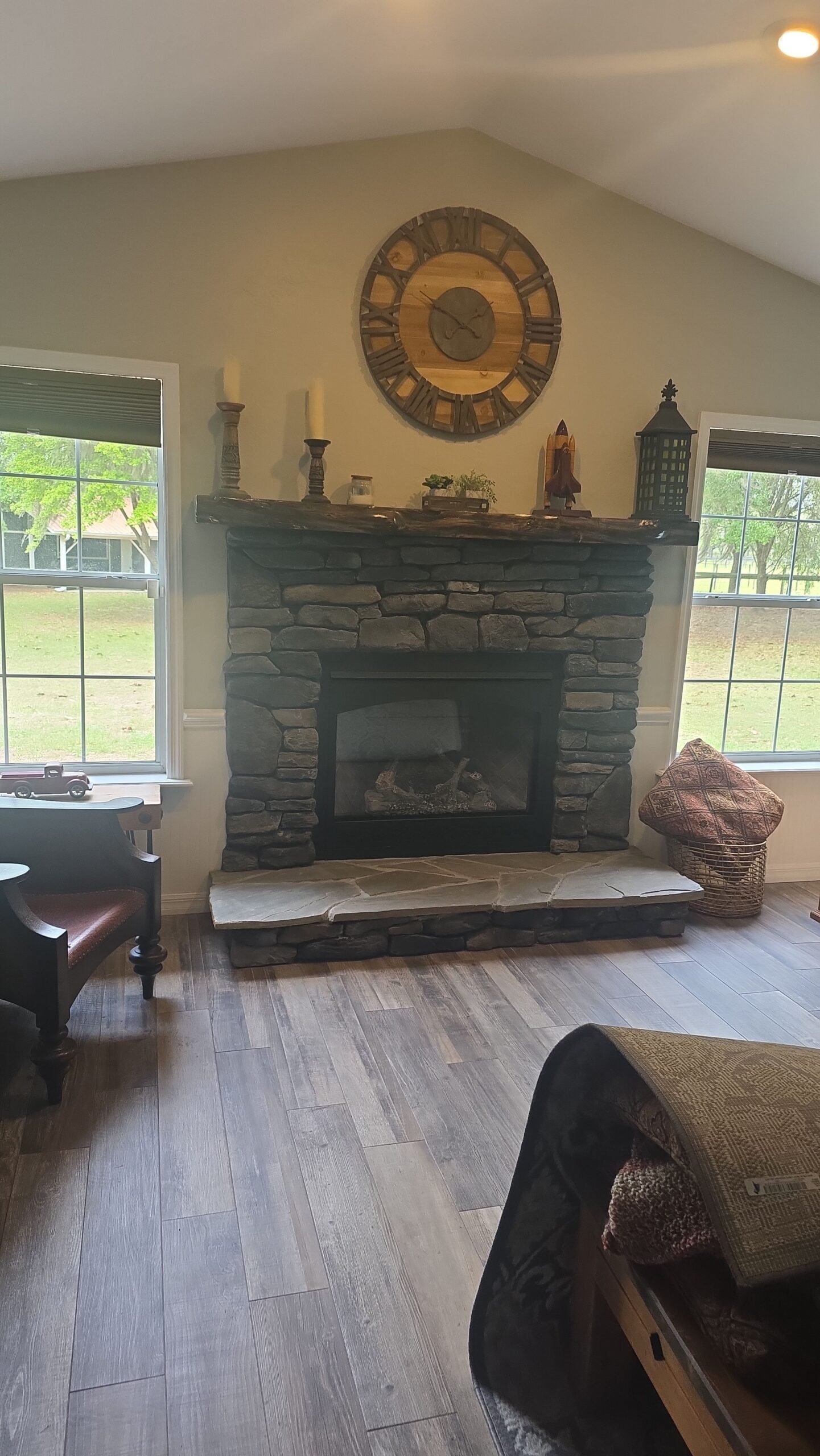
Fireplaces electric fireplace options are the easiest way for an Ocala homeowner to add real ambiance and supplemental warmth without a chimney, gas line, or open flame. They plug into a standard outlet, need no venting, and mount in rooms where wood or gas simply can’t go. For many homeowners in Marion County and The Villages, that simplicity is exactly the point.
This guide walks through how electric units compare to gas and wood, where they fit best in a Florida home, and what safety details actually matter before installation. We’ll also cover the maintenance reality — which is refreshingly small — and answer the questions our crew hears most at kitchen tables across North Central Florida.
📌 Key Takeaways
- Electric fireplaces need no chimney, flue, or gas line — ideal for condos, lanais, and bedrooms.
- They run on standard 120-volt power in most models; larger built-ins may need a dedicated circuit.
- Maintenance is mostly dusting and bulb or ember-bed replacement — no creosote, no soot.
- A licensed installer still checks electrical load, clearances, and mounting safety before you plug in.
- Always Fire & Gas installs and services electric, gas, water vapor, and wood units under one family-owned roof.
Jump to a section:
- Compare electric, gas, and wood options
- See why Marion County homeowners are switching
- Find the best placement in your home
- Review the safety details that matter
- Know what installation day looks like
- Read homeowner FAQs
Fireplaces Electric Fireplace Options: How They Compare to Gas and Wood
Quick Answer: Electric units skip venting entirely, gas offers more heat output per square foot, and wood delivers the most traditional experience but needs the most upkeep. Your household’s priorities — low maintenance, real heat, or classic character — usually decide the answer.
What Makes Electric Different
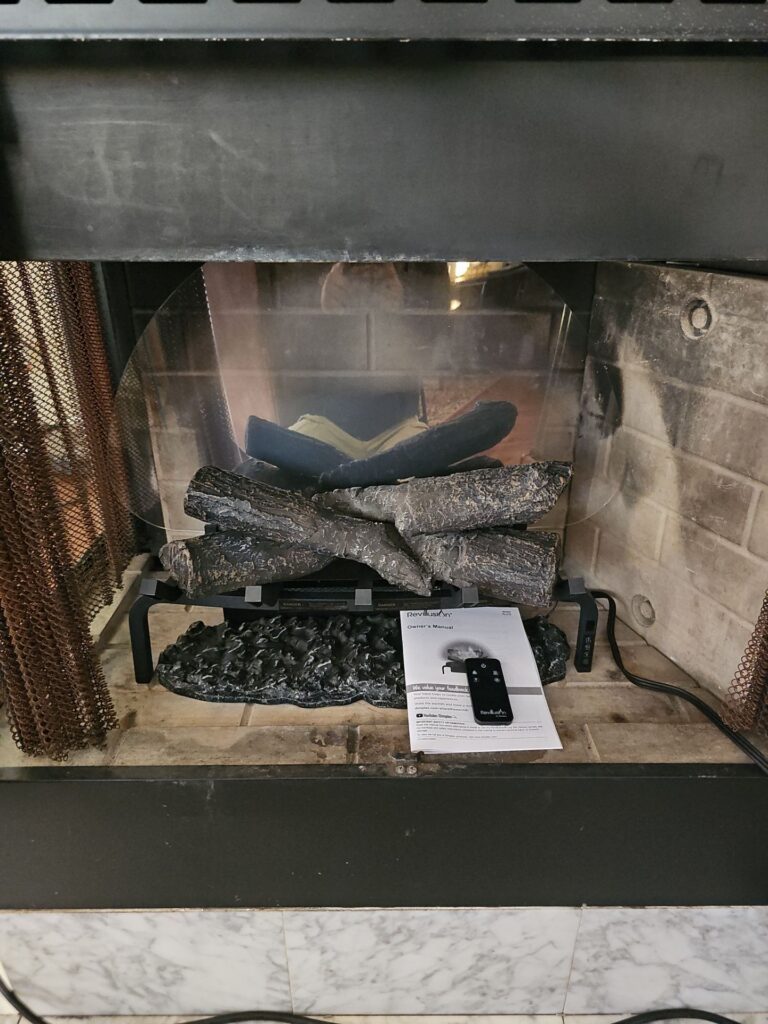
An electric fireplace uses a heating element and LED flame display instead of combustion. There’s no gas supply, no exhaust, and no open flame to monitor. That makes it the lowest-maintenance of the three main fireplace types we install and service.
Gas units, by contrast, require a dedicated line and periodic inspection of the burner and venting. Wood-burning fireplaces need regular sweeping to remove creosote, a flammable byproduct of combustion that builds up inside the flue. Our wood stove fireplaces page covers that upkeep in more detail.
| Feature | Electric | Gas | Wood |
|---|---|---|---|
| Venting required | None | Yes (vented) or none (ventless) | Yes |
| Annual inspection | Optional | Recommended | Required |
| Heat output | Supplemental | High | High |
| Best for | Bedrooms, condos, renters | Primary heating rooms | Traditional living rooms |
| Cleanup | Dusting only | Occasional burner check | Ash and creosote removal |
✅ Quick Tip: If you’re unsure which type fits your floor plan, ask about our fireplace services before you buy a unit online — placement and power needs vary more than people expect.
Why Marion County and The Villages Homeowners Are Choosing Electric Fireplaces
Quick Answer: Electric fireplaces appeal to homeowners who want ambiance without the commitment of venting work, gas lines, or chimney maintenance — a common priority in retiree communities and HOA neighborhoods across our growth areas.
A Fit for Retiree Communities
In The Villages and similar Marion County communities, many residents use a fireplace rarely but still want the look and warmth for cooler evenings. An electric unit delivers that without the long-term upkeep of a flue or the installation of a gas appliance.
HOA rules in some communities also restrict exterior venting or visible gas equipment. An electric fireplace sidesteps that entirely since it mounts inside the wall or sits as a freestanding unit with no exterior penetration.
A Fit for Transaction-Driven Buyers
Homeowners preparing to sell, or buyers closing on a new property, often want a fireplace feature that won’t raise questions during an inspection. Because electric units carry no combustion risk, they rarely complicate an insurance review or a closing checklist the way an aging wood-burning chimney can.
💡 Expert Insight: I’ve walked into more than a few Ocala homes where the seller added an electric unit specifically to avoid chimney questions before closing. It’s a practical move, not a shortcut — as long as the wiring is done correctly.
⚠️ Common Mistake: Plugging a large electric fireplace into a shared circuit with other high-draw appliances. This can trip breakers repeatedly and is often mistaken for a defective unit.
Where an Electric Fireplace Fits Best in Your Florida Home
Quick Answer: Electric fireplaces work well in bedrooms, home offices, condos, and lanai-adjacent living spaces where venting isn’t practical. They’re a poor substitute for primary heating in larger, draftier rooms.
Matching the Unit to the Room
A wall-mounted electric fireplace suits a bedroom or den where ambiance matters more than heat volume. A larger built-in insert can supplement a living room’s primary HVAC system on cooler nights, which are common in Marion County between October and January.
Condos and manufactured homes in communities like Dunnellon or The Villages often restrict structural changes for venting. An electric unit avoids that conflict since no chimney or exterior vent penetration is involved.
| Room Type | Good Fit? | Why |
|---|---|---|
| Bedroom | Yes | No venting, low heat needed |
| Condo or HOA unit | Yes | No exterior penetration |
| Large open living room | Limited | Heat output is supplemental only |
| Screened lanai | No | Not rated for outdoor/humid exposure unless specified |
A Word on Ventless Confusion
Homeowners sometimes confuse an electric fireplace with a ventless gas unit, since neither requires a chimney. They are not the same appliance. A ventless gas fireplace still burns fuel and releases combustion byproducts into the room, while an electric unit produces zero combustion at all. Our breakdown of ventless vs. vented gas fireplace installation explains that distinction if you’re weighing gas options too.
Electric Fireplace Safety: What Every Homeowner Should Verify
Quick Answer: Electric fireplaces are low-risk compared to combustion appliances, but electrical load, mounting hardware, and proximity to flammable materials still matter. A licensed installer checks all three before the unit goes live.
The Electrical Side
Most compact electric fireplaces run on a standard 120-volt circuit, similar to any household appliance. Larger built-in models can draw enough current to need a dedicated circuit, which is why a licensed electrician or installer should review your panel before mounting a large unit.
According to the National Fire Protection Association (NFPA), heating equipment remains one of the leading causes of home fires nationwide, and electrical faults are a common contributing factor. That statistic applies broadly across heating appliance types, not just combustion units, which is why correct installation still matters even for a flameless fireplace.
Clearance and Mounting
Even without a flame, an electric fireplace generates heat at its surface. Manufacturer clearance guidelines still apply around mantels, trim, and furniture. A unit mounted too close to drapery or a bookshelf can scorch nearby materials over time.
📊 Data Point: The U.S. Department of Energy notes that electric heating elements convert nearly all consumed electricity directly into usable heat, making them efficient for supplemental warmth — though not a full replacement for central HVAC in larger rooms.
Our team holds Florida Contractor License #CRC1333200 and Certified Category V Gas License #LI45277, along with CSIA and NFI hearth certifications, so the same crew that inspects your gas or wood fireplace can evaluate an electric installation with the same attention to code and clearance. According to the Chimney Safety Institute of America (CSIA), proper clearance and installation review apply across all hearth appliance types, not only combustion units.
⚠️ Common Mistake: Assuming an electric fireplace needs zero professional input because there’s no gas or flue involved. Electrical load and wall-cavity heat buildup still deserve a trained eye.
Installation and Maintenance: What to Expect From a Licensed Team
Quick Answer: Installation typically involves confirming electrical capacity, securing the mounting bracket or insert frame, and testing the unit before we leave. Maintenance afterward is mostly dusting and occasional bulb or ember-bed replacement.
What Our Crew Checks
- We confirm your home’s electrical panel can support the unit without overloading existing circuits.
- We verify wall framing or mantel structure can safely hold the fireplace’s weight.
- We test the heating element and flame display for consistent operation.
- We walk you through basic cleaning so the unit keeps performing for years.
Because there’s no combustion, there’s no soot, ash, or creosote to manage afterward. That’s one reason electric units rank as the lowest-maintenance hearth option we install, alongside water vapor models that use a similar no-flame approach.
Our Promise on Every Job
Whether we’re installing an electric insert or sweeping a 40-year-old chimney, every job site gets the same ZERO Mess Guarantee: floors and furniture tarped, debris HEPA-vacuumed, and the work area left as clean as we found it — in writing. That standard has carried our family business since 1982, and it doesn’t change based on which fireplace type you choose.
If you’re also comparing gas options for a primary heating room, our page on gas fireplace installation costs walks through what that process typically involves.
FAQ
Do fireplaces electric fireplace units require a permit in Florida?
In most Marion County jurisdictions, a simple plug-in electric fireplace doesn’t require a permit, but a built-in unit tied to a dedicated circuit may need electrical permitting. Check with your local building department or ask your installer to confirm before work begins.
Can an electric fireplace actually heat a room?
A plug-in electric fireplace typically supplements room heat rather than replacing central HVAC, especially in larger Florida living rooms. It works best as a comfort feature on cooler nights common from October through January.
Is an electric fireplace safer than a gas fireplace?
Electric units remove combustion risk entirely, which simplifies the safety picture, but any electrical appliance still needs proper installation and clearance. Gas fireplaces remain safe when installed and maintained by a licensed, certified technician.
How much maintenance does an electric fireplace need?
Maintenance is mostly light dusting and occasional bulb or ember-bed replacement, since there’s no combustion byproduct to clean. Most homeowners find upkeep takes only a few minutes a few times a year.
Will an electric fireplace affect my home insurance or closing inspection?
Because there’s no chimney or combustion involved, electric units rarely raise flags during a home inspection or insurance review. That’s one reason transaction-driven homeowners in Marion County often choose them before listing a property.
Can I install an electric fireplace in a condo or Villages community home?
Yes, in most cases, since electric units need no exterior venting or structural chimney work that HOA rules commonly restrict. Always confirm your specific community’s guidelines before purchase.
What’s the difference between an electric fireplace and a water vapor fireplace?
An electric fireplace uses LED lighting to simulate flame, while a water vapor fireplace uses ultrasonic mist and lighting for a more three-dimensional flame effect. Both avoid combustion, but they use different technology to create the visual.
Final Thoughts
Fireplaces electric fireplace options give Ocala and Marion County homeowners a genuinely low-maintenance way to add warmth and ambiance without a chimney or gas line. They’re not a one-size-fits-all replacement for every hearth, but for bedrooms, condos, and HOA communities, they’re often the simplest answer. The safety details — electrical load, clearance, and proper mounting — still deserve a licensed eye, even without a flame involved.
Next steps:
- Decide which room needs ambiance, supplemental heat, or both.
- Check your community’s HOA rules if you live in a restricted neighborhood.
- Call a licensed, certified installer to confirm your electrical panel can support the unit.
- Schedule installation with a crew that documents the work in writing.
Always Fire & Gas is family-owned since 1982, Florida’s Most Certified hearth team, holding two state licenses and six national certifications, with every job backed by our written ZERO Mess Guarantee. Florida Contractor License #CRC1333200. Call or text (352) 282-0158, or reach our team to schedule your electric fireplace consultation today.