You noticed a brown ring forming on the ceiling near the chimney, or maybe a musty smell in the room right after a storm. Sometimes it’s a faint dripping sound inside the wall when rain hits hard. If you’re also smelling anything like rotten eggs near a gas stove or chimney chase, stop reading, shut off the gas appliance if it’s safe to reach, and call a licensed professional immediately. For everything else, that water stain is almost always a flashing problem, and it’s one of the most common calls we get across Hernando and Marion County homes.
According to the Chimney Safety Institute of America (CSIA), flashing failures are among the leading causes of water damage around masonry chimneys nationwide. In Florida, where afternoon thunderstorms roll through nearly every summer week, that failure point gets tested constantly. Chimney flashing repair in Spring Hill isn’t a cosmetic fix — it’s what keeps rainwater out of your attic, insulation, and drywall.
Is this urgent?
Most flashing issues can wait a few days for a scheduled visit, but a few signs mean you should call today, not next week:
- Active dripping inside the house during or right after rain
- Sagging or discolored ceiling drywall near the chimney
- Visible daylight around the flashing from inside the attic
- A burning or gas odor near any nearby stove or fireplace appliance
- Mold or soft, spongy wood where the chimney meets the roofline
If you see any of these, don’t wait for the next dry spell to call. Water intrusion compounds fast in Florida’s humidity, and what starts as a stained ceiling tile can become a structural repair.
Symptom, Cause, and What To Do
| What You’re Noticing | Most Likely Cause | What To Do |
|---|---|---|
| Ceiling stain near chimney, worse after rain | Cracked or lifted flashing seal | Schedule a flashing inspection this week |
| Rust streaks running down brick | Corroded metal flashing | Have the flashing replaced, not just caulked |
| Water in attic but roof shingles look fine | Counter-flashing pulled away from mortar joint | Have a pro re-set and re-seal the counter-flashing |
| Leak only during wind-driven storms | Gap at step flashing overlaps | Inspect and reseat step flashing pieces |
| Damp smell with no visible stain yet | Early flashing separation, moisture trapped in attic insulation | Request a full chimney water intrusion assessment |
Cracked or Lifted Flashing Seal
What it looks like
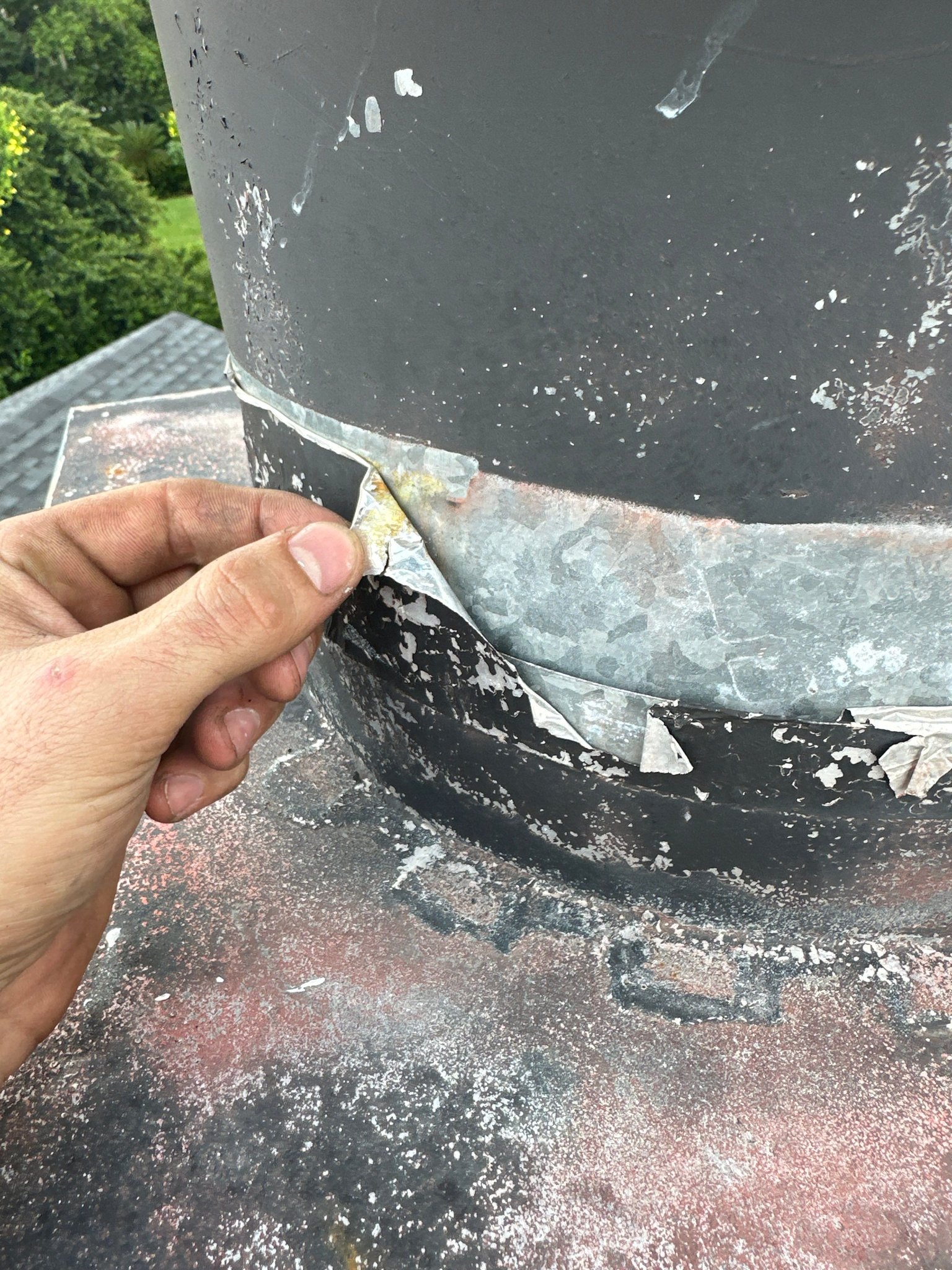
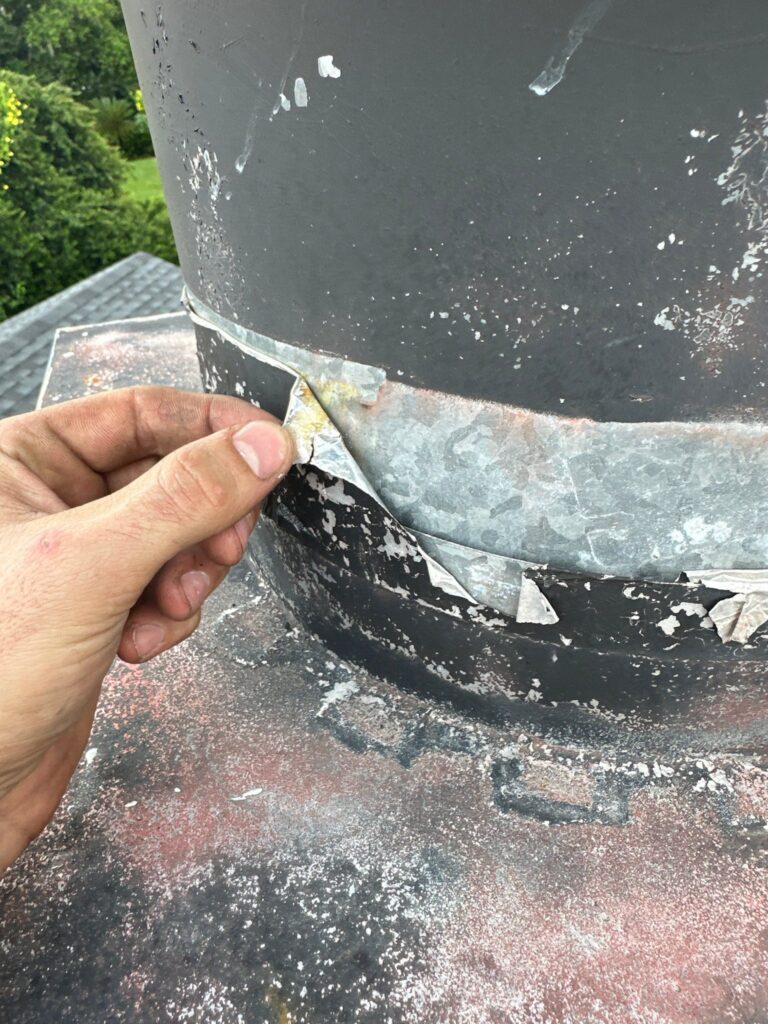
The metal flashing around the base of the chimney looks fine from the ground, but up close there’s a hairline gap where the sealant has dried out and pulled away from the brick.
What you can do
From the ground, use binoculars to check for an obvious gap or a strip of sealant that looks chalky and cracked. Don’t climb onto a wet or steep roof to inspect this yourself.
When to call a pro
If the gap is visible from the ground or you’ve had any interior staining, it’s time for a licensed inspection. This is the single most common reason we’re called out for chimney flashing repair in Spring Hill after summer storm season.
Corroded or Rusted Metal Flashing
What it looks like
Rust streaks on the brick below the flashing line, or flashing metal that’s thinned out and flaking at the edges. Galvanized flashing has a lifespan, and Florida’s humidity shortens it.
What you can do
Take a photo of the streak pattern and note whether it’s worse after specific storms. That helps a technician pinpoint the exact failure point faster.
When to call a pro
Rust means the metal itself is failing, not just the seal. Caulk won’t fix corroded flashing. This calls for a full strip-and-replace, something we document as part of our chimney leaky repair services.
⚠️ Common Mistake: Homeowners often grab a tube of roofing cement and smear it over a flashing gap as a quick fix. It looks sealed for a season, but it traps moisture against the metal and speeds up corrosion underneath. We see this constantly on older homes around Dunnellon and Ocala.
Counter-Flashing Pulled From the Mortar Joint
What it looks like
Counter-flashing is the top piece that tucks into a cut mortar joint on the chimney itself. When mortar ages and crumbles, that piece works loose and water runs straight behind it.
What you can do
Check the mortar line where the flashing meets the brick. Crumbling, powdery mortar is a visible clue you can spot safely from a ladder at ground level.
When to call a pro
Re-cutting a mortar joint and properly seating counter-flashing is skilled masonry work. If the chimney crown also looks cracked, read our guide on cracked chimney crown repair signs before deciding what needs attention first.
Step Flashing Separation Along the Roofline
What it looks like
Step flashing is the series of small overlapping metal pieces running up the roof slope alongside the chimney. Wind can lift individual pieces, creating gaps that only leak during driving rain.
What you can do
Note whether leaks only happen with wind from a specific direction. That detail narrows down which step flashing piece has failed.
When to call a pro
This is intermittent and easy to miss during a dry-weather inspection. If storms have hit the Orlando or Marion County area recently, read our notes on chimney leaks after a storm before assuming the roof itself is at fault.
DIY Check vs. Professional Repair
A safe DIY check means standing on solid ground, using binoculars, and looking for obvious gaps, rust streaks, or lifted metal. It also means checking your attic with a flashlight after a rainstorm for fresh water spots on the underside of the roof deck. That’s the extent of what we’d recommend doing yourself.
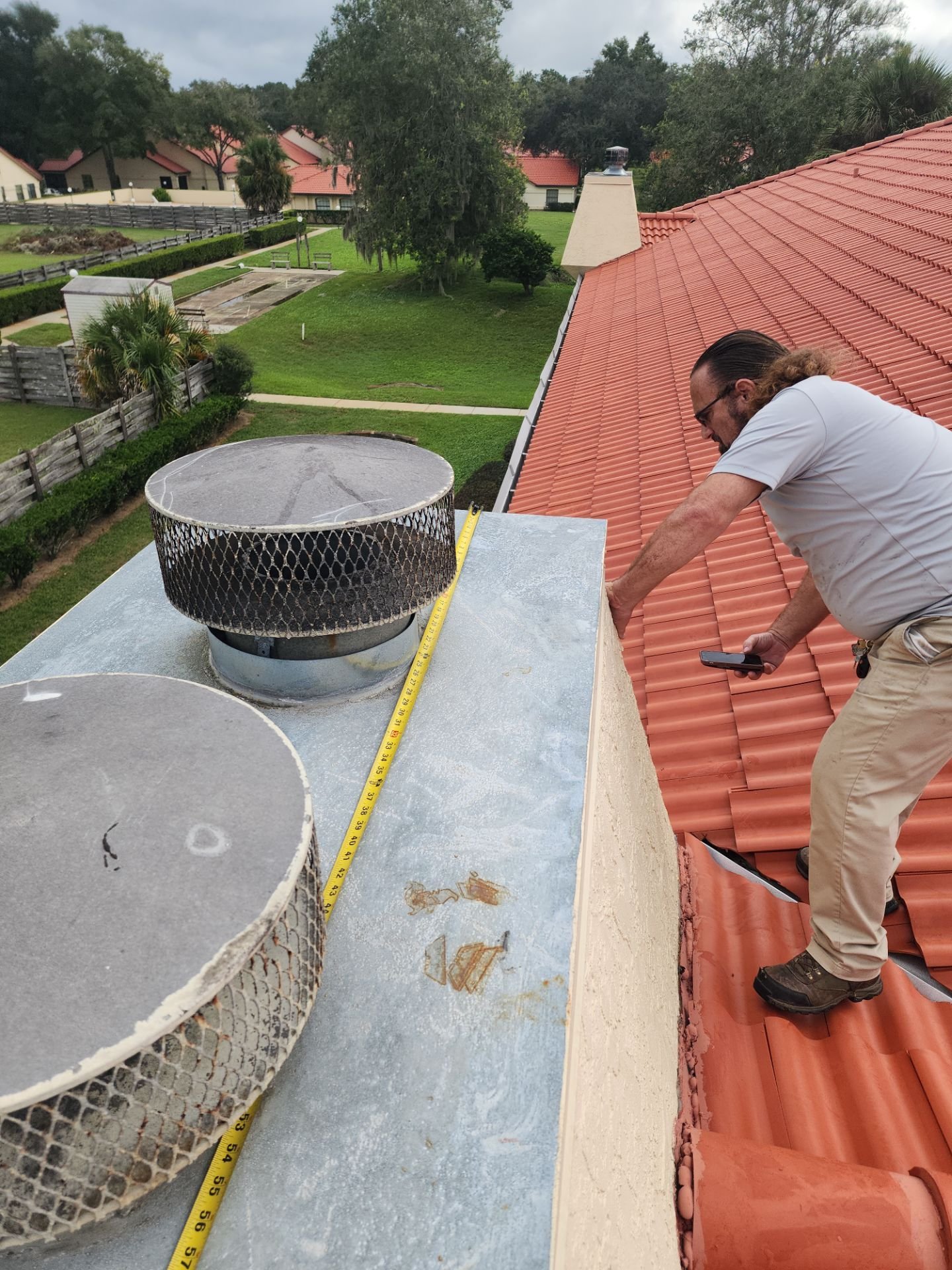
Professional repair means getting on the roof safely, removing and resetting flashing pieces, cutting a proper mortar reglet for counter-flashing, and sealing with materials rated for Florida’s UV and humidity exposure. According to NFPA 211, the national standard governing chimney and vent systems, proper flashing integration is part of a code-compliant chimney system — not an optional add-on. We also carry two Florida state licenses, including Certified Category V Gas License #LI45277, and you can verify any contractor’s license directly through the Florida DBPR license search.
I’ve walked attics in Spring Hill homes where a two-inch flashing gap had been quietly soaking the insulation for over a year before anyone noticed the ceiling stain. The EPA notes that trapped moisture like this is a leading contributor to indoor mold growth, which is exactly why we don’t recommend waiting once you spot a stain.
Next Steps
- Check your attic with a flashlight after the next rain for fresh water spots.
- Photograph any visible rust, gaps, or ceiling stains from the ground.
- Avoid patching flashing yourself with caulk or roofing cement.
- Schedule a licensed inspection before the next storm cycle rolls through.
- Ask for documentation of what was found and what was repaired.
Always Fire & Gas has been family-owned since 1982, with two state licenses and six national certifications backing every chimney flashing repair in Spring Hill and across North Central Florida. Every visit includes our ZERO Mess Guarantee — floors and furniture tarped, debris fully removed, in writing. When others say they can’t, we show up. Call or text (352) 282-0158 to schedule your inspection, done right.