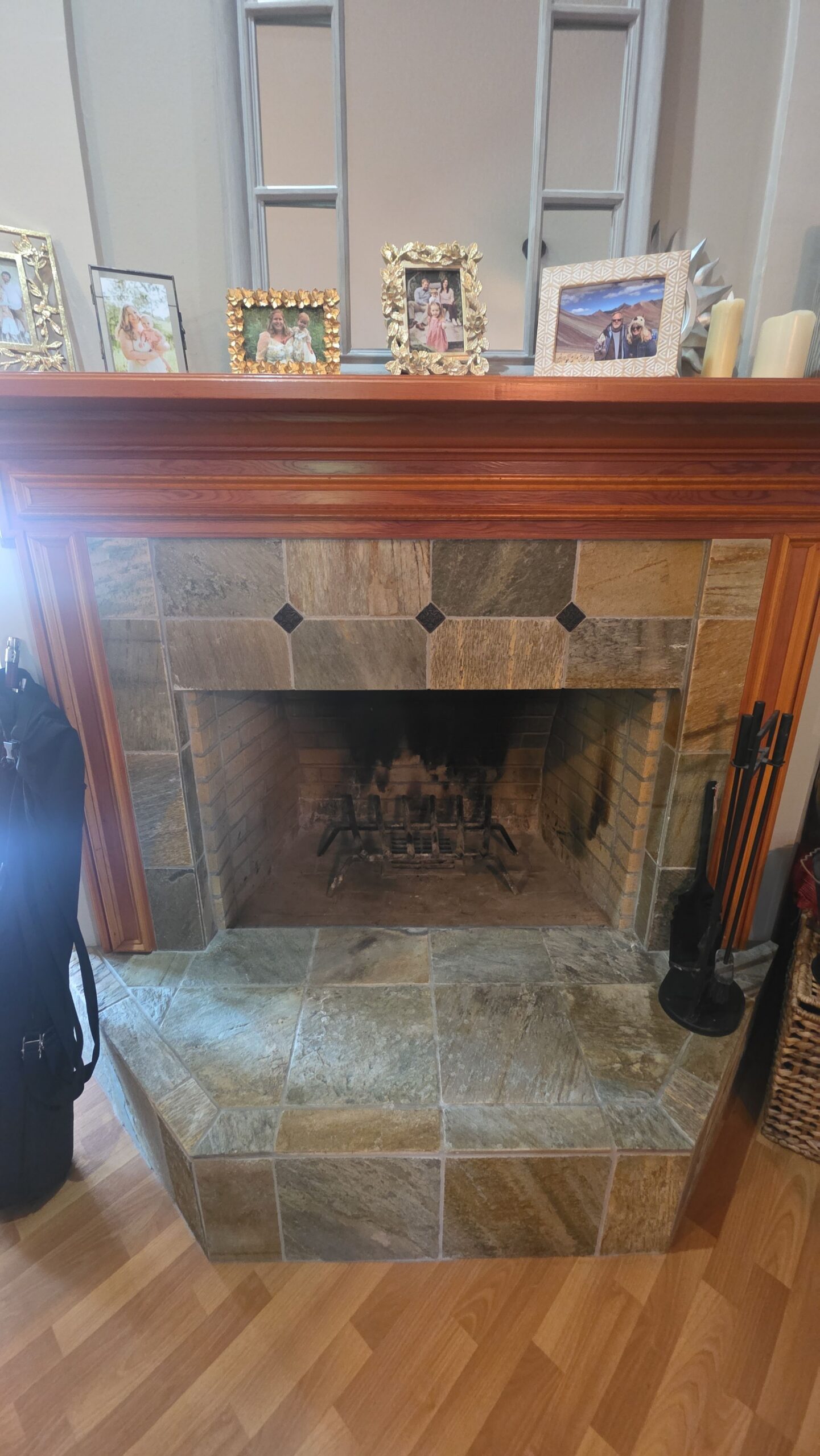
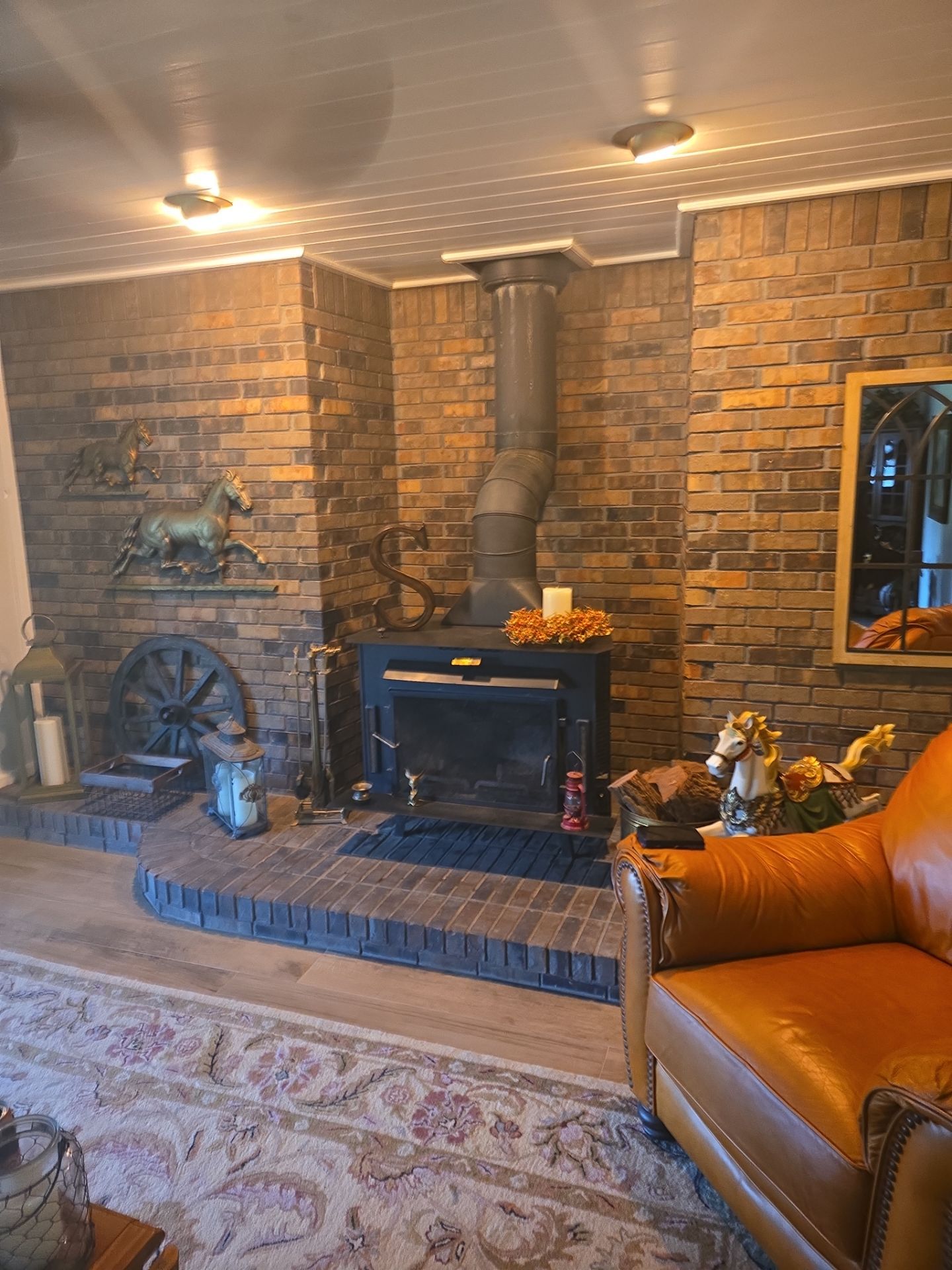
Chimney mantels are more than a decorative shelf — they sit inches from real heat and open flame, and the wrong material or placement can turn a beautiful focal point into a fire hazard. The short answer: any wood or combustible mantel needs specific clearance from the firebox opening, measured by code, not guesswork. Many older Marion County homes were built before current clearance standards existed, which is exactly why we get called out after a home inspection flags one.
I’ve walked into living rooms in Ocala and The Villages where a gorgeous, hand-carved mantel was installed just a few inches too close to the firebox — nobody noticed until a real estate inspector or an insurance adjuster did. That’s a stressful moment for a homeowner who just wanted a cozy living room. This guide breaks down what’s safe, what’s not, and how to get it right the first time.
📌 Key Takeaways
- Combustible wood mantels need minimum clearance from the firebox opening, set by code and manufacturer specs.
- Clearance rules differ for wood-burning, gas, and factory-built fireplaces — never assume one rule fits all.
- Cracks, scorch marks, or warping on an existing mantel are signs it’s too close to the heat source.
- Noncombustible materials like stone, tile, and certain engineered products allow closer installation.
- A licensed inspection before buying, selling, or renovating catches mantel clearance problems before they become closing-day surprises.
Jump to a section:
- What Is a Chimney Mantel and Why Does Clearance Matter?
- Mantel Materials: What’s Safe Near Real Flame?
- Mantel Height and Clearance Rules for Florida Homes
- Gas vs. Wood Fireplaces: Does the Mantel Rule Change?
- Signs Your Existing Mantel Is a Fire Hazard
- Installing or Replacing a Mantel the Right Way
- FAQ: Chimney Mantel Questions We Hear Most
What Is a Chimney Mantel and Why Does Clearance Matter?
Quick Answer: A mantel is the shelf or decorative surround above and around a fireplace opening, and clearance is the required gap between it and the firebox. Get that gap wrong, and heat radiating from the firebox can scorch wood or ignite dust buildup over time.
A mantel isn’t just trim — it’s a structural and safety element governed by fire codes. The National Fire Protection Association, through NFPA 211, sets the baseline standards that most Florida jurisdictions reference for fireplace and chimney construction, including mantel projections and clearances (NFPA).
Why Older Homes Are Often Out of Compliance
Many homes across Marion County, Dunnellon, and surrounding communities were built decades before current clearance tables were standard practice. A mantel that looked fine to a builder in the 1980s may not meet today’s documented clearance requirements. That’s not a knock on the original work — codes evolve as fire data improves.
💡 Expert Insight: We’ve been family-owned since 1982, and we’ve watched clearance standards tighten over four decades. What passed inspection then doesn’t always pass today, especially on resale.
Combustible vs. Noncombustible, Defined
"Combustible" simply means a material that can ignite and burn — wood, particleboard, and most laminates fall here. "Noncombustible" materials, like stone, brick, tile, and steel, resist ignition and generally allow closer placement to the firebox. Knowing which category your mantel material falls into is the first step to understanding your clearance requirement.
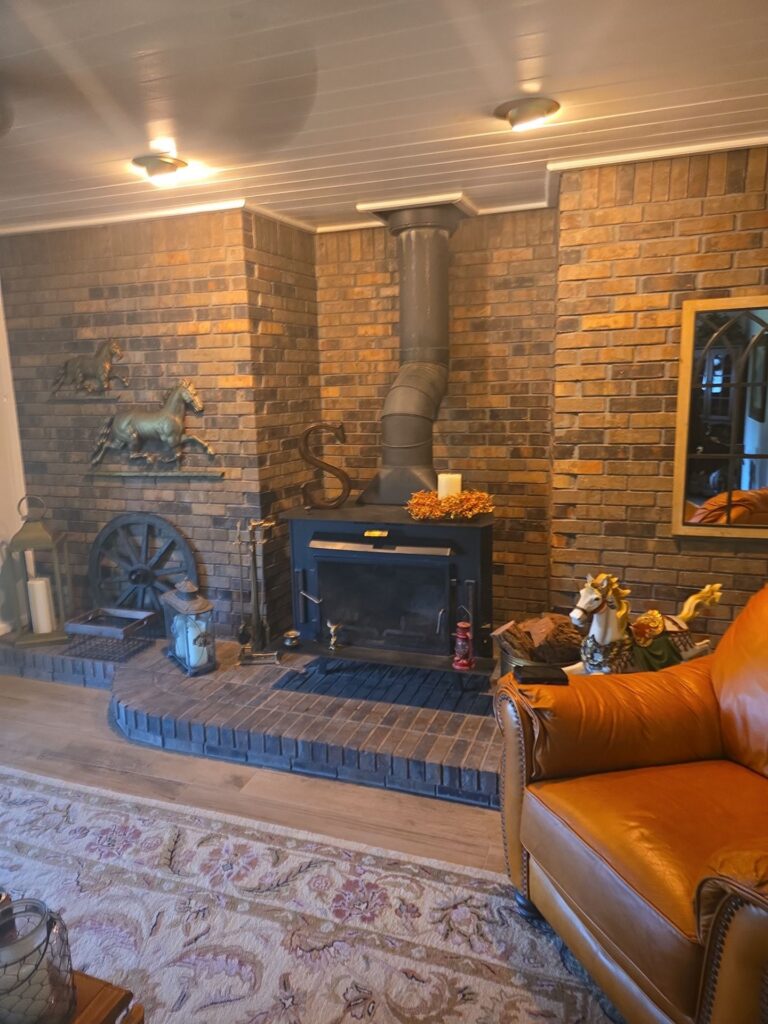
Mantel Materials: What’s Safe Near Real Flame?
Quick Answer: Stone, tile, and masonry mantels tolerate heat best and allow tighter clearances. Wood and engineered-wood mantels need more distance from the firebox and benefit from a fire-rated backer or heat shield.
Homeowners in Ocala and Lake Nona-area communities often want a reclaimed wood beam or a custom-carved mantel for that warm, Florida-craftsman look. That’s completely achievable — it just has to be positioned correctly, and sometimes paired with a heat shield to reduce the required clearance.
Comparing Common Mantel Materials
| Material | Heat Tolerance | Typical Clearance Need | Best Use |
|---|---|---|---|
| Natural stone/brick | High | Minimal, per code table | Wood-burning or gas fireplaces |
| Tile or cast stone | High | Minimal to moderate | Transitional or modern designs |
| Solid wood beam | Low | Greater clearance required | Decorative, set back from firebox |
| Engineered wood/MDF | Low | Greater clearance required | Lower-heat gas inserts only, with care |
| Steel or metal surround | High | Minimal | Modern/industrial styling |
⚠️ Common Mistake: Homeowners sometimes reuse a reclaimed barn-wood mantel without checking its actual projection and depth against clearance tables. A beautiful piece of salvage lumber is still combustible lumber.
Heat Shields and Why They Matter
A heat shield is a noncombustible barrier — often metal or cement board — installed between the firebox and a combustible mantel to reduce required clearance. It doesn’t eliminate the need for proper spacing, but it can make a tighter layout code-compliant when installed correctly by someone who understands the math behind it.
Mantel Height and Clearance Rules for Florida Homes
Quick Answer: Clearance depends on how far the mantel projects outward from the wall — the farther it projects, the higher above the firebox opening it must sit. This isn’t a single fixed number; it’s a sliding scale found in code reference tables.
Florida follows the Florida Building Code, which incorporates fire-protection standards similar to NFPA 211 for fireplace construction, including mantel and trim clearances (per International Code Council model codes adopted statewide). A mantel that barely projects from the wall can typically sit a bit lower; one that projects several inches needs to be mounted higher above the opening.
Why Guesswork Is Risky
📊 Data Point: According to the Consumer Product Safety Commission, heating equipment including fireplaces and chimneys is a leading contributor to residential fires reported each year in the U.S. (CPSC). Clearance mistakes are a quiet but real piece of that picture.
I’ve measured mantels in homes across Citrus Hills and Stonebridge where the owner simply eyeballed the install years ago. It looked fine — until a routine inspection measured the projection-to-height ratio and found it fell short of the table. Correcting it after drywall and paint is more disruptive than getting it right from the start.
What We Check During an Inspection
- Mantel material and whether it’s combustible.
- Projection distance from the wall face.
- Vertical distance from the firebox opening.
- Condition of any existing heat shield or backer board.
- Scorch marks, discoloration, or warping as early warning signs.
Gas vs. Wood Fireplaces: Does the Mantel Rule Change?
Quick Answer: Yes — gas fireplace units often run cooler at the mantel line than open wood fires, but manufacturer specs for that specific unit always override general assumptions. Never assume a gas insert automatically means a looser clearance.
Factory-built gas fireplaces come with listed clearance requirements set by the manufacturer and tested as part of the unit’s safety listing. Those numbers can differ significantly from the general masonry fireplace tables in NFPA 211, so matching the mantel to the specific appliance matters.
Why We Check the Nameplate First
Every listed gas fireplace has a nameplate or manual specifying clearance to combustibles, including the mantel. Before recommending a mantel height or material for a gas fireplace installation, we confirm those manufacturer numbers rather than relying on general wood-fireplace rules.
✅ Quick Tip: If you’re adding or replacing a mantel on an existing gas insert, keep the appliance’s owner’s manual handy. The clearance table is usually printed right in it.
Homeowners converting from wood to gas, or installing a new wood burning fireplace, should treat the mantel plan as part of the overall appliance decision, not an afterthought once the unit is already in place.
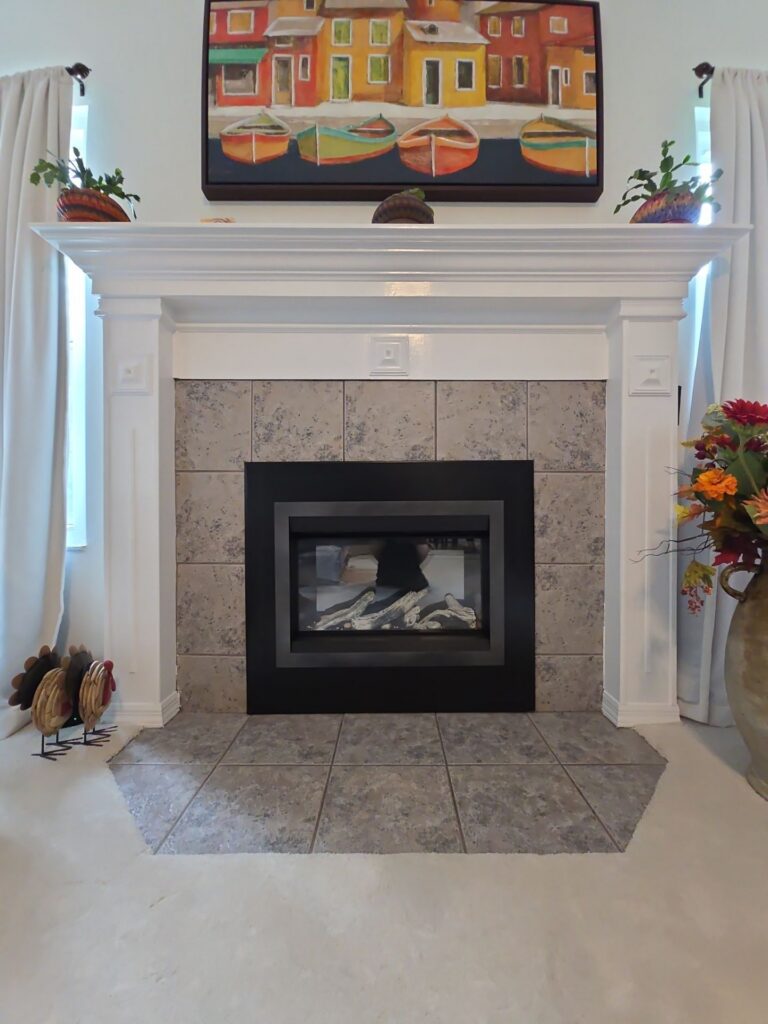
Signs Your Existing Mantel Is a Fire Hazard
Quick Answer: Discoloration, cracking, warping, or a scorched smell near the mantel are all signals it’s receiving more heat than it should. These symptoms often show up gradually, which is why many homeowners miss them for years.
Visual and Physical Warning Signs
Darkened or yellowed wood directly above the firebox opening is one of the clearest signs of heat stress. Cracking or splitting along the underside of a wood mantel, paint that bubbles or discolors, and a faint burnt smell after use are all reasons to stop using the fireplace and schedule an inspection.
| Symptom | Likely Cause | Recommended Action |
|---|---|---|
| Darkened/yellowed wood | Prolonged heat exposure | Schedule a clearance inspection |
| Cracking or warping | Clearance too tight | Reposition or add heat shield |
| Burnt smell during use | Combustible material overheating | Stop use, call a certified technician |
| Paint bubbling near mantel | Excess radiant heat | Verify clearance against code table |
💡 Expert Insight: As a CSIA Certified Chimney Specialist, I always tell homeowners: a mantel showing heat damage isn’t a cosmetic problem to paint over. It’s telling you the clearance is wrong.
When It’s Time for a Professional Look
If you’re buying, selling, or an HOA or insurance company has flagged the fireplace, a documented inspection resolves the uncertainty quickly. Our chimney inspections include a written report, which real estate agents and insurers across Ocala and The Villages regularly request before closing.
Installing or Replacing a Mantel the Right Way
Quick Answer: Correct mantel installation starts with confirming the firebox type, measuring projection and height against the applicable code table, and choosing a material that matches the heat exposure. Skipping any one of those steps is how clearance violations happen.
The Process We Follow
- Confirm whether the fireplace is wood-burning, gas, or factory-built, and pull manufacturer specs if applicable.
- Measure the firebox opening width and depth.
- Select a mantel material rated for the expected heat exposure.
- Calculate required clearance based on projection distance.
- Install with a heat shield if the design calls for tighter spacing.
- Document the install for insurance and resale records.
⚠️ Common Mistake: Hiring general contractors who are skilled builders but unfamiliar with fireplace-specific clearance tables. A beautifully built mantel that’s two inches too low is still a code violation and a hazard.
DIY vs. Professional Installation
| Factor | DIY Approach | Professional Installation |
|---|---|---|
| Code knowledge | Often incomplete | Based on current code tables and listings |
| Material selection | Based on looks | Based on heat tolerance and clearance |
| Documentation | Rarely provided | Written report for insurance/resale |
| Risk of rework | Higher | Lower, done right the first time |
Our team carries two Florida state licenses and six national certifications, including CSIA and NFI credentials, so every mantel recommendation ties back to a documented standard — not a guess. When others say they can’t verify it’s safe, we show up with the measurements and the paperwork. If your project also involves structural chimney work, our guide on framing a chimney safely covers how the surrounding structure factors into the plan.
FAQ: Chimney Mantel Questions We Hear Most
How close can a wood mantel be to a fireplace opening?
It depends on how far the mantel projects from the wall — the clearance distance increases as projection increases, per NFPA 211 reference tables. A licensed technician can calculate your exact number based on your firebox and mantel design.
Can I install chimney mantels myself?
You can, but clearance mistakes are common without code tables and firebox-specific measurements. A professional installation documents the clearance for insurance and resale purposes, which DIY work typically doesn’t.
What mantel material is safest for a wood-burning fireplace?
Stone, brick, tile, and other noncombustible materials tolerate heat best and generally allow closer placement. Wood mantels are still fine when positioned with correct clearance, sometimes aided by a heat shield.
Does a gas fireplace need the same mantel clearance as wood?
Not necessarily — gas units have manufacturer-listed clearances that can differ from general wood-fireplace tables. Always check the appliance’s nameplate or manual before finalizing mantel height.
Why did my home inspector flag my mantel before I sold my Ocala home?
Inspectors check mantel clearance against current code tables, and older homes often predate those standards. A documented chimney inspection before listing can resolve the issue before it affects your closing.
What are signs my mantel is too close to the fire?
Discoloration, warping, cracking, or a scorched smell near the mantel all indicate excess heat exposure. Stop using the fireplace and have it inspected before continuing.
Do HOA communities in The Villages have specific mantel requirements?
HOAs generally defer to state and local fire code rather than setting separate mantel rules, but some review renovations for safety compliance. A written inspection report makes it easy to satisfy an HOA request.
Final Thoughts
Chimney mantels bring warmth and character to a living room, but they live inches from real heat, and that demands respect for clearance rules, not just style preferences. Whether you’re restoring an older Marion County home, installing a new mantel in Dunnellon, or preparing a house for sale in The Villages, the safest path is confirming your mantel’s material, height, and projection against documented standards. As of 2026, Florida homes still carry a wide mix of mantel ages and styles, which is exactly why a professional check-up matters before you light that first fire of the season.
- Inspect your current mantel for discoloration, cracking, or warping.
- Measure projection and height, or have a certified technician do it.
- Confirm material type — combustible or noncombustible.
- Schedule a documented inspection before buying, selling, or renovating.
- Request a written report for insurance, HOA, or closing purposes.
Always Fire & Gas has been family-owned since 1982, holds two Florida state licenses (Contractor License CRC1333200, Gas License LI45277), and our technicians carry CSIA and NFI certifications. Every job includes our ZERO Mess Guarantee — floors and furniture tarped, debris fully HEPA-vacuumed and removed, in writing. Call or text (352) 282-0158 to schedule a chimney and mantel safety inspection today.