
FL Residential Contractor #CRC133200. CSIA Certified Dryer Exhaust Technician #1149. Non-Compliant Run, Prohibited Termination, Blocked Path. North Central Florida Since 1982.
Dryer Vent Reroutes in Ocala, Gainesville, Orlando, The Villages and All Surrounding Areas.
A dryer vent reroute is not a cleaning. It is not a cap replacement. It is a structural change to the vent path: the existing duct run is modified, relocated, or replaced with a new route that exits at a compliant termination location and stays within code-allowed equivalent length. The duct inside the walls and through the ceiling or floor is moved. New penetrations may be required. Old penetrations are sealed.
Dryer Vent Rerouting
The Vent Run Is Too Long. The Vent Terminates in the Soffit, Garage, or Crawl Space. The Path Goes Through the Living Space Without Correct Enclosure. We’ve Seen It All & We’re Here To Help.
This is licensed contractor work in Florida. Every dryer vent reroute requires creating or modifying a penetration in the roof or an exterior wall. Florida law requires FL Residential Contractor #CRC133200 for that scope. Always Fire & Gas holds that license and performs reroutes under it: permit pulled before the first cut, work inspected to code, permit closed on completion. CSIA Dryer Exhaust Technician #1149 governs the dryer vent-specific technical standards throughout the reroute. Before/after photo report at service close.
Five Dryer Vent Configurations That Require a Reroute
Every dryer vent reroute that Always Fire & Gas performs fits one of five scenarios. Each scenario has a specific code basis, a specific safety consequence, and a specific reroute approach.
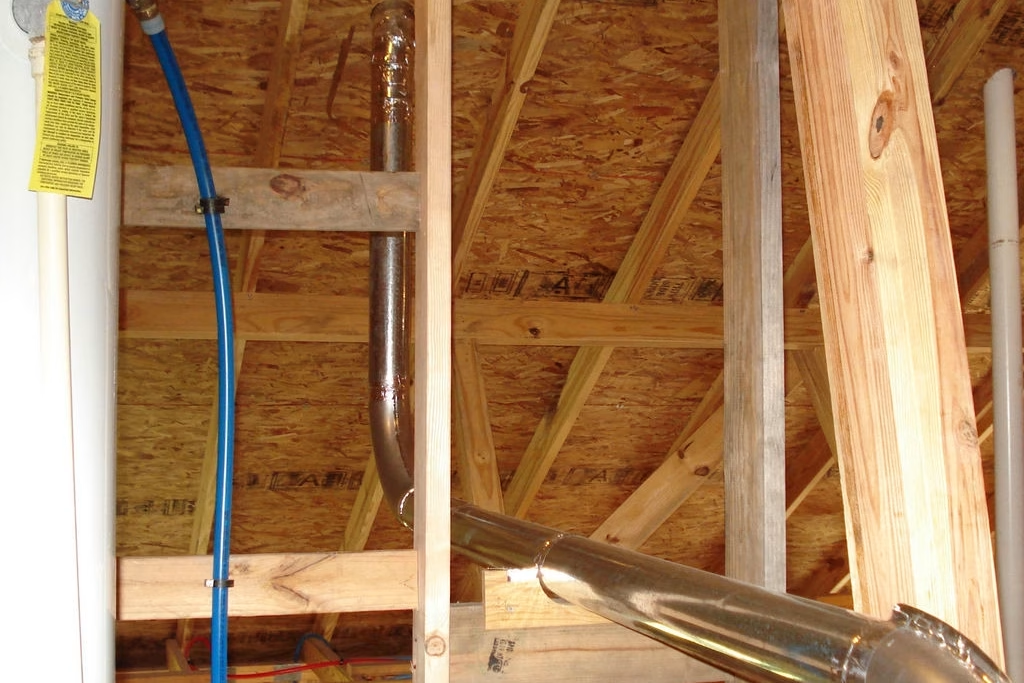
Run Too Long: Exceeds Code-Allowed Equivalent Length
The most common reroute scenario: the vent path from dryer to exterior exceeds the limit NFPA 91 and Florida Building Code allow
NFPA 91 sets a maximum equivalent length for dryer exhaust duct runs: 35 feet for a straight run, with 5 feet deducted for each 90-degree elbow and 2.5 feet deducted for each 45-degree elbow in the run. A run with two 90-degree elbows has an effective equivalent length maximum of 25 feet of actual straight duct. Many residential dryer vent installations in North Central Florida exceed these limits - particularly in homes where the laundry room was added, relocated, or renovated without duct length analysis, and in multi-story homes where the dryer is on an interior floor and the vent must travel significant horizontal and vertical distance to reach an exterior termination. A vent run that exceeds the equivalent length maximum restricts airflow, reduces dryer efficiency, and accelerates lint accumulation throughout the run. The correct solution is a reroute to a shorter, more direct path - not more cleanings on an over-length run.
• NFPA 91 maximum: 35-foot equivalent length for straight run; each 90-degree elbow deducts 5 feet
• Common exceedance scenarios: added laundry rooms, interior-floor dryers, renovation-extended paths
• Consequence: restricted airflow, accelerated lint accumulation, reduced dryer efficiency on every cycle
• Correct solution: reroute to shorter path with fewer bends, not continued cleaning of a non-compliant run
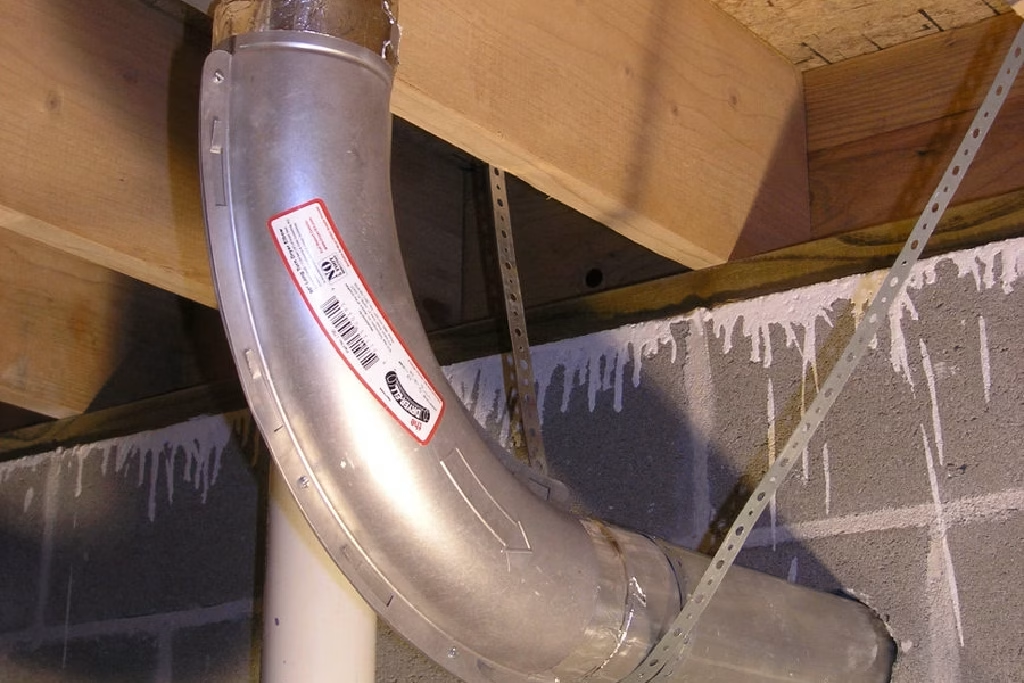
Prohibited Termination
Location
The vent terminates somewhere it is not allowed to terminate: soffit, eave, garage, crawl space, attic, or interior wall
Florida Building Code and NFPA 91 require dryer exhaust to terminate at a code-compliant exterior location with specific clearance requirements from windows, doors, HVAC intakes, and other openings. Dryer exhaust cannot terminate in a soffit or eave (where exhaust re-enters the structure through roof ventilation), a garage (occupied enclosed space), a crawl space (semi-enclosed space with direct path to structure), an attic (enclosed space with fire and moisture consequences), an interior wall cavity, or any other location that is not a clear exterior discharge with proper clearances. This is the finding that most frequently surprises homeowners: the vent "works" in the sense that the dryer exhausts, but the exhaust is going somewhere it is not permitted to go. A prohibited termination cannot be corrected with a cap replacement - the vent path itself must be rerouted to a compliant exterior discharge point.
• Prohibited termination locations: soffit, eave, garage, crawl space, attic, interior wall cavity
• Why soffit terminations are common: original installer chose shortest path to exterior without code review
• Consequence: exhaust re-enters structure through roof ventilation or collects in enclosed space
• Correct solution: reroute to code-compliant exterior discharge location with correct clearances
• Cannot be corrected with cap replacement alone - the vent path itself must change
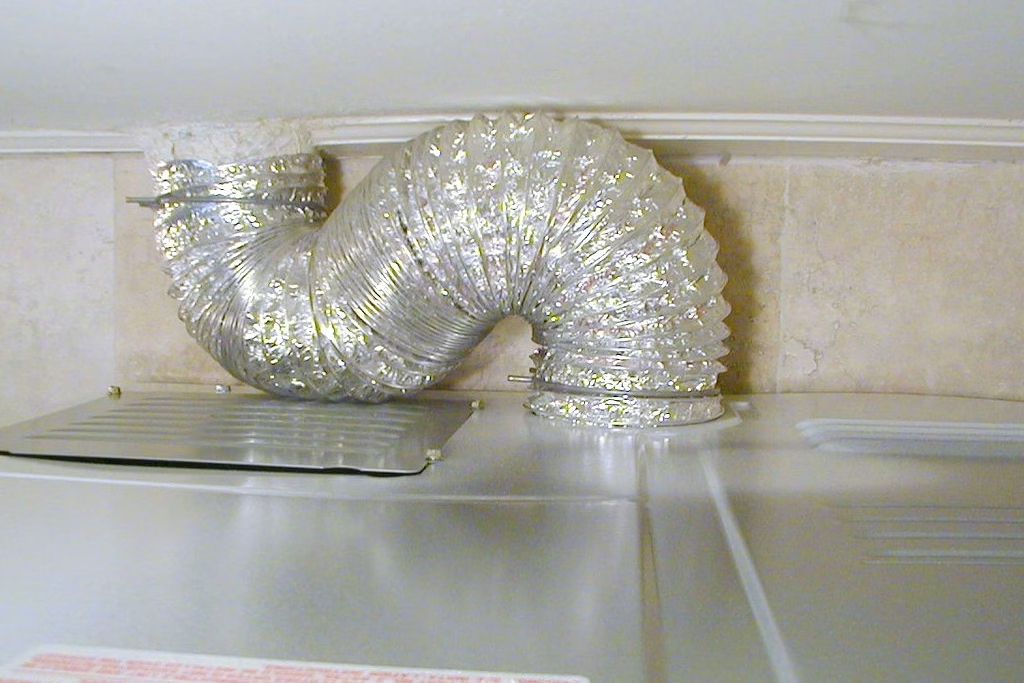
Vent Passes Through Living Space Without Correct Enclosure
The duct run passes through a habitable room, closet, or other occupied space without the enclosure Florida Building Code requires
Dryer exhaust duct that passes through a living space or occupied area must be enclosed in a rated shaft, chase, or enclosure per Florida Building Code. A duct run that crosses through a finished bedroom, a walk-in closet, a hallway, or a similar occupied space without correct enclosure is non-compliant. This configuration is found most often in homes where the dryer was moved to a new location and the installer ran the duct through the most convenient path regardless of the enclosure requirement, and in older homes where standards were different at the time of original installation. The duct itself may be rigid metal and correctly installed - but its path through the living space without enclosure is the violation. The reroute either provides the correct enclosure for the existing path or redirects the duct through a compliant path.
• Code requirement: duct through habitable or occupied space requires rated shaft, chase, or enclosure
• Common occurrence: dryer relocation where new path crosses through finished living space
• Older homes: installation standards at time of original build may not meet current Florida Building Code
• Two reroute approaches: (1) provide correct enclosure for existing path, (2) redirect duct through compliant path
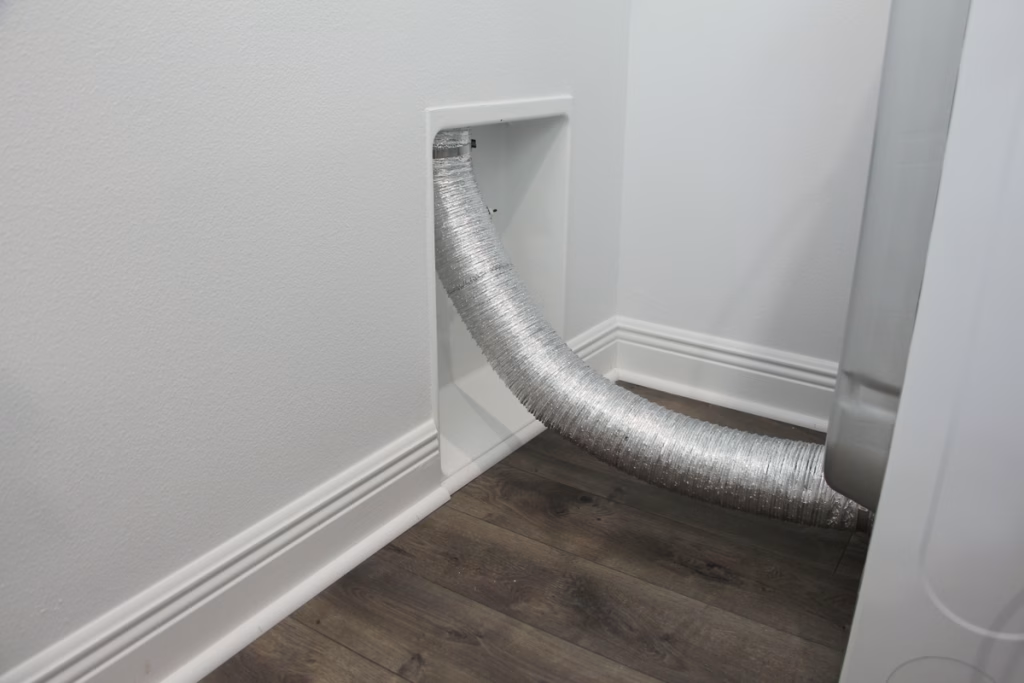
Relocated Appliance: Old Vent Path No Longer Viable
The dryer moved and the existing vent run cannot serve the new location
When a dryer is relocated to a new position in the laundry room, or when the laundry room itself is moved to a different area of the home during a renovation, the existing vent path may no longer be viable for the new appliance location. The old duct penetration is now in the wrong wall. The old run may pass through the new laundry room layout in a way that creates clearance problems. Or the new dryer position extends the equivalent length of the existing run beyond the code maximum. A reroute establishes a new vent path appropriate for the new appliance location: new penetration at the correct wall or roof location, correct run length and elbow count, old penetration sealed. This is the reroute scenario most commonly associated with renovation projects and with laundry room redesigns.
• Old penetration wrong: existing exit wall is no longer adjacent to new dryer location
• Path conflicts with renovation: existing run crosses new layout in non-compliant or impractical path
• Equivalent length exceeded by new position: new location extends run beyond NFPA 91 35-foot limit
• Old penetration sealed: as part of reroute, original penetration closed and sealed at both wall and exterior
• Most common reroute scenario in renovation and laundry room redesign projects
Renovation Blocked or Severed the Existing Path
Construction work closed a wall, removed a ceiling, or changed the structure in a way that eliminated the existing vent path
Renovation projects that close walls, add rooms, change ceiling configurations, or modify the structure between the dryer location and the exterior termination can sever or block the existing vent path. The duct may have been physically cut during demo, buried behind new drywall, rerouted through a space that no longer has the clearances the original path used, or simply disconnected and not reconnected after construction. In these cases the vent path must be re-established from the dryer location to a new compliant exterior termination using the current structural configuration of the home. Always Fire & Gas assesses the post-renovation structure, identifies the most direct compliant path to an exterior termination, and performs the reroute under FL Residential Contractor #CRC133200 with permit.
• Demo-severed duct: existing duct cut or disconnected during construction, not reconnected
• Buried duct: new drywall closed over existing duct path without reconnecting at new surface
• Structural change: new rooms or additions changed the clearances the original path relied on
• Post-renovation assessment: AFG assesses current structure to identify most direct compliant path
Five Steps. Every Dryer Vent Reroute.
Every dryer vent reroute by Always Fire & Gas follows the same documented five-step process. Permit pulled before the first cut. Work inspected to code. Permit closed on completion.

Full Vent Path Assessment Before Any Work Begins
The existing vent path is mapped completely and the correct reroute path is confirmed before the project scope is priced
The assessment traces the existing vent run from the dryer exhaust outlet through every section of duct to the exterior termination (or the point where the run terminates incorrectly). The existing run length, elbow count, duct material, termination location, and any enclosure conditions are documented. The assessment confirms which reroute scenario applies and identifies the most direct compliant path from the dryer location to a code-compliant exterior termination. The reroute scope is presented in writing before any structural work begins: what will be modified, what new penetration is required, what permit will be pulled, and what the correct termination location will be. No work begins until the scope is confirmed.
• Existing run: length, elbow count, duct material, termination location documented
• Reroute scenario confirmed: equivalent length exceedance, prohibited termination, enclosure violation, relocation, or renovation block
• Correct new path identified: most direct compliant route to exterior termination confirmed
• Written scope before work: what changes, what permit, what new termination location - confirmed before first cut

Permit Pulled Under FL Residential Contractor #CRC1332000
The permit is pulled and the inspection is scheduled before any structural work begins
Every dryer vent reroute that requires a new penetration or modification of an existing penetration in a roof or exterior wall requires a permit in Florida under the scope of FL Residential Contractor #CRC133200. Always Fire & Gas pulls the permit under that license before the first cut. The permit documents the licensed contractor, the scope of work, the address, and the inspection requirement. The inspection is scheduled as part of the project, not as an afterthought. When the permit is closed, there is a public record in the county permit office that a licensed contractor performed the reroute and that the work was inspected and approved.
• Permit pulled before first cut: no structural work begins before permit is issued
• FL Residential Contractor #CRC133200: the license under which the permit is pulled
• Inspection scheduled as part of project: not optional, not an add-on
• Permit closes at project completion: public record in county system confirming licensed, inspected work

Old Vent Path Modified or Removed, Old Penetrations Sealed
The non-compliant duct sections are removed and the old termination points are sealed correctly
Depending on the reroute scenario, the old duct run may be partially or completely removed. Duct sections that served the old, non-compliant path are taken out where they conflict with the new path or where they pass through spaces that no longer have a vent run. Old roof or wall penetrations that are no longer used are sealed at both the interior and exterior surfaces: interior closure prevents air movement through the old sleeve, exterior closure prevents water intrusion and pest entry. The sealing materials are matched to the roof or wall material at each old penetration location.
• Partial removal: duct sections that served non-compliant path removed where they conflict with new path
• Complete removal: full run removed and replaced when new path is substantially different from old path
• Old penetrations: sealed at interior and exterior surfaces - air, water, and pest intrusion prevented
• Sealing material: matched to roof or wall material at each old penetration location

New Duct Run Installed: Rigid Metal, Correct Equivalent Length
The new vent path is built with rigid metal duct sized for the equivalent length and elbow count of the new route
The new duct run is built with rigid metal duct throughout the concealed sections of the new path. DryerFlex by InOvate is used at the dryer transition connection. The run is designed so that the equivalent length of the new path - accounting for all straight sections and elbow deductions - is at or under the NFPA 91 35-foot maximum. Elbow count and placement are minimized: the new path takes the most direct route from the dryer location to the new exterior termination with the fewest direction changes the structure allows. The new termination cap is a code-compliant dryer-exhaust-rated louvered or spring-loaded flapper cap. The new penetration is sealed at both the interior and exterior surfaces on installation.
• Rigid metal duct throughout concealed sections: required by Florida Building Code and NFPA 91
• DryerFlex at transition: UL-listed semi-rigid aluminum at the dryer-to-duct connection
• Equivalent length verified: new path at or under 35-foot NFPA 91 maximum
• Elbow count minimized: most direct route, fewest direction changes the structure allows
• New termination cap: dryer-exhaust-rated louvered or flapper cap at new exterior location
• New penetration sealed: interior and exterior surfaces sealed at installation
Before/After Photo Report Under CSIA DET #1149 and Permit Close
Full documentation of the old non-compliant path, the new compliant path, and the permit record
The before photos document the existing non-compliant vent configuration: the old run, the prohibited termination location or equivalent length exceedance, any enclosure violations, or the blocked/severed path. The after photos document the new duct run, the new exterior termination, the sealed old penetrations, and the airflow confirmation. The permit record is noted: permit number, inspection date, and permit close status. The report is produced under CSIA Dryer Exhaust Technician certification #1149 and records the duct materials used, the equivalent length of the new run, and the new termination location. It is suitable for insurance documentation, real estate disclosure, and future service reference.
• Before: existing non-compliant configuration documented - reroute scenario, old path, old termination
• After: new duct run, new termination, sealed old penetrations, airflow confirmation
• Permit documentation: permit number, inspection date, permit close status
• Produced under CSIA DET #1149: equivalent length, duct materials, new termination location recorded
• Suitable for insurance, real estate disclosure, and future service reference
FL Residential Contractor #CRC1332000 Is Required for Dryer Vent Reroutes
Every dryer vent reroute requires creating, relocating, or modifying a penetration in the roof or an exterior wall. Under Florida law (Florida Statute 489.105), that work requires a licensed residential contractor. FL Residential Contractor #CRC133200 authorizes that scope.
A dryer vent service company without FL Residential Contractor #CRC133200 cannot legally perform a dryer vent reroute in Florida, regardless of how the scope is described or priced.
When comparing quotes: ask every contractor for their Florida Residential Contractor license number. If they cannot provide one, they cannot legally reroute your dryer vent.
Why Every Dryer Vent Reroute in Florida Requires FL Residential Contractor #CRC133200
Florida Statute 489.105 defines the scope of a licensed residential contractor as including the construction, remodeling, repair, and improvement of residential structures, including work that creates new openings in exterior walls and roof structures. Every dryer vent reroute – by definition – involves at least one of the following: creating a new penetration in an exterior wall or roof at the new termination location, modifying an existing penetration to accommodate the new run path, or closing a former penetration that is no longer used. All three are explicitly within the scope of licensed residential contractor work under Florida law. None are within the scope of a dryer vent service company, a handyman, or any contractor who does not hold FL Residential Contractor #CRC133200.
Companies and Contractors Who Cannot Legally Perform a Dryer Vent Reroute in Florida
A dryer vent cleaning company that does not hold FL Residential Contractor #CRC133200 cannot legally perform a dryer vent reroute in Florida. Cleaning, cap replacement, and transition duct replacement are within the scope of a vent cleaning company with appropriate certifications. Rerouting – which requires a new penetration or modification of an existing penetration – is not. A cleaning company that quotes a dryer vent reroute without a residential contractor license is quoting work outside its legal authority in Florida, regardless of how the scope is described.
A handyman operating under Florida’s handyman registration cannot legally perform new penetration work. Florida law explicitly limits handyman registration scope to minor, non-structural repairs. Creating a new opening in an exterior wall or roof is not within that scope. A handyman who performs a dryer vent reroute is performing work for which they are not licensed in Florida.
A reroute performed without a licensed contractor and without a permit is not legally completed work in Florida. The homeowner’s insurance carrier has grounds to deny a dryer-related claim if the vent path was modified by an unlicensed contractor without a permit – because the modification is not documented as compliant work and the homeowner used an unlicensed contractor for work that required licensure. The savings from an unlicensed quote are a transfer of financial and legal risk from the contractor to the homeowner.
What a Permit Record Does for a Homeowner After a Reroute
A permitted reroute creates a public record: the permit number, the licensed contractor, the address, the scope of work, the inspection date, and the permit close status are all in the county permit office system. That record is searchable, verifiable, and does not expire. A home buyer’s inspector can verify the vent was rerouted by a licensed contractor and passed inspection. An insurance adjuster can verify the vent path was modified with a permit and meets code. A future technician servicing the vent has a documented record of the reroute scope and the new termination location.
An unpermitted reroute has none of that. The work happened. The vent may function correctly. But there is no public record that a licensed contractor performed it, and no inspection record confirming code compliance. When the home is sold, the absence of a permit for vent modification work is a disclosure item in Florida real estate transactions. When a claim is filed, the absence of a permit is grounds for the insurance carrier to investigate whether the work was performed to code.
Five Reasons to Call for a Dryer Vent Reroute. One Licensed Process.
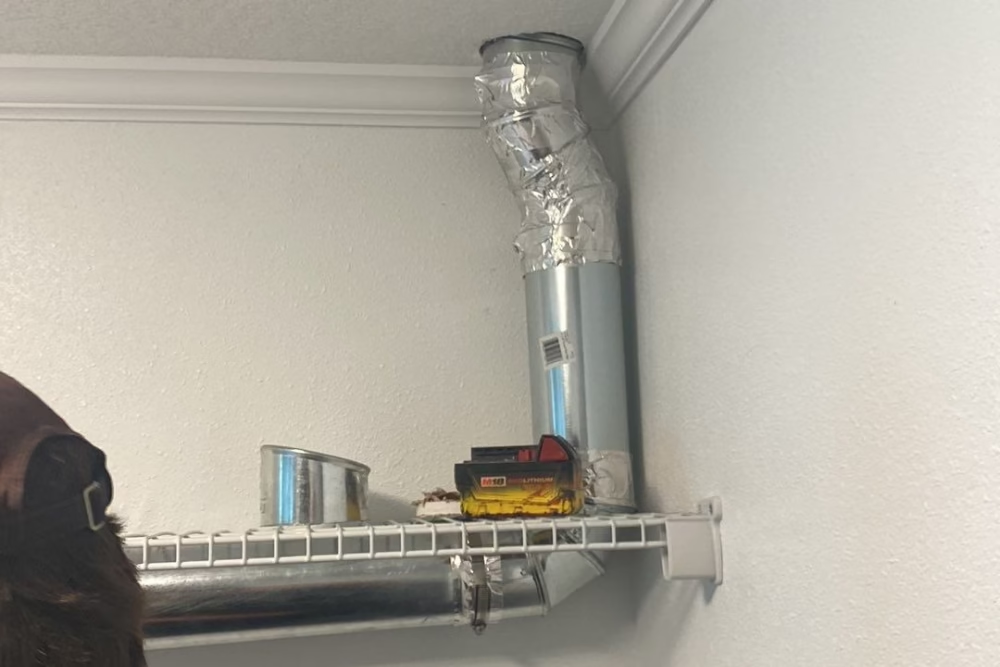
The most common path to a reroute call: the vent was cleaned, the duct is confirmed clear, and the technician noted that the run is over equivalent length, the termination location is prohibited, or the path passes through a living space without correct enclosure. The cleaning resolves the lint inside the duct. The reroute resolves the configuration problem that made the duct a code violation regardless of its cleanliness. Always Fire & Gas can perform the assessment immediately after the cleaning finding and sequence the reroute permit and installation around the homeowner’s timeline.
Call or text (352) 282-0158. Provide the cleaning finding as described by the technician. AFG will confirm the reroute scenario and assess the scope.
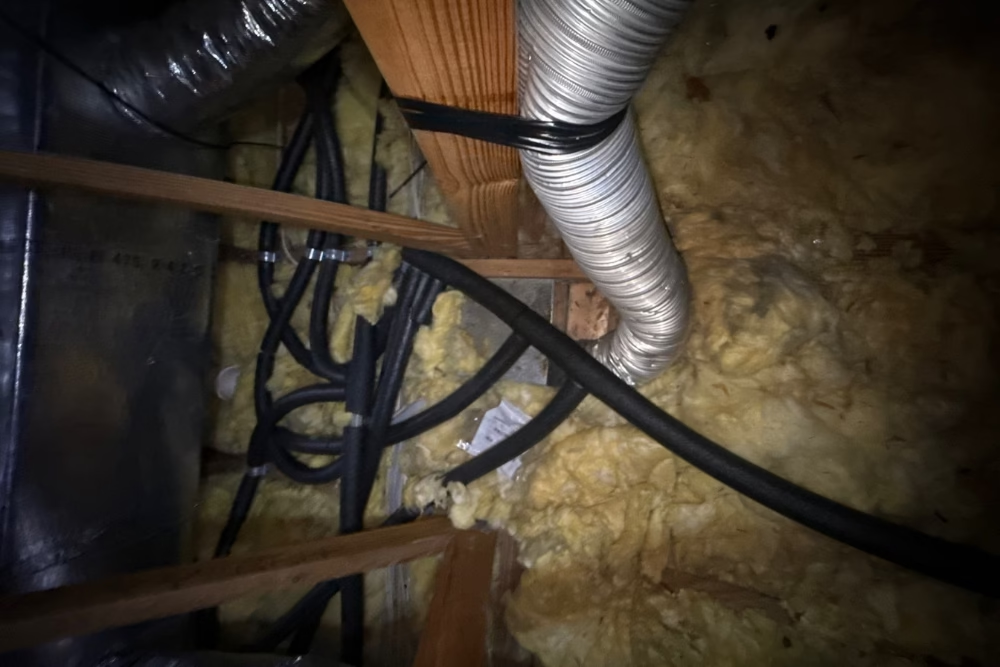
The inspection report included a dryer vent finding that requires a reroute: vent terminates in the soffit, run is over code length, or path passes through a prohibited space. The finding needs a documented response before closing. Always Fire & Gas performs reroutes under FL Residential Contractor #CRC133200 with permit, produces a before/after photo report under CSIA DET #1149, and delivers documentation suitable for the buyer’s agent, the listing agent, the lender, or the title company. Reroutes with clear scope can often be completed within the typical residential closing timeline.
Call or text (352) 282-0158. Provide the property address, the inspection finding as stated in the report, and the closing date. AFG will confirm the reroute scope and the documentation format.
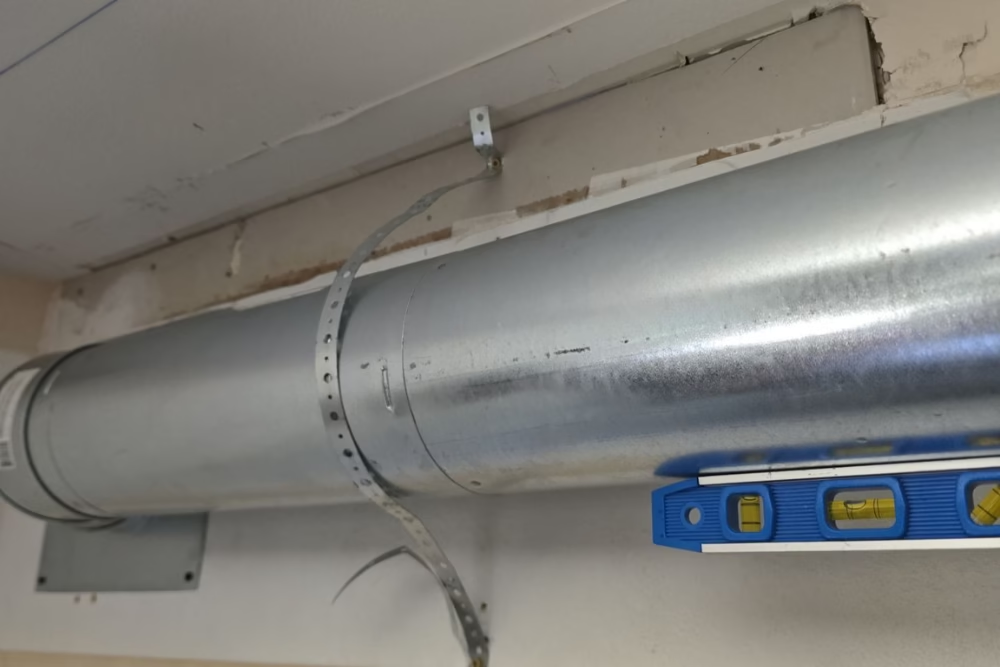
The laundry room is being renovated. The dryer is moving to a new location. The wall behind the current vent is open. This is the correct time for a reroute assessment: the structure is accessible, the current vent path can be evaluated before it is closed behind new drywall, and the new vent path can be integrated into the renovation rather than added after the fact. Always Fire & Gas coordinates with renovation projects and GC timelines for reroute assessment and installation. The reroute permit is pulled under FL Residential Contractor #CRC133200, integrated with the renovation permit timeline where applicable.
Call or text (352) 282-0158. Provide the renovation timeline, the new dryer location if known, and the current vent path if accessible. AFG will assess the reroute scope and coordinate with the project timeline.
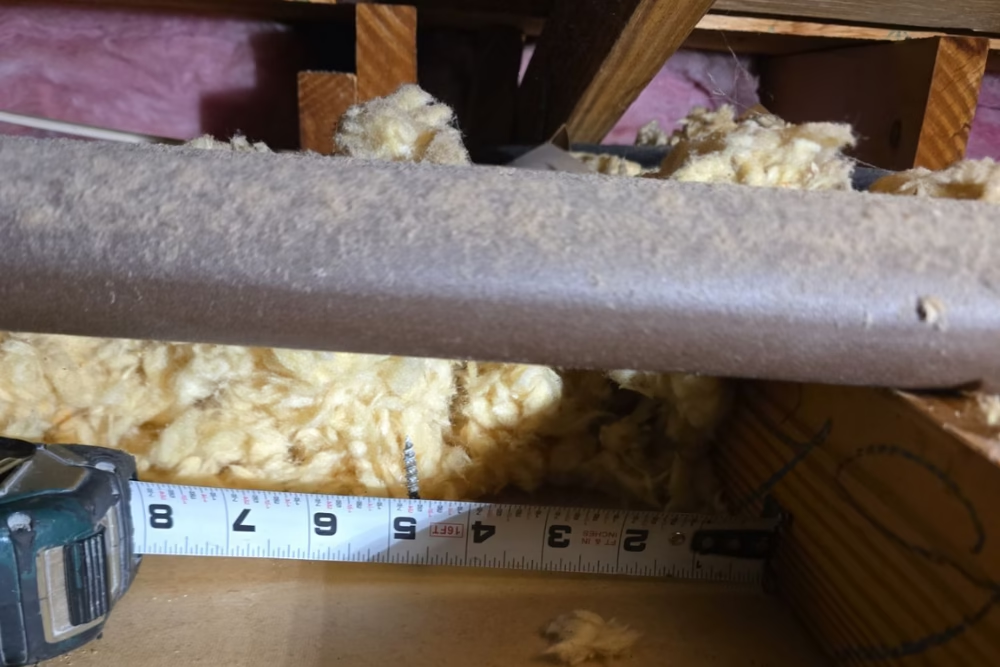
The dryer vent has been cleaned multiple times. Each time, performance improves for a few months and then returns to the two-cycle pattern. Nobody has confirmed whether the run is within code equivalent length. An over-length run accumulates lint faster than a correctly sized run because airflow is restricted across the entire length of the over-limit run, not just at a single blockage point. Every cleaning removes the accumulated lint, but the next cycle begins accumulation again at the same accelerated rate because the underlying cause – the run exceeding the NFPA 91 equivalent length – has not been addressed. A reroute that brings the run within code-allowed equivalent length changes the accumulation rate on every cycle going forward.
Call or text (352) 282-0158. Describe the cleaning history and the current dryer performance pattern. AFG will assess the full vent run for equivalent length and identify whether a reroute is the correct solution.
You manage a rental property or a portfolio of rental properties in North Central Florida. A dryer vent reroute finding from an inspection or a code compliance review needs to be resolved and documented. Always Fire & Gas performs reroutes for rental properties on the same permitted, licensed process as owner-occupied homes: FL Residential Contractor #CRC133200, permit pulled before work begins, inspection closed, before/after photo report under CSIA DET #1149. The permit record and service documentation are suitable for insurance records, property management files, and code compliance response documentation.
Call or text (352) 282-0158. Provide the property address, the inspection finding or compliance requirement, and the documentation format needed. AFG will confirm the reroute scope.
What Continues When a Non-Compliant Vent Path Is Not Rerouted
A vent run that exceeds NFPA 91’s equivalent length maximum is a code violation on every day it is in service. Cleaning it extends the service interval somewhat but does not address the airflow restriction that the over-length run creates throughout its entire length. Lint that a correctly sized run would exhaust efficiently is slowed, deposited earlier in the run, and accumulated at a higher rate per cycle on a non-compliant run. The cleaning interval that a homeowner with a compliant run can hold annually may compress to every six months on an over-length run – and even at that interval, the run may not be fully serviceable from a single cleaning direction.
A vent that terminates in a soffit is discharging lint, moisture, and combustion products (for gas dryers) into the space between the soffit and the roof deck on every dryer cycle. That discharge accumulates in the roof ventilation system, increases the moisture load on the attic structure, and creates a fire fuel load in an enclosed, hard-to-inspect space directly adjacent to the combustion source. The homeowner who does not know the vent terminates in the soffit is not experiencing no problem – they are experiencing a slow, invisible problem.
A reroute performed without a licensed contractor and without a permit leaves the homeowner holding the liability for an unpermitted structural modification. When a claim is filed, that is the first thing an adjuster checks.
What the Dryer Vent System Looks Like After a Correctly Permitted Reroute
The vent run is within NFPA 91’s equivalent length maximum. The dryer exhausts at a code-compliant exterior location with correct clearances from windows, doors, and HVAC intakes. The duct inside the walls is rigid metal throughout the concealed sections. There is a permit record in the county system confirming a licensed contractor performed the work and that it was inspected and approved.
The cleaning interval normalizes. A compliant run accumulates lint at the rate the system was designed for. Annual cleaning is the maintenance the correct vent supports. The technician who cleans the vent in three years has a before/after photo report from the reroute to reference. They know what was changed, what the new run looks like, and what the new termination location is.
If the home is sold, the permit record and the service documentation are available for the buyer’s inspector and the buyer’s lender. The reroute is disclosed, documented, and verified. It is not a question mark.
Two Reroutes. Two Homeowners Who Now Have a Compliant, Permitted Vent.

A homeowner in Ocala scheduled a dryer vent cleaning after noticing the dryer had been running significantly longer per load over the past year. The cleaning technician cleared the duct run and noted that the vent terminated in the soffit above the side entry – not at an exterior wall face as required by Florida Building Code. The homeowner had not known the termination was in the soffit; the cap was visible from the yard and appeared to be a normal exterior vent. AFG assessed the full run: 28 equivalent feet of duct, two 90-degree elbows, terminating at a soffit cap recessed under the eave. The correct reroute extended the run four additional feet in a new direction to an exterior wall face with clear clearances from the HVAC intake and the nearest window. AFG pulled a permit under FL Residential Contractor #CRC133200, installed the new run section and wall termination cap, sealed the old soffit penetration at both the interior and exterior, and scheduled the inspection. The permit was closed. The before/after report documented the soffit cap, the new wall cap, the sealed soffit penetration, and the airflow confirmation. Soffit termination finding?
Call (352) 282-0158.

A homeowner in Gainesville was renovating the laundry room in a two-story home. The dryer was located on the second floor; the existing vent run traveled horizontally across the second floor ceiling and then down through the exterior wall on the far side of the house to an exterior cap – a total equivalent length of 52 feet with four 90-degree elbows, well over the NFPA 91 35-foot maximum. The run had been cleaned annually but the cleaning technician had flagged the length repeatedly. With the wall open during the renovation, the homeowner called AFG to assess the reroute options. AFG identified a new path: down through the second floor structure directly behind the dryer location and out through the exterior wall below, with an equivalent length of 18 feet and two 90-degree elbows. The renovation contractor coordinated the wall opening. AFG pulled the permit under FL Residential Contractor #CRC1332000, installed the new rigid metal run and wall cap, sealed the old second-floor horizontal run and the old exterior penetration, and closed the permit. The before/after report documented both the old 52-foot run and the new 18-foot compliant path. The renovation was completed with the correct vent path integrated. Renovation in progress? Assess the reroute before the wall closes.
Call (352) 282-0158.
Dryer Vent Reroutes Across North Central Florida
Always Fire & Gas performs dryer vent reroutes for residential and rental properties across Marion, Alachua, Lake, Sumter, Citrus, Putnam, Hernando, Orange, and Volusia Counties and all surrounding areas. FL Residential Contractor #CRC133200. CSIA Dryer Exhaust Technician #1149. Permit pulled before first cut. Before/after photo report on every reroute. Available as a standalone reroute or coordinated with dryer vent cleaning and other dryer vent services in a single project.
Call or text (352) 282-0158. Describe the reroute scenario – what was found, what finding prompted the call, and the current vent path configuration if known. AFG will confirm the reroute scenario and schedule the assessment.
Dryer Vent Reroute Questions, Answered Directly
Under NFPA 91 and Florida Building Code, a dryer exhaust duct run has a maximum equivalent length of 35 feet. Equivalent length is not the same as physical length: each 90-degree elbow in the run deducts 5 feet from the maximum, and each 45-degree elbow deducts 2.5 feet. A run with two 90-degree elbows has an effective maximum of 25 feet of actual straight duct. A run with four 90-degree elbows – common in multi-story homes where the dryer is on an interior floor – has an effective maximum of 15 feet of actual straight duct. Some dryer manufacturers specify shorter maximum equivalent lengths than NFPA 91’s 35-foot standard; the manufacturer’s specification governs if it is more restrictive. Always Fire & Gas calculates the equivalent length of the existing run at assessment and designs the reroute path to stay at or under the applicable maximum.
An over-length dryer vent run restricts airflow across its entire length – not just at bends and not just at the far end. Restricted airflow means the dryer must run longer to dry a load, lint that would exhaust completely on a compliant run is deposited in the duct at an accelerated rate, and the cleaning interval compresses. Over time, lint accumulation in an over-length run reaches a density that cleaning from a single direction cannot fully resolve: the section of run nearest the exterior termination may remain partially blocked even after cleaning from the dryer end. Beyond maintenance costs, an over-length run is a code violation under Florida Building Code and NFPA 91 – the run is not compliant regardless of how clean the duct is. A reroute to a shorter, more direct path is the only solution that addresses both the maintenance problem and the code violation.
No. A dryer vent cannot terminate in a soffit, eave, or any location where the exhaust re-enters the structure through roof ventilation. Florida Building Code and NFPA 91 both prohibit dryer exhaust termination in enclosed or semi-enclosed spaces, including soffits. When a dryer vent terminates in a soffit, the exhaust – including lint, moisture, and combustion byproducts for gas dryers – is discharged into the space between the soffit and the roof deck and enters the attic structure through the roof ventilation pathway. Lint accumulates in the roof ventilation, moisture increases the attic moisture load, and a fire fuel source is deposited in a location that is difficult to inspect and adjacent to the heat source. A soffit termination must be rerouted to a code-compliant exterior wall or roof location with correct clearances from windows, doors, and HVAC intakes.
Under Florida Building Code and NFPA 91, dryer exhaust cannot terminate in any of the following locations: a soffit or eave (exhaust re-enters structure through roof ventilation); a garage (enclosed occupied space); a crawl space (semi-enclosed space with direct path to structure); an attic (enclosed space – moisture, lint, and fire hazard); an interior wall cavity (not an exterior discharge); any location where the exhaust is directed back toward an air intake, window, or door opening that allows re-entry into the building; or any location with insufficient clearance from adjacent openings or intakes as specified by Florida Building Code. A compliant dryer vent termination must discharge at an exterior wall face or roof surface with correct clearances from all adjacent openings and intakes, via a dryer-exhaust-rated cap that is open to the outside.
A dryer vent reroute typically takes one to three days from permit issuance to permit close, depending on the scope of the reroute and the inspection scheduling in the local jurisdiction. The physical installation work – removing the old non-compliant duct sections, installing the new run, creating the new penetration, sealing the old penetration, and confirming airflow – typically takes two to four hours on-site for a straightforward single-floor reroute. Multi-floor reroutes with more complex routing through the structure take longer. The permit and inspection timeline adds one to five business days depending on the jurisdiction. Always Fire & Gas confirms the expected total timeline at assessment based on the specific reroute scope and the local permit office processing time.
Yes. Every dryer vent reroute that creates a new penetration in an exterior wall or roof, or that modifies an existing penetration, requires a permit in Florida. The permit must be pulled by a contractor holding FL Residential Contractor #CRC133200 – the license that authorizes new penetration work in residential structures under Florida Statute 489.105. A dryer vent service company without that license cannot legally perform the reroute or pull the permit. Always Fire & Gas holds FL Residential Contractor #CRC133200 and pulls the permit before any structural work begins on every reroute. The permit is closed after inspection, creating a public record that a licensed contractor performed the reroute and that the work was inspected to code.
Yes, and it is often the correct approach. When the cleaning finding is the trigger for the reroute – the technician confirmed the run is over-length, the termination is prohibited, or the path is non-compliant – the most efficient sequence is: complete the cleaning first (so the new duct run connects to a clean system), then proceed with the reroute assessment, permit, and installation. Cleaning and rerouting in a single project produces one before/after report covering both the pre-cleaning duct condition and the post-reroute vent configuration. For cleaning findings that require reroutes, Always Fire & Gas can assess the reroute scope at the same visit as the cleaning and schedule the permit and reroute installation on the next available date. Call or text (352) 282-0158 and describe both the cleaning need and the finding that prompted the reroute question.