
DryerFlex by InOvate. CSIA Certified Dryer Exhaust Technician #1149. Recessed In-Wall Dryer Vent Connection. North Central Florida Since 1982.
Dryer Wall Box Installation in Ocala, Gainesville, Orlando, The Villages, and All Surrounding Areas.
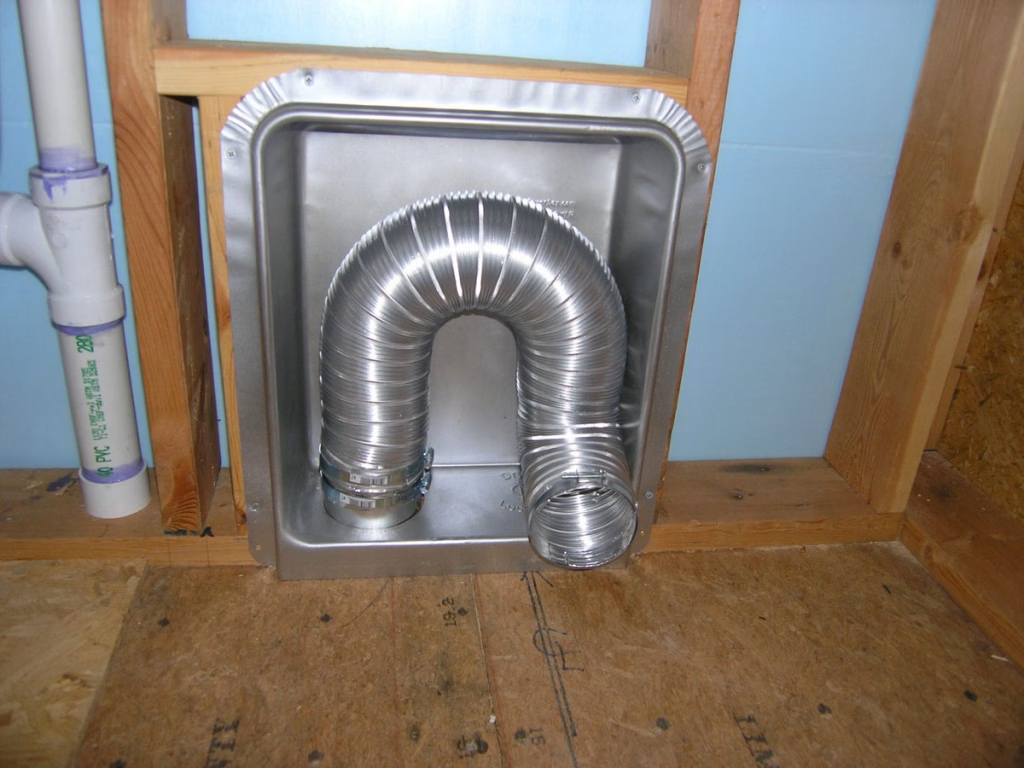
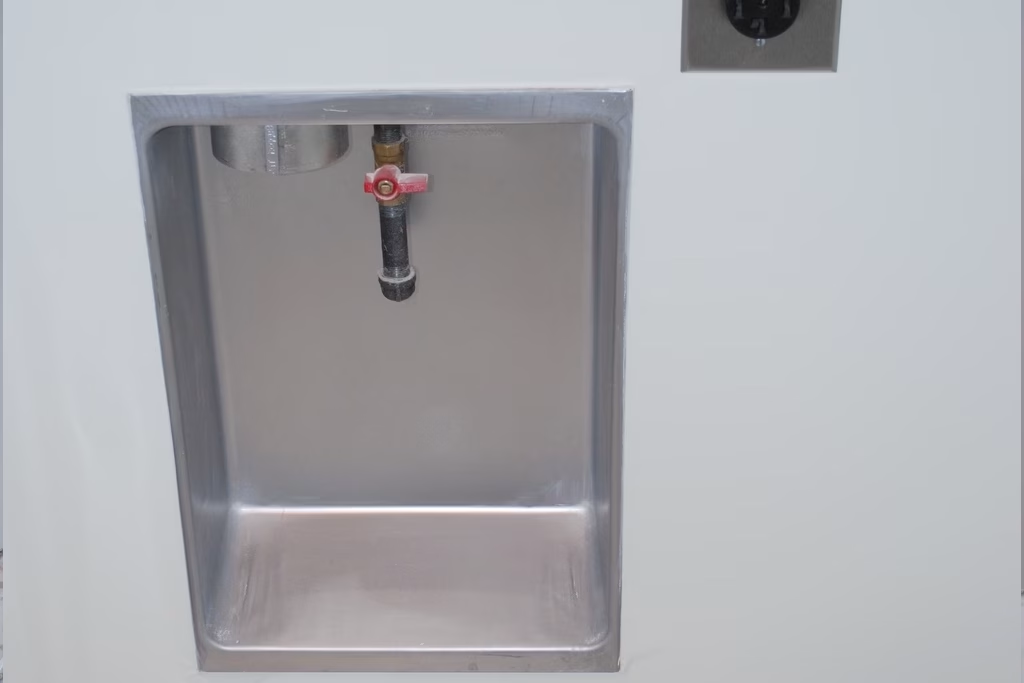
Dryer Wall Box (Recessed Dryer Vent Periscope Box)
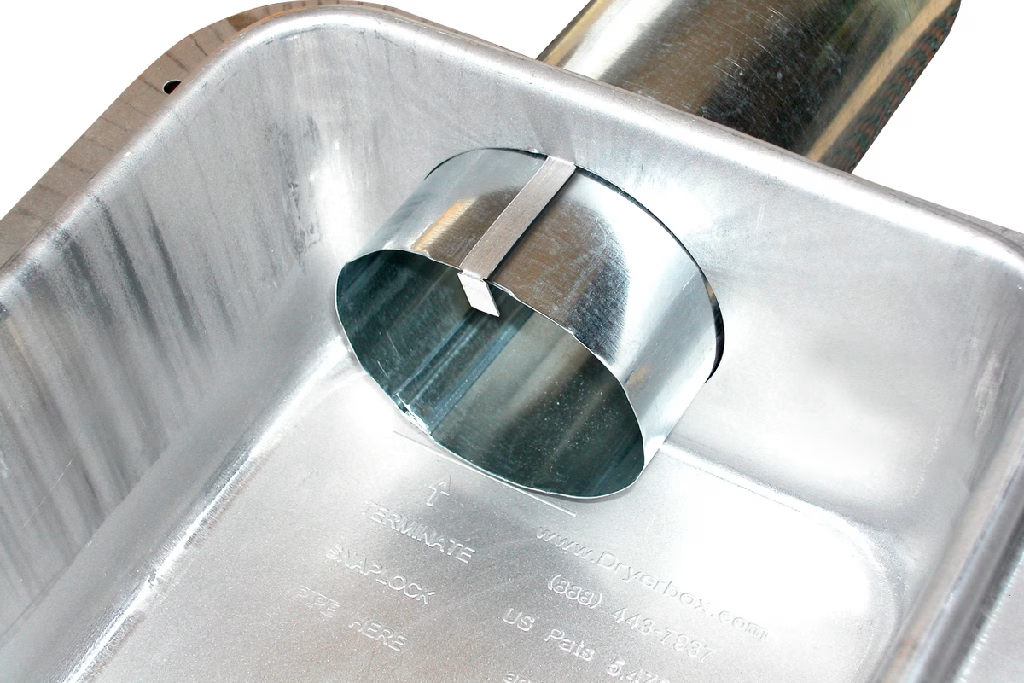
Recessed metal box installed in the wall cavity behind the dryer. Connects the dryer exhaust outlet directly to the in wall duct – no flexible transition duct running behind the appliance. Eliminates the gap that foil duct requires between the dryer and the wall. Allows the dryer to sit flush against the wall, freeing 4-6 inches of floor space. Compatible with standard 4-inch round dryer exhaust outlets.
Dryer Vent Upgrade
Foil Duct Behind the Dryer That Crushes Every Time You Push It Against the Wall. Dryer Pulled Six Inches Out Because the Duct Has Nowhere to Go. Cleaning Technician Told You the Transition Duct Needs to Be Addressed. There Is a Permanent Fix.
The foil accordion duct that connects most dryers to the wall is the weakest point in the dryer vent system. It crushes when the dryer is pushed against the wall. It accumulates lint at every corrugation. It is not designed for permanent installation in the position it ends up in on most dryer installations – between an appliance and a wall, repeatedly compressed and extended every time the dryer is moved. The dryer wall box eliminates it.
A dryer wall box is a recessed metal enclosure installed in the wall cavity behind the dryer. The dryer’s exhaust outlet connects directly into the box, which connects to the rigid duct run inside the wall. The flexible transition duct is replaced with DryerFlex by InOvate – a UL-listed semi-rigid aluminum duct that does not crush and does not accumulate lint at corrugations. The dryer sits against the wall.
Step 1: Call or Text (352) 282-0158
Step 2: We Install the Wall Box and DryerFlex
Describe the laundry room setup: dryer type (gas or electric), current duct type (foil, plastic, or already semi-rigid), and whether there is a cleaning due. We confirm the scope and schedule.
Existing transition duct removed. Wall box recessed into cavity at correct depth and position. DryerFlex connected from dryer exhaust to box outlet. Airflow confirmed through to exterior termination. About 60 to 90 minutes on-site.
Step 3: Dryer Against the Wall. System Documented.
Before/after photo report under CSIA DET #1149. Dryer pushed flush against the wall. No foil duct. No crush point. Clean duct run from dryer exhaust to exterior.
- CSIA Certified Dryer Exhaust Technician #1149
- FL Residential Contractor #CRC1332000
- Certified Category V Gas License #LI45277
- BBB A+ Since 2018
- Family-Owned Since 1982
DryerFlex by InOvate. CSIA Certified Dryer Exhaust Technician #1149. Recessed in-wall connection. Before/after photo report. Ocala, Gainesville, The Villages, and all of North Central Florida.
Want to understand exactly what the wall box fixes and why the foil duct is the problem? Section 2 explains both.
Four Reasons to Install a Dryer Wall Box. One Certified Installation Process.
Laundry Room Renovation: Do It Right While the Wall Is Open
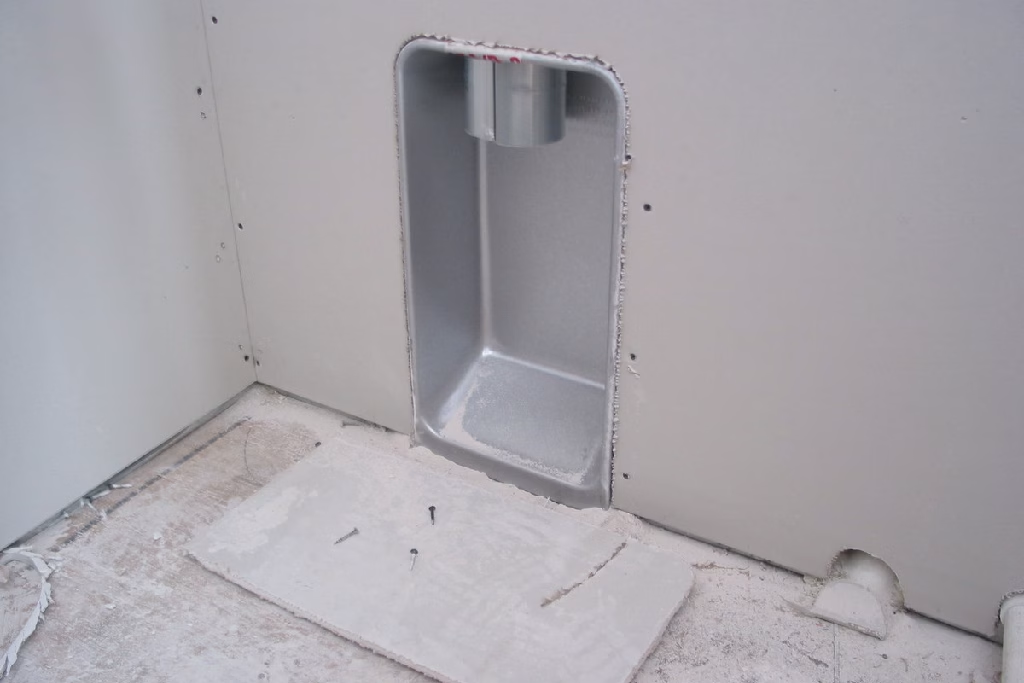
You are renovating the laundry area. The wall behind the dryer is open or will be. The duct run is being reconfigured or the dryer location is changing. This is the correct moment for a wall box installation – the wall cavity is accessible, the duct connection is already being modified, and the cost of adding the wall box now is a fraction of what it would be to open the wall again after the renovation is closed. Always Fire & Gas coordinates with renovations and GC projects for dryer wall box installation as a standalone scope within a larger project: box installed, DryerFlex connected, drywall patch completed at the same visit.
Call or text (352) 282-0158. Provide the project timeline and the dryer location in the renovation plan. AFG will confirm the wall box scope and coordinate scheduling with your renovation.
Cleaning Recommendation: The Technician Said the Transition Duct Needs to Be Addressed
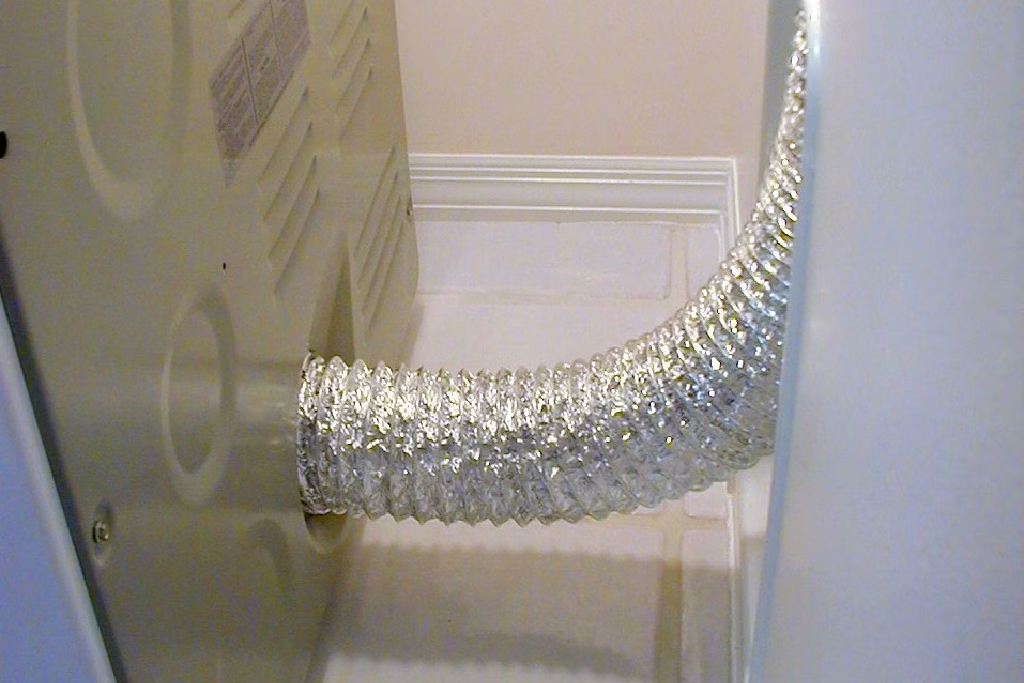
The dryer vent was cleaned. The technician confirmed the duct run is clean but noted that the foil accordion duct at the transition is crushed, deteriorated, or wrong for the position. The recommendation was to replace the transition duct with DryerFlex or install a dryer wall box. Both address the same problem – the foil duct at the transition. The wall box goes further: it eliminates the transition duct space entirely and allows the dryer to sit against the wall. If the transition duct is the only concern from the cleaning report and the dryer location is not changing, DryerFlex replacement alone may be the right scope. If the laundry room is cramped and the dryer-to-wall gap is already a frustration, the wall box is the permanent solution.
Call or text (352) 282-0158. Describe the cleaning finding and the laundry room setup. AFG will confirm whether the correct scope is DryerFlex replacement, wall box installation, or a combined cleaning/installation service.
New Dryer Installation: Upgrade the Transition at the Same Time
A new dryer is being installed. The old foil duct behind the old dryer is the default replacement – the new appliance connects with the same foil duct that was already there, or a new foil duct is included with the appliance installation. Always Fire & Gas can install the dryer wall box and DryerFlex at the time of a new dryer installation, before the appliance is pushed to its final position, for the best access and lowest disruption. The wall box installation at a new dryer delivery is faster and less invasive than a standalone wall box service because the dryer is not yet in position and the transition connection has not been made.
Call or text (352) 282-0158. Provide the new dryer delivery date and the appliance model if available. AFG will confirm the wall box scope and schedule to coincide with the delivery or immediately after.
Space Optimization: The Dryer Is Pulled Out and You Want That Space Back
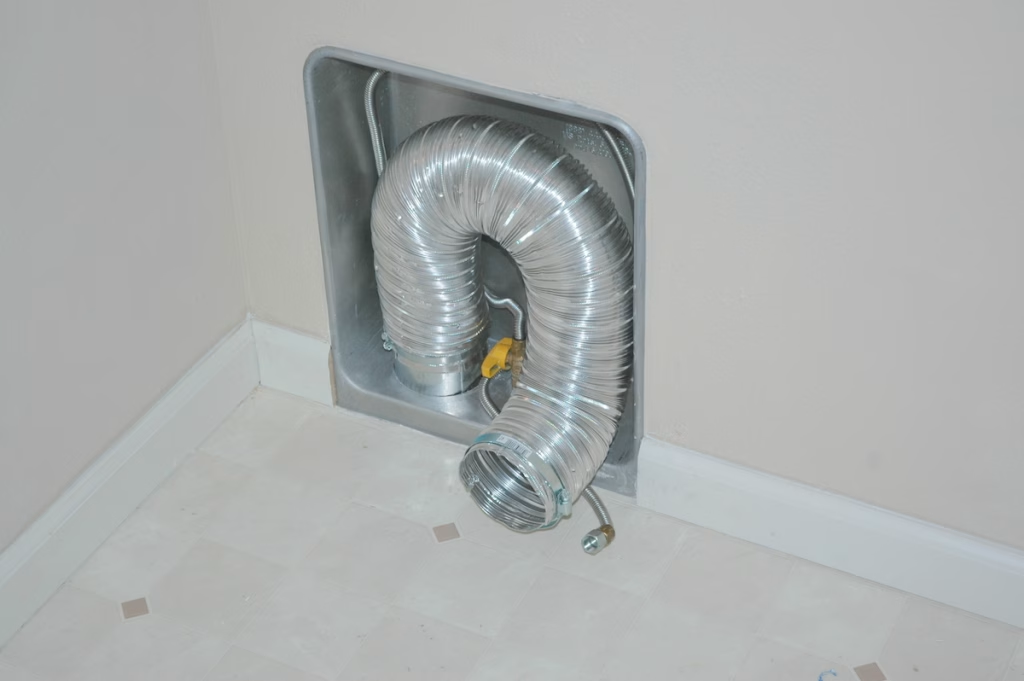
The dryer sits 4 to 6 inches away from the wall because the duct needs room. The laundry area is cramped. You have always pushed the dryer to the wall and had it pushed back out. Or you have always left the gap because you were told the dryer needs room for the duct. The wall box eliminates the duct entirely at the transition – the dryer sits against the wall with nothing between the exhaust outlet and the wall surface except the recessed box connection. The space you have been ceding to the duct for years comes back. Always Fire & Gas installs the wall box, patches the drywall, and positions the dryer against the wall before leaving.
Call or text (352) 282-0158. Describe the dryer type (gas or electric), the current dryer-to-wall gap, and the wall construction behind the dryer (standard drywall, tile, other). AFG will confirm the scope and schedule.
Your Dryer Is Sending Signals. Here Is What They Mean.
A dryer vent does not fail suddenly. It fills gradually. Lint passes through the filter on every cycle and accumulates inside the vent line between the dryer and the exterior wall. The accumulation grows slowly – it might take a year or two before the restriction is serious enough to change how the dryer performs. By the time you notice the symptoms, the problem has been building for a while.
These five symptoms are the signals that the buildup has reached the point where service is required. Any one of them is enough.
It Crushes Every Time the Dryer Is Pushed Against the Wall
The most visible failure: the dryer has to stay pulled out because the duct needs room
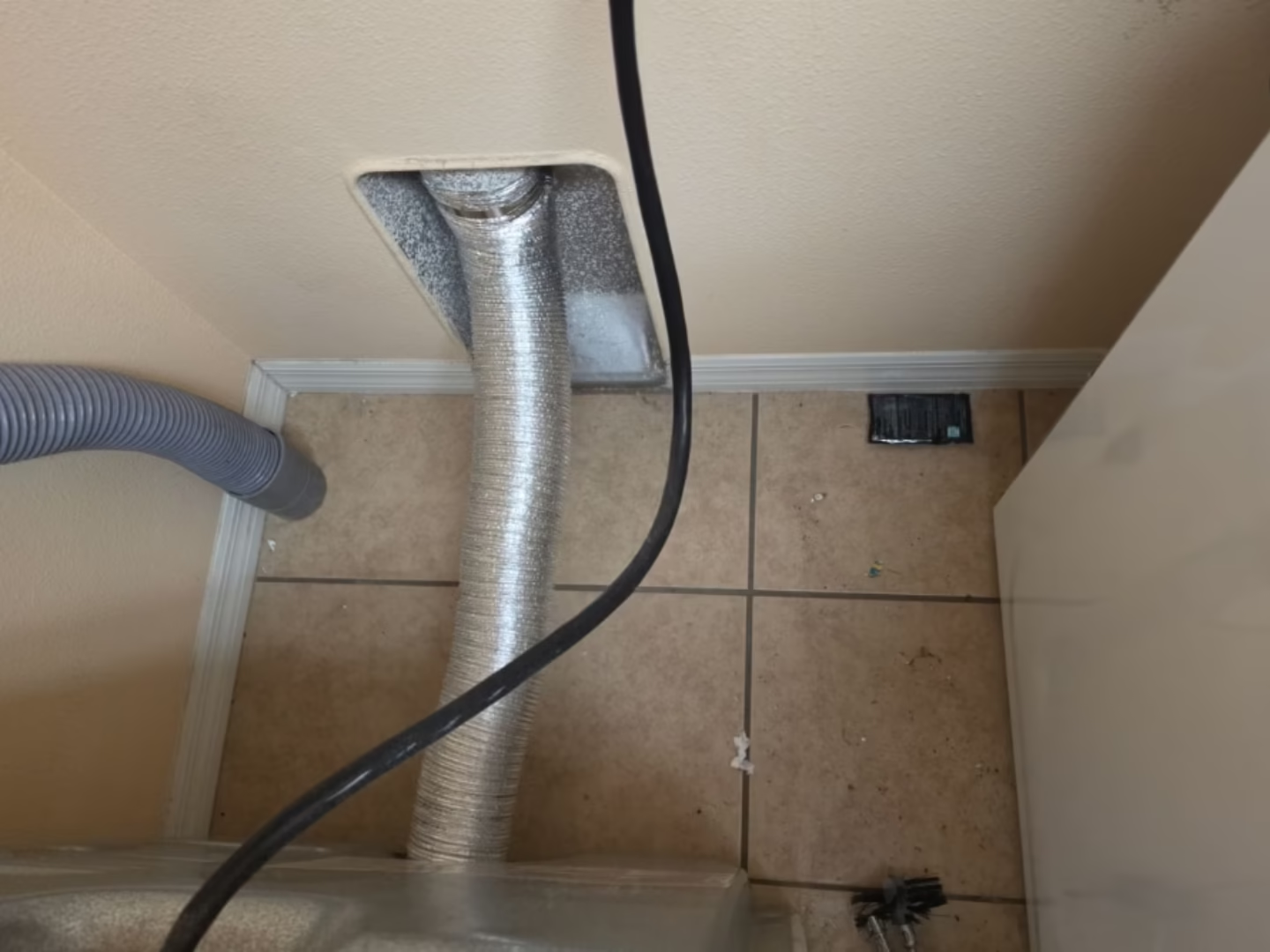
Foil accordion duct has no structural resistance to compression. When a dryer is pushed against the wall, the foil duct between the appliance and the wall compresses. If pushed far enough, it collapses completely, blocking the vent at the transition point regardless of the condition of the rest of the duct run. Most homes manage this by keeping the dryer pulled away from the wall – leaving 4 to 6 inches of gap permanently to accommodate the duct. That gap is dead floor space in the laundry area. The dryer wall box eliminates the duct entirely at the transition and replaces it with a recessed connection: the dryer sits against the wall, the duct is inside the wall, and there is nothing between the dryer and the wall surface to crush.
- Foil duct compression: occurs on every dryer installation or repositioning
- Complete collapse: duct can be fully blocked by a dryer pushed against the wall
- The gap tax: most homes keep the dryer 4-6 inches out from the wall permanently to protect the duct
- Wall box solution: recessed connection, dryer sits flush against wall, no duct to crush
Every Corrugation Is a Lint Trap
The accordion structure that makes foil duct flexible also makes it accumulate lint faster than any other duct type
Foil accordion duct has a corrugated interior surface – the accordion ridges that allow it to flex and extend. Lint in the dryer exhaust stream catches at every corrugation on every cycle. A foil transition duct behind a dryer accumulates lint faster than any section of rigid duct in the run because it is the narrowest, most turbulent section of the system and its interior geometry maximizes lint contact. A duct that is cleaned from the inside of the wall – the typical direction for professional dryer vent cleaning – reaches the transition duct last and with reduced suction force. DryerFlex by InOvate has a smooth semi-rigid interior that does not accumulate lint at corrugations. The wall box positions DryerFlex correctly so that the full cleaning suction reaches it.
- Corrugated interior: every ridge is a lint contact surface - accumulates lint per cycle
- Narrowest point in the run: foil transition duct restricts airflow more than any other section
- Cleaning direction: cleaning from inside the wall reaches the transition duct last, with reduced suction
- DryerFlex solution: smooth semi-rigid interior, no corrugations, no lint accumulation at corrugations
Foil Duct Is Not Listed for In-Wall or Concealed Positions
The duct type used behind most dryers is not approved for the position it is in
Foil accordion duct – the flexible metallic duct sold in the dryer accessories section at home improvement stores – is listed for use as a short transition connector in visible, accessible positions only. It is not listed for installation inside wall cavities, behind drywall, or in positions where it cannot be inspected and replaced without wall access. In most residential dryer installations, the foil duct extends from the dryer exhaust outlet into the wall connection – partially behind the dryer, partially inside the wall sleeve. This is a concealed position. Florida Building Code and NFPA 91 require dryer exhaust duct in concealed positions to be rigid metal duct. The wall box + DryerFlex combination resolves this: the DryerFlex is in the visible, accessible transition position (in the wall box opening, not behind a wall), and the duct inside the wall is rigid metal.
- Foil duct listing: approved for visible, accessible transition positions only
- Concealed position violation: foil duct inside wall sleeves or behind dryers is non-compliant in many configurations
- Florida Building Code and NFPA 91: rigid metal duct required in concealed positions
- Wall box solution: DryerFlex is in the accessible box opening (not concealed), rigid duct continues inside wall
Two Products. One Installation. The Permanent Solution to the Foil Duct Problem. .
Every dryer wall box installation by Always Fire & Gas uses two specific products: DryerFlex by InOvate at the dryer transition, and a recessed metal wall box at the wall connection. Neither is a generic replacement for the foil duct. Both are specific solutions to specific failure modes.
DryerFlex by Inovate
UL-listed semi-rigid aluminum transition duct – the correct replacement for foil accordion duct
DryerFlex is manufactured by InOvate Technologies and is the transition duct Always Fire & Gas installs on every dryer vent service that involves a transition connection. It is UL-listed for dryer exhaust use. The duct body is semi-rigid aluminum – it has enough structural stiffness to resist crushing under normal installation pressure, which standard foil duct does not. Its interior is smooth rather than corrugated, which eliminates the lint accumulation point that makes foil duct the fastest-accumulating section in the vent run. It is flexible enough to accommodate slight offsets between the dryer exhaust outlet and the wall box connection without requiring additional elbows. It installs in the transition position – the short connector between the dryer exhaust outlet and the wall connection – where it replaces foil duct permanently.
- Manufacturer: InOvate Technologies
- Listing: UL-listed for dryer exhaust transition use
- Material: semi-rigid aluminum – structural resistance to crush under normal placement
- Interior surface: smooth – no corrugations, no lint accumulation at ridges
- Position: transition connector between dryer exhaust outlet and wall connection (visible, accessible)
- Replaces: foil accordion duct, plastic corrugated duct (fire code violation), standard flex duct at transition
- Included in every AFG dryer vent cleaning, repair, and wall box installation service
1
Recessed Dryer Vent Wall Box
In-wall recessed metal enclosure that connects the dryer directly to the duct run without external flex duct
The dryer wall box is a metal enclosure that is recessed into the wall cavity behind the dryer. The front face of the box is flush with or slightly recessed from the wall surface. The dryer exhaust outlet connects to the box’s front inlet – either directly or via a short DryerFlex connector – and the back of the box connects to the in-wall rigid duct run. The depth of the box in the wall cavity means the dryer’s exhaust outlet aligns with the connection point without requiring a flex duct run between the appliance and the wall. The dryer can be pushed against the wall with the exhaust outlet engaging the box inlet directly. The result: no flexible duct between the dryer and the wall surface, dryer sits flush, and the transition connection is inside the wall enclosure where it is protected from accidental compression.
- Construction: metal enclosure, typically 4-inch round inlet and outlet, depth matched to wall cavity
- Position: recessed into wall cavity, face flush with wall surface
- Connection: dryer exhaust outlet to box inlet (direct or via short DryerFlex), box outlet to in-wall rigid duct
- Result: dryer sits flush against wall, no flexible duct in the transition space
- Compatibility: standard 4-inch round dryer exhaust outlet (the most common residential dryer exhaust size)
- Wall material: compatible with standard wood-framed stud walls; drywall opening required, patched at installation close
2
Four Steps.Every Dryer Wall Box Installation.
Every dryer wall box installation by Always Fire & Gas follows the same documented four-step process. The drywall opening is patched at service close. The old foil duct is gone. The airflow is confirmed before we leave.
1
Assessment and Position Confirmation
Correct box position in the wall cavity confirmed before any cutting begins
The assessment confirms the wall cavity is clear at the installation location (no structural members, insulation, or wiring at the box position), the depth of the box is compatible with the wall construction at that location, and the existing duct run position inside the wall aligns with the box outlet at the planned location. The position of the dryer exhaust outlet and the planned box inlet are confirmed for alignment – the box must position the inlet at the correct height and horizontal offset for the dryer in the specific installation. Stud location is confirmed. The drywall opening dimension is marked before cutting.
- Wall cavity: confirmed clear of structural members, insulation, and wiring at box position
- Duct alignment: existing in-wall duct position confirmed relative to planned box outlet
- Exhaust outlet alignment: dryer exhaust outlet height and offset confirmed for box inlet position
- Stud location: confirmed before marking opening
- All findings confirmed before any drywall is cut
2
Existing Transition Duct Removal and Drywall Opening
The foil duct comes out completely. The wall opening is cut at the confirmed position.
The existing transition duct – foil accordion, plastic corrugated, or any other flexible material – is removed from the connection between the dryer exhaust outlet and the wall sleeve. The wall sleeve material is evaluated: if the in-wall duct at the connection point is also foil or flex material, it is replaced with rigid metal duct to the nearest accessible point before the wall box is installed. The drywall opening is cut at the marked position to the correct dimension for the wall box housing. The in-wall duct is accessed at the opening and the box outlet connection is confirmed.
- Transition duct removal: foil, plastic, or any flex material removed completely — not pushed into wall
- In-wall duct evaluation: if duct immediately inside wall is non-rigid, replaced to nearest accessible point
- Drywall opening: cut to correct dimension, clean edges, marked position confirmed at cut
- In-wall duct access: box outlet connection point accessed and confirmed before box installation
3
Wall Box Installation and DryerFlex Connection
Box recessed and secured, DryerFlex connected from dryer exhaust to box inlet, dryer pushed to wall
The wall box is inserted into the drywall opening and secured to the wall framing or drywall surface per the manufacturer’s installation specification. The box outlet is connected to the in-wall duct at the access point. DryerFlex is connected from the dryer’s exhaust outlet to the box inlet – the short semi-rigid aluminum run that replaces the foil accordion duct in the transition position. The dryer is positioned against the wall with the exhaust outlet engaged at the box inlet. Airflow is confirmed from the dryer connection through to the exterior termination cap. The drywall opening around the box face is patched and finished at service close.
- Wall box installation: inserted, secured to framing or wall surface per manufacturer spec
- Box-to-duct connection: box outlet connected to in-wall duct at access point, joint secured
- DryerFlex connection: short semi-rigid aluminum run from dryer exhaust outlet to box inlet
- Dryer positioning: pushed against wall, exhaust outlet engaged at box inlet, confirmed seated
- Airflow confirmation: confirmed from dryer connection to exterior termination
- Drywall patch: opening around box face patched and finished
4
Before/After Photo Report Under CSIA DET #1149
Full service documentation including before-state foil duct condition and after-state wall box installation
The before photos document the existing foil transition duct condition, the dryer-to-wall gap, and the duct interior condition if the vent is being cleaned at the same visit. The after photos document the installed wall box, the DryerFlex connection at the box inlet, the dryer pushed against the wall, and the airflow confirmation. For combined cleaning/wall box services, the before photos also document the duct condition pre-cleaning and the after photos document the post-cleaning duct condition. The report is produced under CSIA Dryer Exhaust Technician certification #1149 and records the wall box installed, the DryerFlex used, and the airflow confirmation result.
- Before: existing foil duct condition, dryer-to-wall gap, pre-cleaning duct condition if combined service
- After: installed wall box, DryerFlex connection, dryer against wall, airflow confirmation
- Combined cleaning services: cleaning before/after also documented in the same report
- Produced under CSIA DET #1149 – records products installed, confirms code compliance
What Continues When the Foil Duct Stays
Every cleaning removes lint from the duct run. But if the transition duct is foil accordion, the corrugations are re-coated with lint on the first post-cleaning cycle. The duct that accumulates lint fastest in the entire system is back to accumulating lint immediately. The cleaning interval compresses. The dryer performance degrades faster between services. The crush point – the section of foil duct between the appliance and the wall – remains a potential blockage every time the dryer is repositioned.
A foil duct in a concealed or semi-concealed position that has been in place for years has also likely been repeatedly compressed, partially blocked, and lint-packed at the corrugations. Cleaning addresses the accessible duct from the interior direction. The transition duct section is the last section reached and the one with the most resistance to cleaning suction because of the corrugated surface and the repeated compression deformation. A cleaning that cannot fully clear the transition duct is a cleaning with a diminished return.
What the Laundry Room Looks Like After a Wall Box Installation
The dryer is against the wall. Flush. No gap. The foil duct is gone. There is no flexible duct between the appliance and the wall surface – the dryer exhaust outlet connects directly into the recessed box in the wall. The connection is inside the box, protected, and not something that can be accidentally crushed by a repositioned appliance.
The first cleaning after a wall box installation reaches the full duct run from the exterior termination to the DryerFlex connection at the box without the foil duct resistance. The lint that previously accumulated at every corrugation does not have a corrugation to accumulate at. The cleaning interval holds.
The before/after photo report shows the foil duct on the left and the dryer against the wall on the right. You keep the report. If you sell the home, the upgrade is documented. If a technician services the vent in the future, they have the baseline. The wall box is not something you think about until the next annual cleaning.
Dryer against the wall. Foil duct gone. System documented. CSIA Certified #1149. Ocala, Gainesville, The Villages, and North Central Florida.
Two Wall Box Installations. Two Laundry Rooms That Work Correctly Now.
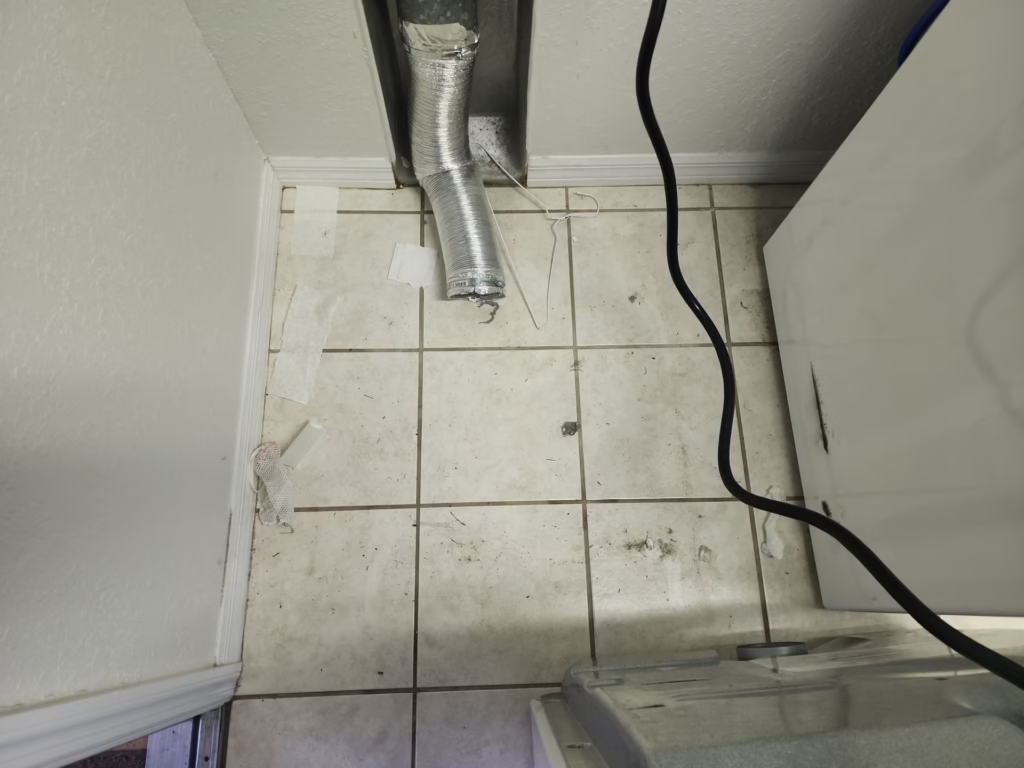
The Villages: Foil Duct Replaced After Repeated Compressed-Duct Findings
A homeowner in The Villages had the dryer vent cleaned annually. The cleaning report consistently noted that the transition duct was partially compressed and required clearing before the cleaning suction could reach the full duct run. Each cleaning included a note recommending transition duct replacement. After the third consecutive report with the same finding, the homeowner called to ask about the wall box option. AFG assessed the installation: standard drywall behind the dryer, clear wall cavity at the box position, 4-inch rigid duct in the wall. The foil duct was removed. The wall box was installed and recessed at the correct position. DryerFlex was connected from the dryer exhaust outlet to the box inlet. The dryer was pushed against the wall. The drywall opening was patched. The before photos documented the compressed foil duct and the dryer pulled out from the wall. The after photos documented the wall box, the DryerFlex connection, and the dryer against the wall. The next annual cleaning report did not include a transition duct finding.
Same finding on repeated cleaning reports? Call (352) 282-0158.
Ocala: Wall Box Installed During New Dryer Delivery
A homeowner in Ocala was having a new dryer delivered and called AFG to ask whether the wall box installation could be coordinated with the delivery. The old dryer had been using a foil transition duct for eleven years. The new dryer was the same model configuration. AFG scheduled the wall box installation for the same morning as the delivery – arriving after the delivery team removed the old appliance and before the new one was positioned. With the old dryer out of the way and the wall fully accessible, the wall box installation took 45 minutes: cavity confirmed clear, existing foil duct removed, wall box installed and connected to the in-wall rigid duct, DryerFlex prepped at the box inlet. The delivery team returned to position the new dryer. The exhaust outlet engaged the box inlet. The dryer was pushed against the wall. The drywall patch was completed. The report was delivered under CSIA DET #1149. The new dryer has never had a foil duct behind it.
New dryer coming? Coordinate the wall box installation. Call (352) 282-0158.
Dryer Wall Box Installation Across North Central Florida
Always Fire & Gas installs dryer wall boxes for residential properties across Marion, Alachua, Lake, Sumter, Citrus, Putnam, Hernando, Orange, and Volusia Counties and all surrounding areas. CSIA Dryer Exhaust Technician #1149. DryerFlex by InOvate on every installation. Before/after photo report on every service. Available as a standalone installation or combined with dryer vent cleaning in a single visit.
Call or text (352) 282-0158. Describe the dryer type, the current transition duct condition, and whether a cleaning is also needed. AAS confirms the scope and schedules the service.
Dryer Wall Box Questions, Answered Directly
A dryer wall box (also called a recessed dryer vent box or dryer periscope box) is a metal enclosure recessed into the wall cavity directly behind the dryer. The dryer’s exhaust outlet connects to the box’s front inlet – through a short DryerFlex semi-rigid aluminum duct or directly depending on the model – and the box’s back outlet connects to the in-wall rigid duct run. The box eliminates the flexible transition duct between the dryer and the wall by recessing the connection into the wall cavity: the dryer sits flush against the wall with no flex duct between the appliance and the wall surface. Always Fire & Gas installs dryer wall boxes combined with DryerFlex by InOvate under CSIA Dryer Exhaust Technician certification #1149 across North Central Florida.
DryerFlex by InOvate is a UL-listed semi-rigid aluminum transition duct. It differs from foil accordion duct in three ways: it has structural resistance to compression and does not crush when the dryer is pushed against the wall; its interior surface is smooth rather than corrugated, which eliminates the lint accumulation that occurs at every corrugation in a foil duct; and it is listed for its transition position in a visible, accessible location, rather than the semi-concealed position that foil duct often ends up in. Foil accordion duct is the most common transition duct in residential dryer installations but is also the component that fails most frequently and accumulates lint fastest in the vent system. DryerFlex is the correct replacement.
A dryer wall box installation requires: confirming the wall cavity at the planned box position is clear of structural members, wiring, and insulation; cutting the drywall to the correct dimension; connecting the box outlet to the in-wall duct run at the opening; installing and securing the box; connecting DryerFlex from the dryer exhaust to the box inlet; and patching the drywall around the box face. A homeowner comfortable with drywall work and basic duct connections can perform this installation. The critical requirements are: confirming the cavity is clear before cutting; correct box position for dryer exhaust outlet alignment; and a complete, sealed connection between the box outlet and the in-wall duct. If the in-wall duct at the connection point is foil or flex material, it should be replaced with rigid metal duct to the nearest accessible point before the box is installed. Always Fire & Gas can assess the installation if there is any uncertainty about the wall cavity contents or the in-wall duct condition.
The installation requires cutting a drywall opening at the box position – typically a rectangular opening sized for the box housing. The opening is patched at the close of the service: the box face is flush with or slightly recessed from the wall surface, and the drywall around the box face is patched and finished. The patch is a standard drywall repair. Painting to match the existing wall finish is not included in the service scope – the patch is finished to a paintable condition, and the homeowner applies the finish coat. For tile or other non-standard wall materials at the installation location, AFG confirms the material impact at assessment before any work begins.
A dryer wall box installation at an existing dryer vent penetration – replacing the transition duct and installing the box in the wall cavity at the existing connection point – typically does not require a permit in Florida. The scope does not create a new roof or wall penetration; it modifies the connection method at an existing penetration. Where the wall box installation involves relocating the dryer exhaust connection to a new penetration location, or where local jurisdiction requirements apply, a permit may be needed. Always Fire & Gas confirms the permit requirement at assessment. Where a permit is required, AFG pulls it under FL Residential Contractor #CRC1332000 before work begins.
Yes, and it is the recommended approach. The ideal sequence is: clean the duct run first (confirming the rigid duct inside the wall is clear and airflow is unobstructed from the wall connection to the exterior termination), then install the wall box and DryerFlex so the clean duct connects to the new recessed box immediately. Performing both in the same visit also produces a single before/after report documenting the pre-cleaning duct condition, the installed wall box, the DryerFlex connection, and the post-installation airflow confirmation. Combined cleaning/wall box installation visits are typically two to two and a half hours on-site. Call or text (352) 282-0158 and describe both the duct cleaning need and the wall box interest when scheduling.
Dryer wall boxes are compatible with standard residential dryers that have a 4-inch round exhaust outlet – which is the vast majority of gas and electric dryers sold in the United States. The dryer exhaust outlet position varies by model: most dryers have a rear-exit outlet positioned near the bottom center of the back panel, but some models have side-exit or adjustable-position outlets. The wall box installation position is confirmed at assessment for the specific dryer model to ensure the box inlet aligns with the exhaust outlet. Stackable washer/dryer units and compact dryers with non-standard exhaust positions should be confirmed at assessment before scheduling. Always Fire & Gas confirms compatibility at the initial call when the dryer type and model are provided.