CSIA Certified Dryer Exhaust Technician #1149. Blocked Cap, Failed Boot, Bird Nest, Improper Termination. North Central Florida Since 1982.
Dryer Vent Roof Termination Replacement in Ocala, Gainesville, Orlando, The Villages and All Surrounding Areas.
Step 1: Call or Text (352) 282-0158 – Describe what you found or were told – blocked cap, bird nest, water around the penetration, or flapper that will not open. We confirm the scope and schedule the service.
Step 2: We Handle the Roof – Full roof termination assessment. Existing cap and boot removed. Code-compliant louvered or flapper cap installed. Boot sealed to roof deck. Airflow confirmed from inside. About one to two hours on-site.
Step 3: You Get a Documented Correct Termination – Before/after photo report under CSIA #1149. Sealed penetration. Code compliant cap. No lint blockage, no pest entry
- CSIA Certified Dryer Exhaust Technician #1149
- FL Residential Contractor #CRC133200
- Certified Category V Gas License #LI45277
- BBB A+ Since 2018 - Family Owned Since 1982
Dryer Vent Caps
Cap Blocked With Lint or a Nest. Flapper That Will Not Open. Water Stains Around the Vent Penetration. Screen That Should Not Be There. You Need the Correct Cap, a Sealed Boot, and a Documented Fix.
Something brought you to the roof termination specifically. Maybe a technician cleaned the vent, confirmed airflow at the wall, and then went outside and found the roof cap is the problem. Maybe you noticed water staining on the ceiling near where the dryer exhausts. Maybe you watched a bird disappear into the vent cap from the backyard and you have been thinking about it since. Maybe the dryer keeps blocking up despite recent cleanings and nobody has checked the termination.
A roof dryer vent termination that is blocked, damaged, or incorrectly installed does not just restrict airflow. A blocked cap forces lint to accumulate at the blockage point, which is now inside the duct run close to the roof deck. A failed boot allows water into the wall cavity on every rain event. A bird or pest nest in the termination creates an organic material accumulation at ignition temperature during dryer cycles. These are not maintenance items that can wait.
Always Fire & Gas replaces dryer vent roof terminations under CSIA Dryer Exhaust Technician certification #1149. The replacement process includes removing the failed cap and existing boot, inspecting the duct at the roof penetration for damage or improper configuration, installing a code-compliant louvered or flapper cap rated for dryer exhaust, sealing the new boot to the roof deck, and confirming airflow through the new termination from inside the home. A before/after photo report is produced at service close. You do not have to get on the roof to find out what is happening up there.
Five Ways a Dryer Vent Roof Termination Fails .
Roof terminations fail differently from wall terminations. The roof environment adds water, UV degradation, pest pressure, and wind loading that wall caps do not face. These five failure types cover the most common problems Always Fire & Gas finds at dryer vent roof penetrations in North Central Florida.
Cap Blocked With Lint Accumulation
The most common failure – lint that should exhaust is packing into and around the cap
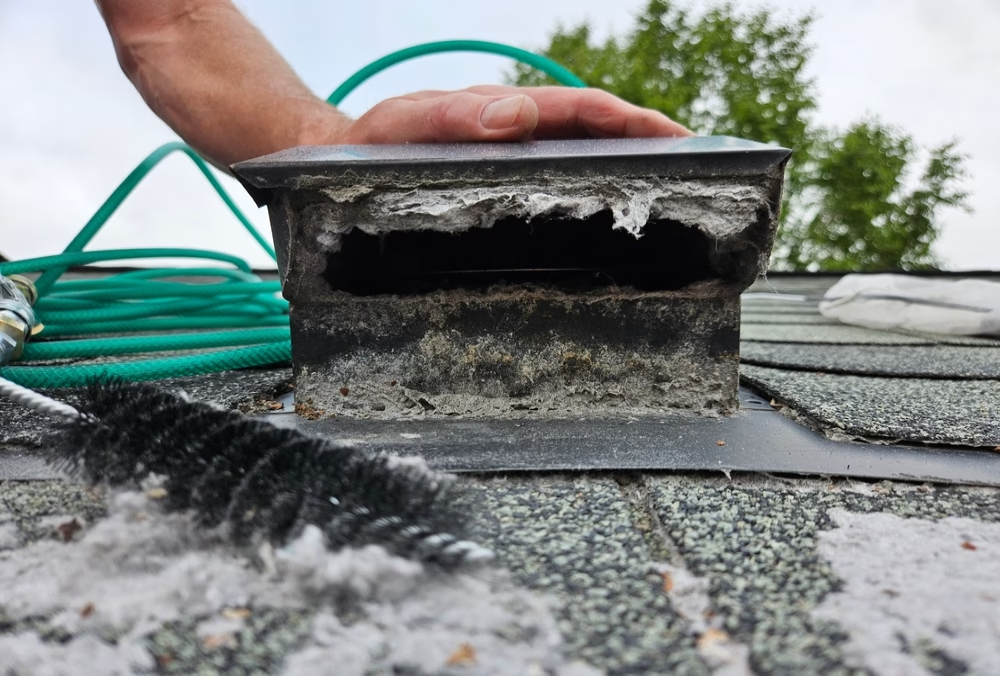
A dryer vent roof cap that has not been inspected or replaced in several years accumulates lint at the cap opening and inside the cap housing. The flapper or louver blades that open during dryer operation become caked with lint and stop opening fully, or stop opening at all. The result is a partial or complete blockage at the termination end of the vent run. Lint accumulates back through the duct from the blocked cap toward the dryer. A vent that has been cleaned from the inside but not inspected at the roof cap will re-block at the cap on the next several cycles. The solution is not another cleaning – it is cap replacement.
- Flapper or louver blades caked with lint: restrict or prevent opening during dryer cycle
- Cap housing interior packed with lint: creates secondary accumulation point
- Vent re-blocks at cap after cleaning if cap is not replaced: cleaning from inside does not address cap condition
- Cap replacement restores full, unobstructed airflow at the termination
Bird Nest or Pest Nesting Material in the Termination
In North Central Florida, year-round pest pressure at roof penetrations is a recurring service need
Dryer vent roof caps are warm during and after dryer cycles, exhaust intermittently rather than continuously, and are typically not inspected from outside the home. All three characteristics make them attractive nesting sites. In North Central Florida, the most common nesters are house sparrows, starlings, squirrels, and wasps – all active year-round in the region’s climate. A nest partially or fully blocking the termination creates the same airflow restriction as lint accumulation, with the additional hazard that organic nesting material at the dryer exhaust exit point is combustible. A nest removal without cap replacement leaves the same access point open to re-nesting within one season. The correct solution is nest removal, duct inspection for debris inside the run, and cap replacement with a pest-resistant louvered cap that does not provide a nesting platform.
- House sparrows, starlings, squirrels, and wasps: most common termination nesters in North Central Florida
- Nesting material is combustible: organic material at exhaust exit during dryer cycles
- Nest removal alone leaves access open: re-nesting occurs within one season without cap replacement
- Pest-resistant louvered cap: does not provide nesting platform, closes fully between cycles
- Duct inspection for nesting debris inside the run: nesting material can extend several feet into the duct
Screen Cap - Prohibited for Dryer Exhaust
A screened cap is a code violation and a lint trap – and it is still the most common cap type found at dryer vent roof terminations
Screened termination caps are designed for passive ventilation openings – attic vents, bath fans, crawlspace vents – where blocking insects from entering the structure is the primary concern. They are prohibited for dryer exhaust by Florida Building Code and NFPA 91 because dryer exhaust carries lint particles that clog the screen mesh within a few months of installation, creating a progressive blockage that eventually becomes complete. A screen cap on a dryer vent is not a safety feature – it is a lint trap that will block the vent and require cleaning or replacement on a compressed schedule. Many homes in North Central Florida, particularly those built before current code adoption or where the laundry was relocated after original construction, still have screen caps at their dryer vent roof termination.
- Screen caps: prohibited for dryer exhaust by Florida Building Code and NFPA 91
- Lint clogs screen mesh within months: progressive blockage becomes complete over time
- Common in pre-code or relocated laundry installations across North Central Florida
- Replacement: remove screen cap, install code compliant louvered or flapper cap rated for dryer exhaust
Failed Roof Boot - Water Intrusion at the Penetration
The boot seals the cap to the roof deck. When it fails, rain follows the duct into the wall.
The roof boot is the flashing and sealant assembly that seals the dryer vent pipe penetration to the roof deck surface. In North Central Florida, UV exposure, thermal expansion cycles, and Florida’s intense rain seasons degrade rubber roof boots over five to ten years. A cracked or separated boot allows water to follow the exterior of the duct pipe into the wall cavity on every rain event. The water intrusion is typically not immediately visible inside the home – it enters the wall cavity above the ceiling and manifests as staining, soft drywall, or mold growth at a lower point in the wall, sometimes months after the boot first fails. A failed boot is a water damage problem, not just a vent problem, and the repair window matters.
- Rubber roof boot: degrades from UV and thermal cycling, typical lifespan 5-10 years in Florida conditions
- Failed boot: water follows duct exterior into wall cavity on every rain event
- Water intrusion not immediately visible: appears as staining or mold below the entry point, often months later
- Boot replacement: remove existing boot and cap assembly, install new cap with properly sealed boot to roof deck
- Inspect duct at penetration for moisture damage or rust at service close
Improper Termination Location or Configuration
The vent exits in the wrong place, under an overhang, or too close to an air intake
Roof dryer vent terminations that were installed without reference to the applicable code requirements may exit in locations that violate Florida Building Code and NFPA 91: under a roof overhang where exhaust recirculates toward the soffit intake; on the upwind face of the roof where lint blows back into the termination during high-wind events; within the prohibited clearance distance from a window, attic vent, HVAC air intake, or power source; or on a roof face that is not accessible for inspection and service. These location violations are not correctable by cap replacement alone – they require rerouting the duct to an acceptable termination location. Always Fire & Gas identifies improper location issues during the roof assessment and confirms whether a cap replacement resolves the finding or whether rerouting is required before any work is performed.
- Under roof overhang: exhaust recirculates toward soffit intakes
- Upwind roof face: lint blows back into termination during high-wind events
- Clearance violations: within prohibited distance from windows, HVAC intakes, attic vents
- Location violations require rerouting, not cap replacement: confirmed at assessment before work begins
- All location compliance confirmed against Florida Building Code and NFPA 91 at service close
FL Residential Contractor #CRC1332000: Required for New Roof Penetrations
Rerouting a dryer vent to a new termination location means cutting a new opening in the roof. Florida law requires a licensed residential contractor to create new penetrations in a roof structure. A dryer vent cleaning company without FL Residential Contractor #CRC133200 cannot legally perform this scope. Always Fire & Gas holds FL Residential Contractor #CRC133200 and pulls the required permit before any new penetration work begins.
What this means: If your termination location is wrong and the duct must exit somewhere new, the contractor who does that work must be licensed. If you are getting quotes from anyone other than a l icensed residential contractor for that scope, you are being quoted work they cannot legally perform.
SUMMARY: Five Dryer Vent Roof Termination Failures (Featured Snippet target)
Dryer vent roof terminations fail in five ways: lint accumulation in the cap housing blocks the flapper or louver; bird or pest nesting material blocks the cap and creates a combustion hazard; a screened cap (prohibited by Florida Building Code and NFPA 91 for dryer exhaust) clogs progressively with lint; a cracked or separated roof boot allows water intrusion into the wall cavity; or the termination is located under an overhang, near an air intake, or outside permitted clearances. Always Fire & Gas replaces dryer vent roof terminations under CSIA Dryer Exhaust Technician certification #1149, serving Ocala, Gainesville, The Villages, and all of North Central Florida.
Four Steps. Every Roof Termination Replacement.
Every roof termination replacement by Always Fire & Gas follows the same documented four-step process. No shortcuts at the roof — a cap that is installed incorrectly or a boot that is not properly sealed creates a second problem before the first one is resolved.

Full Termination Assessment Before Replacement Begins
You do not replace a cap without confirming what you are replacing it with and why
The assessment begins with an inspection of the existing termination from the roof: cap condition, boot condition, duct condition at the penetration, clearance distances from the termination to adjacent roof features, and whether the current termination location is code-compliant. If the termination location violates code, that finding is confirmed and presented before any cap removal begins. The assessment also includes airflow confirmation from inside the home at the dryer connection – before the cap is removed – to confirm that the duct run between the dryer and the roof is clear. A blocked duct run with a replaced cap is still a blocked vent.
- Roof inspection: cap condition, boot condition, duct at penetration, clearance distances
- Termination location: code compliance confirmed before cap removal
- Duct inspection for debris (pest nesting, lint accumulation) inside the run from the roof
- Airflow confirmation at dryer connection before roof work begins: confirms duct run is clear
- Any finding that changes the scope: communicated and confirmed before proceeding

Existing Cap and Boot Removal, Duct Clearance
The old cap comes off completely – not covered over,
not patched
The existing cap, flashing, and boot assembly are removed from the roof penetration. The duct at the penetration is inspected for rust, moisture damage, and any debris inside the duct at the cap location. Lint accumulation, nesting material, or debris at the termination end of the duct is cleared before the new cap is installed. A new cap installed over uncleared debris creates a blockage at the cap from the first cycle. The existing boot flashing is evaluated: where the boot has failed and allowed water intrusion, the surrounding roof material is inspected for moisture damage before the new boot is sealed.
- Full removal: cap, flashing, and boot assembly removed, not covered or patched
- Duct interior at penetration: cleared of lint, nesting material, or debris before new cap install
- Rust and moisture assessment: duct at roof penetration inspected for deterioration
- Surrounding roof material: inspected for moisture damage where boot failure is confirmed
Code-Compliant Cap Installation and Boot Sealing
The correct cap for the roof type and pitch, sealed boot, confirmed airflow
Always Fire & Gas installs a code-compliant louvered or spring-loaded flapper cap rated specifically for dryer exhaust – not a general-purpose roof vent cap, not a screened cap, not an HVAC exhaust cap. The cap is selected for the specific roof pitch, roofing material, and duct diameter at the penetration. The new boot is installed and sealed to the roof deck using materials compatible with the roofing substrate. For asphalt shingle roofs, the boot flashing is correctly integrated with the shingle courses. For metal roofs, the boot is sealed with appropriate membrane and sealant. Airflow is confirmed through the new cap from inside the home after installation.
- Cap selection: dryer-exhaust-rated louvered or spring-loaded flapper cap – not a screen cap or general vent cap
- Roof pitch and material: cap and boot selected for the specific roof conditions at the penetration
- Boot sealing: new boot sealed to roof deck, flashing integrated with roofing material correctly
- Asphalt shingle: boot flashing integrated with shingle courses per roofing standards
- Metal roof: boot sealed with appropriate membrane and sealant for the panel type
- Airflow confirmation: confirmed through new cap from inside the home at service close
Before/After Photo Report Under CSIA DET #1149
Documentation of the old termination condition, the replacement, and the corrected installation
The before photos document the existing cap condition, the boot condition, and any debris or nesting material at the termination before removal. The after photos document the new cap installed, the sealed boot, and the cleared duct at the penetration. For water intrusion cases, the before photos document the failed boot and any visible moisture damage. The report records the cap type installed, the boot sealing method, the airflow confirmation result, and any additional findings from the roof assessment. The report is produced under CSIA Dryer Exhaust Technician certification #1149 and is suitable for insurance documentation, home sale records, and property management files.
- Before: existing cap condition, boot condition, debris or nesting material documented
- After: new cap, sealed boot, cleared duct at penetration documented
- Water intrusion cases: failed boot condition and any visible moisture damage documented
- Produced under CSIA DET #1149 – suitable for insurance, real estate, and property management documentation
Four Situations That Lead to a Chimney Relining Assessment
Why North Central Florida Roof Terminations Need More Attention Than Other Markets
North Central Florida does not have a dormant pest season. House sparrows, European starlings, squirrels, and paper wasps are active at roof penetrations twelve months of the year in Ocala, Gainesville, The Villages and Orlando. A dryer vent roof termination provides exactly what these species look for: a warm, intermittently exhausting opening that is not disturbed by human activity. From the street, the homeowner cannot see the cap. From inside, the vent appears to be working until the nest is large enough to restrict airflow noticeably. The consequence of this pest pressure is that nest removal without cap replacement does not solve the problem for more than one season. A pest-resistant louvered cap with a weighted or spring-loaded flapper that closes completely between dryer cycles removes the access point. Caps with lightweight flappers that do not close fully against wind resistance are re-entered. Always Fire & Gas selects caps with the closing force appropriate for the roof exposure at the specific installation.
Florida's UV and Rain Cycle Shortens Roof Boot Lifespan
Rubber roof boots rated for ten to fifteen years in moderate climates degrade faster in North Central Florida. Florida's UV index is among the highest in the continental United States, and the thermal expansion cycles driven by surface temperatures exceeding 150 degrees on dark roofing materials in summer, followed by cooling at night and during rain events, stress rubber boot materials at an accelerated rate. A roof boot that is five to seven years old in a North Central Florida installation may already be cracking at the collar where it seals to the duct pipe. The timing of boot failure relative to the dryer vent cleaning schedule means that many homeowners discover a failed boot during a dryer vent service call, not during a roofing inspection. Always Fire & Gas inspects the boot condition at every roof termination service and documents the boot assessment in the service report. A boot showing early cracking is noted as a finding even if it has not yet allowed water intrusion - giving the homeowner the option to address it proactively rather than after a rain event has already sent water into the wall.
Four Entry Points. One Certified Replacement Process.
Cleaning Found a Termination Problem - The Duct Is Clear but the Cap Is Not
The vent was cleaned. The technician confirmed the duct run is clear. But airflow at the roof cap is poor or nonexistent – the cap flapper does not open fully, or lint and debris at the cap housing are restricting the exhaust exit. This is a common finding at roof-terminated vents in North Central Florida because the cap is the one part of the vent system that homeowners and cleaning technicians rarely access directly. The cleaning resolves the lint in the duct. The cap replacement resolves the restriction at the exit. Without the cap replacement, the vent will re-block at the cap on the next several cycles as lint that can now move through the clean duct accumulates at the restricted cap.
Call or text (352) 282-0158. Describe what the cleaning technician found at the roof cap – flapper condition, airflow result, or any visible debris at the termination. AFG will confirm the replacement scope and schedule the service.
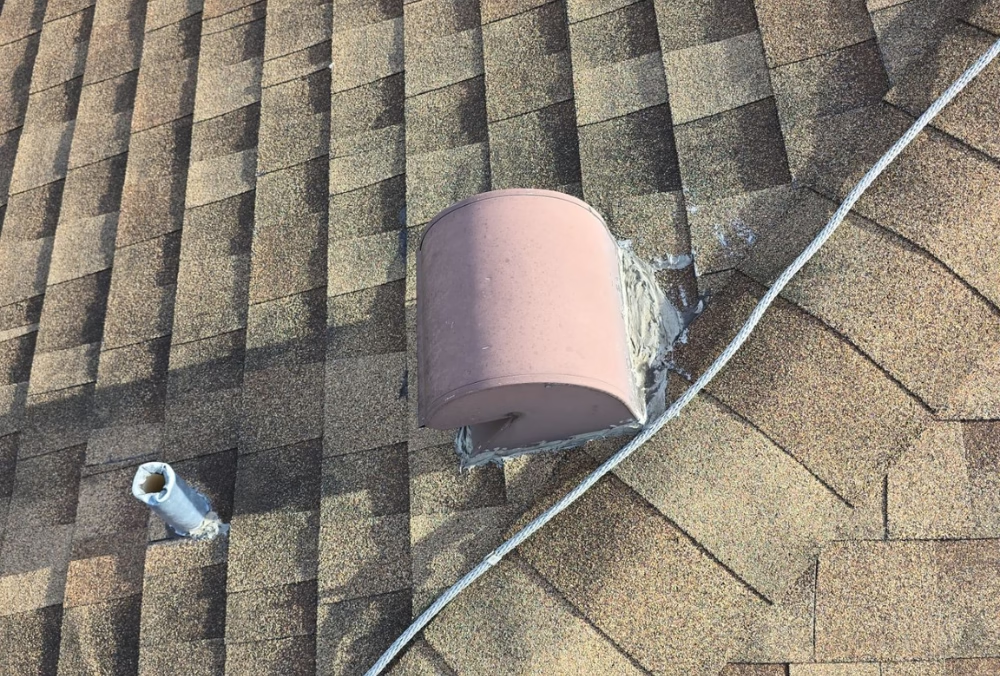
Water Stains Around the Vent Penetration - Failed Boot
There is staining on the ceiling near where the dryer exhausts through the roof. Or a roofing contractor noticed the boot is cracked during a separate roof inspection. Or you had a heavy rain event and water appeared inside the wall near the laundry area. Any of these is a failed boot until confirmed otherwise. Water intrusion through a dryer vent roof boot enters the wall cavity and follows the path of least resistance downward – which means the staining or damage you can see is below the actual entry point. The longer the boot remains failed, the larger the moisture event inside the wall. Always Fire & Gas will remove the failed cap and boot, inspect the duct and surrounding roof deck for moisture damage, install a new cap with correctly sealed boot, and document the before and after.
Call or text (352) 282-0158. Describe the staining or the roofing contractor’s finding. If you have photos of the ceiling staining or the failed boot, have them available. AFG will confirm the scope and schedule the service.
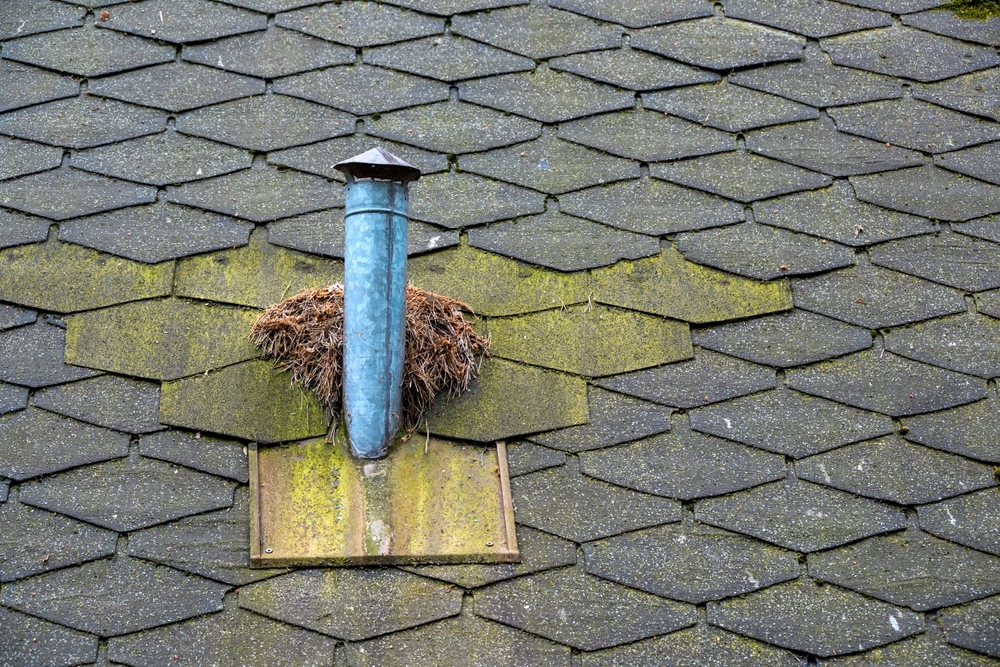
Bird or Pest Nest at the Termination
You saw a bird going in and out of the vent cap. The dryer has been running poorly and you looked outside and found nesting material at the cap. A pest control company identified a nest in the dryer vent as part of a broader pest inspection. The nest is not just an airflow problem – it is combustible organic material at the exit point of a system that runs at dryer exhaust temperatures. Always Fire & Gas removes the nest, inspects the duct for nesting debris that extends into the run, replaces the cap with a pest-resistant louvered cap that closes fully between cycles, seals the boot, and documents the service. Without cap replacement, re-nesting occurs within one season in the North Central Florida market.
Call or text (352) 282-0158. Describe what you saw or were told – species if known, visible nest material, and any dryer performance symptoms. AFG will confirm the scope (nest removal plus cap replacement) and schedule the service.
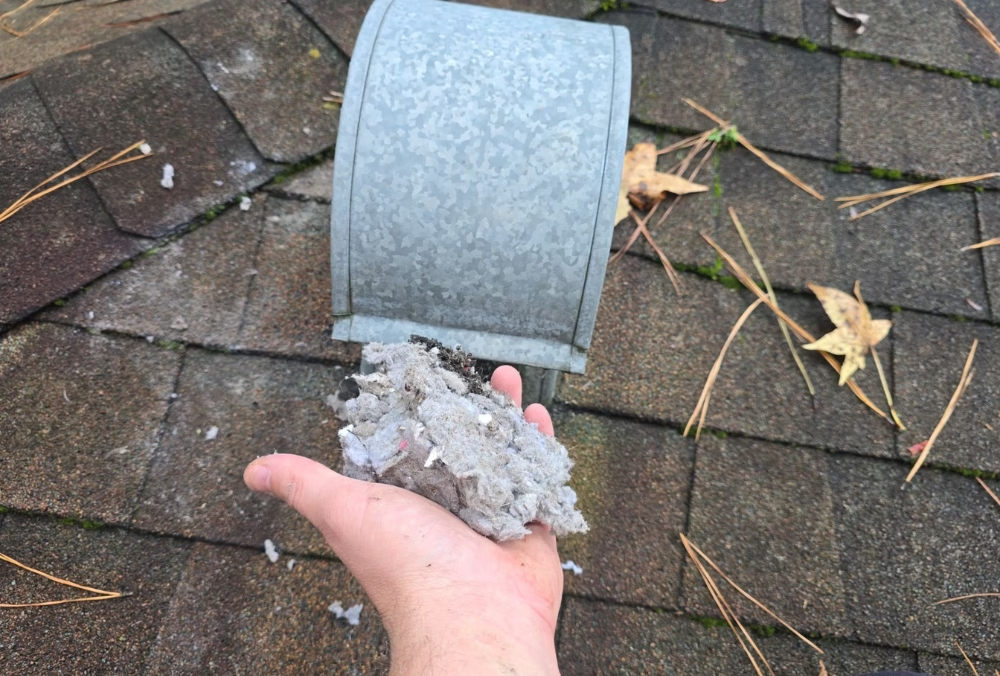
Home Sale Requires Documented Dryer Vent Service
A home inspector flagged the dryer vent roof termination – screen cap, failed boot, bird evidence, or general condition concern. The finding needs a response before closing: a repair documented by a licensed and certified contractor. Always Fire & Gas replaces the roof termination and produces a written before/after photo report under CSIA Dryer Exhaust Technician #1149 that can be provided to the buyer’s agent, the listing agent, the buyer’s lender, or the title company. Service can typically be scheduled within the closing timeline. If the cleaning has not been performed recently, a combined cleaning and roof termination replacement can be scheduled as a single visit.
Call or text (352) 282-0158. Provide the property address, the inspection finding as stated in the report, and the closing date or timeline. AFG will confirm the scope and documentation format.
Four Steps. Every Roof Termination Replacement.
Every roof termination replacement by Always Fire & Gas follows the same documented four-step process. No shortcuts at the roof – a cap that is installed incorrectly or a boot that is not properly sealed creates a second problem before the first one is resolved.
What Stays Broken When the Termination Is Not Replaced
A dryer vent cleaning that does not address a failed roof termination is an incomplete service. The duct may be clear today, but the restricted or failed cap is working against that clearing on every cycle. Lint that can now move through the clean duct accumulates at the restricted cap. The vent re-blocks at the termination end. The dryer returns to poor performance. The homeowner schedules another cleaning. The cap is still the problem.
A failed boot left in place continues to allow water into the wall cavity on every significant rain event. The moisture event is not always visible immediately. By the time it becomes visible as ceiling staining, soft drywall, or a musty smell in the laundry area, the water has been entering the wall for multiple rain events. Mold remediation in wall cavities is significantly more expensive and disruptive than replacing the boot before the water damage is established.
A pest nest at the termination that is removed without cap replacement is back within one season. The cap that allowed the first nest will allow the second one.
What Your Roof Termination Looks Like After Replacement
The cap closes between cycles. Fully. No lint accumulates at the housing between service visits because the flapper seals properly and nothing is entering the cap when the dryer is not running. The boot is sealed. Rain runs off the roof and does not follow the duct pipe into the wall.
You have a before/after photo report. The before photos show what was found. The after photos show the new cap and sealed boot. If your insurance company asks whether the vent and termination were in proper condition at the time of any future claim, you have the documentation.
You do not have to wonder what is happening at the roof cap above the laundry room. It was replaced. It was documented. It is correct.
Two Terminations. Two Homeowners Who Can Stop Thinking About It.
- Ocala: Screen Cap Removed After Repeated Cleaning Failures
A homeowner in Ocala had the dryer vent cleaned twice in eighteen months with diminishing results – the dryer would perform normally for two to three months after each cleaning and then return to the two-cycle pattern. The cleaning technician on the third service call went to the roof and found a screened termination cap, prohibited for dryer exhaust, packed solid with lint. The screen mesh had trapped lint from every cleaning and every cycle since the last cap clearing. The cap was the problem on every previous cleaning as well – it just had not been checked from outside. AFG removed the screen cap and the degraded rubber boot beneath it, inspected the duct at the penetration, installed a dryer-exhaust-rated louvered cap with a spring-loaded flapper, and sealed a new boot to the roof deck. The before photos documented the screen cap packed with lint. The after photos documented the new louvered cap and sealed boot. The homeowner has not had a cleaning failure since.
Repeated cleaning failures? The termination may be why. Call (352) 282-0158.
- The Villages: Failed Boot Found During Termination Inspection, Water Damage Prevented
A homeowner in The Villages scheduled a dryer vent cleaning and mentioned that the dryer had been running slightly longer than normal but nothing dramatic. During the cleaning service, the technician inspected the roof termination and found the rubber boot cracked at the collar – a condition consistent with five to seven years of Florida UV exposure. The crack had not yet allowed water into the wall cavity, but the gap was present and a rain event would have directed water into the wall. The homeowner was shown the before photos of the cracked boot at the assessment. AFG removed the cap and boot assembly, confirmed the duct at the penetration was dry and undamaged, installed a new dryer-exhaust-rated cap, and sealed a new boot to the roof deck. The after photos documented the new cap and sealed boot. The homeowner received the report. The water damage that would have followed the next heavy rain did not happen.
Have you had the boot inspected recently? Call (352) 282-0158.
Dryer Vent Roof Termination Replacement Across North Central Florida
Always Fire & Gas replaces dryer vent roof terminations for residential and rental properties across Marion, Alachua, Lake, Sumter, Citrus, Putnam, Hernando, Orange, and Volusia Counties and all surrounding areas. CSIA Dryer Exhaust Technician #1149. Before/after photo report on every service. Service available as a standalone replacement or combined with dryer vent cleaning in a single visit.
Call or text (352) 282-0158 to schedule. Describe what you found or were told – blocked cap, failed boot, bird nest, screen cap, or cleaning finding. AAS confirms the scope and schedules the service.
Dryer Vent Roof Termination Questions, Answered Directly
No. Screened termination caps are prohibited for dryer exhaust by Florida Building Code and NFPA 91. Dryer exhaust carries lint particles that clog screen mesh within a few months of installation, creating a progressive blockage that eventually becomes a complete blockage. Screened caps are appropriate for passive ventilation openings – attic vents, crawlspace vents, bath fans – where preventing insect entry is the primary concern and no lint is exhausted. If your dryer vent roof cap has a screen, it should be replaced with a code-compliant louvered or spring-loaded flapper cap rated specifically for dryer exhaust. Always Fire & Gas replaces screened dryer vent roof caps under CSIA Dryer Exhaust Technician certification #1149 across North Central Florida.
The most reliable indicator is going outside during a dryer cycle and observing the roof cap: the flapper or louver blades should open visibly during the cycle and close when the dryer stops. If the cap does not open, or opens only partially, the cap is restricted. If you cannot safely access the roof to observe the cap, the dryer performance symptoms are the secondary indicator: a dryer that requires more than one cycle per load, produces a burning smell, or runs hot in the laundry area, and has had the duct recently cleaned with no improvement, has a termination end problem rather than a duct accumulation problem. A CSIA certified dryer exhaust technician can assess the full vent system and confirm whether the termination is the cause.
Dryer vent roof caps attract nesting birds because the exhaust makes the cap warm during cycles, the cap is typically not disturbed by human activity at roof height, and many standard cap designs – particularly those with lightweight flappers or open housing configurations – provide a sheltered interior that suits cavity-nesting species. In North Central Florida, house sparrows and European starlings are the most frequent dryer vent nesters. Both species are active year-round and do not have a single nesting season – meaning a nest can appear in any month. The correct solution is nest removal, duct inspection for nesting debris inside the run, and replacement of the existing cap with a pest-resistant louvered cap that closes fully and securely between dryer cycles, eliminating the access and the warmth-shelter combination that attracted the nest.
A rubber roof boot around a dryer vent pipe typically lasts five to ten years in North Central Florida conditions – shorter than the ten to fifteen year lifespan often cited for moderate climates. Florida’s UV index is among the highest in the continental United States, and the thermal expansion cycles between summer surface temperatures exceeding 150 degrees and the cooling from rain events stress rubber boot materials at an accelerated rate. A boot that is seven to eight years old on a North Central Florida roof should be inspected for cracking at the collar where it seals to the duct pipe. Early cracking can be addressed with sealant in some cases; a fully separated or cracked-through boot requires replacement. Always Fire & Gas inspects boot condition at every roof termination service and documents the finding in the service report.
Cap replacement at the roof is a task a homeowner with roof access experience and the correct cap can perform. The primary risks are: selecting a cap that is not rated for dryer exhaust (screened caps and general HVAC exhaust caps are not appropriate); failing to fully seat and seal the new boot to the roof deck, which creates or continues the water intrusion path; and not clearing debris from inside the duct at the penetration before installing the new cap, which creates an immediate blockage at the new cap. If the existing boot is failed or the termination location is non-compliant, those issues require more than a cap swap. For a straightforward blocked or pest-nested cap where the boot is intact and the termination location is correct, a properly selected and installed cap replacement is within the capability of a homeowner comfortable on the roof. For anything beyond that scope, a CSIA certified dryer exhaust technician is the correct resource.
Replacing a cap at an existing roof penetration – removing the old cap and installing a new one at the same location – typically does not require a permit in Florida. However, creating a new roof penetration is a different scope entirely. Florida law requires a licensed residential contractor to open a new penetration in a roof structure. Rerouting a dryer vent to a new termination location, adding a first-time roof termination where none existed, or relocating an existing termination to a code-compliant position all require a new penetration – and all require a licensed residential contractor to perform the work legally. Always Fire & Gas holds FL Residential Contractor #CRC1332000. Any dryer vent service company without that license cannot legally create a new roof penetration in Florida, regardless of how the work is described or priced. Always Fire & Gas confirms the permit requirement at assessment for any scope where a new penetration may be needed and pulls the required permit before work begins.
Yes. Always Fire & Gas can combine dryer vent cleaning and roof termination replacement in a single service visit. This is the most efficient sequence: clean the duct first to confirm the run is clear, then replace the roof termination so the clean duct exhausts through a new, unobstructed cap. Performing both in the same visit also produces a single before/after photo report documenting the complete vent system condition before and after service – one report covering the duct cleaning and the termination replacement. Scheduling a combined service is confirmed when booking: call or text (352) 282-0158 and describe both the duct cleaning need and the termination issue, and AFG will confirm the combined scope and estimated service time.