Licensed Contractor. Certified Builder. Built to Last in This Climate.
New Chimney Construction in Florida.
Always Fire & Gas has been building and servicing chimneys in North Central Florida since 1982. We build chimneys we will be servicing for the next forty years. That accountability shapes how we build.
- CSIA Certified Chimney Sweep #10020
- CCP (Certified Chimney Professional) #546
- Certified Chimney Specialist (CSIA) #59
- Certified Master Chimney Technician #34
- FL Residential Contractor #CRC133200
- FL Gas Contractor #LI45277
- Certified Chimney Re-liner #94
- Certified Chimney Journeyman #5053
Chimney Construction
Custom Masonry Chimneys. New Home Construction. Home Additions. Outdoor Structures. FL Residential Contractor #CRC133200. CSIA Certified. North Central Florida Since 1982.
Always Fire & Gas and Always Home Repair are sister companies under the same ownership, the same licensed team, and the same credential stack. When you build a new chimney with us, the contractor who pulls the permit, the certified chimneyprofessional who designs the system, and the master-level technician who builds it are not three different companies coordinating on your project. They are the same people.
That distinction matters in new chimney construction more than in any other chimney service. A chimney built incorrectly from the foundation is a chimney that produces problems for the life of the structure. Incorrect footing dimensions, wrong mortar mix for Florida’s moisture exposure, flue sizing calculated for the wrong appliance, a crown built without adequate overhang — none of these are visible after the chimney is complete. They manifest as performance problems, deterioration, and safety issues over the following years.
Which Situation Describes You?
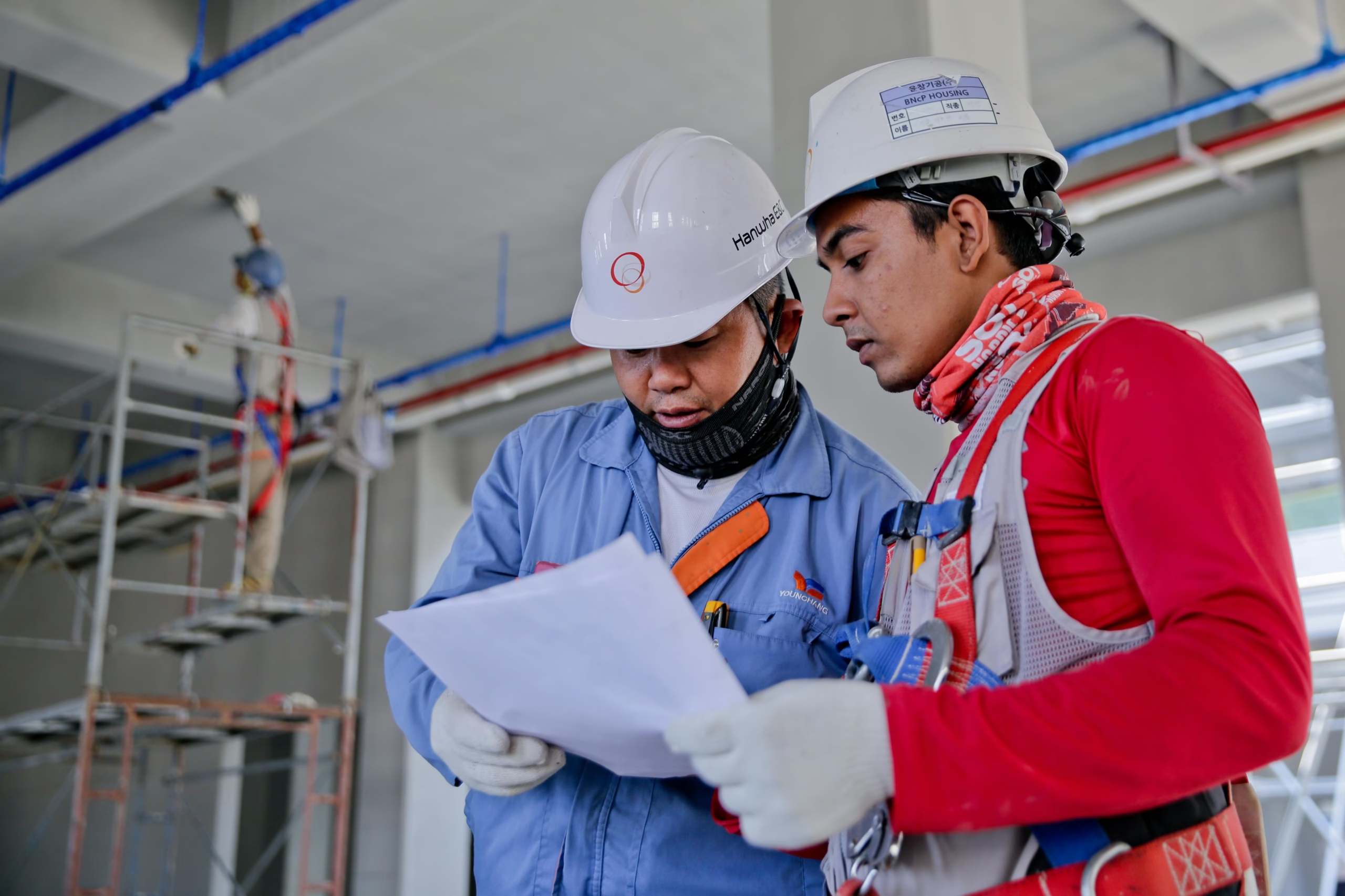
General Contractors and Custom Home Builders
A GC building a custom home with a masonry chimney needs a chimney subcontractor who shows up when scheduled, coordinates with the building department inspection timeline, and does not create rework for the trades that follow. Always Home Repair has been working as a chimney subcontractor for custom home builders in North Central Florida since 1982. We coordinate directly with the GC's project manager, meet the inspection schedule, and provide the documentation the GC needs to close the chimney scope at project completion. If the GC's client changes the appliance specification mid-project — which happens regularly in custom home construction — we adjust the liner specification and document the change without requiring a project restart.
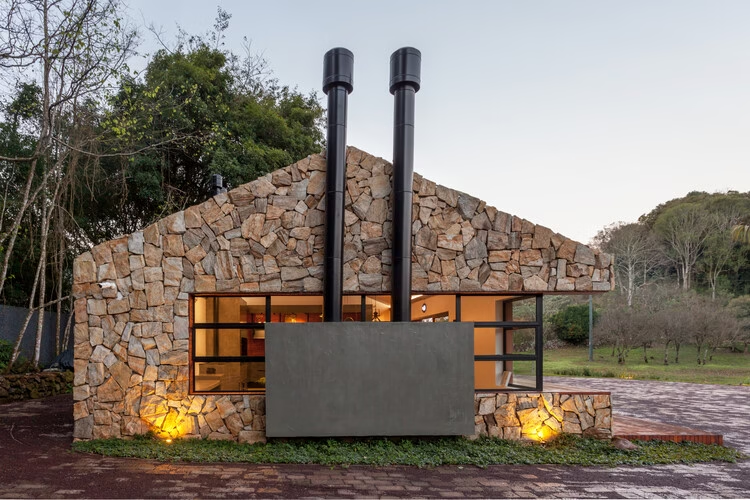
Architects and Designers Specifying Chimney Systems
An architect specifying a masonry chimney system for a custom home in North Central Florida needs a chimney builder who can work from drawings, confirm Florida Building Code compliance for the specified design, and identify any design elements that will not perform as intended before construction begins rather than after. Always Home Repair reviews architectural chimney specifications and provides a written confirmation of code compliance, construction feasibility, and any recommended modifications — before the project goes to bid. If the design specifies a chimney configuration that will produce draft problems given the planned appliance and the site's prevailing wind conditions, we document that finding at the review stage
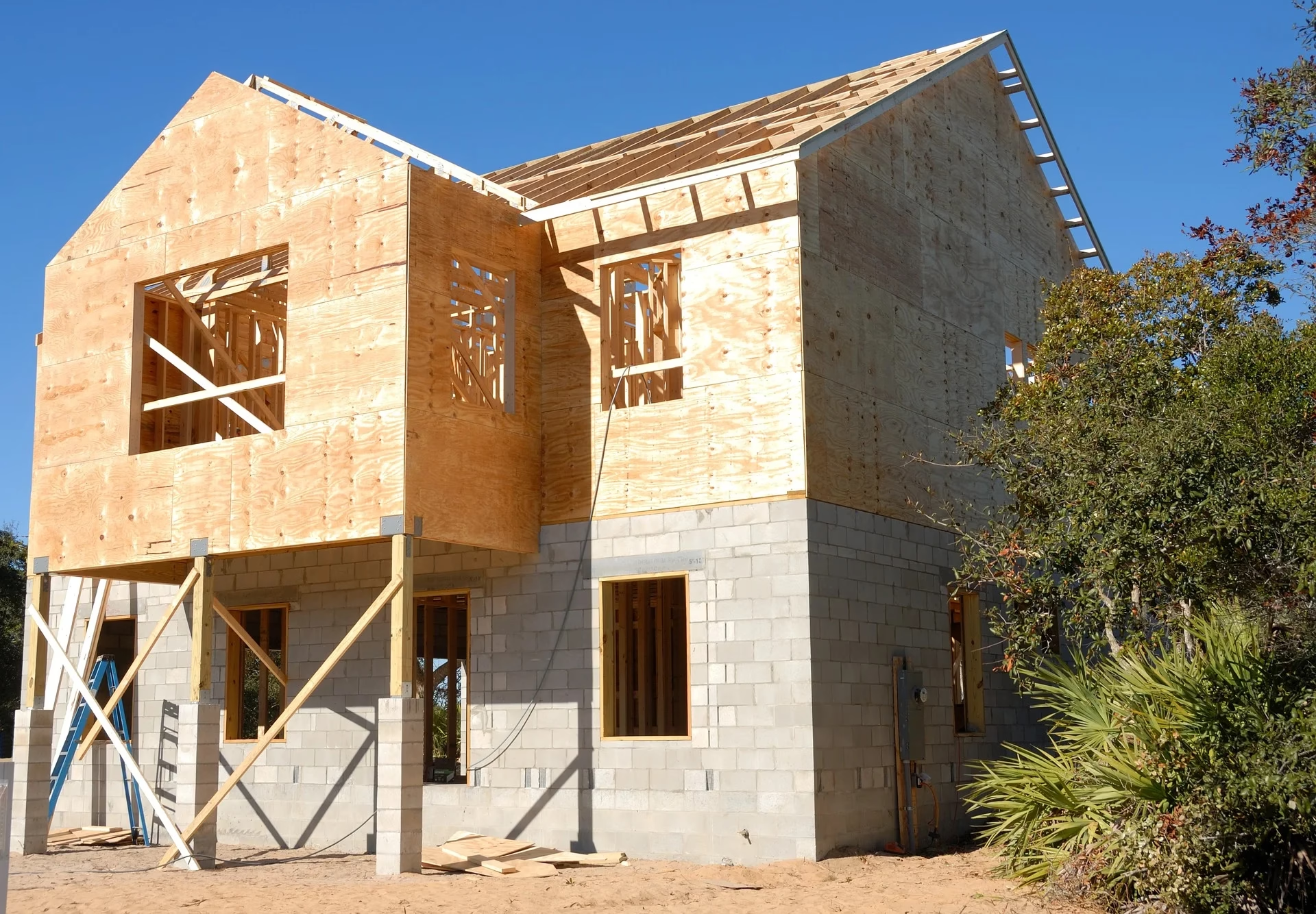
Homeowners Building a Custom or Semi-Custom Home
A homeowner building a custom home who wants a masonry fireplace and chimney has one primary concern: that the person who builds it knows what they are doing. The credential stack — MCT, CCR #94, CRC133200 — is the answer to that concern. The homeowner who is also thinking about the long-term service relationship has a second concern: that the company that builds the chimney will still be available to service it in ten and twenty years. Always Fire & Gas has been in continuous operation in North Central Florida since 1982. The chimney we build for your new home is a chimney we will be servicing for the next generation of its ownership.
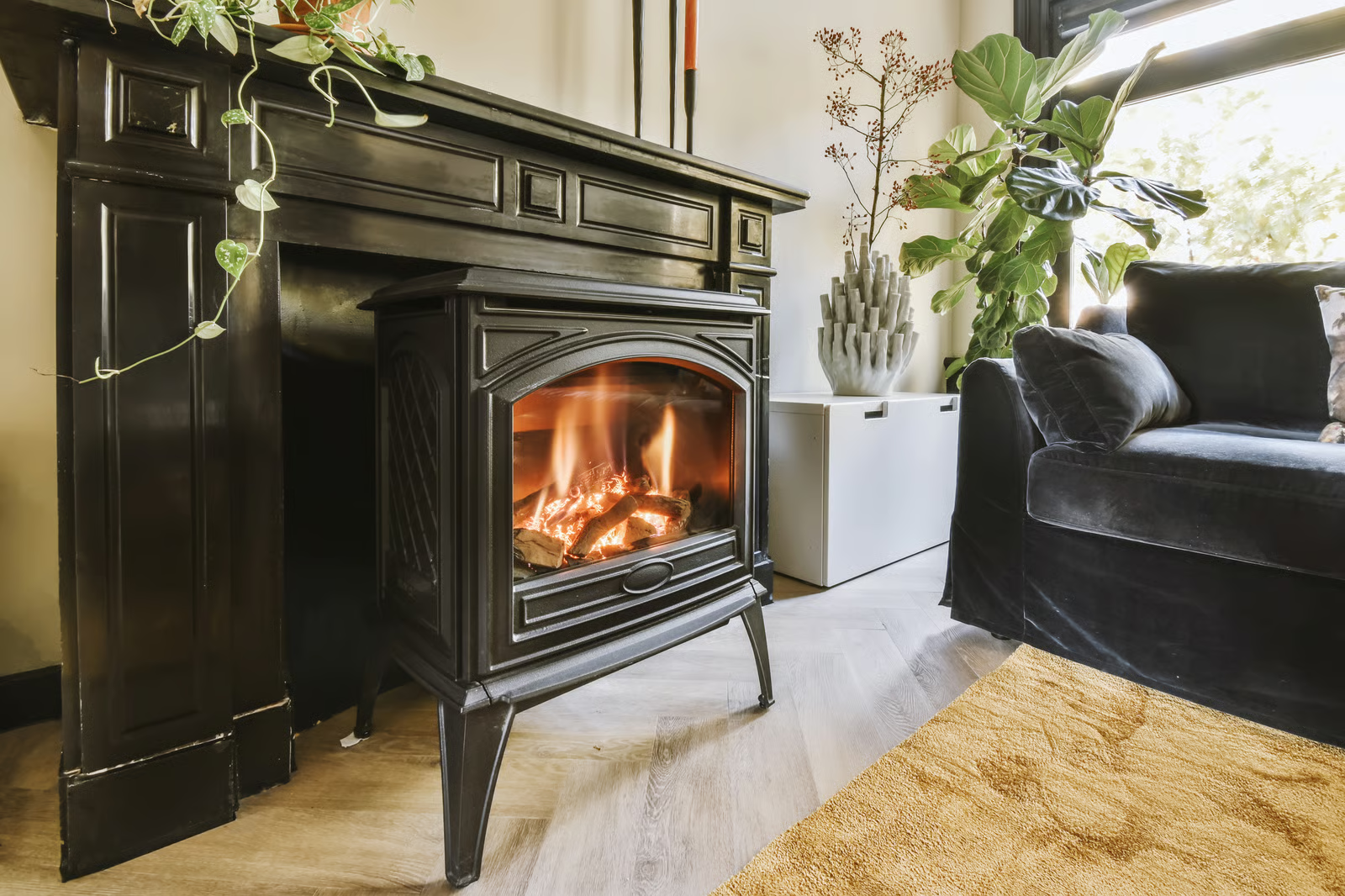
Homeowners Adding a Fireplace and Chimney to an Existing Home
A homeowner who wants to add a fireplace to an existing home has a decision to make before calling any contractor: which location, which fuel type, and whether a masonry chimney or a factory-built chimney system is the right application for the space and budget. Always Home Repair provides a free feasibility consultation that addresses all three questions — structural feasibility of the proposed location, fuel type options given the home's gas availability and the homeowner's preferences, and the cost and performance trade-offs between masonry and factory-built systems. We do not propose masonry construction for every application. For some home configurations and budget ranges, a factory-built system is the correct answer. We will tell you which one applies to your situation
Three Stages of Creosote. One Is Routine. Three Credentials That Cover Every Decision Made in New Chimney Construction. On One Team.
A new chimney project involves three distinct categories of decision: system design (what type of chimney, what flue dimensions, what liner specification, what appliance compatibility), structural construction (footing, masonry, crown, flashing), and permitting (licensed contractor authority to pull and close construction permits). Most chimney companies can address one of these categoriesAlways Fire & Gas and Always Home Repair address all three.
Master Chimney Technician
What it requires: Passing a comprehensive examination covering advanced chimney system design, appliance compatibility, venting engineering, NFPA 211 and NFPA 54 standards, and the full scope of chimney system performance across all fuel types and construction configurations. The MCT designation requires demonstrated mastery — it is not a continuing education certificate.
Why it matters for new construction:The MCT credential governs the system design decisions made at the beginning of a new construction project: what chimney configuration is appropriate for the specified appliance, what flue dimensions produce correct draft at the planned chimney height, what liner system is required, and what construction specifications produce a chimney that performs correctly from the first fire. These decisions, made correctly at design stage, cannot be corrected easily after construction.
Certified Chimney Reliner #94
What it requires: Passing a specific examination covering liner materials, NFPA 211 sizing requirements, and installation standards for all liner system types. CCR #94 places Always Fire & Gas among the earliest credentialed chimney reliners in the country
Why it matters for new construction: In new construction, the liner system is designed before the appliance is installed. The CCR credential governs the specification of a liner that is correctly sized for the planned appliance — not an approximation or a standard residential size. A liner specified incorrectly at the design stage produces draft failure or condensation problems that persist for the life of the chimney.
FL Residential Contractor #CRC1332000
What it requires: Passing the Florida State Contractors Examination, maintaining liability insurance and workers’ compensation coverage, and holding an active license in good standing with the Florida Department of Business and Professional Regulation.
Why it matters for new construction: The contractor license is what authorizes Always Home Repair to pull building permits for chimney construction, serve as the contractor of record for foundation and structural inspections, and provide the permit documentation that makes the construction legal, insurable, and documentable at resale. A chimney builder without a contractor license cannot legally pull permits in Florida.
Florida Chimney Construction Has Requirements That Northern-Market Specifications Do Not Address
Most chimney construction guidance available online — from manufacturer specifications to national chimney organization publications — is written for cold-climate markets where freeze-thaw cycles, frost-line footings, and heating-season chimney performance are the primary design drivers. Florida chimney construction operates under a different set of constraints.
FLORIDA-SPECIFIC REQUIREMENT
WHY IT APPLIES HERE
CONSEQUENCE OF GETTING IT WRONG
Mortar mix selection for high-humidity exposure
Florida’s sustained humidity causes moisture absorption in standard mortar mixes that accelerates joint deterioration. Type S mortar is the standard specification for exterior chimney masonry in Florida’s exposure zone — not Type N, which is appropriate for protected or interior applications.
Type N mortar in Florida exterior chimney exposure deteriorates significantly faster than properly specified Type S. Mortar joint failure begins within five to ten years rather than twenty to thirty.
Wind load compliance per Florida Building Code
Florida Building Code requires chimney structures in high-wind design regions to meet specific lateral load requirements. Marion, Alachua, and Sumter Counties have defined design wind speeds that affect chimney anchorage, height limitations, and above-roofline structural specifications
A chimney built without Florida Building Code wind load compliance is not a code-compliant structure. It will not pass building department inspection and may be a structural liability in any tropical storm or hurricane event.
Footing design without frost-line requirement
Northern states require chimney footings to extend below the frost line — often 3 to 4 feet below grade. Florida has no frost line. Florida chimney footings are designed for bearing capacity and drainage rather than frost protection. The footing must be sized for the chimney’s weight load and appropriate for the soil conditions at the specific site.
A footing undersized for the chimney’s weight load or incorrectly specified for poor-drainage soils produces differential settlement — the chimney moves relative to the house structure, creating flashing failure, crown cracking, and potential structural separation.
Moisture management at the chimney-roof junction
Florida’s high annual rainfall — averaging 54 inches per year in North Central Florida — means the chimney-roof junction experiences significantly more water load than cold-climate applications. Step flashing, counter flashing, and saddle flashing (cricket) specifications appropriate for Florida’s rainfall intensity differ from minimum code in lower-rainfall jurisdictions
Flashing specified to minimum code in a high-rainfall Florida application produces active water infiltration at the chimney-roof junction within five to ten years. Water entry at this location is the leading source of chimney-related interior water damage.
Cap and crown specification for UV and moisture exposure
Florida’s combination of UV intensity and rainfall requires chimney cap and crown materials specified for sustained outdoor exposure. Mortar crowns without waterproof treatment and caps without stainless steel or powder-coated finishes deteriorate significantly faster in Florida’s climate than equivalent components in moderate climates.
Crown cracking from UV and moisture exposure begins within three to seven years on unprotected mortar crowns in Florida. A crown built to minimum specification without waterproofing treatment requires repair or replacement significantly sooner than one built to the appropriate Florida exposure standard.
FLORIDA-SPECIFIC REQUIREMENT
Mortar mix selection for high-humidity exposure
Wind load compliance per Florida Building Code
Footing design without frost-line requirement
Moisture management at the chimney-roof junction
Cap and crown specification for UV and moisture exposure
WHY IT APPLIES HERE
Florida’s sustained humidity causes moisture absorption in standard mortar mixes that accelerates joint deterioration. Type S mortar is the standard specification for exterior chimney masonry in Florida’s exposure zone — not Type N, which is appropriate for protected or interior applications.
Florida Building Code requires chimney structures in high-wind design regions to meet specific lateral load requirements. Marion, Alachua, and Sumter Counties have defined design wind speeds that affect chimney anchorage, height limitations, and above-roofline structural specifications
Northern states require chimney footings to extend below the frost line — often 3 to 4 feet below grade. Florida has no frost line. Florida chimney footings are designed for bearing capacity and drainage rather than frost protection. The footing must be sized for the chimney’s weight load and appropriate for the soil conditions at the specific site.
Florida’s high annual rainfall — averaging 54 inches per year in North Central Florida — means the chimney-roof junction experiences significantly more water load than cold-climate applications. Step flashing, counter flashing, and saddle flashing (cricket) specifications appropriate for Florida’s rainfall intensity differ from minimum code in lower-rainfall jurisdictions
Florida’s combination of UV intensity and rainfall requires chimney cap and crown materials specified for sustained outdoor exposure. Mortar crowns without waterproof treatment and caps without stainless steel or powder-coated finishes deteriorate significantly faster in Florida’s climate than equivalent components in moderate climates.
CONSEQUENCE OF GETTING IT WRONG
Type N mortar in Florida exterior chimney exposure deteriorates significantly faster than properly specified Type S. Mortar joint failure begins within five to ten years rather than twenty to thirty.
A chimney built without Florida Building Code wind load compliance is not a code-compliant structure. It will not pass building department inspection and may be a structural liability in any tropical storm or hurricane event.
A footing undersized for the chimney’s weight load or incorrectly specified for poor-drainage soils produces differential settlement — the chimney moves relative to the house structure, creating flashing failure, crown cracking, and potential structural separation.
Flashing specified to minimum code in a high-rainfall Florida application produces active water infiltration at the chimney-roof junction within five to ten years. Water entry at this location is the leading source of chimney-related interior water damage.
Crown cracking from UV and moisture exposure begins within three to seven years on unprotected mortar crowns in Florida. A crown built to minimum specification without waterproofing treatment requires repair or replacement significantly sooner than one built to the appropriate Florida exposure standard.
Most chimney construction guidance available online — from manufacturer specifications to national chimney organization publications — is written for cold-climate markets where freeze-thaw cycles, frost-line footings, and heating-season chimney performance are the primary design drivers. Florida chimney construction operates under a different set of constraints.
Every chimney Always Home Repair builds is designed to the Florida Building Code requirements for the specific location — wind design speed, exposure category, and soil conditions — not to a generic national specification. We have been building chimneys in this climate since 1982. We know what holds and what does not.
Minimum Code Gets the Permit. Here Is What We Do Beyond Minimum Code and Why.
A chimney that passes building department inspection meets the minimum standard required for occupancy. A chimney built to last forty years in North Central Florida’s climate is built to a higher standard than the minimum — in specific, documentable ways. Here is what Always Home Repair does beyond minimum code on every new chimney project.
Construction decisions above minimum code:
Type S mortar throughout exterior masonry
Minimum code does not specify mortar type for chimney masonry in Florida. Type S mortar provides superior moisture resistance for Florida’s exterior exposure. We specify it on every project regardless of what the minimum requires.
Oversize footing for drainage and load margin
Minimum code specifies minimum footing dimensions. We build footings with margin above the calculated load and with positive drainage slope — because soil conditions in North Central Florida often involve clay-rich soils with variable drainage that create differential settlement risk over time.
Full flashing system — step, counter, and cricket
Minimum code requires flashing at the chimney-roof junction. We install step flashing, counter flashing, and a saddle (cricket) on the high-side of any chimney wider than 30 inches — a cricket is not required by code until 30 inches, but it is required by physics on any chimney that will experience Florida’s rainfall load without debris accumulation and water pooling on the high side.
Crown with overhang and waterproof treatment
Minimum code specifies a crown. We build crowns with a minimum 2-inch overhang past the chimney face on all sides and apply a penetrating waterproof treatment at completion. The overhang directs water away from the masonry face. The waterproof treatment extends crown service life in Florida’s UV and rainfall exposure.
System design decisions above minimum code:
Liner sized to appliance spec, not to flue dimension
Minimum code requires a liner. We size the liner to the specific appliance’s BTU input and the planned chimney height per NFPA 211 venting tables — not to the flue dimension that was built before the appliance was specified. The liner is designed for the appliance, not adapted from the structure.
Smoke chamber parged at construction
Minimum code does not require smoke chamber parging in all jurisdictions. NFPA 211 Section 13.2 requires smooth, properly sloped smoke chamber surfaces. We parge every smoke chamber at construction — building a code-compliant system from day one rather than leaving a future inspection finding.
Post-construction video confirmation of full liner run
Minimum code requires inspection. We perform a video inspection of the full liner run after construction is complete to confirm the liner is correctly seated, free of construction debris, and performing as designed before we close the project.
Written system documentation provided at project close
Minimum code provides a permit record. We provide a project documentation package: permit record, liner specification and sizing calculation, construction photography, post-construction video, and a recommended service schedule for the chimney’s first five years.
Four Scenarios. Each With Its Own Construction Requirements.
1
Custom Masonry Chimney for New Home Construction
Built from foundation to crown as part of new home construction — coordinated with GC through all construction phases
A masonry chimney built as part of new home construction is the most complex coordination scenario in chimney construction: the footing is poured at foundation stage, the masonry is built through framing stage, the firebox is roughed in before drywall, and the above-roofline section is completed after roofing. Always Home Repair coordinates directly with the general contractor through each phase, meeting the building department inspection schedule and working within the GC’s timeline. The chimney system — including liner specification, appliance clearances, and smoke chamber construction — is designed before the build begins, not adapted after the fact.
- Footing poured at foundation stage — sized to chimney weight load and Florida soil conditions
- Masonry built through framing to roofline — coordinated with GC inspection schedule
- Firebox, smoke chamber, and damper installed before drywall
- Above-roofline section completed after roofing — flashing integrated with roofing contracto
- Liner specified and installed after appliance selection is confirmed
- Post-construction video inspection and project documentation package at close
2
Fireplace and Chimney Addition to Existing Home
Adding a new fireplace and chimney to a home with no prior fireplace — requires structural assessment of proposed location
Adding a fireplace and chimney to an existing home is a different construction challenge than building one as part of new construction. The proposed location must be assessed for structural feasibility: floor joist direction and size at the firebox location, roof structure and framing at the chimney penetration point, foundation condition if the chimney footing must be integrated with the existing foundation, and exterior wall configuration at the chimney location. Always Home Repair performs the feasibility assessment before any project scope is finalized. Not every proposed location is structurally appropriate for a masonry chimney, and an honest feasibility assessment before commitment is more valuable than discovering the problem during demolition
- Structural feasibility assessment of proposed location before project commitment
- Firebox and smoke chamber built to NFPA 211 specification for the selected fuel type
- Chimney penetration through existing roof framing — coordinated with any required structural modifications
- Flashing integrated with existing roofing at chimney penetration
- All work permitted under #CRC1332000 with building department inspection at each stage
3
Chimney for Outdoor Kitchen, Pool House, or Workshop
Freestanding chimney structure for outdoor cooking, heating, or wood-burning applications
An outdoor chimney structure — serving a wood-fired pizza oven, outdoor fireplace, or outdoor kitchen range — is a freestanding masonry structure with different construction requirements than a house-attached chimney. There is no house structure to anchor to: the chimney must be self-supporting from its own footing. Wind load exposure is typically more significant than for a house-attached chimney. The footing must be designed for the specific soil conditions at the outdoor structure location. The fuel type (wood-burning, gas, or both) determines the liner specification and the required appliance clearances. Always Home Repair designs and builds outdoor chimney structures for residential and light commercial applications throughout North Central Florida.
- Self-supporting masonry structure from independent footing — not anchored to house structure
- Wind load designed for outdoor exposure per Florida Building Code
- Fuel type determines liner specification: wood-burning, gas, or dual-fuel configuration
- Appliance clearances designed for outdoor kitchen or fireplace application
- Weatherproof crown and cap specified for full outdoor exposure
- Permitted where required under #CRC1332000
4
New Construction Chimney for Fireplace Insert or Wood Stove
Chimney built specifically for a factory-built fireplace, insert, or wood stove installation
A chimney built for a specific insert or stove installation is designed around the appliance’s manufacturer specifications from the beginning. The flue sizing, liner selection, clearance requirements, and chase construction are all driven by the appliance’s listed installation instructions — not adapted from a generic chimney configuration. Always Home Repair coordinates appliance selection with chimney design before construction begins. A chimney built to accommodate a specific Blaze King stove, a Vermont Castings insert, or a Regency fireplace is designed to that appliance’s venting requirements from footing to cap — not approximated and then corrected after installation.
- Appliance selection coordinated with chimney design before construction begins
- Flue sizing and liner specification determined by appliance manufacturer's listed instructions
- Chase dimensions designed for clearance requirements of selected appliance
- Liner installed and confirmed by post-installation video before appliance connection
- Manufacturer warranty requirements documented in project package
Two Names. One Licensed Team. One Set of Credentials.
For new chimney construction, the relevant entity is Always Home Repair as the licensed contractor of record. For ongoing inspection, sweeping, and service of the chimney after completion, the relevant entity is Always Fire & Gas. You reach both at (352) 282-0158. You will never be told that your question is the wrong company’s responsibility.
New Chimney Construction Across North Central Florida
Always Home Repair builds new chimney systems across Marion, Alachua, Lake, Sumter, Citrus, Putnam, Hernando, Orange, Volusia Counties and all surrounding areas. All construction is permitted under FL Residential Contractor License #CRC133200 in applicable jurisdictions. GC coordination available for new home construction throughout the region.
Ocala & Marion County
Gainesville &Alachua County
The Villages &Sumter County
Home market since 1982. Annual sweep and inspection service across Marion County including rural and agricultural properties with wood stoves and fireplaces
Annual maintenance and problem-diagnosis sweeps throughout Alachua County. New homeowner and real estate follow-up sweeps for Gainesville’s active resale market.
High-volume annual maintenance market. HOA and community association properties. Senior living facilities with common-area fireplaces. Multi-unit scheduling available.
Ocala & Marion County
Home market since 1982. Annual inspections, pre-listing, and buyer inspections across Marion County. Rural and agricultural properties served.
Gainesville & Alachua County
Active resale market with high demand for Level 2 buyer and seller inspections. University-adjacent and established neighborhoods throughout Alachua County.
The Villages & Sumter County
High-volume real estate market. Large senior living and HOA-community population. Level 2 real estate inspections on tight closing timelines throughout Sumter County.
Also serving: Lake, Citrus, Putnam, Hernando, Orange, and Volusia Counties. Call (352) 282-0158 to confirm scheduling availability for your address.
New Chimney Construction Questions, Answered Directly
New chimney construction cost in North Central Florida depends on the chimney type (full masonry vs. factory-built chase), the height and configuration of the chimney, the fuel type and appliance specification, whether the project is new home construction or an addition to an existing home, and the specific site conditions — soil type, roof pitch, and structural access. A full masonry chimney for a new home construction project is priced differently from a chimney addition to an existing home or an outdoor kitchen chimney structure. Always Home Repair does not publish a fixed construction price. Call (352) 282-0158 for a project consultation and written scope.
Timeline depends on the project type and coordination requirements. A masonry chimney built as part of new home construction is phased across the construction schedule — footing at foundation stage, masonry through framing, above-roofline work after roofing — and is typically completed in coordination with the GC’s overall project timeline. A chimney addition to an existing home is typically a standalone project of one to three weeks depending on scope and permit timeline in the applicable jurisdiction. Always Home Repair provides a project schedule at the time of the written scope so the homeowner or GC can plan accordingly.
The choice between masonry and factory-built depends on budget, aesthetic preference, appliance choice, and structural feasibility of the proposed location. Masonry chimneys have higher upfront cost, longer service life when correctly built, and are a permanent structural feature of the home. Factory-built chimney systems have lower upfront cost, are appropriate for locations where masonry construction is not structurally feasible, and offer more flexibility in fuel type and appliance selection. Always Home Repair provides honest guidance on which system is appropriate for a specific home, location, and budget — we build both and do not have a financial preference for masonry over factory-built.
Florida chimney construction requires compliance with Florida Building Code wind load specifications for the design wind speed at the project location, mortar specification appropriate for Florida’s exterior moisture exposure (typically Type S for exterior chimney masonry), footing design for Florida’s soil conditions and the absence of frost-line requirements, and flashing specification appropriate for Florida’s annual rainfall load. Crown and cap selection must be specified for sustained UV and moisture exposure. Always Home Repair designs every chimney to the Florida Building Code requirements for the specific project location — not to a generic national specification.
Yes. Always Home Repair has worked as a chimney subcontractor for custom home builders in North Central Florida since 1982. We coordinate directly with the GC’s project manager through each construction phase — footing, masonry, above-roofline, and final inspection — and meet the building department inspection schedule as part of the GC’s overall project timeline. We provide the documentation the GC needs to close the chimney scope: permit record, liner specification, construction photography, and post-construction video inspection. GCs can call (352) 282-0158 to discuss subcontractor relationship and reference projects.
Yes. New chimney construction is structural construction that requires a Florida Residential Contractor License to pull building permits and serve as contractor of record. Always Home Repair holds FL Residential Contractor License #CRC133200, verifiable at myfloridalicense.com. A chimney builder without a contractor license cannot legally pull construction permits in Florida, which means any chimney they build cannot receive required building department inspections and does not have a permit record — creating insurance and resale complications for the property owner.
The Master Chimney Technician (MCT) designation, issued by the National Chimney Sweep Guild, is the highest professional credential in the chimney industry. It requires passing a comprehensive examination covering advanced chimney system design, appliance compatibility, venting engineering, and the full scope of chimney system performance across all fuel types and construction configurations. For new chimney construction, the MCT credential governs the system design decisions — flue configuration, liner specification, draft engineering — that determine whether the chimney performs correctly from the first fire and for the life of the structure.
In new construction, the liner is specified before it is installed — which means it must be designed for the planned appliance, not adapted from whatever liner was convenient. Always Home Repair coordinates appliance selection with liner specification: the appliance’s BTU input and fuel type determine the minimum liner cross-sectional area per NFPA 211 venting tables, and the planned chimney height determines the liner diameter within the code-specified range. A liner specified correctly for the appliance at the design stage performs correctly from the first fire. A liner that was not specified to the appliance requires correction after construction — which is a relining project, not a warranty repair.
Always Home Repair provides a project documentation package at project close: the building permit record confirming code-compliant construction and building department inspection approval, the liner specification and NFPA 211 sizing calculation, construction photography documenting each phase of the build, a post-construction video inspection of the full liner run confirming correct installation, and a recommended service schedule for the chimney’s first five years. This documentation package is suitable for homeowner files, GC project close-out, real estate disclosure, and insurance records.
Always Fire & Gas — the sister company under the same ownership and the same team — provides annual inspection, sweeping, and service for chimneys built by Always Home Repair. Because the same team that built the chimney also services it, every inspection is performed with direct knowledge of the as-built configuration, the liner specification, and the appliance the system was designed for. You are not explaining your chimney’s construction history to a technician who has never seen it. You are working with the same people who built it. Call (352) 282-0158 to schedule either construction or service.