Custom-Fabricated. Measured to Fit. Built to Last in Florida's Climate.
Chimney Chase Covers in Ocala, Gainesville, Orlando, The Villages, and All Surrounding Areas
- CSIA Certified Chimney Sweep #10020
- CCP (Certified Chimney Professional) #546
- Certified Chimney Specialist (CSIA) #59
- Certified Master Chimney Technician #34
- FL Residential Contractor #CRC133200
- FL Gas Contractor #LI45277
- Certified Chimney Re-liner #94
- Certified Chimney Journeyman #5053
- We measure the chase opening on-site. Cover fabricated to exact dimensions. Installed same visit or scheduled return.
Chimney Chase Covers
Stainless Steel. Galvanized. Aluminum. Copper. Custom-Fabricated to Your Chase Opening Dimensions. Factory-Built and Masonry Chimney Systems. FL Residential Contractor #CRC1332000. North Central Florida Since 1982
A chimney chase cover is the flat or sloped metal panel that sits on top of the chimney chase enclosure and sheds water away from the chase walls and the flue pipe penetration. On factory-built chimney systems, it is the component most likely to fail first: the galvanized steel covers installed by builders at the time of original construction rust through in eight to fifteen years in Florida’s coastal-adjacent humidity and rainfall environment, and a rusted or ill-fitting cover is one of the most direct water entry paths in a prefab chimney system.
Always Fire & Gas installs custom-fabricated chase covers measured to the exact dimensions of the chase opening — not cut-down stock covers forced to approximate fit. A cover that fits correctly sits flat on the chase top, drains properly at all four edges, and does not admit water at the flue pipe penetration or at the seam between cover and chase wall. That requires a cover built to the actual measurements, not the nearest standard size.
A chimney chase enclosure — the framed, sided box that surrounds a factory-built flue pipe and extends above the roofline — is not waterproof on its own. The chase cover is the component that makes it waterproof: it sits on top of the chase walls, sheds rain to the outside of the chase rather than into the interior, and seals around the flue pipe penetration at its center. Without a correctly fitting and intact chase cover, the interior of the chase enclosure is an open collection point for rain, debris, and wildlife.
Chase covers in North Central Florida fail faster than their counterparts in moderate climates for two reasons. First, the galvanized steel covers installed by production builders at the time of original construction are specified to a minimum standard that is adequate for the builder’s warranty period, not for the twenty-year service life the homeowner assumes. In Florida’s combination of high humidity, annual rainfall averaging over 50 inches, and salt-adjacent air throughout much of the region, galvanized steel rusts through in eight to fifteen years — often faster on the high-moisture north face of the chase. Second, builder-installed covers are typically stock sizes cut to approximate fit rather than custom-fabricated to the actual chase dimensions, which means seams and overlaps that should shed water instead collect it.
The Chase Cover's Job Is Simple. Here Is Why Florida's Climate Makes It Hard.
FAILURE MODE
VISIBLE SIGN
CONSEQUENCE IF NOT REPLACED
Galvanized cover rusted through
Orange-brown rust staining on chase siding below the cover line, visible rust on cover surface from roofline
Direct water entry into chase interior on every rain event — soaks chase framing and insulation, damages flue pipe connections
Flue pipe collar seal failed
Water visible inside firebox or at the base of the flue pipe, rust ring around flue pipe penetration on cover surface
Water running down the outside of the flue pipe into the firebox — often misdiagnosed as cap failure or crown failure
Cover warped or lifted at edges
Operation, seal condition, throat dimensions relative to flue
Stuck, broken, corroded, or missing damper; throat obstruction
Ill-fitting stock cover with exposed seams
Visible seam or overlap on cover surface, cover does not sit flush at chase walls
Seam acts as water collection channel rather than drain — water pools at seam and wicks through
FAILURE MODE
Galvanized cover rusted through
Flue pipe collar seal failed
Cover warped or lifted at edges
Ill-fitting stock cover with exposed seams
VISIBLE SIGN
Orange-brown rust staining on chase siding below the cover line, visible rust on cover surface from roofline
Water visible inside firebox or at the base of the flue pipe, rust ring around flue pipe penetration on cover surface
Operation, seal condition, throat dimensions relative to flue
Visible seam or overlap on cover surface, cover does not sit flush at chase walls
CONSEQUENCE IF NOT REPLACED
Direct water entry into chase interior on every rain event — soaks chase framing and insulation, damages flue pipe connections
Water running down the outside of the flue pipe into the firebox — often misdiagnosed as cap failure or crown failure
Stuck, broken, corroded, or missing damper; throat obstruction
Seam acts as water collection channel rather than drain — water pools at seam and wicks through
Four Materials. Each With a Defined Performance Profile for Florida's Climate.
Chase cover material selection depends on the chimney’s exposure conditions, the homeowner’s budget, the architectural character of the home, and the expected service interval before next replacement. Always Fire & Gas installs all four materials and recommends the one that fits the specific combination of factors for each project — not the most expensive option by default.
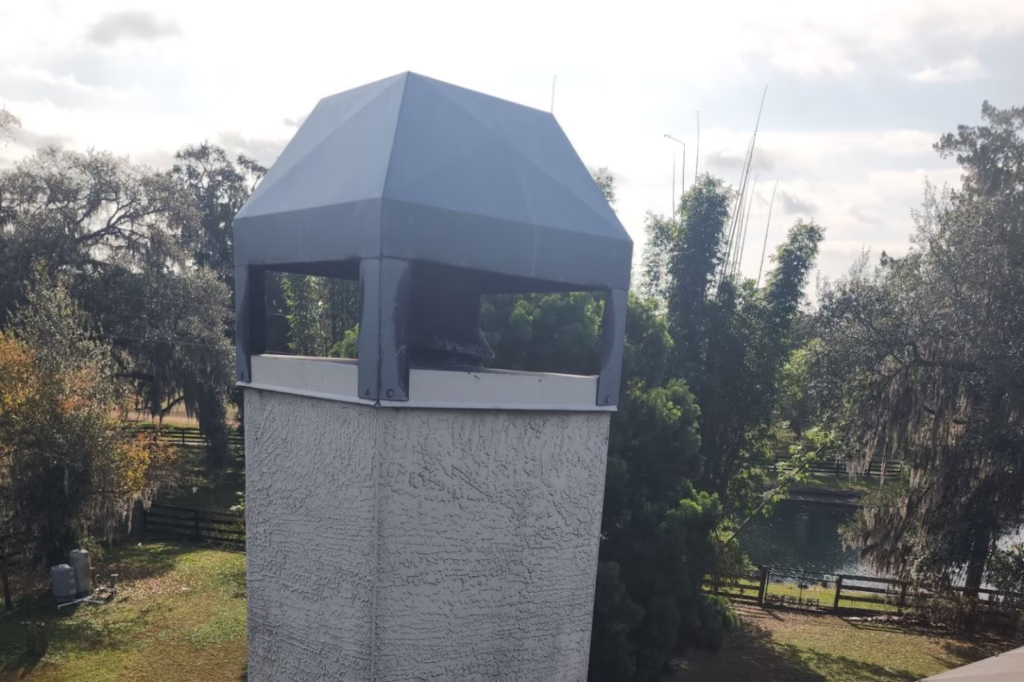
Stainless Steel
20-gauge Type 304 stainless steel, brushed or mill finish | Most commonly installed material
Best for: Homeowners who want a single replacement that does not require revisiting in ten to fifteen years. Chimneys with significant exposure: south or west-facing chase walls, direct sun, high rainfall area. Properties where repeated replacement is inconvenient or costly due to roof access.
Florida performance note: Type 304 stainless steel is non-corrosive in Florida’s coastal-adjacent humidity environment. It does not rust, does not require painting or coating, and does not degrade at the seams or flue pipe collar over time the way galvanized steel does. The custom-fabricated cover sits flat on the chase top, sheds water at the drip edge overhang on all four sides, and is sealed at the flue pipe penetration with a stainless collar and high-temp sealant. In Florida’s climate, a correctly fabricated and installed stainless cover is a one-generation replacement — not a ten-year maintenance item.
Expected service life: 25 to 40 years in Florida exposure with no maintenance required
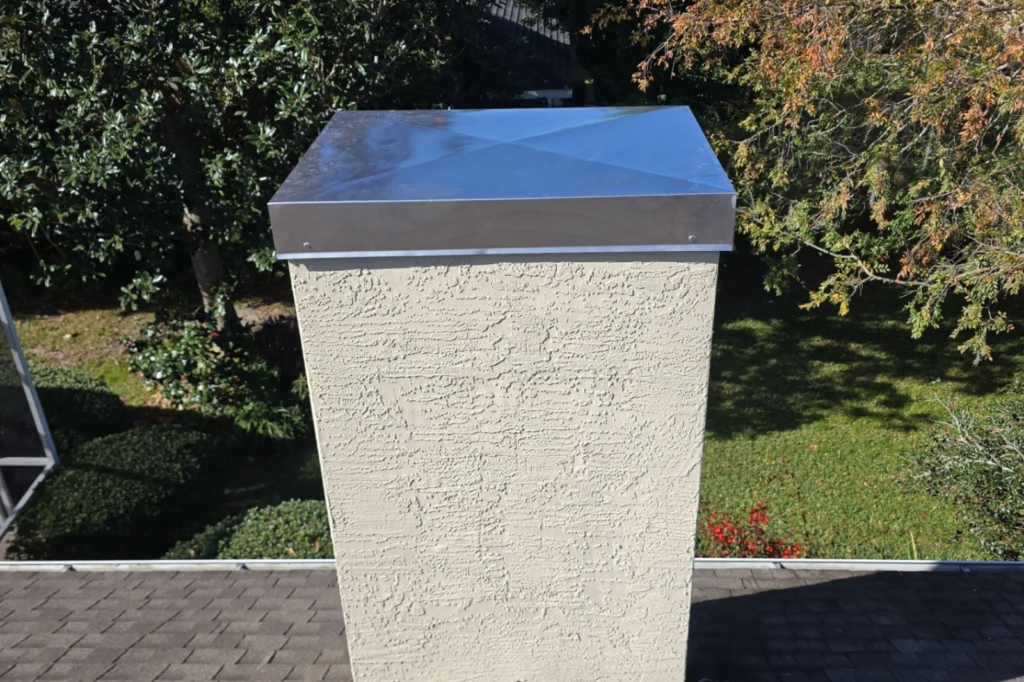
Galvanized Steel
24-gauge galvanized steel, painted or bare | Economy replacement option
Best for: Budget-constrained replacements where the homeowner understands the shorter service life. Rental properties where the maintenance schedule allows for replacement in eight to twelve years. Properties being prepared for sale where a functional cover at lower cost is the priority.
Florida performance note: Galvanized steel is zinc-coated mild steel. The zinc coating provides corrosion resistance that extends service life beyond uncoated steel, but in Florida’s sustained humidity and rainfall, the coating degrades and the underlying steel rusts through — typically in eight to fifteen years depending on exposure. Galvanized covers installed on south or west-facing chases with direct sun exposure tend toward the shorter end of that range. Always Fire & Gas installs galvanized when the homeowner’s budget or timeline requires it, with a clear explanation of the expected service life difference relative to stainless. We do not recommend galvanized as the default choice in Florida.
Expected service life: 8 to 15 years in Florida exposure — shorter on high-sun, high-moisture exposures
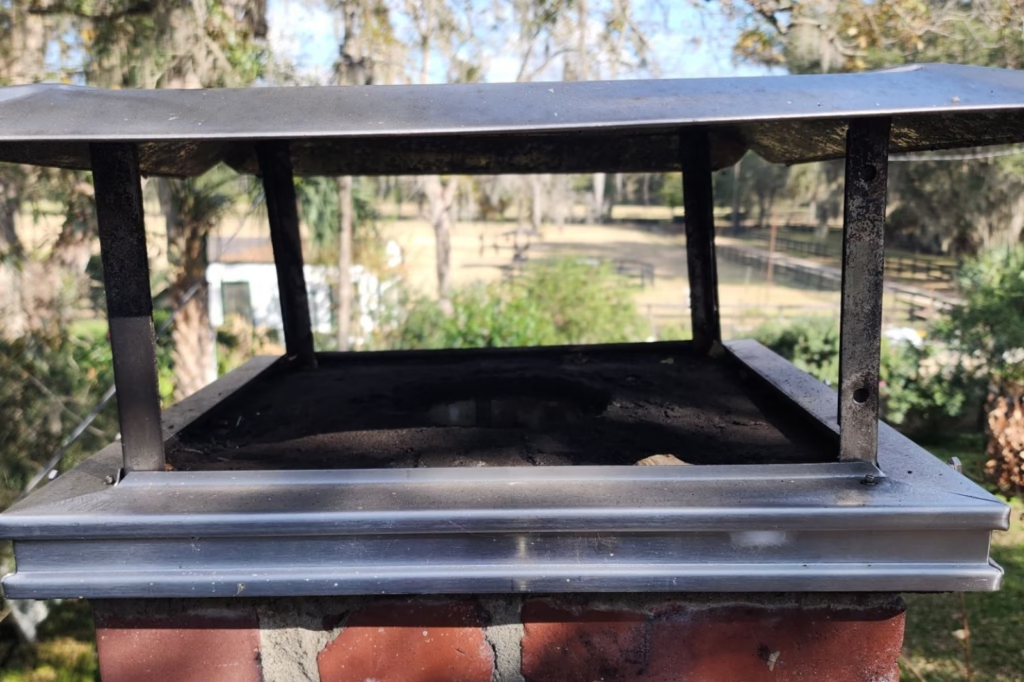
Aluminum
0.040-inch aluminum alloy, mill or painted finish
Best for: Chimneys where weight is a consideration — lighter than steel on larger chase openings. Applications where paint finish match to existing trim is a priority. Coastal properties where salt air is a significant exposure factor and stainless steel is not in budget.
Florida performance note: Aluminum does not rust in Florida’s humidity or coastal-adjacent salt air environment — it forms a stable oxide layer that protects the base metal rather than continuing to corrode the way galvanized steel does. It is lighter than both stainless and galvanized steel, which matters on large chase openings where cover weight can affect fit stability. Aluminum is softer than stainless and can dent or deform under impact — falling branches, foot traffic during roof work — more readily than steel. For most residential applications it is a sound mid-tier choice between galvanized and stainless.
Expected service life: 15 to 25 years in Florida exposure, depending on gauge and finish
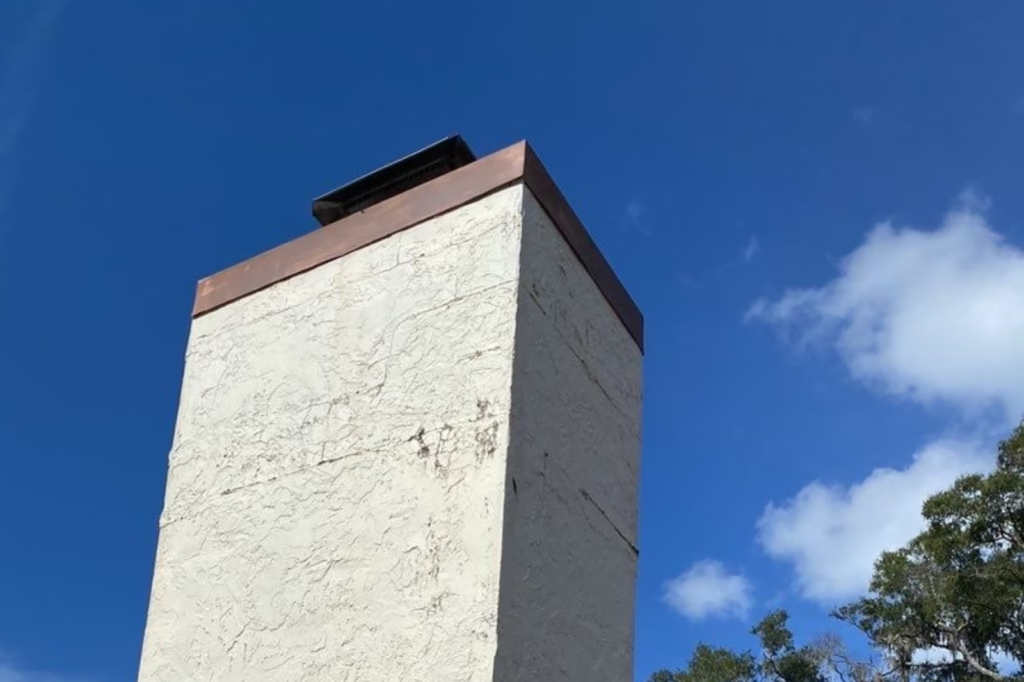
Copper
16 oz. copper sheet, natural patina finish
Best for: Architecturally significant homes where roofline material quality matches the home’s character. Custom and high-end residential construction where the chimney chase is a visible design feature. Homeowners who want a permanent installation that improves visually with age.
Florida performance note: Copper is the premium chase cover material for architectural applications. It does not corrode in Florida’s environment — it develops a stable green patina over five to ten years that is both weather-resistant and visually distinctive. Copper is heavier than aluminum and requires secure mechanical fastening at the chase walls. It is the most expensive material option and is fabricated with the same custom-dimension approach as stainless: measured to the chase opening, drip edge on all four sides, sealed flue pipe collar. For homes where the chimney chase is visible from the street and the homeowner wants the cover to be a finished architectural detail rather than a utilitarian component, copper is the correct specification.
Expected service life: 50+ years in Florida exposure — effectively permanent for the life of the structure
MATERIAL
SERVICE LIFE (FL)
SERVICE LIFE (FL) RUST RISK
RELATIVE COST
BEST SITUATION
Stainless Steel
25 to 40 years
None
Mid
Most Florida applications — recommended default
Galvanized Steel
8 to 15 years
High after ~8 years
Low
Budget or short-term need
Aluminum
15 to 25 years
None
Mid
Coastal, paint match, lighter weight
Copper
50+ years
None
High
Architectural / premium residential
MATERIAL
Stainless Steel
Galvanized Steel
Aluminum
Copper
MATERIAL
25 to 40 years
8 to 15 years
15 to 25 years
50+ years
SERVICE LIFE (FL) RUST RISK
None
High after ~8 years
None
None
RELATIVE COST
Mid
Low
Mid
High
BEST SITUATION
Budget or short-term need
Most Florida applications — recommended default
Coastal, paint match, lighter weight
Architectural / premium residential
Stock Covers Cut to Fit Create the Problems They Are Meant to Prevent
Chase cover material selection depends on the chimney’s exposure conditions, the homeowner’s budget, the architectural character of the home, and the expected service interval before next replacement. Always Fire & Gas installs all four materials and recommends the one that fits the specific combination of factors for each project — not the most expensive option by default.
Stock cover cut to size:
Seams at cut edges
Where a stock cover is trimmed to fit, the cut edge is a raw metal edge without the formed drip profile of the original factory edge. Water runs to the lowest point of the cover — often the cut edge — and enters at the raw seam rather than shedding past the chase wall.
Incorrect drip edge geometry
A stock cover cut down from a larger piece retains the drip edge profile only on the sides that were not cut. The cut sides have no drip edge — water runs flat to the edge and wicks between the cover and the chase wall top rather than dripping clear.
Approximate collar fit
Stock covers have a pre-punched or pre-cut flue pipe opening at a standard diameter. If the actual flue pipe diameter is different, the collar gap is filled with sealant rather than fitted with a properly sized collar — sealant that degrades in three to five years.
AFG custom-fabricated cover:
Measured to the actual chase opening
Before fabrication, AFG measures the chase opening at the top of the chase walls — length, width, and the location of the flue pipe penetration relative to the chase opening center. These are the fabrication dimensions. The cover is built to those measurements, not to the nearest stock size.
Formed drip edge on all four sides
The fabricated cover has a formed downward-facing drip edge profile on all four sides — not just the factory edges. Water that reaches any edge of the cover sheds past the chase wall face rather than running into the seam between cover and wall.
Collar sized to actual flue pipe diameter
The flue pipe collar is sized to the actual flue pipe diameter measured on-site and sealed with a high-temperature collar and sealant rated for the thermal cycling of the flue pipe. Not a stock punch with gap-fill sealant.
The fabrication step adds time to the project — covers are not pulled from a van and installed in an hour. For standard residential chase dimensions, AFG fabricates and installs on the same visit where the chase dimensions allow. For non-standard or unusually large openings, measurement is taken on the first visit and installation is scheduled when the fabricated cover is ready. The homeowner is told which applies at the time of the initial assessment.
Stock Covers Cut to Fit Create the Problems They Are Meant to Prevent
- On-Site Measurement and Existing Cover Assessment
The existing chase cover is inspected from the roof: condition of the cover surface, rust or corrosion pattern, seam and edge integrity, flue pipe collar condition and fit, and whether the cover failure is the sole source of any reported water entry or whether additional leak sources should be assessed. Chase opening dimensions are measured: length and width at the top of the chase walls, flue pipe diameter, and flue pipe position relative to the chase opening center. Findings are documented and the homeowner is given a material recommendation and price before any commitment.
- Old Cover Removal and Chase Top Preparation
The existing cover is removed from the chase top. The chase wall top surfaces are inspected for any moisture damage, rot, or structural deterioration that should be addressed before the new cover is installed. If the chase top framing has been damaged by chronic water entry from the failed cover, that repair is assessed and scoped at this stage. Chase top surfaces are cleaned of old sealant, debris, and rust residue before the new cover is set.
- FL Residential Contractor #CRC133200
The replacement cover is fabricated to the measured dimensions: formed metal sheet with drip edge profile on all four sides, flue pipe collar opening sized to the actual flue pipe diameter, and mechanical fastening points positioned for the chase wall top. For standard residential dimensions, fabrication is completed and the cover is fitted on the same visit. For non-standard dimensions, the cover is fabricated off-site and installation is scheduled for a return visit — typically within three to five business days.
Category V gas contractor license for natural gas and propane systems in Florida. The license most fireplace companies do not hold. Verify at myfloridalicense.com.
- Installation, Sealing, and Final Inspection
The fabricated cover is set on the chase top, mechanically fastened at the perimeter, and sealed at the flue pipe collar with high-temperature collar and sealant. The cover edge-to-chase-wall seam is sealed where required by the chase top configuration. The completed installation is photographed from the roofline and the homeowner is given before-and-after documentation. If the chase cover replacement was performed as a response to a reported water entry, the homeowner is advised to monitor through the next significant rain event and call (352) 282-0158 if water entry continues — which would indicate a secondary leak source beyond the cover.
Three Situations. One Solution. And What Happens Measured, Fabricated, and Installed Correctly.
Your Prefab Chimney Is Leaking and You Suspect the Chase Cover
A factory-built chimney that is leaking after rain — water in the firebox, a ceiling stain near the chimney, or rust staining on the chase siding below the cover line — has a failed chase cover as the most probable single source. The symptom that most reliably points to chase cover failure rather than flashing or cap failure is rust staining on the chase siding: orange-brown staining running down the siding below the top course indicates that water has been pooling on the cover and running over the edge rather than shedding past the drip edge. Always Fire & Gas assesses the chase cover condition as the first step of any factory-built chimney water intrusion call — if the cover is the source, replacement resolves the leak without a more extensive diagnostic process.
Call (352) 282-0158 and describe the symptom and chimney type (factory-built or masonry with chase enclosure). We can often confirm chase cover failure as the likely source from the description and schedule measurement and replacement in one visit.
Your Builder-Installed Chase Cover Has Rusted and Needs Replacement
A galvanized steel chase cover installed by the original builder and showing rust — visible from the roofline or identified during a chimney inspection — is at or past the end of its functional service life. Rusting through has likely already begun at the thinnest sections, even if active water entry has not yet appeared at the interior. Replacing a rusting cover before it fails through is less expensive than replacing it after chronic water entry has damaged the chase framing and required structural repair inside the chase enclosure. Always Fire & Gas replaces builder-installed galvanized covers with custom-fabricated stainless steel as the recommended default — a one-generation replacement that does not require revisiting in eight to twelve years.
Call (352) 282-0158 to schedule a roofline assessment and measurement. If the cover is showing rust, we will confirm whether it is still structurally intact or already failing through, and give you a material recommendation and price before any commitment.
Your Chimney Inspector or Roofer Noted a Failed Chase Cover
Your Chimney Inspector or Roofer Noted a Failed Chase Cover
A chimney inspection report or a roofer’s assessment that notes a failed, rusting, or ill-fitting chase cover is an accurate finding that should be addressed before the next rain season. Roofers who identify chase cover failures regularly refer that work to Always Fire & Gas — not because they cannot install a stock cover, but because the correct replacement requires measurement and custom fabrication that is outside the typical roofing scope. If your chimney inspector’s report or your roofer’s notes reference the chase cover, call (352) 282-0158 with the report in hand. We confirm the finding, measure the opening, and give you a material recommendation and installation price.
Call (352) 282-0158 with the inspection report or roofer’s notes. We confirm the finding and provide a written scope and price before any commitment is required.
Chimney Chase Cover Installation Across North Central Florida
Always Fire & Gas installs custom-fabricated chimney chase covers across Marion, Alachua, Lake, Sumter, Citrus, Putnam, Hernando, Orange, Volusia Counties and all surrounding areas. All four materials — stainless steel, galvanized, aluminum, and copper — available for factory-built and masonry chimney systems with chase enclosures.
Call (352) 282-0158 to confirm scheduling for your address. Bring the chimney inspection report or roofer’s notes if you have them — it helps confirm the scope before we arrive.
Still not sure which level you need?
Call or text (352) 282-0158 and describe your situation in one sentence. We will tell you which level applies in two minutes. It is a faster answer than reading three more paragraphs.
Chimney Chase Cover Questions, Answered Directly
A chimney chase cover is the flat or sloped metal panel that sits on top of a chimney chase enclosure — the framed, sided box that surrounds a factory-built flue pipe above the roofline. The chase cover’s job is to shed rain away from the chase interior and seal around the flue pipe penetration at its center. Without a correctly fitting and intact chase cover, rain enters the chase enclosure directly, soaks the framing and insulation inside the chase, runs down the outside of the flue pipe, and eventually appears as water in the firebox or a ceiling stain inside the home.
The most reliable visible sign of a failed or failing chase cover is rust staining on the chase siding — orange-brown staining running down the chase siding below the cover line indicates that water has been pooling on the cover and running over the edges rather than shedding properly. Other signs include visible rust on the cover surface when viewed from the roofline, water inside the firebox after rain when the cap appears intact, ceiling staining near the chimney base, or a chimney inspection report noting cover deterioration. Galvanized steel chase covers in Florida typically begin showing significant rust between eight and fifteen years after installation.
Stainless steel is the recommended default for most Florida residential applications. Type 304 stainless steel does not rust in Florida’s coastal-adjacent humidity and rainfall environment, requires no maintenance or coating, and has an expected service life of twenty-five to forty years. Aluminum is a sound alternative where weight or paint finish match is a priority, with a service life of fifteen to twenty-five years. Copper is the premium architectural choice for high-end residential applications with an effective service life exceeding fifty years. Galvanized steel is the least expensive option and is appropriate for budget-constrained or short-term applications with the understanding that it will require replacement in eight to fifteen years in Florida’s climate.
The replacement itself — removing the old cover and setting a new one — is mechanically simple. The problem is obtaining a correctly fitted cover. A stock cover purchased at a home improvement store is a standard dimension that will not match most residential chase openings without cutting, and a cut stock cover loses the formed drip edge on the cut sides. A cover without a formed drip edge on all four sides does not shed water correctly. Correct replacement requires measuring the chase opening and obtaining a fabricated cover built to those dimensions. Always Fire & Gas measures and fabricates on-site for standard residential dimensions and provides the installed cover with proper collar seal and documentation.
Chase cover replacement cost depends on the chase opening dimensions, the selected material, and whether the chase top framing requires any repair before the new cover is installed. Stainless steel custom-fabricated covers for standard residential chase openings are priced differently from copper covers for large or architectural applications. Always Fire & Gas provides a written price at the time of the on-site measurement — before any commitment is required. Call (352) 282-0158 for scheduling.
Chase covers apply primarily to factory-built chimney systems, where the flue pipe is enclosed in a framed chase structure that requires a cover at its top. Masonry chimneys do not have a chase enclosure — they have a crown, which is a concrete or mortar cap that seals the top of the masonry structure around the flue tile opening. A masonry chimney with a deteriorated crown needs crown repair or replacement, not a chase cover. Some masonry chimneys are enclosed in a wood-framed chase for aesthetic reasons — those applications do use a chase cover at the chase top. Always Fire & Gas installs chase covers for both factory-built systems and masonry chimneys with framed chase enclosures.
A chase cover replacement that fails within one to two years was almost certainly a stock cover cut to size rather than a custom-fabricated cover built to the actual chase opening dimensions. The cut edges of a stock cover do not have the formed drip edge profile required to shed water correctly — they allow water to run flat to the edge and wick into the seam between the cover and the chase wall top. Additionally, a stock flue pipe collar punch that does not match the actual flue pipe diameter is typically sealed with standard roofing sealant that degrades in the chimney’s thermal cycling environment within one to three years. Always Fire & Gas fabricates to the measured dimensions and uses a properly sized collar with high-temperature sealant rated for the application.