Existing Systems. NFPA 58 Compliance Restored. Permitted and Pressure Tested.
Propane Tank Upgrades and Relocations in Ocala, Gainesville, Orlando, The Villages and All Surrounding Areas.
- Master Chimney Technician #34
- FL Gas Contractor #LI45277
- CSIA Certified #10020
- FL Residential Contractor #CRC133200
- Liquified Petroleum (LP) Gas Master Qualifier License #MQ31416
- BBB A+ Since 2018 Family-Owned Since 1982
Gas Propane System Upgrades
Tank Upgrades. Tank Relocations. Above-Ground to Underground Conversions. System Pressure Upgrades. Distribution Line Upgrades. FL Gas Contractor #LI45277 & LP Gas Master Qualifier License #MQ31416. Master Chimney Technician. North Central Florida Since 1982.
This page is for existing propane systems. If you need a new propane tank installed on a property that currently has no propane service, see /gas/lp-tank-installation/ for the new installation scope.
An existing propane system that needs modification – a tank that is too small, a tank that needs to move for NFPA 58 compliance, an above-ground tank that needs to be buried, distribution lines that are aging past their service life, or a regulator and line configuration that cannot support a new high-demand appliance – requires the same licensed process as a new installation: assessment, permit, installation, pressure test, and inspection before gas is restored.
The most common call trigger on this page is simple: a homeowner has an above-ground tank the HOA wants out of sight, or a buyer’s agent has flagged the tank location as a potential issue before closing. The scope required is not always simple. A tank burial requires excavation to correct depth, Florida-specific corrosion protection for the buried tank exterior, correct backfill and surface restoration, an NFPA 58 setback verification for the burial location, and a permit. A tank relocation for an NFPA 58 violation requires identifying the specific violation, determining the correct compliant location, coordinating with the propane supplier for service line rerouting, and pulling a new permit for the relocated installation. Always Fire & Gas handles every step.
Five Scopes. One Licensed Team. Assessment Before Any Excavation or Disconnection.

Above-Ground to Underground Conversion
An above-ground to underground conversion takes an existing surface-mounted propane tank and buries it so that only the dome and service connections are visible at grade. The conversion is not a simple excavation and lower: the existing tank must be de-pressurized and purged before it is moved, the burial location must be NFPA 58 setback compliant (burial does not reduce the required setback distances from structures and property lines), the burial site must be excavated to correct depth with stable base material, and the tank exterior must receive Florida-specific corrosion protection before backfill. If the existing above-ground tank has reached or is approaching end of service life, a conversion is the correct time to replace it with a new tank rather than bury an aging unit. Always Fire & Gas assesses the existing tank condition as part of every conversion scope and advises on whether burial of the existing tank or replacement with a new tank is the better investment.
- Existing tank de-pressurized and purged before any movement – not disconnected and dragged to excavation
- Existing tank exterior condition assessed before burial decision – aging or corroded tank should be replaced rather than buried
- Burial location NFPA 58 setback verified – burial does not reduce required distances from structures or property lines
- Excavation to correct depth with stable base material confirmed before tank is lowered
- Florida corrosion protection applied: exterior coating integrity confirmed, sacrificial anode installed where soil conditions indicate
- High water table assessment: buoyancy anchoring required in some North Central Florida locations
- Backfill in correct material, surface restoration to pre-installation condition
- Permit pulled for conversion under #LI45277 & LP Gas Master Qualifier License #MQ31416, final inspection before gas service restored
- Propane supplier coordinated for service line rerouting where tank relocation changes service entrance point

Tank Relocation
A tank relocation moves an existing propane tank from its current location to a new position on the same property. The most common reasons for relocation are: an NFPA 58 setback violation identified during a property sale inspection or insurance review, a building addition or renovation that changes the structure’s footprint and creates a new setback conflict with the existing tank position, and a property reconfiguration (new fence, new structure, driveway extension) that places an ignition source within the required setback from the tank. The relocation process requires identifying the specific setback violation, confirming a compliant alternative location, coordinating with the propane supplier for service line adjustment, and permitting the relocated installation. The new location must meet current NFPA 58 setback requirements – relocating a tank to a location that resolves one setback conflict while creating another is not a compliant relocation.
- Specific setback violation identified and documented before relocation scope is designed
- Compliant alternative location confirmed against all applicable NFPA 58 setback requirements before any work is scheduled
- De-pressurization and purge before tank movement
- Service line rerouting coordinated with propane supplier where new tank location changes service entrance configuration
- New installation position meets current NFPA 58 requirements – not grandfathered to original installation standard
- New concrete pad or base preparation at relocation site where required
- Permit pulled for relocation under #LI45277 & LP Gas Master Qualifier License #MQ31416 – a relocated tank is a new permitted installation at the new position
- Pressure test at completion, final inspection before gas service restored
- Documentation suitable for real estate transaction, insurance file, or permit close-out

Tank Upgrade
A tank upgrade replaces an existing propane tank with a larger unit to serve additional appliances or a higher total BTU demand, or replaces an aging tank that has reached end of service life with a new unit. The two triggers are distinct: a capacity upgrade is load-driven (a new generator, a whole-home conversion from electric to gas, the addition of a gas fireplace or outdoor kitchen that pushes total demand past the existing tank’s practical supply capacity). An end-of-life replacement is condition-driven (a tank that has failed inspection, developed corrosion, or reached an age where continued service is not appropriate). In either case, the upgrade process requires de-pressurizing and purging the existing tank, assessing whether the existing installation location is adequate for the new tank size (a larger tank may require a larger footprint or may push the installation closer to a setback boundary), and installing the new tank with the full permit, pressure test, and inspection sequence.
- Load calculation confirms correct new tank size for increased BTU demand – not simply ‘one size up’ from existing
- Existing installation location assessed for NFPA 58 compliance with larger tank footprint before upgrade is scoped
- Existing tank de-pressurized, purged, and removed before new tank installation
- New tank installed at existing location or compliant alternative location
- Permit pulled for tank upgrade under #LI45277 & LP Gas Master Qualifier License #MQ31416 – a new tank at an existing location is still a permitted installation
- Pressure test at completion, final inspection before gas service restored
- Leased tank returns coordinated with propane supplier before removal where applicable
- As-built documentation updated to reflect new tank size and location
System Pressure Upgrade
A system pressure upgrade addresses the situation where the existing propane system’s regulator configuration and distribution line sizing cannot deliver adequate fuel pressure at all appliance connection points under simultaneous demand. This condition develops when appliances are added to a system that was originally designed for a smaller load, when a high-demand appliance (generator, commercial-style range, tankless water heater) is added to a system designed for standard residential demand, or when the original system was undersized at installation. The symptoms are pressure drop at one or more appliances when other appliances are operating simultaneously, pilot lights that blow out under demand conditions, or appliances that run at reduced output rather than rated output. Always Fire & Gas performs a full system assessment to identify where the pressure deficit originates before recommending any upgrade scope: the cause may be at the regulator, at the main distribution line, at a branch line junction, or at a combination of points.
- Full system assessment identifies where the pressure deficit originates before any replacement is recommended
- Regulator assessment: first-stage and second-stage regulator configuration confirmed appropriate for total system BTU demand
- Main distribution line assessment: existing pipe size confirmed against total system BTU demand and line length
- Branch line assessment: individual branch lines to high-demand appliances confirmed correctly sized
- Upgrade scope limited to what the assessment identifies – not a full system replacement by default
- All new regulators, fittings, and distribution line segments installed under #LI45277 & LP Gas Master Qualifier License #MQ31416
- Full system pressure test at completion confirms upgrade resolves the identified deficit
- Permit pulled where distribution line modification scope requires one under Florida Building Code
Distribution Line Upgrade
A distribution line upgrade replaces aging propane distribution lines that have reached or passed their practical service life. Galvanized steel pipe – common in propane systems installed more than 30 years ago – is not the correct material for propane distribution: propane is drier than natural gas and does not benefit from the zinc coating in the same way, and galvanized pipe in propane service develops internal corrosion products that can migrate into appliance gas valves and burner assemblies over time. Black iron pipe in damp locations, including Florida’s frequently humid crawl spaces and utility rooms, develops external corrosion that is not always visible at a glance inspection. Flexible connectors over 20 years old should be replaced regardless of visible condition – the elastomeric seals and corrugated metal in aging connectors are not reliably safe beyond their rated service life. Always Fire & Gas replaces aging distribution lines as a complete scope, not a patchwork of individual segment repairs.
- Full distribution system assessment identifies all aging segments, connectors, and fittings before replacement scope is designed
- Galvanized pipe confirmed as requiring replacement before any segment is left in service – galvanized in propane service is a deficiency, not a condition
- CSST replacement installed with NFPA 54 and Florida Building Code bonding requirements – all CSST bonded to electrical grounding system
- All flexible connectors over 20 years replaced as part of any distribution line upgrade scope
- Black iron segments in humid locations assessed for external corrosion and replaced where corrosion has progressed past surface condition
- Full system pressure test at completion of all distribution line replacement
- Permit pulled for distribution line replacement where scope requires one under Florida Building Code
- As-built documentation updated to reflect new distribution line materials and routing
What You Are Experiencing. What It Usually Indicates. Which Scope Addresses It.
Propane system problems do not always arrive with a clear label. A real estate agent says the tank needs to move before closing but does not explain why. The HOA sends a letter about an unsightly tank. A new generator runs but not at full output. The gas range works fine until the dryer is on at the same time. The table below maps the experience that most commonly triggers a call to the likely cause and the correct upgrade or relocation scope.
WHAT YOU ARE EXPERIENCING
HOA or neighbor complaint about visible tank
Real estate agent or inspector says tank must move before closing
Insurance company requiring tank relocation or upgrade
New generator installed but does not run at full output
Appliances lose pressure when multiple are running
Old galvanized or black iron pipes — want to upgrade
Running out of propane faster than expected — tank too small
WHAT YOU ARE EXPERIENCING
Above-ground tank visible from street, neighboring property, or common area. HOA covenants may restrict above-grade propane tanks.
NFPA 58 setback violation identified at property inspection — tank too close to structure opening, property line, or ignition source.
Insurer identified NFPA 58 setback deficiency, aging tank condition, or unpermitted installation during policy review or renewal inspection.
Generator is fuel-starved under load. Existing propane supply line to generator is undersized for peak BTU demand, or main distribution line cannot support generator demand plus household appliances simultaneously.
Existing distribution system was designed for original appliance load only. Additional appliances added over time have pushed total demand past the system’s delivery capacity.
Distribution lines past practical service life. Galvanized pipe in propane service develops internal corrosion products over time. Black iron in damp locations develops external corrosion.
Low delivery pressure at one or more appliances. Cause may be at regulator, main line, branch line, or combination. Pilot assemblies are sensitive to pressure variability.
Existing tank capacity inadequate for current demand. Common after adding appliances, especially generator, outdoor kitchen, or fireplace.
THE SCOPE THAT ADDRESSES IT
Above-ground to underground conversion (Service Card 01). Assessment confirms burial location, NFPA 58 setback compliance, and corrosion protection requirements.
Tank relocation (Service Card 02). Assessment identifies specific setback violation and confirms compliant alternative location before relocation is scheduled.
Tank relocation (02) or tank upgrade (03) depending on whether the insurer’s finding is location-based or condition-based. Assessment identifies which scope is required.
System pressure upgrade (Service Card 04). Full distribution system assessment identifies where the pressure deficit originates before any replacement is scoped.
System pressure upgrade (Service Card 04). Load calculation confirms total current demand against existing main line and branch line sizing.
Distribution line upgrade (Service Card 05). Full system assessment identifies all aging segments before replacement scope is designed.
System pressure upgrade (Service Card 04). Assessment first — do not replace pilot assemblies before confirming the cause is not a supply pressure deficiency.
Tank upgrade (Service Card 03). Load calculation confirms new tank size required before upgrade is scoped.
WHAT YOU ARE EXPERIENCING
WHAT IT USUALLY INDICATES
THE SCOPE THAT ADDRESSES IT
HOA or neighbor complaint about visible tank
Above-ground tank visible from street, neighboring property, or common area. HOA covenants may restrict above-grade propane tanks.
Above-ground to underground conversion (Service Card 01). Assessment confirms burial location, NFPA 58 setback compliance, and corrosion protection requirements.
Real estate agent or inspector says tank must move before closing
NFPA 58 setback violation identified at property inspection – tank too close to structure opening, property line, or ignition source.
Tank relocation (Service Card 02). Assessment identifies specific setback violation and confirms compliant alternative location before relocation is scheduled.
Insurance company requiring tank relocation or upgrade
Insurer identified NFPA 58 setback deficiency, aging tank condition, or unpermitted installation during policy review or renewal inspection.
Tank relocation (02) or tank upgrade (03) depending on whether the insurer’s finding is location-based or condition-based. Assessment identifies which scope is required.
New generator installed but does not run at full output
Generator is fuel-starved under load. Existing propane supply line to generator is undersized for peak BTU demand, or main distribution line cannot support generator demand plus household appliances simultaneously.
System pressure upgrade (Service Card 04). Full distribution system assessment identifies where the pressure deficit originates before any replacement is scoped.
Appliances lose pressure when multiple are running
Existing distribution system was designed for original appliance load only. Additional appliances added over time have pushed total demand past the system’s delivery capacity.
System pressure upgrade (Service Card 04). Load calculation confirms total current demand against existing main line and branch line sizing.
Old galvanized or black iron pipes - want to upgrade
Distribution lines past practical service life. Galvanized pipe in propane service develops internal corrosion products over time. Black iron in damp locations develops external corrosion.
Distribution line upgrade (Service Card 05). Full system assessment identifies all aging segments before replacement scope is designed.
Pilot lights blow out - no wind, no visible reason
Low delivery pressure at one or more appliances. Cause may be at regulator, main line, branch line, or combination. Pilot assemblies are sensitive to pressure variability.
System pressure upgrade (Service Card 04). Assessment first – do not replace pilot assemblies before confirming the cause is not a supply pressure deficiency.
Running out of propane faster than expected - tank too small
Existing tank capacity inadequate for current demand. Common after adding appliances, especially generator, outdoor kitchen, or fireplace.
Tank upgrade (Service Card 03). Load calculation confirms new tank size required before upgrade is scoped.
Assessment First. Permit Pulled. Pressure Tested Before Gas Restored. Every Scope.
An upgrade or relocation to an existing propane system is not maintenance work that can be performed without a permit. Any scope that involves moving a tank, modifying a distribution line, replacing a regulator, or changing the configuration of a gas system is regulated gas contractor work under Florida law and requires the same permit and inspection process as a new installation. The practical consequence for the homeowner: gas is not restored after an upgrade or relocation until the installation passes the jurisdiction’s final inspection.
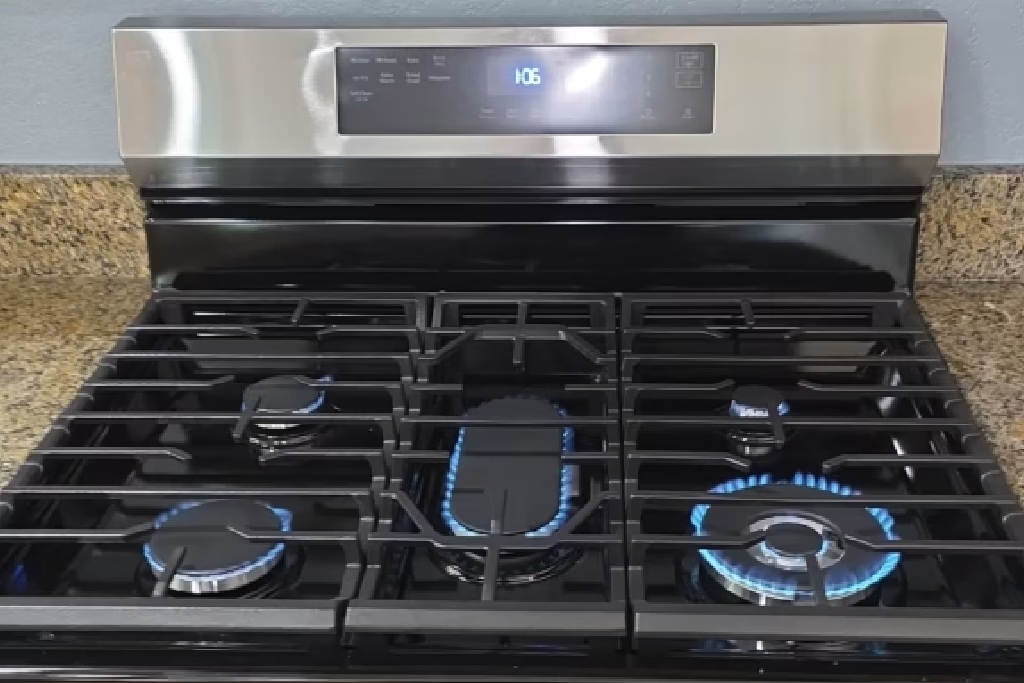
Assessment Before Any Work Is Authorized
Every upgrade and relocation scope begins with a system assessment. The assessment identifies the specific deficiency (setback violation, capacity shortfall, pressure deficit, aging material) and confirms the correct scope before any excavation, disconnection, or material purchase is authorized. AFG does not begin a relocation and then discover the proposed new location also has a setback problem. The assessment is the step that prevents that sequence.
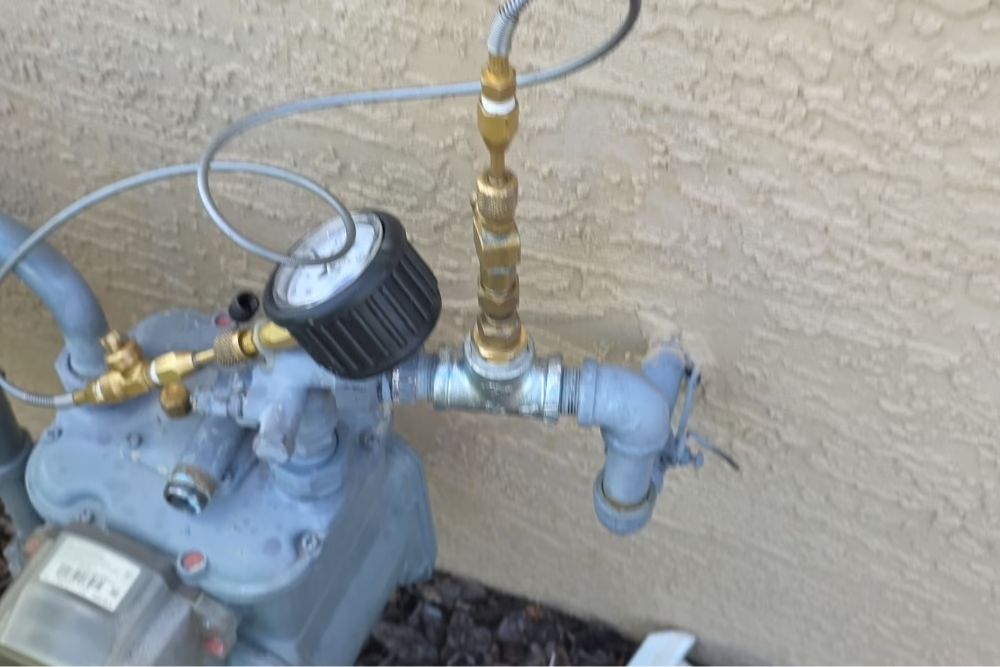
Permit Pulled Under #LI45277
Always Fire & Gas pulls the permit for every scope that requires one. Tank relocations, above-ground to underground conversions, tank upgrades, system pressure upgrades, and distribution line replacements all require permits under Florida Building Code in North Central Florida jurisdictions. The permit documents the work for the property record, closes out any previous compliance finding, and is the documentation a real estate transaction or insurance renewal requires.
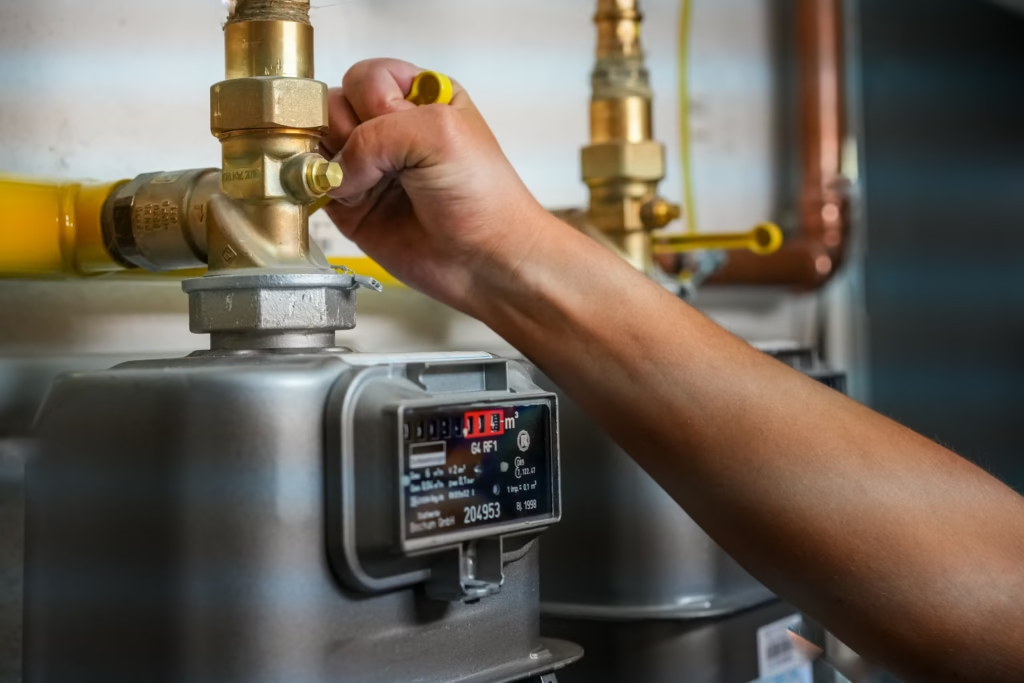
Gas Disconnected Before Any Tank Movement or Major Distribution Work
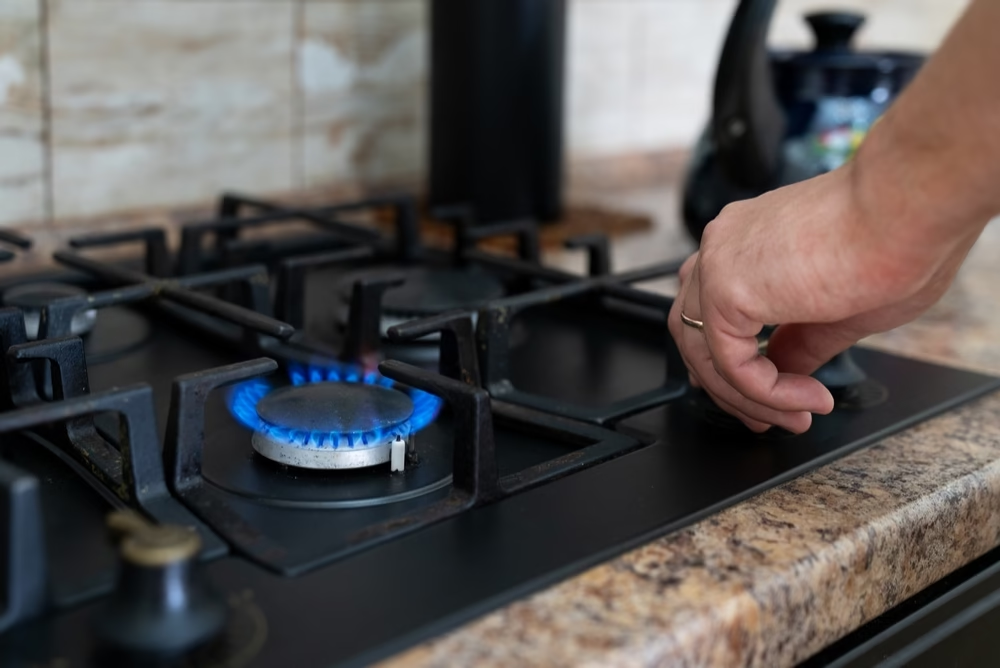
Gas service is confirmed off and the system de-pressurized before any tank is moved, lifted, or buried. Any scope that involves tank movement or disconnection of distribution lines is performed with gas off. This is not a preference – it is the only safe sequence.
Pressure Test at Completion
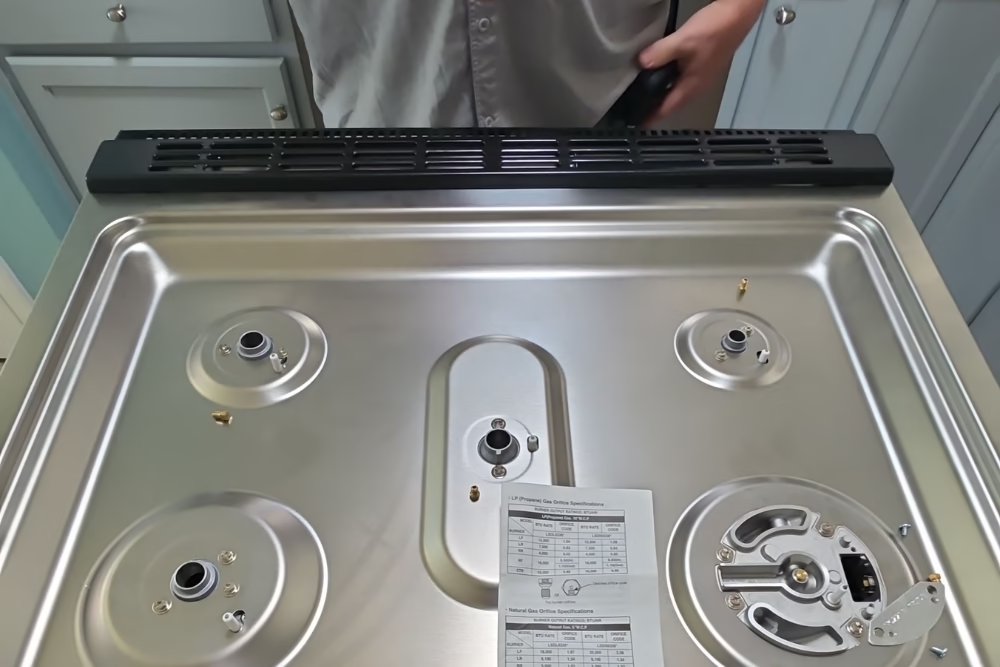
Every modified system segment is pressure tested at completion before gas is restored. For tank relocations and conversions, the full distribution system is tested after the tank is repositioned and the service connections are remade. For distribution line upgrades, every replaced segment is tested before the connection to the gas supply is restored. Pressure test results are documented.
Final Inspection Before Gas Restored
Gas is not restored after any upgrade or relocation scope until the jurisdiction’s final inspection is passed and documented. AFG schedules and attends the final inspection. The closed permit documentation is provided to the home owner.
Six Situations. One Process. Assessment First Every Time.
HOA or Neighbor Complaint - Above-Ground Tank Must Go Underground
The most common reason Always Fire & Gas receives an upgrade and relocation call in North Central Florida is simple: a homeowner has an above-ground propane tank and their HOA, neighborhood covenants, or a neighbor’s complaint has made burial a requirement. The above-ground to underground conversion scope addresses this directly. The conversion is not just digging a hole and lowering the tank: burial requires NFPA 58 setback verification at the burial location (burial does not reduce the required setback distances from structures and property lines), correct depth excavation with stable base material, Florida-specific corrosion protection for the buried tank exterior, buoyancy anchoring in high water table areas of North Central Florida, correct backfill and surface restoration, and a permit. If the existing above-ground tank is aging or in questionable condition, the conversion is the correct time to replace it with a new tank rather than bury a unit that will require re-excavation in the near future.
Call (352) 282-0158 with the property address and any documentation from your HOA or covenant. We confirm whether burial of the existing tank or replacement with a new buried tank is the correct scope for the tank’s current condition, and provide a scope and price before any excavation is authorized.
Selling the Home - Tank Location Flagged Before Closing
Insurance Requirement - Insurer Flagging Tank Location or Condition
Homeowner’s insurance renewals and new policy applications in North Central Florida increasingly include inspections that flag propane tank location violations and condition deficiencies. An insurer that flags an NFPA 58 setback violation typically requires documented correction as a condition of policy renewal or issue. An insurer that flags tank condition (age, visible corrosion, unpermitted installation) requires documented remediation. Always Fire & Gas provides written documentation of the completed relocation or upgrade, including the closed permit, the pressure test record, and the as-built system layout, in a format suitable for submission to the insurer as evidence of compliance. The documentation must be from a licensed gas contractor – a homeowner’s own attestation is not sufficient for an insurer’s compliance file.
Call (352) 282-0158 with the insurer’s finding or requirement letter. We identify the specific deficiency, scope the correct remediation, and provide documentation at project close suitable for your insurer’s compliance file.
Renovation or Addition Increased Gas Demand - Existing System Cannot Keep Up
A kitchen renovation that adds a high-BTU commercial-style range, a bathroom addition with a tankless water heater, a generator installation, or an outdoor kitchen project can push total propane demand past what the existing distribution system can deliver. The failure mode is not catastrophic – the system does not fail, it underperforms. Appliances run at reduced output, pilot lights are unstable under simultaneous demand, and the generator that was supposed to power the house during a hurricane runs at 60 percent output because the supply line cannot maintain fuel pressure at peak load. Always Fire & Gas performs the full system assessment before recommending a pressure upgrade scope: the pressure deficit may originate at the regulator, the main distribution line, a branch line, or the tank itself if the capacity has been exceeded. The correct scope depends on where the deficit originates.
Call (352) 282-0158 and describe the new appliances or increased demand and the symptoms you are observing (which appliances underperform, under what conditions). We perform the full system assessment and identify the correct upgrade scope before any replacement is authorized.
Generator Addition - Existing System Cannot Support the New Load
A whole-house standby generator is one of the highest single-appliance BTU demands in a residential propane system. A 20kW generator at full load draws as much fuel as several household appliances combined. A generator connected to the household propane distribution system at a branch line sized for a range or dryer will run, but will not reach rated output under full load conditions – and during a power outage, full load is exactly when it needs to perform. Always Fire & Gas addresses generator propane supply as a distinct scope: the generator may require a dedicated propane line from the tank or regulator, a dedicated first-stage regulator, or a tank upgrade to provide adequate capacity for the generator’s demand alongside household appliances. The assessment determines which of these is the correct approach before any pipe is run.
Call (352) 282-0158 with the generator brand, model, and BTU or kW rating. We assess the existing distribution system, calculate whether the current tank and line configuration can support the generator’s peak demand alongside household appliances, and provide a scope for whatever upgrade is required.
ging Distribution Lines - Galvanized Pipe or Old Flex Connectors
A propane distribution system in a North Central Florida home that is more than 25 to 30 years old may still be the original installation: galvanized steel pipe, original flex connectors at every appliance, and fittings that have never been inspected since the original permit was closed. Galvanized pipe in propane service is a deficiency, not a condition – the material is not appropriate for dry gas service and develops internal corrosion products that migrate into appliance components over time. Flexible connectors have a manufacturer-rated service life of approximately 20 years; connectors beyond that age are approaching or past the point where replacement should not be deferred. A whole-home renovation, kitchen renovation, or appliance replacement is the correct time to address aging distribution lines while walls are open and access is available.
Call (352) 282-0158 if your home is more than 25 years old with an original propane distribution system that has not been inspected or updated. We assess the full distribution system from tank regulator outlet to all appliance connections and provide a written report identifying every component approaching or past end of service life before any replacement scope is committed to.
Propane Tank Upgrades and Relocations Across North Central Florida
Always Fire & Gas performs propane tank upgrades, relocations, above-ground to underground conversions, system pressure upgrades, and distribution line upgrades across Marion, Alachua, Lake, Sumter, Citrus, Putnam, Hernando, Orange, Volusia Counties and all surrounding areas. All upgrade and relocation work performed under FL Gas Contractor #LI45277 & LP Gas Master Qualifier License #MQ31416. Assessment before any work is authorized. NFPA 58 compliance confirmed for every installation position. Permits pulled for all required scopes. Pressure tested before gas is restored.
Call (352) 282-0158 to schedule a propane system assessment. Describe what you are experiencing (the symptom from the table in Section 3 above, the HOA letter, the inspection finding, or the appliance performance issue) and the property address. We confirm whether your location is in our service area and schedule the assessment before any scope or price is provided.
Propane Tank Upgrade and Relocation Questions, Answered Directly
The most common indicators that a propane tank requires relocation are: a real estate inspection report noting that the tank is within a required NFPA 58 setback distance from a building opening, property line, or ignition source; an insurance inspection flagging the tank location as a compliance deficiency; an HOA notice requiring removal or burial of an above-ground tank; or a building permit for an addition or renovation that reveals the existing tank position conflicts with the new structure’s footprint. The specific NFPA 58 setback requirements for propane tanks in Florida are detailed at /gas/lp-tank-installation/ — the same setback requirements apply to existing tanks as to new installations. Always Fire & Gas performs a setback assessment as part of every relocation evaluation and identifies the specific violation before a relocation scope is designed.
Whether an existing above-ground tank can be buried or should be replaced depends on the tank’s age and condition. A tank that is in good condition – no significant corrosion, no structural damage, and exterior coating intact – can typically be buried with correct corrosion protection applied at installation. A tank that is aging, visibly corroded, or in questionable structural condition should be replaced with a new tank rather than buried: excavating a buried tank for replacement is significantly more expensive than a surface replacement, and burying a tank that fails within five to ten years of burial is an expensive sequence to repeat. Always Fire & Gas assesses the existing tank’s condition as the first step of any above-ground to underground conversion scope and advises on whether burial of the existing tank or replacement with a new buried tank is the better investment.
No. NFPA 58 applies the same setback distances to underground propane tanks as to above-ground tanks of the same capacity. For tanks from 126 to 500 gallons, the minimum setback from a building opening is 10 feet and from a property line is 10 feet, regardless of whether the tank is above-grade or below-grade. Burial eliminates the visual presence of the tank and removes it from above-grade impact and wind risks, but it does not reduce the required distance from structures and property lines. Always Fire & Gas verifies NFPA 58 setback compliance at the proposed burial location before any excavation is authorized.
Yes. Tank relocations, above-ground to underground conversions, and tank upgrades all require a permit under Florida Building Code and applicable local jurisdiction requirements. The permit documents the installation at the new location, closes out any previous compliance finding, and is required for the final inspection that must be completed before gas service is restored. Always Fire & Gas pulls the permit for every relocation, conversion, and upgrade scope under #LI45277 & LP Gas Master Qualifier License #MQ31416. An unpermitted tank relocation does not resolve a real estate or insurance compliance finding – the documentation the buyer’s attorney or insurer requires is a closed permit, not a contractor’s letter.
A propane generator that runs but does not reach rated output under load is most commonly experiencing fuel starvation: the propane supply line to the generator cannot maintain adequate pressure at the generator’s peak BTU demand. The cause may be at the generator’s dedicated supply line (undersized for peak demand), at the branch junction where the generator line connects to the household distribution system (the branch is sized for a lower-demand appliance), at the main distribution line (total system demand including generator exceeds the main line’s capacity), or at the first-stage regulator (regulator output pressure insufficient for total system demand at peak load). Always Fire & Gas performs a full distribution system assessment to identify where the pressure deficit originates before recommending any upgrade scope. A generator supply line is a distinct scope from the household distribution system in many cases, and may require a dedicated line from the tank regulator rather than a branch from the household system.
Galvanized pipe is not the correct material for propane distribution and should be replaced when identified in a propane system. The galvanizing process applies a zinc coating to steel pipe to prevent corrosion; this coating is effective in wet environments but is not beneficial and can be counterproductive in dry gas service like propane distribution. Over time, internal corrosion products develop in galvanized pipe in propane service and can migrate downstream into appliance gas valves and burner assemblies, causing valve failures and burner performance problems. The Florida Building Code and NFPA 54 both restrict galvanized pipe in gas piping applications. Always Fire & Gas identifies galvanized pipe in propane distribution systems as a deficiency requiring replacement, not a material to leave in service while replacing only the flex connectors.
Propane tank relocation and burial costs in North Central Florida depend on: the scope (relocation to a new above-grade location is less expensive than an above-ground to underground conversion), the distance of the relocation, whether the existing service line from the propane supplier requires rerouting, the soil conditions at the burial site (corrosion protection scope varies by soil assessment), whether the existing tank is being buried or replaced with a new tank, and the permit fee for the applicable jurisdiction. Surface relocations are consistently less expensive than burial conversions of the same tank size due to excavation, corrosion protection, backfill, and surface restoration requirements. Always Fire & Gas provides a written scope and price after the assessment. Call (352) 282-0158 with a description of the situation and the property address.