Above-Ground and Underground. NFPA 58 Compliant. Permitted and Inspected.
LP Tank Installation and Burial in Ocala, Gainesville, Orlando, The Villages & All Surrounding Areas
- Master Chimney Technician #34
- FL Gas Contractor #LI45277
- CSIA Certified #10020
- FL Residential Contractor #CRC133200
- Liquified Petroleum (LP) Gas Master Qualifier License #MQ31416
- BBB A+ Since 2018 Family-Owned Since 1982
Above-ground or underground. Tank sizing confirmed. NFPA 58 setback verified. Permit pulled. FL Gas Contractor #LI45277 & LP Gas Master Qualifier License #MQ31416.
Gas Propane Tank Installation
Above-Ground Tank Installation. Underground Tank Burial with Florida Corrosion Protection. Tank Sizing. Tank Replacement. FL Gas Contractor #LI45277 & LP Gas Master Qualifier License #MQ31416. Master Chimney Technician. North Central Florida Since 1982.
A propane tank installation is not just setting a tank on a pad. NFPA 58 – the Liquefied Petroleum Gas Code – governs every aspect of propane tank placement: required setback distances from structures, property lines, and ignition sources; minimum clearances above and below grade for buried tanks; corrosion protection requirements for tanks in contact with soil. Florida’s climate adds additional requirements for underground installations that do not apply in drier states: soil moisture levels in North Central Florida accelerate corrosion on steel tank exteriors that are not correctly protected, and an underground tank installed without proper corrosion protection will fail ahead of its rated service life.
Four LP Tank Installation Services. NFPA 58 Compliant. Permitted Under #LI45277
1
New Propane System Installation
A new propane system installation designs and installs a complete propane distribution network for a property that has no existing propane service. The scope begins with confirming the appliance list and total BTU demand, coordinating tank placement and regulator configuration with the propane supplier, designing the distribution system to meet the confirmed demand at all appliance locations simultaneously, and installing all distribution lines and appliance connections under the pulled permit. Always Fire & Gas performs load calculations to size the main distribution line and branch lines correctly – an undersized main line produces pressure drop at appliances furthest from the tank, particularly when high-BTU appliances like a generator or range are operating at the same time as lower-BTU appliances. The installation is pressure tested at completion and inspected before gas is activated.
- Appliance list and total BTU demand confirmed before distribution system is designed
- Tank placement and regulator pressure coordinated with propane supplier before lines are sized
- Load calculation: main line and all branch lines sized to meet simultaneous demand across all appliances
- Distribution lines installed: CSST, black iron, or approved material by application and jurisdiction
- CSST bonding installed per NFPA 54 and Florida Building Code where CSST is used
- Shutoff valve at every appliance connection point – lockable where required
- Full system pressure test at completion – test pressure and duration documented
- Permit pulled under #LI45277 & LP Gas Master Qualifier License #MQ31416, final inspection coordinated, gas activated after inspection approval
- As-built system layout provided at project close
2
Propane Line Extension
A propane line extension adds a new branch to an existing propane distribution system: a new line run to a kitchen where a gas range is replacing an electric model, an extension to a garage where a gas unit heater is being added, or a dedicated line to an outdoor location for a grill station or fire pit. Before any extension is designed, Always Fire & Gas confirms that the existing main distribution line has adequate capacity for the additional BTU load at the new location – an extension connected to an undersized or near-capacity main line will produce pressure drop at the new connection point and at existing appliances. If the existing main line requires upsizing to accommodate the new load, that is scoped and priced before the extension is installed.
- Existing system capacity confirmed before extension is designed – undersized supply is identified and addressed before pipe is run
- Extension designed to correct pipe size for the run length and BTU demand of the new appliance location
- Shutoff valve installed at new connection point
- New segment pressure tested before appliance connection is made
- Permit pulled where required for new gas line work
- Extension documented in updated as-built system layout
3
Outdoor Propane Installation
A dedicated outdoor propane line serves a built-in grill, a gas fire pit, a permanent patio heater, or a whole-house generator that requires a gas connection separate from the main portable cylinder supply. Outdoor propane lines run from the interior distribution system or directly from the tank regulator outlet to the exterior connection point, through or under the structure’s exterior wall or foundation, and to the outdoor appliance location. Buried outdoor lines must be at the correct depth for the soil conditions and jurisdiction requirements, protected at exterior wall penetrations, and equipped with a lockable shutoff valve at the connection point. Generator connections require a dedicated line sized to the generator’s gas demand – a generator with a high BTU demand that is connected to the household distribution system at a branch line sized for a range or dryer will not receive adequate fuel pressure during a power outage when the generator is running continuously.
- Outdoor appliance BTU demand confirmed – generator and large grill stations require dedicated line sizing, not shared branch
- Line routed from interior distribution system or directly from tank regulator outlet based on demand and distance
- Buried segments at correct depth for jurisdiction and soil conditions
- Exterior wall or foundation penetration protected and sealed
- Lockable shutoff valve at outdoor connection point
- Outdoor segment pressure tested before appliance connection
- Permit pulled for outdoor line work under #LI45277 & LP Gas Master Qualifier License #MQ31416
- Generator connections: automatic transfer switch and generator manufacturer’s connection requirements confirmed before installation
4
Natural Gas-to-Propane Conversion
A natural gas-to-propane conversion is required when a property loses natural gas utility service, when a homeowner moves a natural gas appliance to a property that does not have natural gas utility access, or when a natural gas appliance is being relocated to an area the utility does not serve. Natural gas and propane burn at different pressures and air-to-fuel ratios – a natural gas appliance operated on propane without conversion will burn incorrectly, producing incomplete combustion, excess carbon monoxide, and appliance damage. Conversion requires a conversion kit specific to the appliance model: typically a different set of burner orifices and in some cases a different regulator. Always Fire & Gas manages the appliance conversion coordination and the distribution system installation together – we do not install the propane lines and leave the appliance conversion to the homeowner.
- Every gas appliance in the conversion scope requires a manufacturer-specific conversion kit – AAS confirms kit availability before installation is scheduled
- Existing natural gas distribution system assessed for compatibility with propane service pressure
- Regulator replacement where existing regulator is not rated for propane service pressure
- Propane tank placement and supplier coordination completed before distribution system is modified
- All appliance orifice sets and conversion components installed by or under supervision of #LI45277 & LP Gas Master Qualifier License #MQ31416 licensee
- Full system pressure test after conversion – natural gas and propane pressure ranges differ, test confirms system integrity at propane service pressure
- Permit pulled for system conversion and any distribution modifications
- Gas fireplace conversions include MCT-credential venting confirmation in same scope
Above-Ground or Underground: What Actually Determines the Right Choice for Your Property
Aesthetics are a legitimate factor in the above-ground vs. underground decision, but they are rarely the deciding factor for an informed buyer. The four factors that should drive the decision are: the NFPA 58 setback requirements for each type at your tank size (underground tanks can be placed closer to structures), the water table conditions on your property (high water table requires additional anchoring for underground tanks), the soil conditions (aggressive soils require cathodic protection for underground tanks), and the long-term access and replacement considerations (an above-ground tank is inspectable and replaceable without excavation; an underground tank is not).
FACTOR
ABOVE-GROUND
UNDERGROUND
NFPA 58 Setback (1000-gal from structure)
10 feet from building opening, 10 feet from property line
10 feet from building opening, 10 feet from property line – underground tanks 1000+ gal have same setbacks as above-ground at this size
Placement near structures
Setback from openings and ignition sources must be confirmed for every above-ground placement
Underground tanks have the same setback requirements – burial does not reduce required setback distances from structures
Florida water table
No buoyancy concern – above-grade installation unaffected by water table
High water table in some North Central Florida locations requires anchoring to prevent buoyancy uplift– site assessment required before burial
Corrosion protection
Above-grade: no soil contact, no cathodic protection required. Standard factory coating adequate
Below-grade: soil contact requires verified exterior coating integrity and sacrificial anode or impressed current cathodic protection where soil conditions indicate aggressive chemistry
Installation cost
Lower — no excavation, simpler pad preparation, shorter permit timeline in most jurisdictions
Higher – excavation, base material, anchoring hardware, corrosion protection, backfill, surface restoration all add to cost
Future inspection
Tank exterior inspectable without removal, regulator and connections accessible at grade
Dome and connections accessible; tank body not inspectable without excavation
Future Relacement
Tank can be disconnected and removed without excavation
Replacement requires full excavation of burial site – higher future cost if tank requires early replacement due to corrosion
Visual impact
Tank visible above grade – screening with landscape or fencing common
Tank not visible above grade – dome cover at grade level only
Best for
Properties where footprint allows NFPA 58 setback compliance and visual impact is not a primary concern
Properties where aesthetics are a priority, where setback requirements can be met at burial location, and where water table and soil conditions are assessed as compatible with burial
FACTOR
NFPA 58 Setback (1000-gal from structure)
Placement near structures
Florida water table
Corrosion protection
Installation cost
Future inspection
Future replacement
Visual impact
Best for
ABOVE-GROUND
10 feet from building opening, 10 feet from property line
Setback from openings and ignition sources must be confirmed for every above-ground placement
No buoyancy concern – above-grade installation unaffected by water table
Above-grade: no soil contact, no cathodic protection required. Standard factory coating adequate
Lower – no excavation, simpler pad preparation, shorter permit timeline in most jurisdictions
Tank exterior inspectable without removal, regulator and connections accessible at grade
Tank can be disconnected and removed without excavation
Tank visible above grade – screening with landscape or fencing common
Properties where footprint allows NFPA 58 setback compliance and visual impact is not a primary concern
ABOVE-GROUND
10 feet from building opening, 10 feet from property line – underground tanks 1000+ gal have same setbacks as above-ground at this size
Underground tanks have the same setback requirements – burial does not reduce required setback distances from structures
High water table in some North Central Florida locations requires anchoring to prevent buoyancy uplift – site assessment required before burial
Below-grade: soil contact requires verified exterior coating integrity and sacrificial anode or impressed current cathodic protection where soil conditions indicate aggressive chemistry
Higher – excavation, base material, anchoring hardware, corrosion protection, backfill, surface restoration all add to cost
Dome and connections accessible; tank body not inspectable without excavation
Replacement requires full excavation of burial site – higher future cost if tank requires early replacement due to corrosion
Tank not visible above grade – dome cover at grade level only
Properties where aesthetics are a priority, where setback requirements can be met at burial location, and where water table and soil conditions are assessed as compatible with burial
NFPA 58 Setback Requirements: How Far Your Propane Tank Must Be From Structures, Property Lines, and Ignition Sources
NFPA 58 – the Liquefied Petroleum Gas Code published by the National Fire Protection Association – establishes the minimum setback distances for propane tank placement from buildings, property lines, and sources of ignition. These are minimum distances, not recommended distances. Always Fire & Gas confirms NFPA 58 compliance for every proposed installation location before any site preparation is authorized. A tank installed in a non-compliant location is not a properly permitted installation and creates a liability that surfaces at the next property sale, insurance renewal, or jurisdiction inspection.
Ready to confirm setback requirements and line sizing for your property? Contact Always Fire & Gas at (352) 282-0158 to schedule an in-home gas services consultation in Ocala, Gainesville, Orlando, or surrounding areas.
TANK SIZE
Up to 125 gallons (above-ground or underground)
126 to 500 gallons (above-ground or underground)
501 to 2,000 gallons (above-ground or underground)
FROM BUILDING OPENINGS (DOORS, WINDOWS)
5 feet
10 feet
10 feet
FROM BUILDING OPENINGS (DOORS, WINDOWS)
None specified – clear of openings and ignition sources
None specified – clear of openings and ignition sources
None specified – clear of openings and ignition sources
FROM PROPERTY LINE
None specified – local jurisdiction may apply
10 feet
10 feet
FROM IGNITION SOURCES
5 feet
10 feet
10 feet
TANK SIZE
FROM BUILDING OPENINGS (DOORS, WINDOWS)
FROM BUILDING EXTERIOR WALLS
FROM PROPERTY LINE
FROM IGNITION SOURCES
Up to 125 gallons (above-ground or underground)
5 feet
None specified – clear of openings and ignition sources
None specified – local jurisdiction may apply
5 feet
126 to 500 gallons (above-ground or underground)
10 feet
None specified – clear of openings and ignition sources
10 feet
10 feet
501 to 2,000 gallons (above-ground or underground)
10 feet
None specified – clear of openings and ignition sources
10 feet
10 feet
Permitted. Corrosion Protected. Supplier Coordinated. NFPA 58 Compliant. Every Installation.
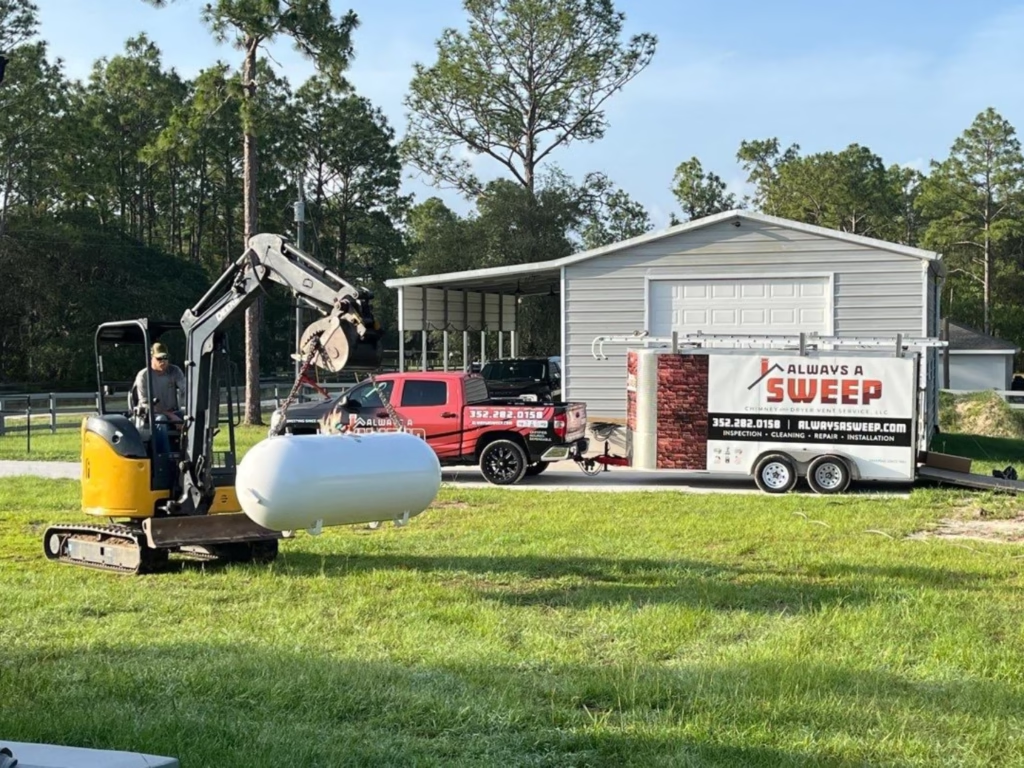
01 Permit Pulling and Inspection Coordination
LP tank installation requires a permit in most North Central Florida jurisdictions for above-ground tanks 125 gallons and larger, and for all underground tanks regardless of size. Always Fire & Gas pulls the permit under #LI45277 & LP Gas Master Qualifier License #MQ31416, coordinates the final inspection with the jurisdiction, and does not activate the propane system until the installation has passed inspection. The permit record documents the installation for property sale, insurance, and future inspection purposes. An unpermitted tank installation that surfaces during a property sale can delay or prevent closing.
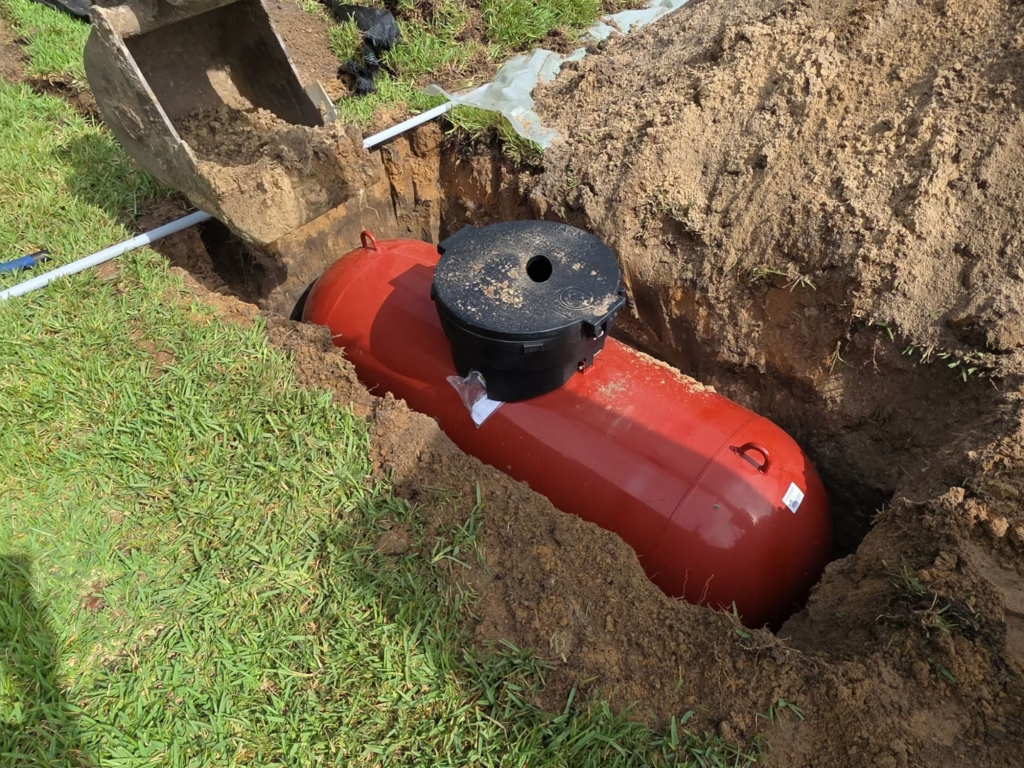
02 Florida-Specific Burial and Corrosion Protection Requirements
Florida’s soil conditions present corrosion challenges for buried steel propane tanks that are more aggressive than the conditions in drier states. High soil moisture content is present year-round across most of North Central Florida. Some soil types in the region contain elevated sulfate concentrations or sulfate-reducing bacteria that accelerate corrosion on steel in contact with the soil. The Florida Building Code requires corrosion protection for underground LP tanks, but the specific protection method must be matched to the site soil conditions. Always Fire & Gas assesses the burial site soil conditions before selecting the corrosion protection method: exterior coating condition verification, sacrificial anode installation, or impressed current cathodic protection where soil conditions indicate a more aggressive chemistry. A tank buried with inadequate corrosion protection in Florida’s soil conditions can develop through-wall corrosion in as little as ten to fifteen years rather than the thirty to forty years of the tank’s rated service life.
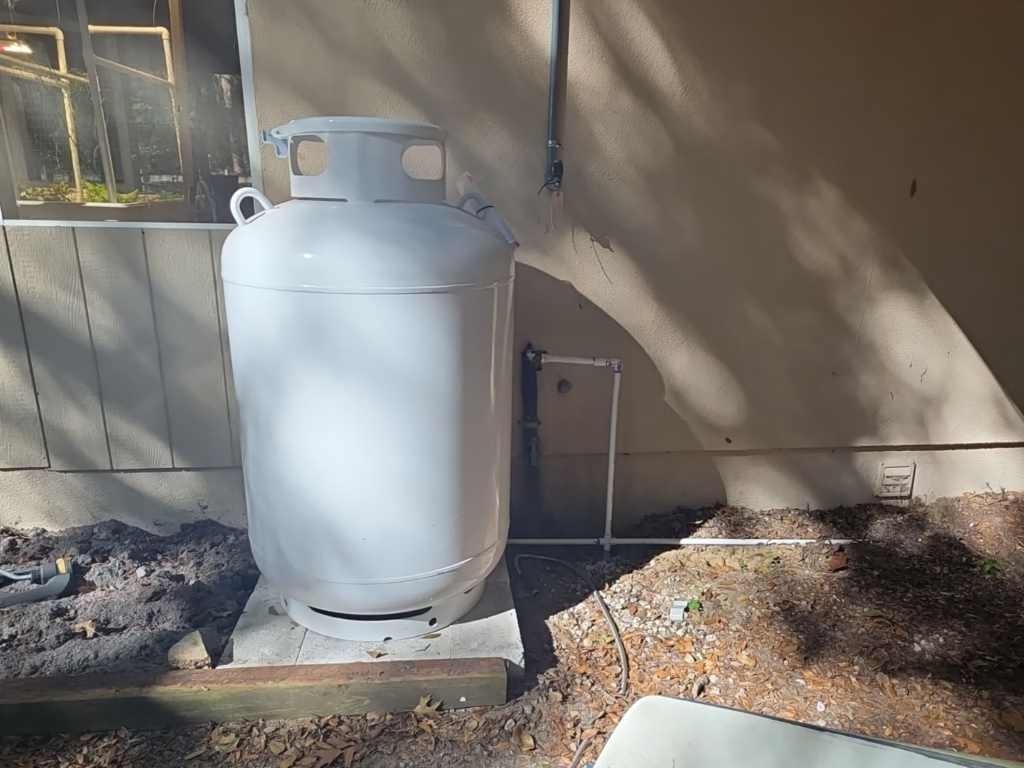
03 NFPA 58 Setback Compliance Verification
The NFPA 58 setback requirements in Section 4 above are confirmed for every proposed installation location before any site preparation is authorized. AFG does not install a tank and then discover a setback deficiency after the fact. The proposed tank location is measured against every applicable setback: from the nearest building opening, from the exterior wall, from the property line, and from every outdoor ignition source present on the property. If the proposed location does not meet NFPA 58 setback requirements, AFG identifies a compliant alternative location before installation is scheduled. If no compliant location exists on the property as proposed, that finding is communicated at the assessment – not after site preparation has begun.
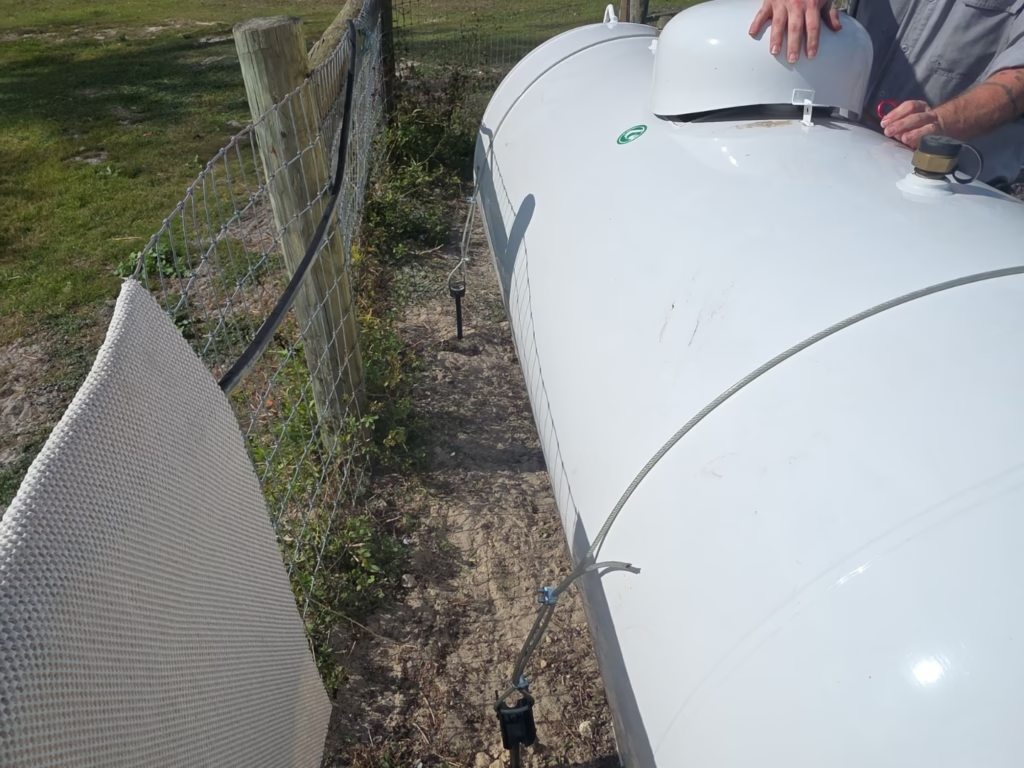
04 Propane Supplier Coordination for Service Setup and Initial Fill
The propane supplier delivers the tank (for leased tank arrangements), sets the service regulator, and provides the initial fill. For owned-tank installations where the homeowner has selected the tank and AAS is installing it, the supplier is coordinated for the initial fill and service account setup after the installation passes inspection. AFG communicates directly with the propane supplier to confirm tank placement, regulator pressure output specification, and service entrance configuration before the distribution system is designed. For tank replacement projects where a leased supplier tank is being removed, AFG coordinates the removal with the supplier to confirm the return process before the old tank is disconnected. The homeowner should not be in the position of managing the contractor-supplier handoff.
Six Situations. One Licensed Process. NFPA 58 Compliant Every Time.

New Home or Property That Has Never Had Propane

Standby Generator Installation Requiring a Dedicated Propane Tank
A whole-house standby generator requires a dedicated propane fuel supply sized to the generator’s BTU demand and the expected run duration during a power outage. A generator that shares the household propane supply at a branch line not sized for its peak demand will starve for fuel under load – the generator runs, but not at full output, and other gas appliances in the home are starved of pressure simultaneously. Always Fire & Gas sizes dedicated generator propane tanks to the generator’s rated BTU demand and the expected run hours per outage event. For North Central Florida’s hurricane season, a generator sized for five to seven days of run time at partial load is the common planning basis. A 500-gallon tank dedicated to the generator provides approximately five to seven days of run time for a 20kW generator at half load – the actual run time depends on the specific generator model and load. Call (352) 282-0158 with the generator brand and model (or BTU/kW rating) and the expected outage duration you are planning for. We calculate the dedicated tank size, confirm the NFPA 58 compliant installation location, and provide a scope and price for tank installation and the generator gas connection.

Whole-Home Propane System - Tank Serves Multiple Appliances
A whole-home propane system serves multiple appliances simultaneously: range, water heater, dryer, fireplace, and possibly a generator and outdoor connections. The tank must be sized to the total BTU demand of all appliances running simultaneously during a peak demand period – not just the average use. Always Fire & Gas performs the load calculation as the first step of every whole-home propane system design, sizes the tank to the confirmed peak demand and desired refill interval, and installs the tank in a NFPA 58 compliant location before the distribution system is designed. A whole-home system is a single coordinated project from tank installation through final appliance connections – not a sequence of separate contractor calls. Call (352) 282-0158 with the complete gas appliance list including any generator. We perform the load calculation, size the tank, confirm the NFPA 58 compliant location, and provide a complete scope for both the tank installation and the distribution system.

Replacing a Leased Supplier Tank With an Owned Tank
A homeowner who leases a propane tank from their supplier is not free to switch suppliers to negotiate fuel prices without switching tanks. The propane supplier who owns the tank typically requires the homeowner to purchase fuel exclusively from them. Replacing a leased tank with a privately owned tank removes that constraint and gives the homeowner the ability to negotiate supply contracts or switch suppliers as market prices change. The replacement process involves coordinating the existing leased tank return with the current supplier, removing the existing tank, confirming the installation site’s NFPA 58 compliance (a replacement is an opportunity to correct any setback deficiency from the original installation), installing the new owned tank, and setting up the service account with the supplier of the homeowner’s choice. Call (352) 282-0158 and describe the existing tank (approximate size, whether leased or owned, and the current supplier). We coordinate the supplier return process, scope the new tank installation, and confirm the NFPA 58 compliant location before scheduling the replacement.

Rural or Off-Grid Property Where Propane Is the Only Fuel Option
Rural properties in Marion, Alachua, Putnam, and Citrus Counties where natural gas utility service is not available and is not likely to be extended represent the largest share of new propane tank installations in North Central Florida. For these properties, propane is not an alternative to natural gas – it is the correct choice, and the tank installation decision (above-ground vs. underground, tank size, installation location) determines the performance and maintenance profile of the fuel system for decades. Always Fire & Gas works with rural property owners on full-system propane installations: tank sizing, NFPA 58 compliant placement, above-ground or underground installation, and the full distribution system and appliance connections as a coordinated project. Call (352) 282-0158 with the property address and the gas appliance list. We confirm whether natural gas utility service is available at your location, perform the tank sizing consultation, and scope the full propane system from tank to appliances.

Fireplace or Outdoor Appliance Requiring a Dedicated or Supplemental Tank
A gas fireplace insert, an outdoor gas fire pit, or a built-in outdoor grill that requires more fuel than portable cylinder supply can provide on a convenient refill schedule may benefit from a dedicated small propane tank rather than tying into the household supply. A 100-gallon or 120-gallon above-ground tank dedicated to an outdoor appliance or a gas fireplace provides an independent fuel source that does not compete with household appliances for pressure and does not require frequent cylinder exchanges. Always Fire & Gas installs dedicated small propane tanks for single-appliance applications and confirms the NFPA 58 setback compliance for the specific tank size and proposed installation location. Call (352) 282-0158 with the appliance type, the BTU rating, and the proposed installation location relative to the structure and property lines. We confirm the NFPA 58 setback requirements for the applicable tank size and provide a scope for the tank installation and the appliance connection.
LP Tank Installation Across North Central Florida
LP Tank Installation Questions, Answered Directly
NFPA 58 setback requirements for propane tanks in Florida: for tanks up to 125 gallons, the tank must be at least 5 feet from any building opening (door, window, or opening in the building wall) and 5 feet from ignition sources. For tanks from 126 to 500 gallons, the tank must be at least 10 feet from building openings and 10 feet from the property line. For tanks from 501 to 2,000 gallons, the same 10-foot setbacks from openings and property lines apply. These are minimum distances under NFPA 58 – local jurisdiction amendments in North Central Florida counties may require greater setbacks. Underground tanks are subject to the same setback distances as above-ground tanks of the same capacity. Always Fire & Gas verifies NFPA 58 setback compliance for the specific installation location before any site preparation is authorized.
Yes, for most propane tank installations. Florida Building Code requires a permit for above-ground LP tank installations of 125 gallons and larger, and for all underground LP tank installations regardless of capacity. Permit requirements are applied by the county or municipality with jurisdiction over the installation location. Always Fire & Gas pulls the permit for every LP tank installation that requires one under #LI45277 & LP Gas Master Qualifier License #MQ31416, coordinates the final inspection, and does not activate the propane system until the installation passes inspection. An unpermitted LP tank installation can create complications at property sale and may not be covered by homeowner’s insurance.
Propane tank sizing for a whole-home system is based on the total BTU demand of all gas appliances running simultaneously and the desired time between fuel deliveries. Common residential propane tank sizes in North Central Florida: a 250-gallon tank is typically adequate for two to three gas appliances with moderate use and a refill interval of four to six times per year. A 500-gallon tank is appropriate for four or more gas appliances, a gas fireplace, or applications where a longer refill interval is preferred. A 1,000-gallon tank is used for whole-home systems that include a standby generator or high-BTU heating equipment. Always Fire & Gas performs a load calculation before recommending tank size – the recommended size is based on actual BTU demand, not a rule of thumb.
The practical differences for North Central Florida homeowners: above-ground tank installation is simpler and less expensive – the tank sits on a concrete pad, the regulator and connections are accessible at grade, and future inspection or replacement does not require excavation. Underground tank burial eliminates the visual presence of the tank, but requires excavation, correct base material, Florida-specific corrosion protection (exterior coating integrity and sacrificial anodes where soil conditions indicate), and anchoring in areas with high water table to prevent buoyancy uplift. Underground tanks are subject to the same NFPA 58 setback distances as above-ground tanks of the same capacity – burial does not allow the tank to be placed closer to the house. Future replacement of an underground tank requires full re-excavation, which adds cost if the tank fails ahead of its rated service life due to corrosion.
Florida Building Code requires corrosion protection for underground LP tanks in contact with soil. The required protection method depends on the soil conditions at the burial site. Factory-applied coating: all underground tanks come from the manufacturer with an exterior coating, but that coating must be verified intact at installationn – any damage to the coating during handling or installation must be repaired before burial. Sacrificial anode systems: magnesium or zinc anodes attached to the tank exterior provide cathodic protection by sacrificing the anode material to soil corrosion instead of the tank steel. Impressed current systems: used where soil conditions are particularly aggressive. Always Fire & Gas assesses the burial site soil conditions and selects the corrosion protection method appropriate to those conditions before burial.
Yes. Replacing a propane supplier’s leased tank with a privately owned tank is a common scope in North Central Florida and is performed under FL Gas Contractor #LI45277 & LP Gas Master Qualifier License #MQ31416. The process involves coordinating the leased tank return with the current supplier, de-pressurizing and removing the existing tank, assessing the installation site for NFPA 58 compliance (a replacement is an opportunity to correct any setback deficiency from the original installation), installing the new owned tank with correct permitting, and coordinating the propane supplier of your choice for the service account and initial fill. Owning the tank removes the fuel supply exclusivity that most leased tank arrangements include, allowing the homeowner to negotiate fuel prices or switch suppliers.
LP tank installation cost in North Central Florida depends on the tank size, whether the installation is above-ground or underground, soil conditions for underground installations (corrosion protection scope varies by soil assessment), whether the installation site requires a new concrete pad, and the permit fee for the applicable jurisdiction. Underground installations are consistently more expensive than above-ground installations of the same tank size due to excavation, base material, corrosion protection, backfill, and surface restoration. Always Fire & Gas provides a written scope and price after the assessment – tank sizing, NFPA 58 setback verification, and site assessment are all performed before the price is provided. Call (352) 282-0158 to schedule.