CSIA Certified. Zero Mess. Done Right the First Time.
Chimney Sweeping in Ocala, Gainesville, Orlando, The Villages and All Surrounding Areas.
- CSIA Certified Chimney Sweep #10020
- CCP (Certified Chimney Professional) #546
- Certified Chimney Specialist (CSIA) #59
- Certified Master Chimney Technician #34
- FL Residential Contractor #CRC133200
- FL Gas Contractor #LI45277
- Certified Chimney Re-liner #94
- Certified Chimney Journeyman #5053
Inspection and sweeping done in one visit. No second appointment.
Chimney Sweeping
CSIA Certified #10020. 3-Motor HEPA Containment System. Inspection and Sweep in One Visit. Serving North Central Florida Since 1982.
A chimney sweep is not complicated work. But the difference between a sweep done right and a sweep done wrong is the difference between a clean, safe fireplace and a living room that smells like ash for three days and a liner that still has Stage 2 creosote deposits on it.
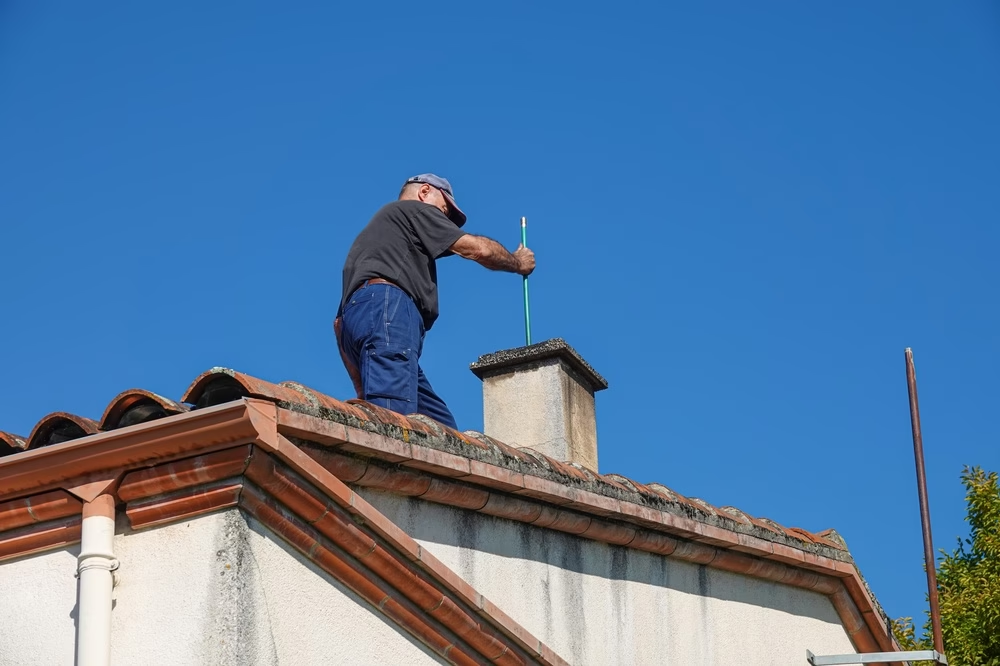
'Chimney Sweep,' 'Chimney Cleaning,' and 'Chimney Service': What Each Term Means and Why the Difference Matters
If you have called more than one chimney company, you have probably heard all three terms used interchangeably. They are not the same thing, and the difference matters when you are trying to evaluate what you are actually paying for.
TERM
WHAT IT MEANS
WHAT IT DOES NOT INCLUDE
Chimney sweep
Physical removal of creosote, soot, debris, and animal nesting material from the flue, firebox, smoke chamber, and smoke shelf using rotary brushes sized to the flue diameter and a contained vacuum system.
A chimney inspection. A sweep removes what is there but does not assess the structural condition of the liner, firebox, crown, or cap.
Chimney cleaning
Often used interchangeably with ‘sweep’ in consumer language. In professional usage, same scope as a sweep: mechanical removal of combustion byproducts and debris.
Any different scope than a sweep. If a company offers ‘chimney cleaning’ at a significantly lower price than ‘chimney sweep,’ ask specifically what the scope difference is.
Chimney service
A broader term that typically encompasses inspection plus sweep. When Always Fire & Gas books a ‘chimney service’ appointment, it means inspection followed by sweep in the same visit – the CSIA recommended minimum annual standard.
Repairs, relining, or structural work. A chimney service is maintenance, not repair.
Chimney inspection
Assessment of all accessible components – firebox, liner, damper, smoke chamber, crown, cap, flashing, and exterior masonry – following NFPA 211 standard. See /chimneys/inspections/ for full detail.
Sweeping or cleaning. An inspection documents condition. It does not remove creosote or clean the flue.
How Always Fire & Gas handles this:
Inspection and sweeping are performed in the same visit. The inspection comes first: it assesses the chimney’s current condition, documents creosote stage, and identifies any issues that affect the scope of the sweep. The sweep follows immediately, using brush sizes and technique appropriate to what the inspection found. You leave the appointment with a documented condition report and a clean chimney – not two separate appointments scheduled weeks apart.
TERM
Chimney sweep
Chimney cleaning
Chimney service
Chimney inspection
WHAT IT MEANS
Physical removal of creosote, soot, debris, and animal nesting material from the flue, firebox, smoke chamber, and smoke shelf using rotary brushes sized to the flue diameter and a contained vacuum system.
Often used interchangeably with ‘sweep’ in consumer language. In professional usage, same scope as a sweep: mechanical removal of combustion byproducts and debris.
A broader term that typically encompasses inspection plus sweep. When Always Fire & Gas books a ‘chimney service’ appointment, it means inspection followed by sweep in the same visit — the CSIA recommended minimum annual standard.
Assessment of all accessible components — firebox, liner, damper, smoke chamber, crown, cap, flashing, and exterior masonry — following NFPA 211 standard. See /chimneys/inspections/ for full detail.
WHAT IT DOES NOT INCLUDE
A chimney inspection. A sweep removes what is there but does not assess the structural condition of the liner, firebox, crown, or cap.
Any different scope than a sweep. If a company offers ‘chimney cleaning’ at a significantly lower price than ‘chimney sweep,’ ask specifically what the scope difference is.
Repairs, relining, or structural work. A chimney service is maintenance, not repair.
Sweeping or cleaning. An inspection documents condition. It does not remove creosote or clean the flue.
Three Stages of Creosote. One Is Routine. Two Require More. Here Is How to Tell Which One You Have.
Creosote is the collective term for the combustion byproducts deposited on flue surfaces when wood is burned. It is not a single substance — it is a spectrum of compounds that changes in form, consistency, and removal difficulty as it accumulates and is exposed to heat cycles. The CSIA classifies creosote into three stages based on the form it takes and the method required to remove it.
A sweep that removes Stage 1 creosote with rotary brushes is a routine annual maintenance event. A sweep that encounters Stage 2 or Stage 3 without the appropriate chemical treatment and technique is a sweep that leaves a fire hazard in the flue.
Stage 1
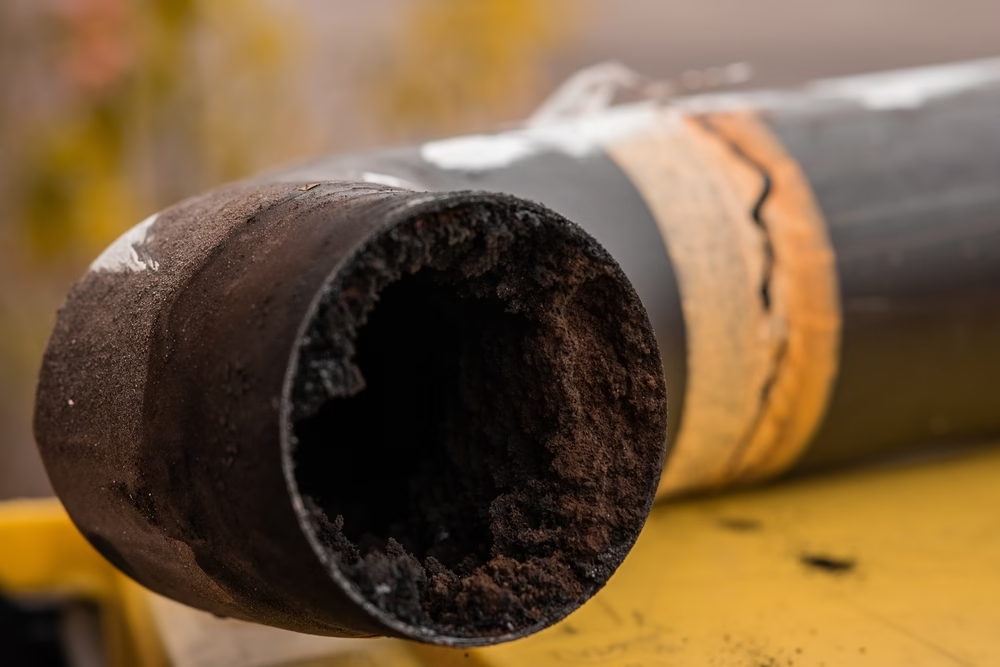
Dusty or Flaky Deposits — Routine Sweep
Fire risk: Low. Stage 1 creosote is combustible but removes readily with standard sweeping. Annual sweeping prevents Stage 1 from progressing.
What it looks like: Light, dusty, or flaky dark deposits on flue tile surfaces. Often gray or dark brown. Falls free when brushed. Produces soot in the firebox after use.
How it’s removed: Standard rotary wire brush sweep with HEPA vacuum containment. Stage 1 is what annual sweeping is designed to address. A chimney swept annually and used with seasoned wood will typically remain at Stage 1.
Stage 2
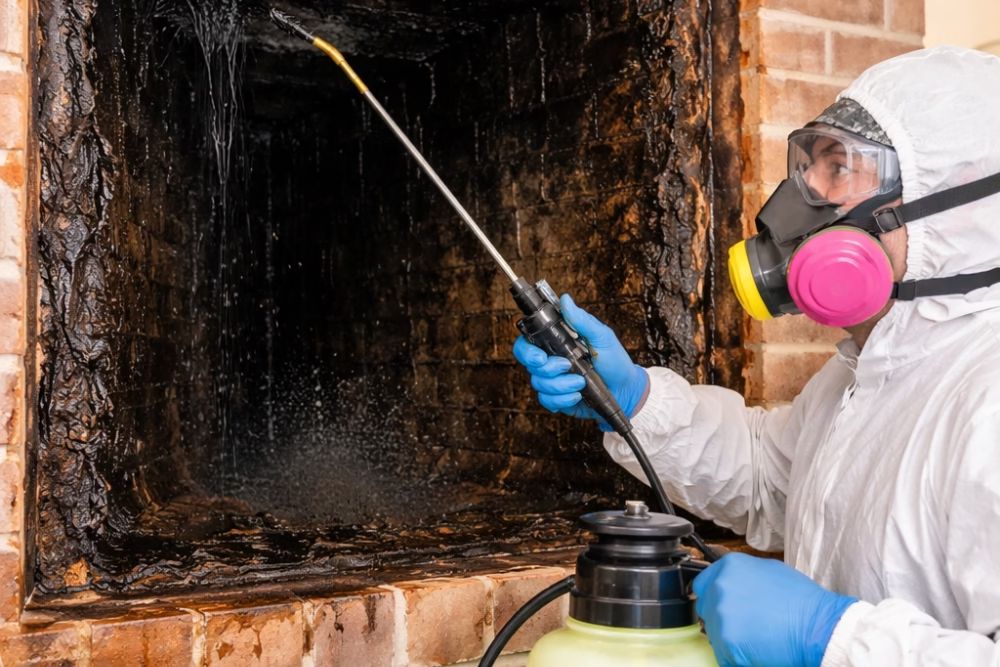
Tar-Like or Hardened Deposits — Chemical Treatment Required
Fire risk: Elevated. Stage 2 creosote is significantly more combustible than Stage 1 and can sustain a chimney fire. It does not fall free when brushed.
What it looks like: Shiny, tar-like, or hardened black deposits that adhere to flue tile surfaces. May be tacky or have a glazed appearance. Significantly heavier than Stage 1. Does not break free with standard brush contact.
How it’s removed: Chemical application (creosote remover or catalyst) followed by mechanical removal after the chemical has altered the deposit’s structure. Stage 2 removal requires a return visit in some cases — the chemical is applied, allowed to act on the deposit, and then the altered material is mechanically removed. Always Fire & Gas identifies Stage 2 during the inspection phase of the visit and discusses the appropriate removal approach before proceeding.
Stage 3
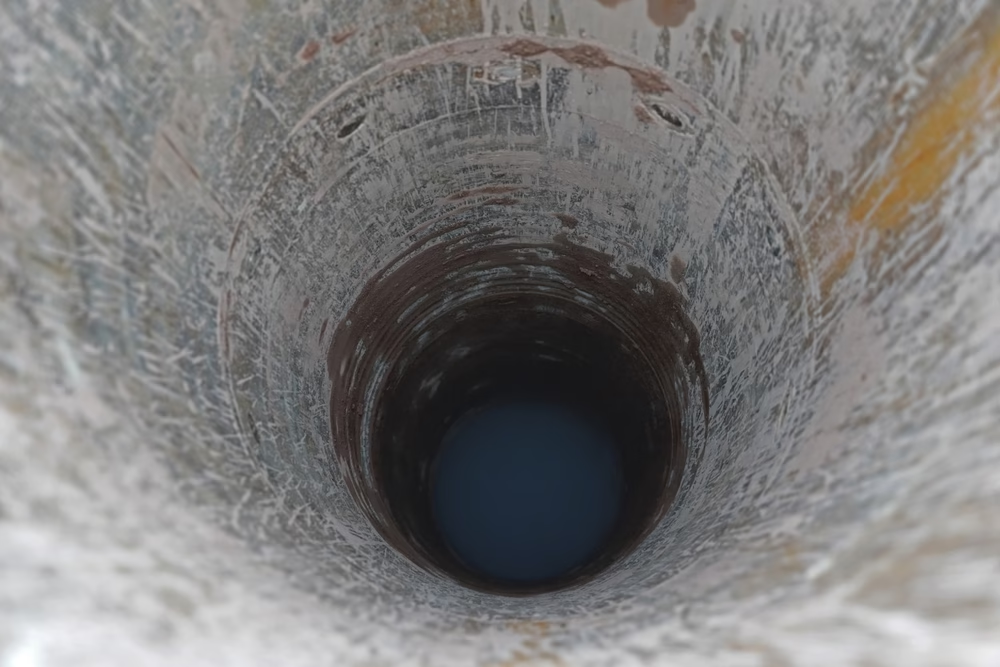
Glazed or Thick Fuel-Form Deposits — Remediation or Replacement
Fire risk: Severe. Stage 3 creosote is a concentrated, highly combustible fuel form coating the interior of the flue. A chimney fire in a Stage 3 flue burns at temperatures exceeding 2000°F and can destroy the liner system.
What it looks like: Thick, tar-like glaze or honeycomb-structure coating on flue surfaces. Varies from smooth and shiny to rough and irregular. May have substantial thickness — Stage 3 deposits reduce the effective flue diameter and significantly impair draft.
How it’s removed: Stage 3 removal is a remediation process, not a standard sweep. Chemical application, mechanical removal, and in severe cases, relining of the flue where the deposits have damaged liner tiles or where removal is not possible without liner replacement. Always Fire & Gas performs Stage 3 assessment and removal and provides a written scope of work before any Stage 3 remediation begins.
Why Florida's Sporadic-Use Pattern Produces More Stage 2 Than Annual Use Does
A chimney used regularly through a cold winter builds creosote incrementally over hundreds of fires and the flue stays warm enough between uses to reduce moisture-related deposition. A chimney in North Central Florida sits unused from March through October, accumulates moisture throughout the humid summer, and is then fired for the first time in November with a cold, damp flue.
That first fire of the season in a cold, damp Florida flue is the single highest creosote-deposition event in a Florida chimney’s annual cycle. The combination of cool flue wall temperature, condensing moisture, and incomplete combustion gases produces rapid Stage 2 deposition in a flue that may have been swept clean twelve months before.
A Florida chimney swept annually but used ten times per season will have less total creosote than a northern chimney used one hundred times – but it is significantly more likely to have Stage 2 deposits from that first-fire dynamic than the northern chimney is from its hundredth fire.
What this means for North Central Florida homeowners:
Annual sweeping before first use of the season – not after last use of the previous season – is the correct timing for a Florida chimney. A chimney swept in February and then used for two more fires before spring does not need a sweep again until before the following season’s first fire. A chimney swept in the fall, after the previous season, has been sitting with whatever deposits accumulated from last season’s use through an entire Florida summer before anyone looks at it again.
How the Zero-Mess Process Works. Every Step, in the Order It Happens.
The standard chimney sweeping anxiety is simple: a technician brushes the flue from the top, soot and ash fall into the firebox, and some amount of it ends up in the room. That outcome is what happens when sweeping is done without a containment system. It is not what happens when sweeping is done the way Always Fire & Gas does it.
Here is the exact sequence of every chimney sweeping visit.
Site Protection and Pre-Photography
Before any equipment touches the chimney, we lay drop cloths on the hearth and surrounding floor area. We photograph the hearth area and the room adjacent to the fireplace. This establishes a documented baseline. If there is any question at the end of the visit about the condition of the area, the photographs answer it.
3-Motor HEPA Vacuum Setup and Negative Pressure
A 3-motor HEPA vacuum system is positioned at the firebox opening and connected to create negative pressure inside the firebox and lower flue. This means air movement is inward - into the vacuum and through the HEPA filter - not outward into the room. Any particulate dislodged during the sweep is drawn toward the vacuum, not toward the living space. The vacuum runs continuously throughout the sweep.
Sealed Firebox
Entry
The firebox opening is sealed against the hearth using a fitted cover that prevents air disturbance from the brushing process from carrying any particulate past the containment system. All equipment enters and exits through this seal without breaking the negative pressure environment.
Top-Down Brush Sweep
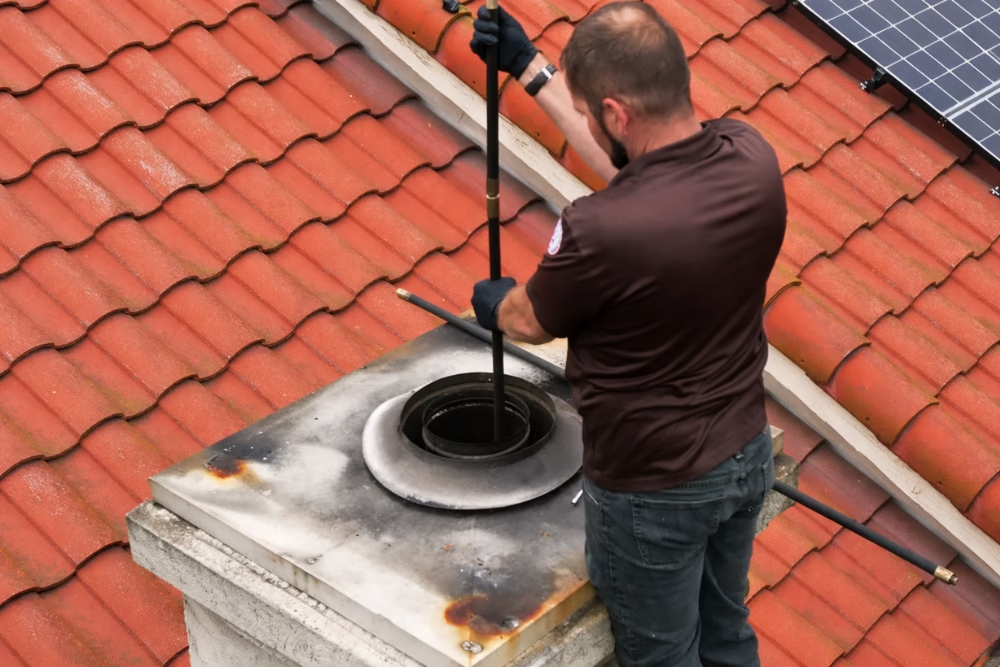
Rotary wire brushes sized to the specific diameter of your flue are introduced from the top of the chimney. The sweep proceeds from the top down, working through the full length of the flue into the smoke chamber and smoke shelf. Brush diameter is matched to the flue — an undersized brush does not make full contact with the liner surfaces and leaves creosote in place.
Smoke Chamber and Smoke Shelf Cleaning
The smoke chamber and smoke shelf - the area between the top of the damper and the base of the flue - are cleaned separately. This is the area where the heaviest debris accumulation typically occurs and where animal nesting material, if present, is most commonly found. It requires direct access from the firebox opening and specific tools sized to the smoke chamber geometry.
Firebox and Ash Pit Removal
Loose ash, soot, and debris in the firebox and ash pit are removed. The area inside the firebox is left clean and clear. If the ash pit has a door, the debris in the pit is addressed. The firebox is not a storage area for the season's ash — accumulated ash in the firebox raises the floor level and changes the air intake dynamics of the fire.
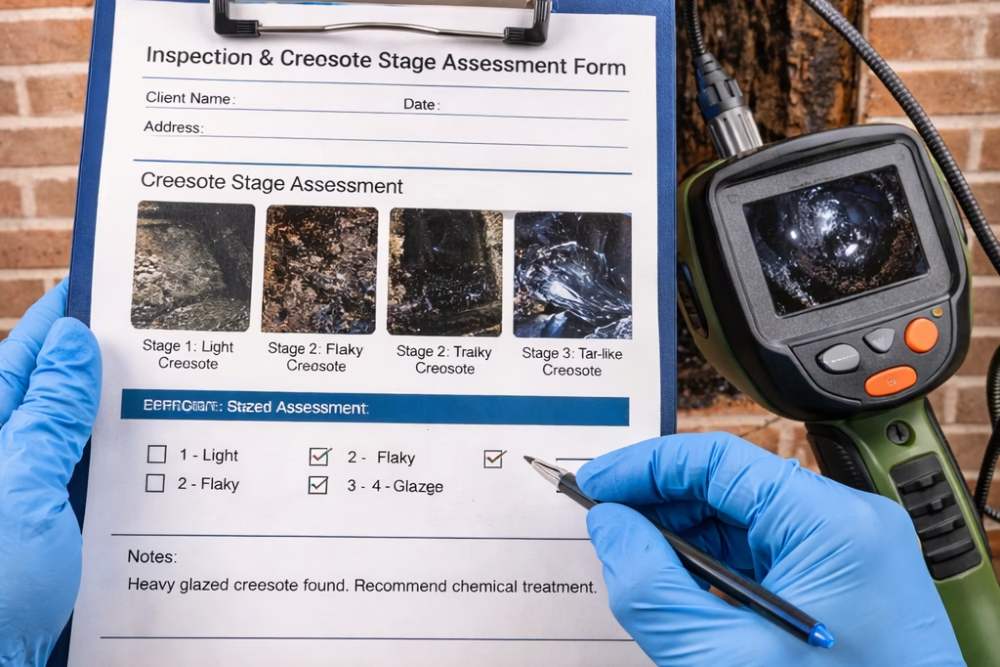
Creosote Stage Assessment and Documentation
After the sweep, the visible flue surfaces and smoke chamber are assessed for residual creosote. If Stage 2 or Stage 3 deposits were found during the pre-sweep inspection phase and treated with chemical application, the post-treatment condition is assessed and documented. If additional treatment is needed, we discuss it before leaving.
Post-Sweep Inspection and Photography
The firebox, damper, smoke chamber, and accessible flue surfaces are photographed after the sweep. The exterior area around the fireplace is checked and photographed. The condition of the area is compared to the pre-sweep photography to confirm no particulate has escaped the containment system.
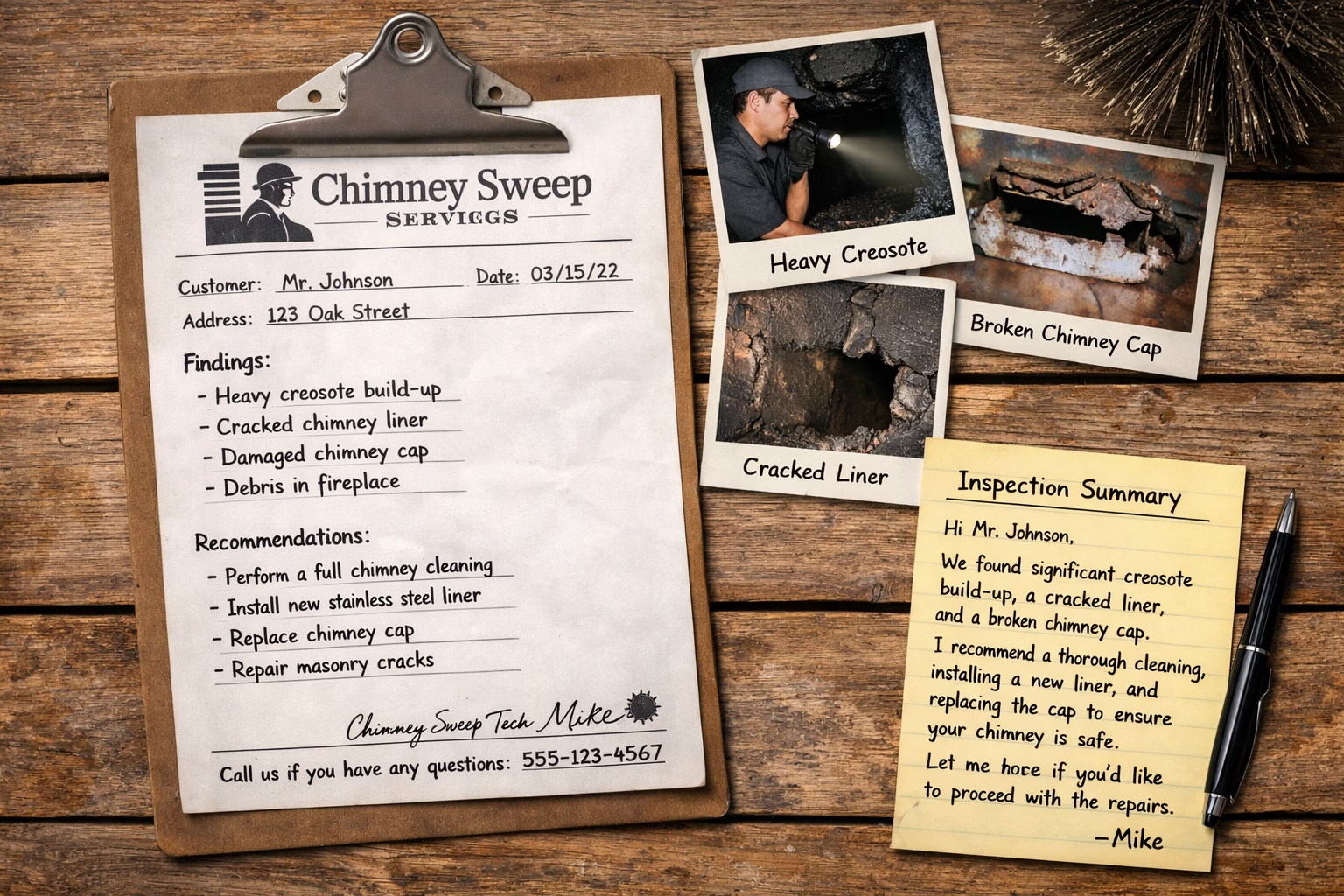
Written Report and Findings Conversation
Every visit produces a written report documenting the sweep scope performed, the creosote stage found and removed, any findings from the inspection phase, and any recommendations. We review the findings with you before we leave. If anything requires follow-up - a repair recommendation, a return visit for Stage 2 or Stage 3 chemical treatment, a cap that needs replacement - it is in the report and we explain it in person.
The Guarantee:
If we leave a mess – any ash, soot, or particulate on any surface in the room – we come back and clean it. Not a discount on the next service. We come back and clean it. That guarantee has never been invoked.
What the Sweep Includes. And What It Does Not. So There Are No Surprises.
What the sweep includes:
- Full-length flue brush sweep from crown to firebox
- Smoke chamber and smoke shelf cleaning
- Firebox and ash pit debris removal
- 3-motor HEPA vacuum containment throughout
- Pre- and post-sweep photography
- Creosote stage assessment during sweep
- Written report documenting scope and findings
- Findings conversation before the technician leaves
- Inspection of accessible chimney components (inspection is included in the same visit - it is not a separate appointment)
What the Sweep Includes.
Chimney repairs
Tuck-pointing, crown repair, firebox brick replacement, flashing repair - these are repair services, not sweep scope. If the inspection identifies a repair need, it is documented and quoted separately.
Chimney liner installation
Liner work is a separate service. If the sweep or inspection identifies that the liner requires replacement or relining, that is a separate project with its own scope and proposal.
Cap installation or replacement
If the cap is missing or deficient, we document it and quote replacement separately. We carry common cap sizes and can often install the same day, but cap work is priced separately from the sweep.
Stage 3 remediation on the first visit
Stage 3 creosote removal involves chemical treatment that requires dwell time before mechanical removal. If Stage 3 is found during the inspection phase, we discuss the remediation process and schedule accordingly.
Gas fireplace service
Gas fireplace cleaning and component service is a different scope from chimney sweeping. If you have a gas fireplace, call to confirm scope before booking.
Which Situation Describes You?
The Annual Homeowner: Time to Schedule Before the Season Starts
The CSIA recommends annual chimney sweeping for all wood-burning fireplace and stove systems. In Florida, the right time is before the first fire of the season - not after the last one. A chimney swept in the fall after last season has been sitting with accumulated deposits through an entire humid summer before anyone checks it again. Sweep before first use. Not after last use.
The Inspection Follow-Up: You Were Just Told You Need a Sweep
If another company or a home inspector has told you that your chimney needs sweeping, you are in the right place. The inspection finding tells you what needs to be removed - Stage 1, Stage 2, or Stage 3 - and the sweep scope is determined by that finding. If you had a Level 2 inspection elsewhere and have the report, call us and describe what it found. We will confirm the appropriate sweep scope before you schedule.
The New Homeowner: You Do Not Know When the Chimney Was Last Cleaned
If you bought a house with a fireplace and have no documentation of the chimney's service history, the correct first step is a combined inspection and sweep. The inspection tells you what condition the chimney is in. The sweep removes whatever is there. You leave the visit with a documented baseline and the knowledge that the chimney has been professionally assessed and cleaned since you took ownership.
The Problem Homeowner: Odor, Smoke, or Something Visible in the Firebox
A fireplace that smells strongly in warm weather, visible soot on the firebox face, or smoke that enters the room when you use the fireplace - these are not always creosote problems, but they are often creosote problems. Stage 2 creosote absorbs moisture from summer humidity and releases odor as the house warms. Soot on the firebox face indicates draft problems that may be related to flue obstruction. If you are using the word 'problem' to describe your chimney, start with a combined inspection and sweep. We diagnose from the system up.
The Landlord or Property Manager: Rental Units with Fireplaces
A rental property with a fireplace has a documented annual maintenance requirement that most landlord insurance policies reference. A chimney fire in a rental unit is a liability event. Annual inspection and sweep with a written report is both the CSIA recommended minimum standard and the documentation that demonstrates due diligence if a fireplace-related incident ever requires an insurance or legal response. Always Fire & Gas schedules multi-property service and provides individual written reports for each unit.
Chimney Sweeping Across North Central Florida Both.
Always Fire & Gas performs CSIA-certified chimney sweeping across Marion, Alachua, Lake, Sumter, Citrus, Putnam, Hernando, Orange, Volusia Counties and all surrounding areas. With a team of more than 20 certified professionals, we serve every part of our service area without extended scheduling delays.
Ocala & Marion County
Home market since 1982. Annual inspections, pre-listing, and buyer inspections across Marion County. Rural and agricultural properties served.
Gainesville & Alachua County
Active resale market with high demand for Level 2 buyer and seller inspections. University-adjacent and established neighborhoods throughout Alachua County.
The Villages & Sumter County
High-volume real estate market. Large senior living and HOA-community population. Level 2 real estate inspections on tight closing timelines throughout Sumter County.
Ocala & Marion County
Gainesville & Alachua County
Active real estate market with high demand for pre-sale and post-inspection relining on real estate timelines. Older residential neighborhoods throughout Alachua County.
The Villages & Sumter County
High-volume real estate market and active insert installation market. Gas and solid fuel liner installations throughout Sumter County. Senior living facility commercial applications.
Also serving: Lake, Citrus, Putnam, Hernando, Orange, and Volusia Counties. Call (352) 282-0158 to confirm scheduling availability for your address.
TERM
WHAT IT MEANS
WHAT IT DOES NOT INCLUDE
Chimney sweep
Physical removal of creosote, soot, debris, and animal nesting material from the flue, firebox, smoke chamber, and smoke shelf using rotary brushes sized to the flue diameter and a contained vacuum system.
A chimney inspection. A sweep removes what is there but does not assess the structural condition of the liner, firebox, crown, or cap.
Chimney cleaning
Often used interchangeably with ‘sweep’ in consumer language. In professional usage, same scope as a sweep: mechanical removal of combustion byproducts and debris.
Any different scope than a sweep. If a company offers ‘chimney cleaning’ at a significantly lower price than ‘chimney sweep,’ ask specifically what the scope difference is.
Chimney service
A broader term that typically encompasses inspection plus sweep. When Always Fire & Gas books a ‘chimney service’ appointment, it means inspection followed by sweep in the same visit – the CSIA recommended minimum annual standard.
Repairs, relining, or structural work. A chimney service is maintenance, not repair.
Chimney inspection
Assessment of all accessible components – firebox, liner, damper, smoke chamber, crown, cap, flashing, and exterior masonry – following NFPA 211 standard. See /chimneys/inspections/ for full detail.
Sweeping or cleaning. An inspection documents condition. It does not remove creosote or clean the flue.
How Always Fire & Gas handles this:
Inspection and sweeping are performed in the same visit. The inspection comes first: it assesses the chimney’s current condition, documents creosote stage, and identifies any issues that affect the scope of the sweep. The sweep follows immediately, using brush sizes and technique appropriate to what the inspection found. You leave the appointment with a documented condition report and a clean chimney – not two separate appointments scheduled weeks apart.
Chimney Sweeping Questions , Answered Directly
The CSIA recommends annual chimney sweeping for all wood-burning fireplace and stove systems regardless of frequency of use. In Florida, where chimneys are typically used sporadically during a short heating season and then sit unused through a long humid summer, annual sweeping before first use of the season is the recommended minimum standard. A chimney used fewer than five times per season still requires annual sweeping because the combination of humidity-exposed deposits, wildlife activity potential, and cold-flue first-fire conditions produces creosote and risk regardless of how few fires were burned.
A professional chimney sweep includes full-length flue brushing from crown to firebox using rotary wire brushes sized to the flue diameter, smoke chamber and smoke shelf cleaning, firebox and ash pit debris removal, HEPA vacuum containment throughout, creosote stage assessment, pre- and post-sweep photography, and a written report documenting scope and findings. Always Fire & Gas performs inspection and sweeping in the same visit – the inspection assesses all accessible chimney components before the sweep begins, and the sweep addresses what the inspection found.
Always Fire & Gas uses a 3-motor HEPA vacuum system that creates negative pressure inside the firebox and flue before any sweep equipment enters the chimney. Particulate is captured in HEPA filtration throughout the process. The firebox opening is sealed against the hearth during sweeping. The hearth area is photographed before and after. If we leave any ash, soot, or particulate on any surface in the room, we come back and clean it. That guarantee has never been invoked.
A combined inspection and sweep visit for a standard residential chimney typically takes one to one and a half hours. The inspection phase assesses all accessible chimney components. The sweep phase follows immediately. If Stage 2 or Stage 3 creosote is found and chemical treatment is indicated, the timeline extends and a return visit may be required for the mechanical removal phase. Always Fire & Gas provides a time estimate when scheduling based on your chimney type and last known service history.
Stage 2 creosote is a tar-like or hardened black deposit that adheres to flue tile surfaces and cannot be removed by standard rotary brush sweeping alone. It is produced by incomplete combustion and accumulates more rapidly in chimneys with sporadic use, wet wood, or cold-flue first-fire conditions – all of which are common in Florida’s seasonal use pattern. Stage 2 removal requires application of a chemical creosote remover or catalyst that alters the deposit’s structure, followed by mechanical removal after the chemical has acted. Always Fire & Gas identifies creosote stage during the inspection phase and addresses Stage 2 deposits with the appropriate chemical and mechanical process.
Stage 3 creosote is a concentrated, glazed or thick fuel-form deposit that coats flue surfaces and burns at temperatures exceeding 2000°F in a chimney fire. It cannot be removed by brush sweeping or standard chemical treatment. Stage 3 remediation involves heavy chemical application, extended dwell time, and mechanical removal – and in cases where the deposits have damaged liner tiles or where complete removal is not achievable without liner access, relining may be required. Always Fire & Gas performs Stage 3 assessment and provides a written scope of work before any Stage 3 remediation begins.
Stage 2 creosote accumulates more rapidly under specific burning conditions than under heavy regular use: cold flue walls at the start of a fire, wet or unseasoned wood, restricted air supply, and the combination of cool flue temperature and condensing moisture that is characteristic of a Florida chimney’s first fires of the season. A chimney used five times in November under these conditions can produce Stage 2 deposits that a chimney used fifty times under ideal northern winter conditions does not. The number of fires is less important than the conditions under which they were burned.
Yes. Always Fire & Gas performs inspection and sweeping in the same visit. The inspection comes first, assessing all accessible chimney components and documenting creosote stage. The sweep follows immediately, using the appropriate brush sizes and techniques for what the inspection found. You leave the visit with both a documented condition report and a clean chimney. There is no requirement to schedule a separate inspection appointment before booking a sweep.
Yes. Wood-burning fireplaces and wood stoves produce creosote and soot as combustion byproducts and require mechanical sweeping with rotary brushes to remove flue deposits. Gas fireplaces do not produce creosote and do not require traditional flue sweeping. Gas fireplace service involves cleaning the firebox, inspecting and cleaning the burner assembly and ignition components, checking the gas connection, and verifying venting – a different scope from a wood-burning sweep. If you have a gas fireplace, call (352) 282-0158 to confirm the appropriate service scope before booking.
Always Fire & Gas does not publish a fixed chimney sweep price because the correct scope – and therefore the correct price – depends on the creosote stage found, the flue size and configuration, and the access conditions at your property. A Stage 1 annual sweep for a standard single-flue chimney is priced differently than a Stage 2 chemical treatment and mechanical removal. Quoting a single price for both would either overcharge one customer or underdeliver to another. Call or text (352) 282-0158 and describe your situation – we will give you a price range in the same call.